
Talking to Young Children About Race and Racism: A Discussion Guide


There is no perfect way to talk to children about race and racism. These topics are complex issues that can be hard for younger children to grasp.
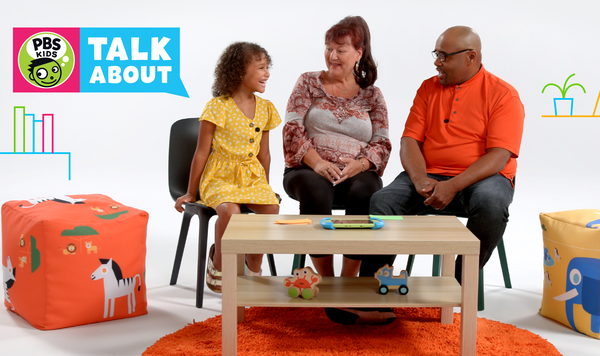
In the "PBS KIDS Talk About: Race & Racism" special, PBS KIDS spoke with real families and had conversations about racial identity, anti-Black racism, and how it is incumbent on all of us — children and parents alike — to actively work towards building a more equitable society.
To do this, families can start by using our voices to celebrate our similarities and differences, talking and asking questions about racism, and standing up for ourselves and each other when we see someone being treated unfairly. This is how we start to make things more fair for everyone.
Here are some simple and age-appropriate ideas on continuing these conversations about race and racism.
Questions you can ask your child:
- It’s natural to notice race and recognize differences in race. What makes us different? What makes us the same?
- Why do people look different from one another?
- Do you think it’s okay to notice and talk about differences in people? (Or, more specifically, Do you think it’s okay to notice and talk about differences in people’s skin color?) Why?
- Think about your family. What are three things that are the same or different about you and them? (Think of physical features or likes and dislikes!)
- Who are the heroes who have fought against racism in history and today?
- Do you think racism might make it harder for Black people to become important leaders? Is that fair?
- Share a story with your children about a time when you had to stand up for yourself because you were being treated unfairly. How did you feel?
- Ask your child, "When was a time you took a stand for yourself or for someone else? If someone was being mean to your friend, how would you stand up for them?"
- What is an upstander? How are you an upstander?
- When we see something unfair, what are ways we can stand up for others?
- What role do you play in being a part of change in your community?
- What can we do to be an advocate? Talk with your students/child about speaking up, speaking out, and supporting others.
Terms and definitions you and your child can talk about:
Race is the man-made idea that people can be divided into groups based on physical differences.
Racism is, essentially, using race to create and support beliefs and systems that discriminate against some people and give privileges to other people. Racism is maintained by individuals, groups, and institutions.
Anti-racism is actively noticing, questioning, and opposing racism by taking action to address and speak out about racism through your words and actions.
Black Lives Matter is a movement that advocates for non-violent civil disobedience to protest police brutality and other racially motivated violence against Black people.
An advocate is someone who speaks out in support or defense of something or someone, especially someone who fights for the rights of others.
White privilege means that white people do not struggle with being treated unfairly because of their race or skin color. It doesn’t mean white families do not experience struggles in life.
Discrimination is the unjust treatment of people and groups based on characteristics such as race, age, religion, gender, ability, or sexual orientation.
Segregation is the enforced separation of different racial groups. This used to be allowed in the United States and different races would have to use different facilities, such as water fountains, bathrooms, and schools.
Desegregation is the ending of the policy of racial segregation.
Microaggressions are subtle gestures, comments, and biased behaviors towards marginalized groups. For example, telling a child of another race that their hair is beautiful and asking to touch it may leave the child feeling like they are not “normal” (even if you intended to compliment).
 Author: