
Talking to Young Children About the Wildfires


“Can we go on a bike ride today?”
This summer, my family has been enjoying daily bike rides to get outside. But with the recent wildfires out west and the smoke affecting many parts of the country, that’s been harder to do. And trying to explain that to my almost 3-year-old? Even harder.
In response to my telling him that we couldn’t go outside because the wildfire smoke wasn’t good for his baby brother’s lungs, he said (in true toddler fashion), “There’s no smoke!” He grabbed a toy wand, waved it at the window, and repeated, “See? No more smoke!” I had never seen him try to use “magic” to make something bad disappear. Was this a normal response?
There are a lot of big, scary things happening in the world right now. I’m having a hard time handling these big things myself, how am I supposed to explain them for my child?
To help, I turned to a couple of parenting and early childhood education experts on how to best talk to children about this natural disaster.
Be open and honest
I wondered if perhaps I should’ve told a little white lie about why we couldn’t go outside. But communication is essential, says Dr. Shauna Tominey, Assistant Professor of Practice & Parenting Education Specialist at Oregon State University.
“You want to be open and honest,” Dr. Tominey says. “Share what you know in words that your child understands.”
Start with the basics: “Wildfires are occurring. They cause smoke that isn’t good for our bodies. You might not be able to smell the smoke, but it can still be harmful.” Dr. Tominey says also to use sentences such as “We’re staying inside to keep our bodies safe.” These conversations can and should happen with children of any age.
Dr. Tominey suggested I should also explain the wildfires and smoke to my newborn. Even though he won’t understand, it builds eventual vocabulary and brings him into the family’s conversation. A television episode or a book may help your child understand and process natural disasters. In my house, we watched the Wild Kratts episode about a forest fire. The episode helped him better understand what a wildfire was and how it could be started, but also be stopped. We talked about how firefighters were working hard to put out the wildfires, just like the Tortuga did in the episode.
Acknowledge emotions
My toddler doesn’t fully grasp the concept of a wildfire, so his main concern is when we can return to the playground.
Older children may experience fear or have nightmares either from hearing about, experiencing, or seeing images of wildfires. No matter how close or far you are from a fire, no fear or trauma should be minimized. The first step is to validate a child’s feelings and let them know that it is okay to be afraid.
“Wildfires are scary because they threaten our safety in our home,” Dr. Tominey says. If you do live in an area threatened by wildfire then “focus on what we are doing to keep our family and the people we love safe because we can’t keep our home safe.”
If your home isn’t threatened by wildfires, ask your child how they think those affected by the fires feel and how you as a family can help. This both reassures the child and helps them manage their feelings.
Focus on connecting
Younger children who may not be aware or have the language skills yet to understand will still notice a difference. Whether it’s a change in routine or your own heightened stress changing the energy in the household, Dr. Tominey suggests that parents try to maintain some of the family routines to help with stress. My family may not be able to enjoy our morning bike rides, but we can do indoor activities to help my toddler get his squirmies out.
Dr. Jeremy Ford, a specialist level school psychologist and assistant professor of Early and Special Education at Boise State University, has first hand experience in explaining difficult topics to children. As a father of four children ranging from 5 to 13 years old, he says that no matter your child’s age, there’s one tool that always helps: connection.
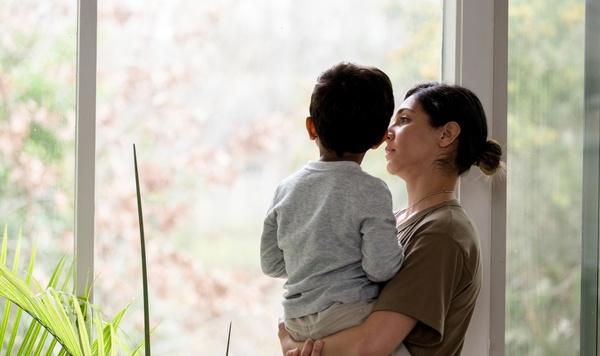
“You have a scared little human being with this problem that is way too big for them to fully understand,” Dr. Ford says. “You pull them into your lap and you hug them and you listen to what their fears and concerns are and you tell them they are safe.”
As for my son trying to magically wave away the smoke, Dr. Ford says it’s normal. “Kids deal with big feelings through play.”
Find the helpers
There is one person who many of us turn to when life feels hard: Fred Rogers.
Both Dr. Tominey and Dr. Ford referenced Rogers and his sage advice to “look for the helpers” when discussing how to help children refocus. Remind your child that amazing people like firefighters are doing all they can to keep families safe.
“When these bad or tragic things happen, looking for the people that try to make things better is comforting,” Dr. Ford says. “It’s important to know that those chaotic things that happen are just a part of life and we can get through them.”
 Author: