
What I’ve Learned as an Adoptive Parent


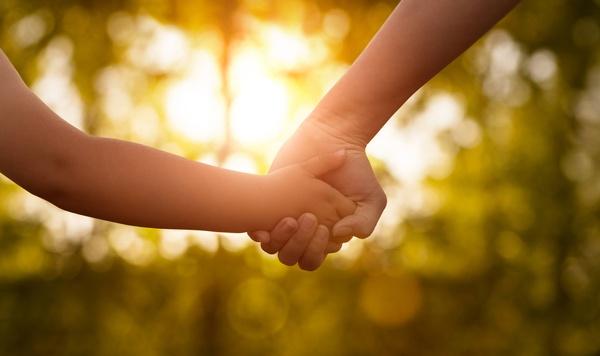
My journey started simply enough. I wanted to be a parent alongside my husband. I had seen other women become moms through adoption, and I thought I could do it, too. I felt no real strong tug to have biological children, which I recognized might be unusual, but might also be a calling to provide a home for a child who might not otherwise have stability, resources, and commitment. I had no idea the experience waiting for me. And I certainly wasn’t even yet considering the experience waiting ahead of my four children.
We are a family just as much as others
It’s interesting I’ve never gotten the question which triggers many transracial adoptive parents, “Are they yours?” But my kids are unmistakably mine. We can’t go anywhere without yells of “Mom, look at this!” All the time, my kids race off in front of me, excited to visit the children’s museum or choose a Christmas tree. I smile when families walking in the other direction say, “Mom, you better catch up!” We don’t share a genetic bond other families do, but our shared experiences have bonded us emotionally in ways genetic bonds do not. My husband and I are committed to our kids, like in a family covenant, where we do not give up when one of us is struggling to be part of this family we have constructed. After all, my kids did not choose this family.
But their first families will always be part of ours
Early in my pursuit of adoption, I was scared to consider contact with my future kids’ birth families. I let my anxiety eclipse the benefits my future kids would receive in knowing their genetic family. I will not replace the women who gave birth to them, and I do not want to. My kids regularly surprise me with questions or statements about their other mamas, dads, and siblings. We learned of our sons’ given names late in their story, after they had already come to know themselves by the names we gave them. But I find those names scratched out in their journals and on the top of worksheets still. We view our kids’ first families as an extension of our family tree, permanently engrafted in our story. Parts of the tree might be tangled, but it’s a tree, nonetheless. What I’ve learned as an adoptive parent is my experiences fade in light of the other people whose loss preceded my joy — my kids’ birth families and my kids, themselves.
Attachment is not automatic
We were strangers to our kids when we met them. The way we looked, smelled, and talked were all new to them. I was not the mom whose voice they heard in utero. On my side, I thought (and still think) they’re the cutest kids I’ve seen. But we walked into our attachment without any history at all. I believe “love at first sight” in adoption neglects to consider the real work attachment and bonding take between a parent and child. I make daily choices to earn my kids’ attachment. I rock their long-legged bodies in too-small rocking chairs. I let them feed me made up concoctions of grapes, milk and cinnamon. I know there are days they may not want my hugs or may be annoyed by me singing our bedtime hymn again. They, too, make a choice to allow it. I believe we all desire to feel connected.
Trauma is a thread through everything
Trauma occurs in babies separated from their birth mothers at birth. That newborns can sense loss and separation breaks my heart, but informs my parenting. I’ve filled my brain with things like the information presented in Bessel van der Kolk’s “The Body Keeps the Score” and the Adverse Childhood Experiences score. My kids’ trauma is personal and private, and it calls me to offer them a higher level of grace. I’ve found strength in being curious about why they might do things which bother me or even hurt me. It all comes back to trauma. They missed out on a lot of building blocks kids being raised in their original families receive.
November is National Adoption Month, and it’s also the month of my twin sons’ birthday. They turned 9 this week, and it was a big birthday for us. Because they were adopted at the age of 4-and-a-half, nine years marks just as long with us as they were not with us. And that’s not to minimize the family and culture they lost. It feels like they’ve been with us forever, yet they’ve only lived half their days here. It is a big deal. It is the greatest honor of my life to get to be a mom to these remarkable kids.
 Author: