
What Mister Rogers Taught Us About Media and Human Connection


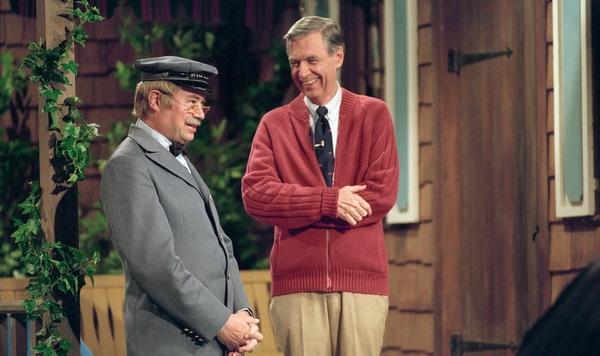
Over the past few weeks, fans around the country flocked to movie theaters to watch Tom Hanks portray Fred Rogers in A Beautiful Day in the Neighborhood. The movie tells the story of a reporter who is tasked with profiling Fred Rogers, and through the process, rediscovers his own ability to forge meaningful human connections.
While we revel in the kind of feel-good nostalgia that only Mister Rogers can evoke, it’s also a great opportunity to examine why Mister Rogers’ Neighborhood has had such an enormous impact on American families since its debut more than 50 years ago.
At a time when people saw television as a “vast wasteland,” Fred Rogers viewed it as a tool that could help children grow. Fred Rogers cracked the code to how media could foster authentic conversations and create opportunities for parents and children to bond. Relationships — and their importance to how we learn — are at the very core of Fred’s legacy.
People often think of media and human relationships as being at odds with one another, but Fred knew then what years of research have since confirmed: that media can, in fact, support deeper human connections and help form the critical foundation for all other learning. He believed that human interaction was paramount to a child’s development, and he provided examples of the very best of these behaviors in each episode of Mister Rogers’ Neighborhood. All of his on-screen moments with other characters provided a blueprint not just for children, but for adults as well, on how to treat others with kindness and respect.
Fred was best known as a media pioneer, but more than anything else, he was a kind and compassionate human. When I met Fred Rogers, he looked deeply into my eyes and established a connection that I will never forget. He had a rare quality of making you feel seen – making you feel like you truly mattered. I’ll never forget the time I visited the White House with Fred and witnessed his conversation with a security guard. This man approached Fred to let him know that when he was growing up, Mister Rogers was the only person who told him that he mattered, and that affirmation was essential to his success in life.
That is what we try to do at PBS KIDS — remind every child about their value and importance, and create the kind of media that fosters deeper human relationships. Just like Fred did.
After we launched our newest children’s series, Molly of Denali, which follows the adventures of an Alaska Native girl, Molly Mabray, a mother tweeted the following: "My kindergartner is home sick today. We’ve discussed the importance of native voices and language and customs, and the role of many species in helping the environment. PBS KIDS, you are a truly undervalued resource and Molly of Denali is such a breath of fresh air."
These are the types of meaningful conversations and bonding moments we seek to spark between children and the grown ups in their lives. Research has shown that these connections are ultimately what have the most impact in kids’ learning.
As evidence, I would point to a 2016 Texas Tech University study of Daniel Tiger’s Neighborhood, a series inspired by Mister Rogers’ Neighborhood and produced by Fred Rogers Productions. Researchers found that preschoolers who watched Daniel Tiger’s Neighborhood for 30 minutes each day for two weeks demonstrated improved empathy, ability to recognize emotions and increased social confidence. The children who reaped the most benefits were those whose parents or caregivers took the time to talk to them about what they watched.
In all that we do at PBS KIDS, we continue to be inspired and guided by Fred’s pioneering work. We know that parents today often struggle with how to approach their children’s screen time. So when we think about new technology and its impact on children, we often ask ourselves what approach Fred might take.
This holiday season, I hope that A Beautiful Day in the Neighborhood will inspire people to reflect on the powerful lessons that Mister Rogers shared with the world. Fred Rogers transformed television into a tool for good. So let us build on that extraordinary legacy, and use media to spark the desire for learning and exploration, and ultimately, to create meaningful connections between children and their caregivers — long after the screen is turned off.
 Author: