Audit: FDA Recall Process Puts Lives at Risk
June 9, 2016
Share
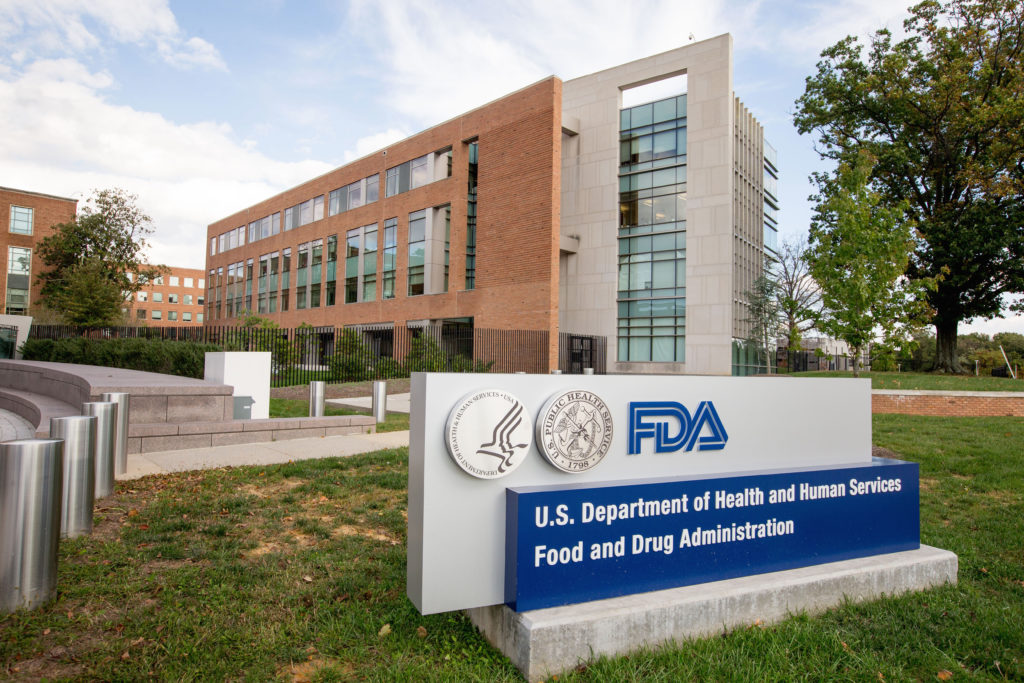
The federal Food & Drug Administration puts lives at risk by not moving swiftly enough on food recalls, according to an ongoing audit of the recall program by the Office of Inspector General for the Department of Health and Human Services.
The auditors made the unusual move to issue an “early alert” about its investigation into the food recall process, because the “finding was so critical and could impact so many people,” according to a press statement.
The Inspector General provided two examples it claims demonstrate unreasonably slow action by the FDA: In one 2014 case, the FDA knew for 81 days that cheese manufactured by the company Oasis Brands, Inc., was adulterated with the bacteria listeria before negotiating a recall. In the interim, the auditors say, the disease is believed to have caused a baby’s death, two fetal miscarriages, and nine illnesses.
In a second 2014 case highlighted by the OIG, the FDA discovered salmonella in a nut butter manufacturing facility of nSpired Natural Foods, Inc. Within two months the FDA had used DNA tests to confirm the bacteria had sickened members of the public. But it took an additional 3 months before the agency managed to negotiate a voluntary recall with the company.
“We found that FDA did not have an efficient and effective food recall initiation process that helps ensure the safety of the nation’s food supply,” the auditors’ preliminary report stated. Specifically, the audit found that the agency would negotiate voluntary recalls, but then fail to either prescribe or enforce any timeline, leaving it up to companies to decide the pace at which they would proceed.
The FDA responded to the audit in a blog post released at the same time as the OIG report, and authored by Dr. Stephen Ostroff, the FDA’s deputy commissioner for foods and veterinary medicine, and Howard Sklamberg, the FDA’s deputy commissioner for global regulatory operations and policy.
In the post, they wrote that the OIG audit zeroed in on 30 cases over the course of three years and that it does not accurately reflect the program as a whole.
“In those three years, the FDA worked with companies to successfully bring about thousands of recalls to keep unsafe food out of the market and homes of consumers with an average recall initiation time of less than a week,” they wrote.
The FDA officials said the agency is taking the audit’s feedback seriously and will expedite changes to strengthen the recall process. But they also noted there are reasons that some investigations take time.
“The FDA’s actions have to be based in science and we go where the evidence leads us. The scope of a contamination must be ascertained to determine how much of a product must be recalled. The time needed to collect evidence can vary, but to request a recall without evidence risks recalling the wrong product and leaving consumers vulnerable to contaminated food that is still on the market,” they wrote.
Another consumer protection process that the FDA oversees came under scrutiny earlier this year during FRONTLINE’s investigation, Supplements and Safety. The investigation revealed that complaints about dietary supplements only rarely result in FDA action, in part because law dictates a high burden of proof before the FDA can recall a product.
The other entity charged with overseeing the nation’s food supply, the U.S. Department of Agriculture’s Food Safety Inspection Service, has also been accused of lax regulation. A 2015 FRONTLINE investigation into poultry safety, The Trouble with Chicken, found that agency’s oversight process also lacked rigor, which led to high rates of salmonella contamination. The investigation led to the introduction of two congressional bills that aimed to improve oversight of the poultry industry. Those bills did not move forward. However, in February, the USDA introduced tougher standards that addressed some of the gaps the investigation had highlighted, standards the agency said would prevent an estimated 50,000 illnesses a year.

Former Reporter, FRONTLINE
Latest Documentaries






Explore
Policies
Teacher Center

Jon and Jo Ann Hagler on behalf of the Jon L. Hagler Foundation
Koo and Patricia Yuen
FRONTLINE is a registered trademark of WGBH Educational Foundation. Web Site Copyright ©1995-2025 WGBH Educational Foundation. PBS is a 501(c)(3) not-for-profit organization.
Funding for FRONTLINE is provided through the support of PBS viewers and by the Corporation for Public Broadcasting, with major support from Ford Foundation. Additional funding is provided the Abrams Foundation, Park Foundation, John D. and Catherine T. MacArthur Foundation, Heising-Simons Foundation, and the FRONTLINE Trust, with major support from Jon and Jo Ann Hagler on behalf of the Jon L. Hagler Foundation, and additional support from Koo and Patricia Yuen. FRONTLINE is a registered trademark of WGBH Educational Foundation. Web Site Copyright ©1995-2025 WGBH Educational Foundation. PBS is a 501(c)(3) not-for-profit organization.