Before Nicolás Maduro, There Was Hugo Chávez
Venezuela’s previous president set in motion the governing model that Nicolás Maduro vowed to continue. ‘The Hugo Chávez Show,’ a documentary that’s newly available on FRONTLINE’s YouTube channel, examined who Chávez was and how he led.
February 18, 2026
Share
In the years before Nicolás Maduro became Venezuela’s leader, the country was led by another controversial president portrayed as both a savior and an autocrat.
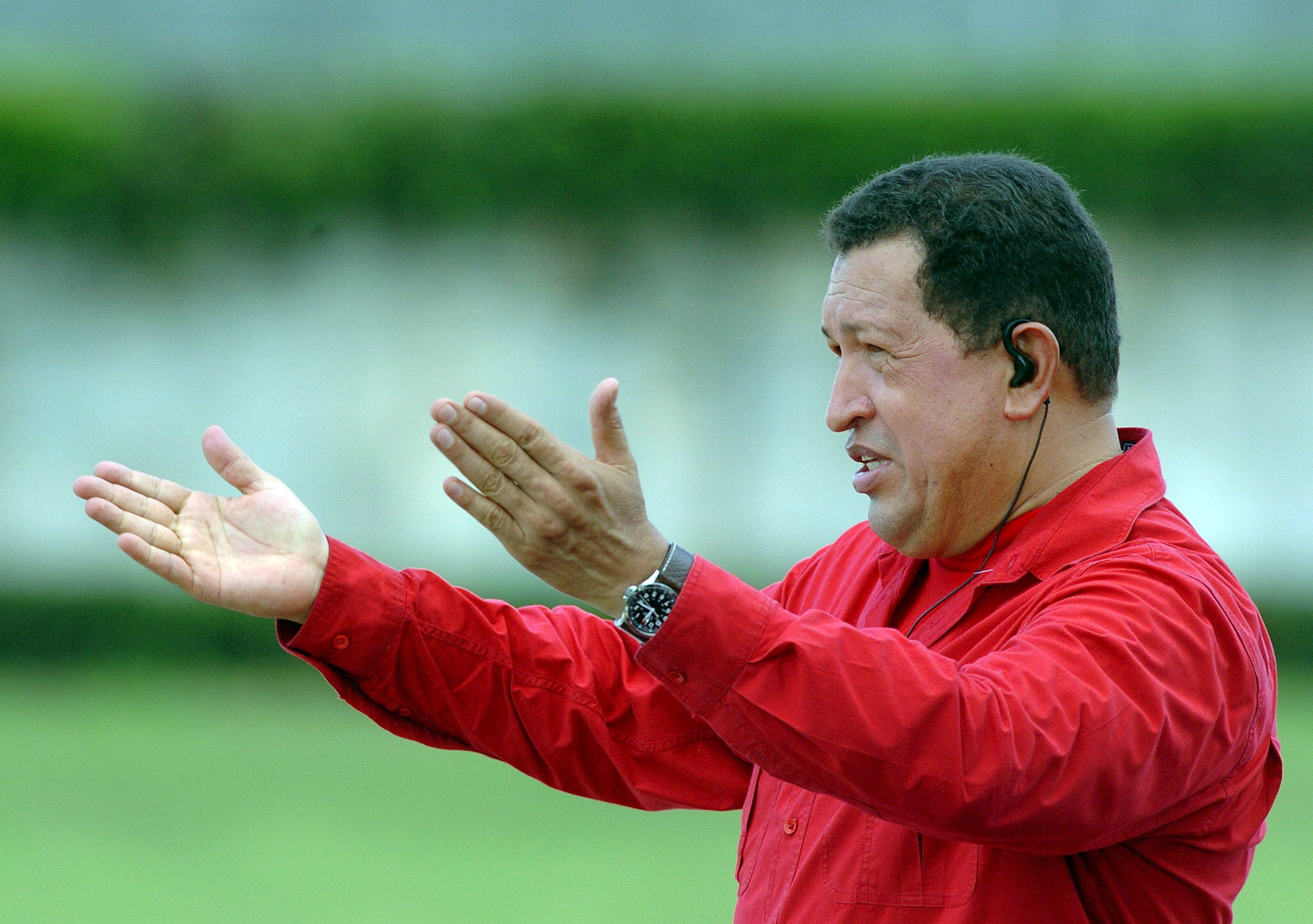
His name was Hugo Chávez, and he’s the subject of The Hugo Chávez Show, the latest documentary from FRONTLINE’s archives to be released on the series’ YouTube channel.
Written, produced and directed by the late Ofra Bikel, the 2008 documentary profiled the polarizing and outspoken Chávez roughly 10 years into his presidency. The film looked at how Chávez rose to and maintained power — including through his savvy use of mass media.
“He’s probably the world’s first virtual president in the age of the communication revolution,” journalist Jon Lee Anderson said of Chávez in the film.
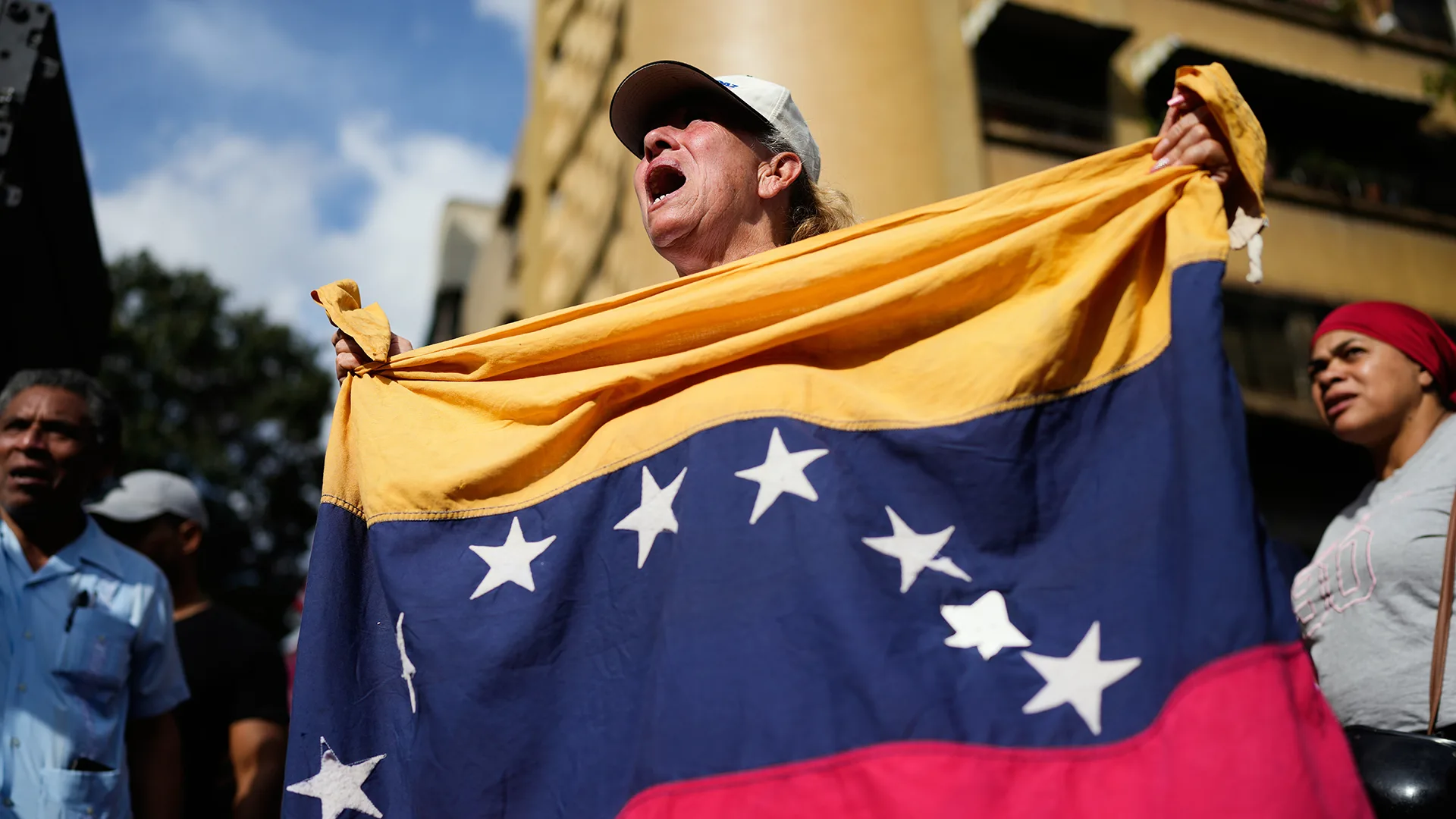
As the documentary reported, Chávez took to the airwaves for a weekly TV show, “Aló Presidente,” that often ran five to eight hours. Part presidential address and part variety show, it featured Chávez speaking directly to the people, explaining government policy and mixing in songs, poetry, memories of his youth, and reflections on the topics on his mind.
“Aló Presidente” also served as a weekly window into the Venezuelan government, with Chávez often announcing major policy decisions on live television. Once, he ordered 10 battalions to the Colombian border, and another time, he announced that Venezuela was pulling out of the International Monetary Fund, a decision soon reversed off-air.
"He's probably the world's first virtual president in the age of the communication revolution."
A decade into Chávez’s tenure, The Hugo Chávez Show also examined the status of the “socialist revolution” he claimed was turning his country into an anti-capitalist beacon for Latin America and the world.
The revolution Chávez promised involved sharing the wealth of the country’s nationalized oil industry with millions of Venezuelan citizens living in poverty, investing it in social programs, ending corruption, and establishing government-supported cooperatives.
But “this is a society that has no auditing,” Alberto Barrera, a Venezuelan author who co-wrote a biography of Chávez, said in the film. “There’s no idea how much money is being spent. We don’t know the real results of cooperatives, what they produce or don’t produce. We know only what Chávez tells us.”
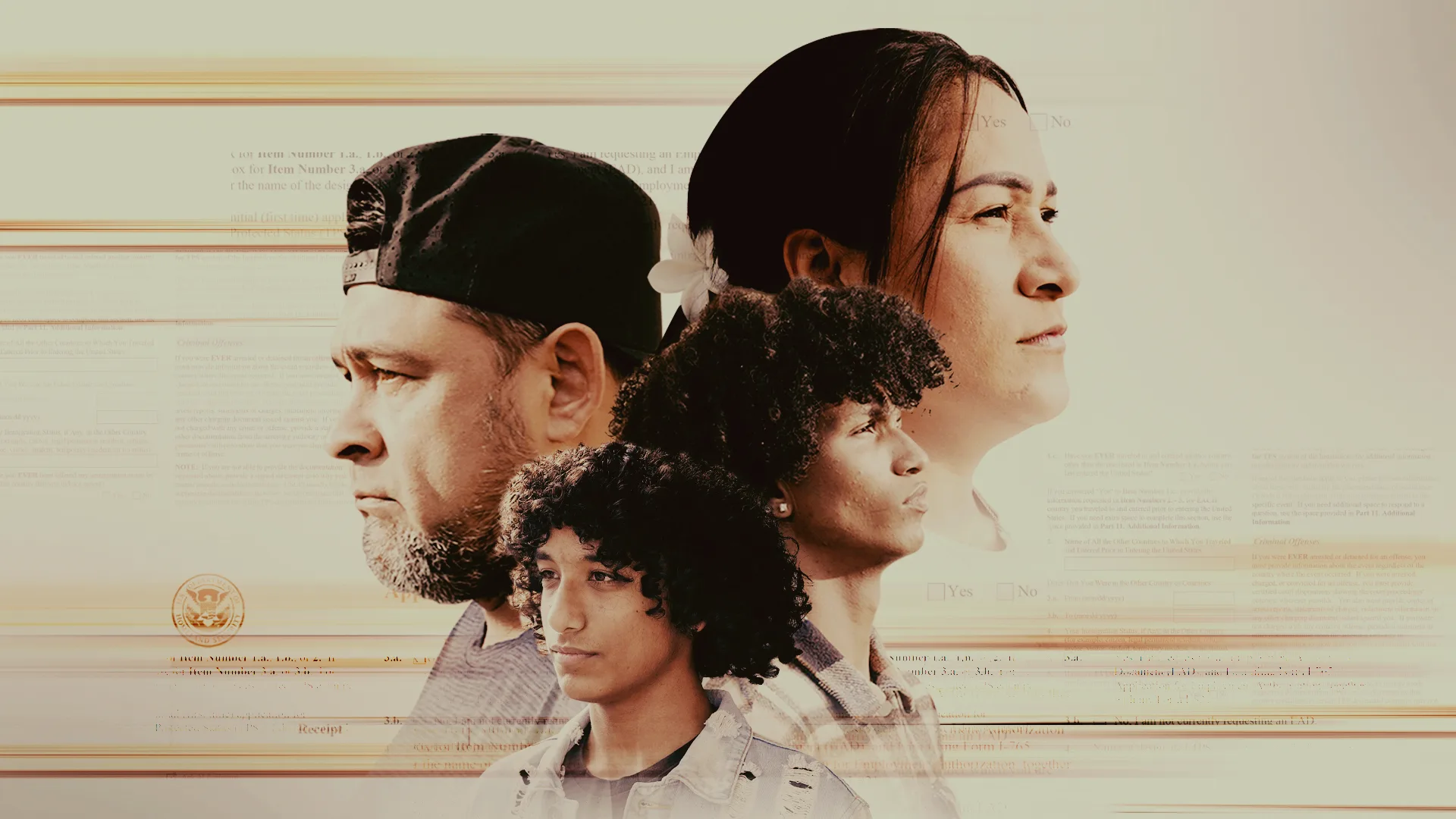
Drawing on interviews with former government officials, Chávez associates and ordinary Venezuelans, the 90-minute documentary investigated the on-the-ground realities of Chávez’s policies, his handling of dissent and who he was as a leader.
“Which one of all the Chávezes we know is most authentic? I don’t have an answer,” Barrera said in the film. “It’s becoming harder to say because Chávez is a myth in progress.”
Chávez died of cancer at age 58 in 2013, five years after the documentary was released.
Taking the reins, and vowing to carry on his revolution, was his vice president and hand-picked successor: Nicolás Maduro.
Explore FRONTLINE's Recent Reporting on Venezuela
Senior Digital Writer, FRONTLINE
Related Documentaries

Latest Documentaries

Related Stories
The Hugo Chávez Show
Related Stories
The Hugo Chávez Show
Explore
Policies
Teacher Center

Jon and Jo Ann Hagler on behalf of the Jon L. Hagler Foundation
Corey David Sauer
Koo and Patricia Yuen
FRONTLINE is a registered trademark of WGBH Educational Foundation. Web Site Copyright ©1995-2025 WGBH Educational Foundation. PBS is a 501(c)(3) not-for-profit organization.
Funding for FRONTLINE is provided through the support of PBS viewers and by the Corporation for Public Broadcasting, with major support from Ford Foundation, and The Fialkow Family Foundation, as part of the Plum Bush Foundation. Additional funding is provided the Abrams Foundation, Park Foundation, John D. and Catherine T. MacArthur Foundation, Heising-Simons Foundation, and the FRONTLINE Trust, with major support from Jon and Jo Ann Hagler on behalf of the Jon L. Hagler Foundation, and Corey David Sauer, and additional support from Koo and Patricia Yuen. FRONTLINE is a registered trademark of WGBH Educational Foundation. Web Site Copyright ©1995-2025 WGBH Educational Foundation. PBS is a 501(c)(3) not-for-profit organization.