Flashback: How the Obama Era Revealed Deep Political Divisions in America
Newly available to stream on YouTube, part one of FRONTLINE’s archival series ‘Divided States of America’ traces the rise of the partisanship and gridlock that continue to define U.S. politics today.
June 3, 2026
Share
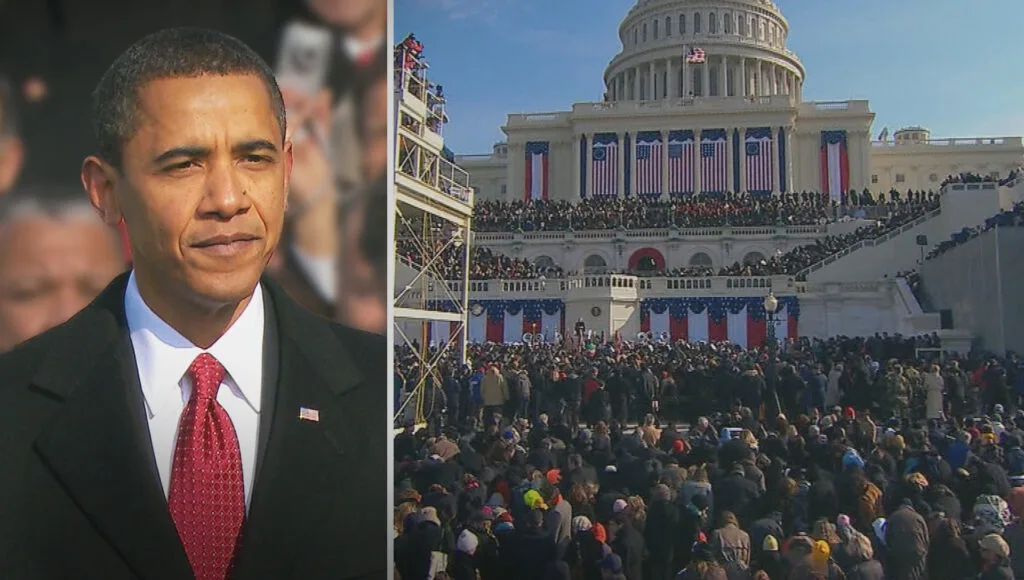
On Jan. 20, 2009, 1.8 million people gathered at the National Mall in Washington, D.C., to witness the historic inauguration of President Barack Obama.
“On this day, we gather because we have chosen hope over fear, unity of purpose over conflict and discord,” Obama said, echoing his campaign-trail message.
Instead, polarization and partisan gridlock would build through the Obama years, as FRONTLINE’s two-part documentary series Divided States of America explored.
From veteran FRONTLINE filmmaker Michael Kirk and his team, the series premiered in January 2017 as Donald Trump prepared to take office. It traced the events during the Obama presidency that revealed the nation’s deep divisions, and examined how they contributed to the ascendency of President Trump.
With conflict and discord continuing to define the American political reality to this day, episode one of Divided States of America is now available to watch on YouTube for the first time. Its release is part of an effort to make FRONTLINE’s documentary archive widely available for streaming, with episode two following next week.
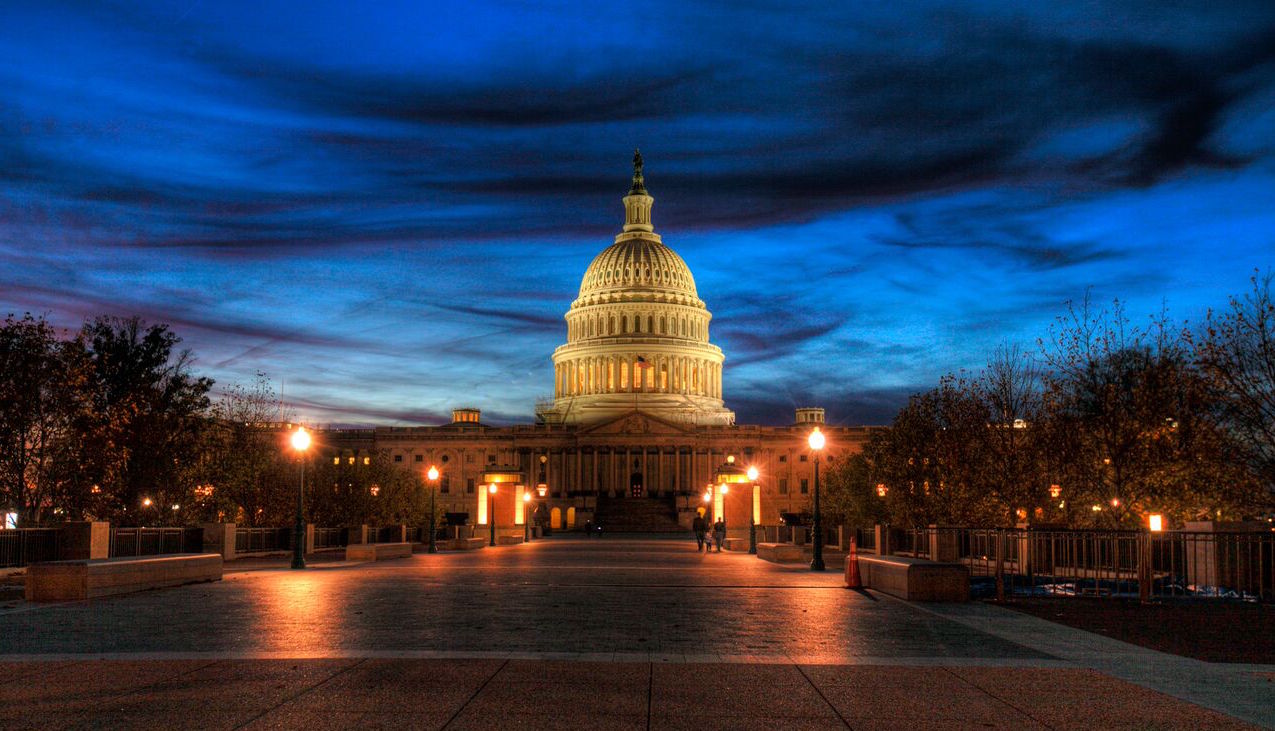
To make the Divided States series, FRONTLINE interviewed key players — a rare collection of congressional leaders on both sides of the aisle, Obama administration officials and critics, political insiders and journalists. Drawing on their voices, the first episode begins by tracing Obama’s historic political ascent from a newly minted senator from Illinois to a presidential candidate promising hope and change. His message of unity resonated and was a defining moment in the country’s racial history, as Obama became the first Black president.
“It’s hard to overstate not only American pride, which was extraordinary, but Black pride, that unapologetically looked upon this man and this figure as the fulfillment of so many dreams and aspirations,” author Michael Eric Dyson said in the film.
But from the start, Obama faced a determined political opposition from a defeated GOP. It became evident with his first major challenge: tackling the Great Recession. Outgoing President George W. Bush had enacted a bank bailout months prior. The economic crisis continued as Obama took office.
“Seven hundred thousand Americans were losing jobs every month. The housing market was in total collapse. Financial sector was imploding. The auto industry was about to go under. Deficits were exploding,” said Obama advisor Phil Schiliro.
Obama tried to get Congressional Republicans to sign on to a compromise economic stimulus plan.
“Their leadership told the members, ‘We’re not for any of it. No matter what it is, no, just say no,’” Nancy Pelosi (D-CA), the then-speaker of the House, told FRONTLINE.
Unable to win them over, Obama and Democrats in the House passed the stimulus bill without a single GOP vote. This sent an early message to the Republicans, former Rep. Eric Cantor (R-VA) told FRONTLINE.
“So I think from that point forward, we saw a very downward tilt towards the possibility of bipartisanship,” he said. “And that was very odd. That was very early on.”
President Obama had been in office only a week, but the polarization was already tangible, former Sen. Tom Daschle (D-SD) said in the documentary: “It was palpable. It was, very, very real. It was just the beginning.”
The film goes on to show how that polarization grew, stoked by anger at Wall Street and the ongoing government bailout, rising racial tensions and racist imagery and language about Obama, and opposition led by the insurgent Tea Party movement to the president’s signature health care reform effort — which Obama pushed through on a party-line vote.
“The Affordable Care Act became sort of a turning point for the Tea Party movement, where they were just upset now with both parties, and they wanted to come to Washington and change everything that was happening in Washington, D.C,” then-Rep. Raúl Labrador (R-ID) told FRONTLINE in the documentary.
The Tea-Party aligned Labrador was among the 87 new Republican House members elected in the 2010 midterms, amid a wave of popular backlash against the Affordable Care Act, dubbed Obamacare.
“When any of the other major programs were passed, signed into law, they were ultimately done with both Democrat and Republican votes,” then-Rep. Cathy McMorris Rodgers (R-WA) said in the film. “It’s very telling that not a single Republican in the House or the Senate ultimately voted for the health care bill.”
“It’s clearly one of the most critical moments in the Obama presidency, because it says we’re now solidifying and accelerating this polarization, this division between the parties,” journalist Peter Baker said of the 2010 midterms in the film. “We’re now throwing out this idea that Washington should be about finding bipartisan compromises, and instead it should be about fighting for principle until the last breath.”
Watch the Documentary
Divided States of America, Part 1
FRONTLINE investigates the partisanship of the Obama era, and the polarized America that Donald Trump inherits as president

Tow Journalism Fellow, FRONTLINE/Newmark Journalism School Fellowship, FRONTLINE
Email:
leo_miranda@wgbh.orgSupport provided by:
Learn More
Related Documentaries

Latest Documentaries


Related Stories
Divided States of America
Related Stories
Divided States of America
Explore
Policies
Teacher Center

Jon and Jo Ann Hagler on behalf of the Jon L. Hagler Foundation
Corey David Sauer
Koo and Patricia Yuen
FRONTLINE is a registered trademark of WGBH Educational Foundation. Web Site Copyright ©1995-2025 WGBH Educational Foundation. PBS is a 501(c)(3) not-for-profit organization.
Funding for FRONTLINE is provided through the support of PBS viewers and by the Corporation for Public Broadcasting, with major support from Ford Foundation, and Fialkow Family Foundation. Additional funding is provided the Abrams Foundation, John D. and Catherine T. MacArthur Foundation, Park Foundation, Heising-Simons Foundation, and the FRONTLINE Trust, with major support from Jon and Jo Ann Hagler on behalf of the Jon L. Hagler Foundation, and Corey David Sauer, and additional support from Koo and Patricia Yuen. FRONTLINE is a registered trademark of WGBH Educational Foundation. Web Site Copyright ©1995-2026 WGBH Educational Foundation. PBS is a 501(c)(3) not-for-profit organization.