The President vs. the Fed
May 12, 2026
54m
FRONTLINE examines President Donald Trump’s unprecedented attempts to assert control over the most powerful institution in the U.S. economy: the Federal Reserve
The President vs. the Fed
May 12, 2026
54m
Share
FRONTLINE examines President Donald Trump’s unprecedented attempts to assert control over the most powerful institution in the U.S. economy: the Federal Reserve.
From filmmakers James Jacoby and Anya Bourg (The Age of Easy Money, The Power of the Fed), The President vs. the Fed illuminates the roots and stakes of Trump’s battle with Powell over the independence of the country’s central bank and its policy decisions as it steers the economy through an increasingly precarious moment.
Directed by
Produced by
Written by
Correspondent
Transcript
Credits
Journalistic Standards
Support provided by:
Learn More
More Documentaries by James Jacoby

Most Watched

The FRONTLINE Newsletter
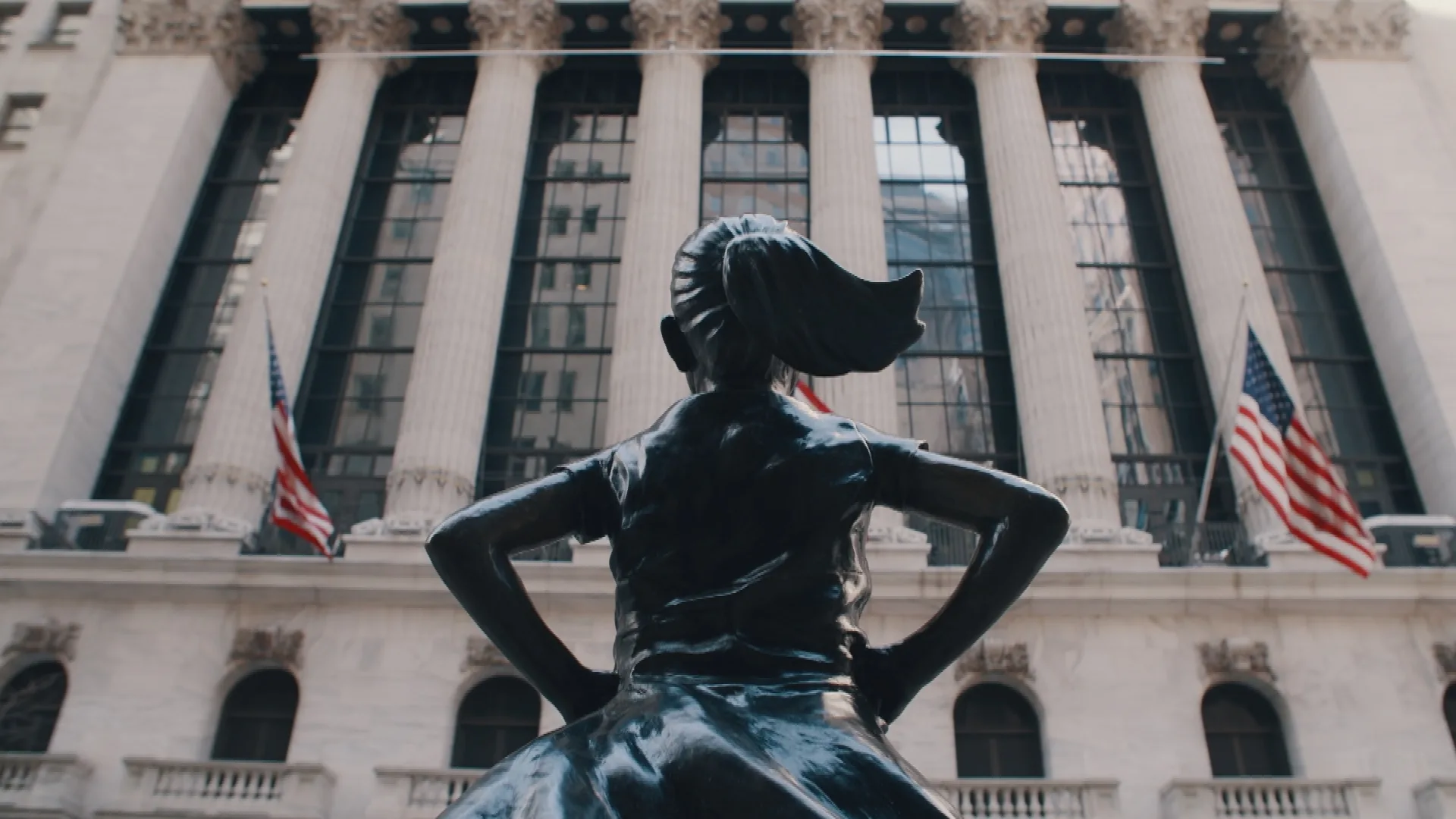
Age of Easy Money
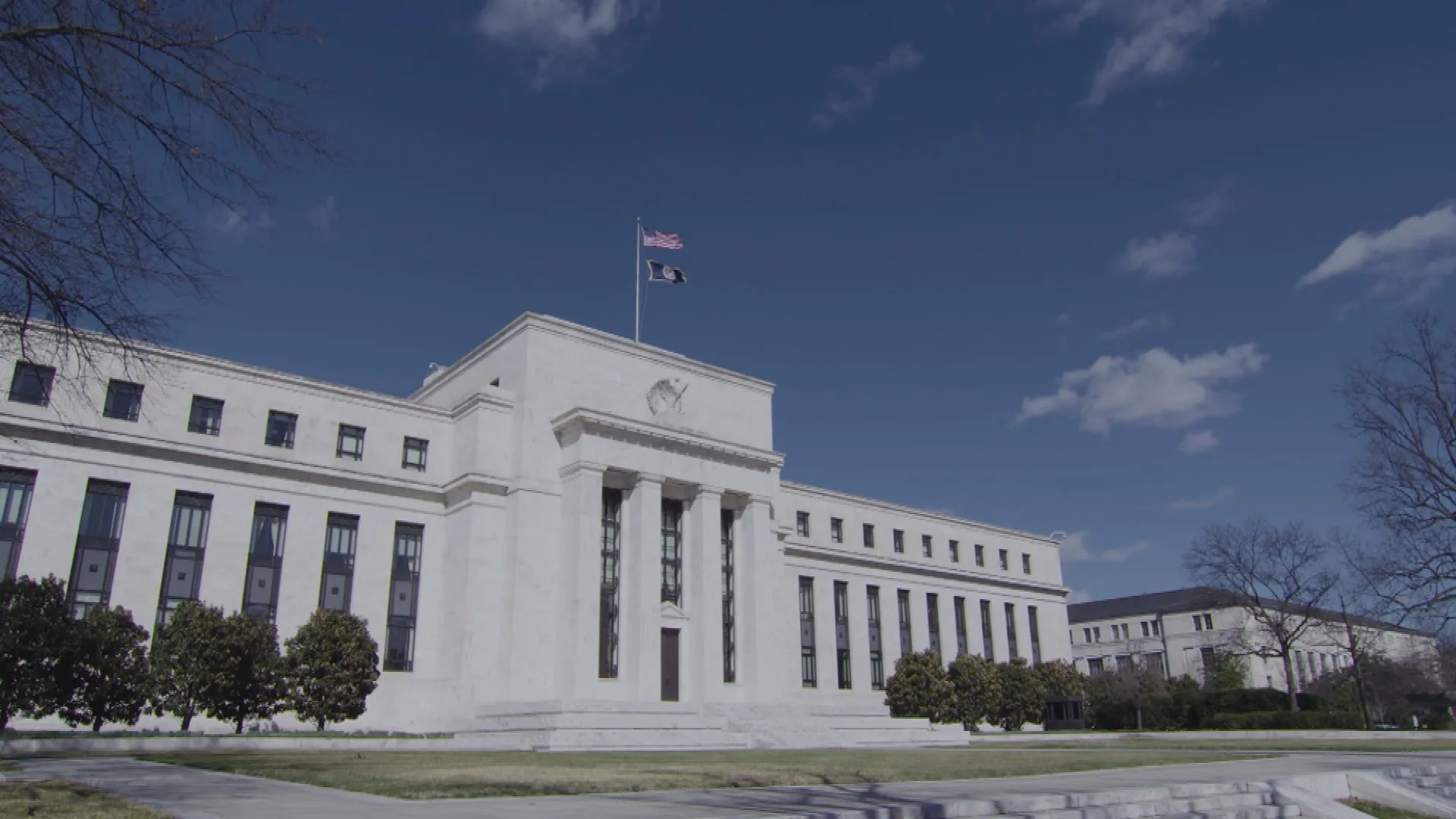
The Power of the Fed
Related Stories
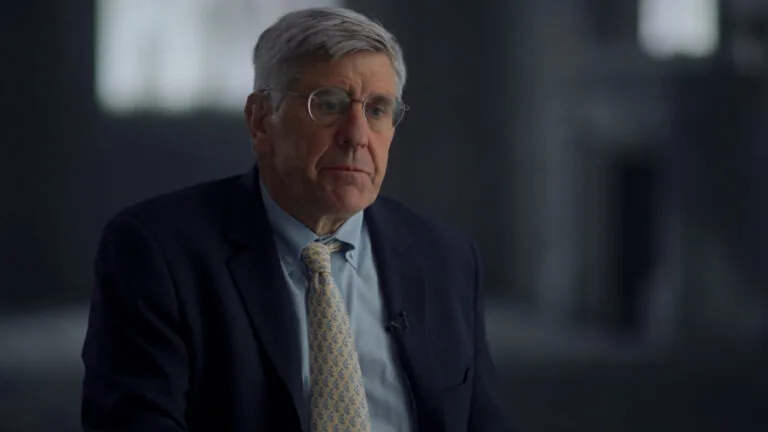
Economist Stephen Moore’s Supply-Side Critique of the Fed
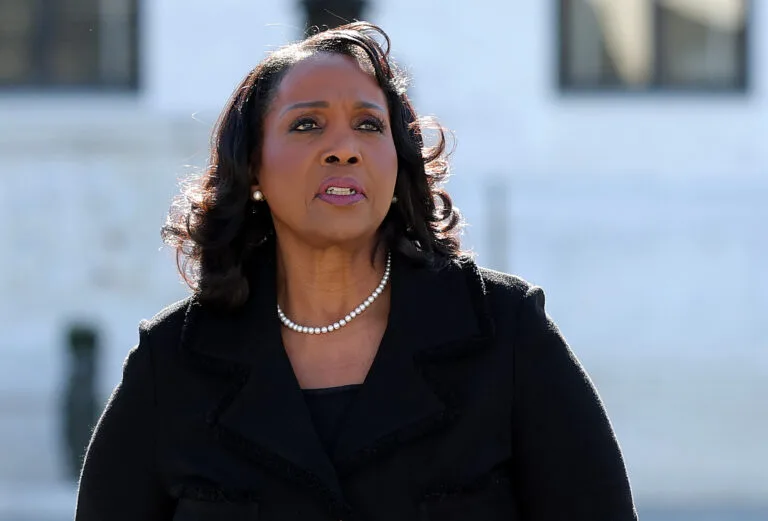
How Federal Reserve Governor Lisa Cook Became a Trump Target
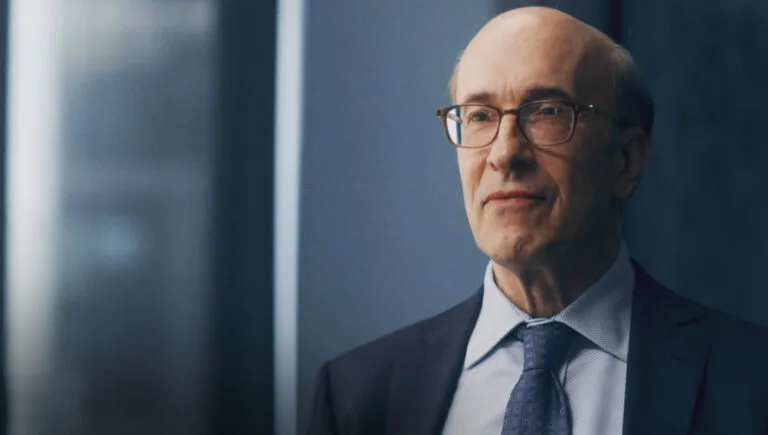
Economist Kenneth Rogoff on the Threat to the Federal Reserve
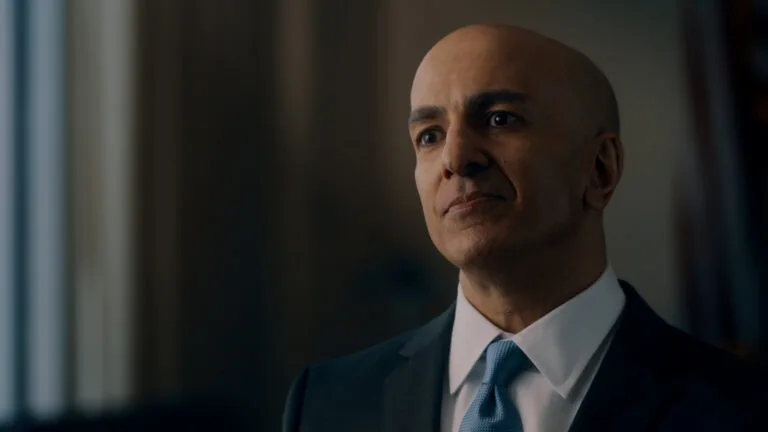
Minneapolis Fed President Neel Kashkari on the Importance of Fed Independence
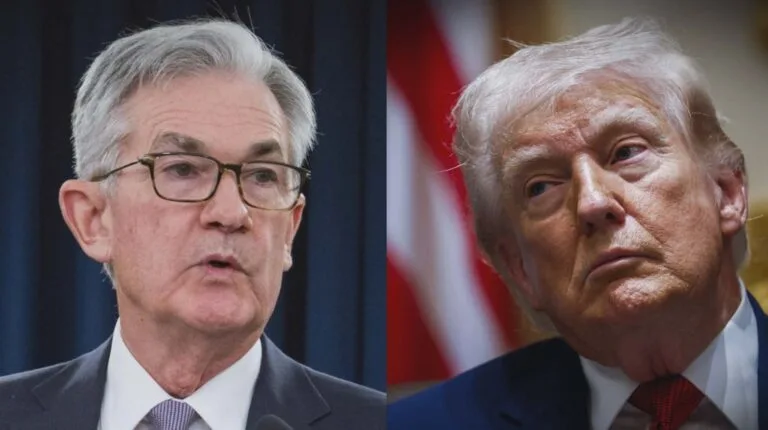
Where to Watch FRONTLINE’s Documentary on Trump’s Fight With the Federal Reserve
Inside the Trump Administration’s Unprecedented Pressure Campaign on the Fed
Age of Easy Money
The Power of the Fed
Related Stories
Economist Stephen Moore’s Supply-Side Critique of the Fed
How Federal Reserve Governor Lisa Cook Became a Trump Target
Economist Kenneth Rogoff on the Threat to the Federal Reserve
Minneapolis Fed President Neel Kashkari on the Importance of Fed Independence
Where to Watch FRONTLINE’s Documentary on Trump’s Fight With the Federal Reserve
Inside the Trump Administration’s Unprecedented Pressure Campaign on the Fed
Age of Easy Money
The Power of the Fed
MALE NEWSREADER:
Jerome Powell’s term as Fed chairman is set to expire.
FEMALE NEWSREADER:
A significant day for the central bank as it transitions to new leadership.
NARRATOR:
Correspondent James Jacoby traces the battle between Donald Trump and the central bank.
PRESIDENT DONALD TRUMP:
If I want him out, he’ll be out of there real fast. Believe me.
JAMES JACOBY, Correspondent:
You think that this is all part of an effort by the president and this administration to get his hands on this powerful economic lever?
NEEL KASHKARI, Pres. & CEO, Fed. Reserve Bank of Minneapolis:
I think he’s been very clear about that.
COLBY SMITH, The New York Times:
In a lot of ways, this is a consequential power struggle. I mean, these are two of the most influential policymakers in the world.
CHRISTOPHER LEONARD, Author, The Lords of Easy Money:
Economically, this is the most important fight of the second Trump administration.
JEROME POWELL, Chairman, Federal Reserve:
Public service sometimes requires standing firm in the face of threats.
ANDREW ROSS SORKIN, Co-anchor, CNBC’s Squawk Box:
That’s when you knew the fight was on. I mean, the real fight was on.
JUDY SHELTON, Senior fellow, Independent Institute:
This agency feels it is not under any obligation to be accountable.
KATHRYN JUDGE, Prof., Columbia Law School:
It’s not just a struggle between President Trump and Chair Powell. It’s a struggle over the future design of the federal government.
NARRATOR:
Now on FRONTLINE: The President vs. the Fed.
FEMALE NEWSREADER:
President Donald Trump at odds for months with Federal Reserve Chairman Jerome Powell, who revealed on Sunday he’s under criminal investigation by Trump’s Justice Department.
COLBY SMITH, The New York Times:
It’s Sunday night, and all of a sudden, there’s a video posted on the Fed’s website with a message from Powell.
JEROME POWELL, Chairman, Federal Reserve:
Good evening. On Friday, the Department of Justice served the Federal Reserve with grand jury subpoenas, threatening a criminal indictment relating to my testimony before the Senate Banking Committee last June.
MOHAMED A. EL-ERIAN, Chief economic adviser, Allianz:
That video, I remember exactly where I was when I saw it. I remember wanting to see it a second time, because I couldn’t quite believe what I was seeing.
COLBY SMITH:
I don’t think that there was anything more explosive that the administration could do beyond threatening criminal proceedings against a sitting Fed chair.
JEROME POWELL:
I have deep respect for the rule of law and for accountability in our democracy. No one, certainly not the chair of the Federal Reserve, is above the law. But this unprecedented action should be seen in the broader context of the administration’s threats and ongoing pressure.
NEEL KASHKARI, Pres. & CEO, Fed. Reserve Bank of Minneapolis:
I mean, in the 113-year history of the Fed, nothing like this has ever happened before. And it’s implying that the Fed, that the chairman, has broken the law. It’s not simply a question of making a bad policy choice or whatnot, or things not going exactly according to plan. It’s an implication that he did something criminally wrong.
JEROME POWELL:
The threat of criminal charges is a consequence of the Federal Reserve setting interest rates based on our best assessment of what will serve the public, rather than following the preferences of the president.
NEEL KASHKARI:
It just was clear that this was a pretext. “We don’t like your monetary policy decisions, so we’re going to change the people making the decisions.”
PRESIDENT DONALD TRUMP:
I would say the Fed really owes it to the American people to get interest rates down. That’s the only thing he’s good for.
JAMES JACOBY, Correspondent:
It was the ultimate escalation in a long-running clash between Donald Trump and the chair of the Federal Reserve.
DONALD TRUMP:
He’s a terrible Federal Reserve chairman.
He’s a fool. He’s a stupid man.
I’ll be honest, I’d love to fire his ass. He should be fired. The guy’s grossly incompetent.
JAMES JACOBY:
An unprecedented attempt to assert control over the most powerful institution in the U.S. economy.
ANDREW ROSS SORKIN, Co-anchor, CNBC’s Squawk Box:
Perhaps more than the president of the United States, the Federal Reserve has a shocking amount of power over the U.S. economy and therefore the global economy. They control the switch of what interest rates are ultimately going to be in America.
JAMES JACOBY:
As Jerome Powell’s tenure as head of the Federal Reserve has been coming to a tumultuous end, we’ve been talking to former and current Fed officials, economists—
KENNETH ROGOFF, Chair, International Economics, Harvard Univ.:
When you undermine faith in our central bank, the pain comes much faster.
JAMES JACOBY:
—titans of finance—
MOHAMED A. EL-ERIAN:
This Fed became harder and harder to defend.
JAMES JACOBY:
—legal experts—
Were you worried about a general power grab here?
KATHRYN JUDGE, Prof., Columbia Law School:
We were seeing a power grab.
JAMES JACOBY:
—as well as some of the president’s staunchest defenders—
JUDY SHELTON, Senior fellow, Independent Institute:
If Trump behaves like a king, Chair Powell behaves like an emperor.
JAMES JACOBY:
—to trace the roots of the battle and understand the stakes.
CHRISTOPHER LEONARD, Author, The Lords of Easy Money:
When you look at Trump’s economic agenda, this fight is actually the most consequential of his presidency. I think he knows that his economic and political success is dependent on what the Fed does. And so this attack for him is almost existential.
MALE NEWSREADER:
Any moment now the president is going to announce his pick to lead the Federal Reserve. It is a position that is considered by some to be the second most-important job in the country.
MALE ANNOUNCER:
Ladies and gentlemen, the president of the United States and Governor Jerome Powell of the Federal Reserve Board.
JAMES JACOBY:
President Trump and Jerome Powell weren’t always at odds. Trump appointed Powell to lead the Federal Reserve in late 2017.
DONALD TRUMP:
It is my pleasure and my honor to announce my nomination of Jerome Powell to be the next chairman of the Federal Reserve. Congratulations, Jay.
COLBY SMITH:
They had a good relationship to start out with. When Powell is being announced as the Fed chair pick, Trump has only good things to say about him.
DONALD TRUMP:
He’s strong, he’s committed, he’s smart. … Jay will put his considerable talents and experience to work leading our nation’s independent central bank.
ANDREW ROSS SORKIN:
Jerome Powell, to some degree, was right out of central casting when it comes to a Wall Street-meets-Washington bureaucrat, if you will. He had worked in private equity for a period of time at the Carlyle Group. He had worked at the Treasury Department under Bush, and he had been a Fed governor for many years before this, and I think was a card-carrying Republican at the time.
JEROME POWELL:
I’m committed to making decisions with objectivity, based on the best available evidence … in the long-standing tradition of monetary policy independence.
MALE NEWSREADER:
The Federal Reserve is going to keep ratcheting up short interest rates, and that is pushing down long rates. So the market is telling you they don’t have any fear of inflation.
JAMES JACOBY:
Powell would take the helm of an institution responsible for keeping inflation in check and unemployment low, using its power to raise and lower short-term interest rates.
CHRISTOPHER LEONARD:
The Fed’s Open Market Committee that sets interest rates is the most powerful economic body in the United States, full stop. I mean, it is the bedrock of the entire financial system and the entire economy.
Think of the U.S. economy as like a nuclear reactor, OK? It’s humming along, it’s producing energy. The Federal Reserve are like the engineers in the control room controlling that reactor. They’re determining how hot it gets or how cool it gets.
MALE NEWSREADER:
The Fed is likely to announce interest rate hikes today.
CHRISTOPHER LEONARD:
So when they make these decisions on interest rates, they’re literally managing the temperature of the economy.
JAMES JACOBY:
At the time Powell took over, the economy had been heating up after a long slump, creating a risk of inflation if interest rates stayed too low.
The Fed had already been raising interest rates, and at his first meeting as chair, Powell moved to raise them even more.
JEROME POWELL:
We decided today to raise the target rate for the federal funds rate by 1/4 percentage point, bringing it to 1 1/2 to 1 3/4 percent.
The rate hikes would soon upset Wall Street.
FEMALE NEWSREADER:
The U.S. markets started the day lower and the losses only got worse. The third-worst [inaudible] drop in history.
MOHAMED A. EL-ERIAN:
Markets love lower interest rates. And if you offer the markets two possibilities, higher rates or lower rates, they will go for lower rates.
FEMALE NEWSREADER:
Analysts say investors are worried about rising interest rates.
MOHAMED A. EL-ERIAN:
Markets are like little kids. They want candy, and the minute you try to take the candy away, they have a tantrum.
FEMALE NEWSREADER:
The Dow Jones plunged more than 800 points Wednesday, its worst drop—
CHRISTOPHER LEONARD:
In the White House, falling stock market every night on CNBC looks like bad news.
MALE NEWSREADER:
The decline will accelerate if Jay Powell doesn’t walk things back.
CHRISTOPHER LEONARD:
And Trump interpreted it as really bad news, and that’s when the antagonism started.
DONALD TRUMP:
I think the Fed has gone crazy. … I really disagree with what the Fed is doing.
I think the Fed is out of control. I think what they’re doing is wrong.
My biggest threat is the Fed, because the Fed is raising rates too fast.
JAMES JACOBY:
What were these attacks like from your vantage point inside the Fed?
LAEL BRAINARD, Fed. Reserve Board of Governors, 2014-23:
So within the Fed, I think we were initially shocked.
JAMES JACOBY:
Lael Brainard was on the Fed’s board of governors at the time.
LAEL BRAINARD:
Rates were extremely low and the Fed slowly started raising them to more normal levels. We inside the Federal Reserve completely understood why the president might be frustrated and might even articulate that, but I think it was surprising just how vocal he was about it.
DONALD TRUMP:
That’s a great crowd of people.
JAMES JACOBY:
Even though markets recovered, Trump was still upset.
DONALD TRUMP:
We’re going to be breaking records. If we had a Fed that would lower interest rates, we’d be like a rocket ship. … But we don’t have a Fed that knows what they’re doing, so it’s one of those little things.
JAMES JACOBY:
He started pointing the blame directly at Powell, complaining that the Fed’s rate hikes were undermining his efforts to grow the economy with deregulation and massive tax cuts.
STEPHEN MOORE:
I would go and see him. He would say things like, “I made a big mistake with Jerome Powell.” And I would say, “Yes, sir, I think you probably did.”
JAMES JACOBY:
Stephen Moore was an economic adviser to the president.
STEPHEN MOORE:
We were really ready for a boom. We had passed the tax cut, everything was looking good. And then there was a big market sell-off, a big sell-off. And Trump was very frustrated with Jerome Powell at that point.
JAMES JACOBY:
Because the market sell-off, because the markets reacted to these Fed—
STEPHEN MOORE:
And he thought he was slowing the economic growth that the economy was capable of. Trump is an old real estate guy, so real estate people like low interest rates. And so Trump was always harping on the fact that he believed that the Fed was restraining economic growth by holding interest rates too high.
JAMES JACOBY:
And you share that view?
STEPHEN MOORE:
At that time, yes, I think he was right.
JAMES JACOBY:
How do you respond to those that would say that the Fed was undermining the president’s agenda?
LAEL BRAINARD:
I think there is no evidence for that. President Trump likes to point to that period as a period of great growth, extremely low unemployment and inflation that was low and stable. So it was a really good period. He likes to tout how great that period was. It’s hard to see why there would be a view that the Fed was somehow undermining that when that was the result.
MALE NEWSREADER:
The Federal Reserve cutting rates for the first time since 2008 today.
JAMES JACOBY:
In 2019, as Trump was waging a trade war against China, the Fed would start to lower rates to cushion the economy.
JEROME POWELL:
We decided today to lower the target for the federal funds rate by a quarter of a percentage point.
JAMES JACOBY:
But Trump still complained they weren’t moving fast enough.
CHRISTOPHER LEONARD:
And that’s when you saw Trump for the first time really start to attack Jay Powell directly.
MOHAMED A. EL-ERIAN:
It was very, very unusual. I cannot tell you how unusual this was to have such a public attack on the Fed chair.
MALE NEWSREADER:
Fed rate too high, they are their own worst enemies. They don’t have a clue. Pathetic.
CHRISTOPHER LEONARD:
He’s pressuring Powell constantly on Twitter to cut rates. He calls Jay Powell and the Fed governors a group of “boneheads.” He questions whether Jay Powell is a bigger enemy of the United States than Chairman Xi in China.
JAMES JACOBY:
I’d have to imagine that lands pretty heavily inside the Fed when the president is posing such a question.
LAEL BRAINARD:
That’s just a shocking statement. I think we can just leave it at that.
The role of central banks is to do unpopular things that elected politicians really can’t do. When the economy is going great and businesses are hiring and interest rates are low, that feels good to everybody. But everybody also hates high prices and they hate inflation. And it’s really the role of the Federal Reserve to start to slow the economy down when inflation’s getting too high. But if you’re an elected politician, you want that party to keep going on until you get reelected.
MALE NEWSREEL NARRATOR:
To help keep the American economy healthy is the primary function of the Federal Reserve system.
JAMES JACOBY:
That’s why Congress designed the Fed to be insulated from political interference: so it would be free to act in the long-term interest of the economy.
MOHAMED A. EL-ERIAN:
Fed independence is crucial to economic well-being. Why? Because political interference will mean that the Fed will be reacting to the short-term political calendar and not the longer-term economic issues.
PRESIDENT RICHARD NIXON:
The Federal Reserve Board plays a very great role in determining whether that inflation will be checked and how it will be checked.
JAMES JACOBY:
Until Trump, no president had tried to pressure a Fed chair as hard as Richard Nixon in the 1970s.
RICHARD NIXON:
You see, Dr. Burns, that’s a standing vote of appreciation in advance for lower interest rates and more money. [Laughter]
KATHRYN JUDGE:
The president was worried about reelection and brought significant pressure to bear on Federal Reserve Chair Arthur Burns to have lower rates in the period before the election to really just juice the economy, recognizing that people are more likely to vote for the sitting president when the economy feels like it’s doing well.
RICHARD NIXON:
The time has come for decisive action—action that will break the vicious circle of spiraling prices and costs.
KENNETH ROGOFF:
And he told Arthur Burns, he said, “I want low interest rates. Do whatever it takes.”
FEMALE OPERATOR [on phone]:
Dr. Burns?
RICHARD NIXON [on phone]:
Yeah.
ARTHUR BURNS [on phone]:
Yes, how are you doing?
RICHARD NIXON [on phone]:
Oh, Arthur, how are you?
ARTHUR BURNS [on phone]:
I’m having a meeting of my Open Market Committee on Tuesday.
RICHARD NIXON [on phone]:
Just kick ’em in the rump a little. [Laughs] OK?
KENNETH ROGOFF:
So Burns did. Burns relented.
MALE NEWSREADER:
Good evening. The economic news tonight contains few bright spots.
KATHRYN JUDGE:
What we saw is greater rates of inflation.
FEMALE SHOPPER:
The prices have gone completely way, way up.
KATHRYN JUDGE:
And once inflation got underway, it really ramped up in a way that was very harmful.
MALE NEWSREADER:
Inflation has cost us dearly in the last year.
MALE NEWSREADER:
High inflation.
MALE NEWSREADER:
Inflation.
MALE NEWSREADER:
Inflation is such a very grave danger to our economy.
MALE NEWSREADER:
Food, a 42% jump. Gas up 100%.
MALE CONSUMER:
I think this inflation’s really covering up a recession or depression.
KATHRYN JUDGE:
Not only did we end up with higher inflation, but there was also a high rate of unemployment.
MALE NEWSREADER:
Seven in the morning, and already outside the Miami food stamp office, a long line of people.
KATHRYN JUDGE:
And so it’s a period of very significant economic pain, far beyond anything that we have seen in recent years.
JAMES JACOBY:
But unlike Fed Chair Burns, Jerome Powell stood firm.
MALE REPORTER:
Do you still want to demote Jay Powell? Are you interested in that at the Fed? At the Federal Reserve?
DONALD TRUMP:
Well, let’s see what he does.
JAMES JACOBY:
By 2019, there’d been reports that Trump was considering firing him, something no president had done before.
LEV MENAND, Economist, Fed. Reserve Bank of NY, 2016-17:
Going into this administration, no president had attempted to explore that bound.
JAMES JACOBY:
Lev Menand used to work at the New York Fed and is an expert in the laws that give the Fed its independence.
What legally can the president do? What would it take for a president to be able to fire a Fed chairman?
LEV MENAND:
So the Federal Reserve Board is what we call an independent agency. The chair of the Federal Reserve can only be removed by the president prior to the completion of his or her term “for cause.” That’s the language in the statute. “For cause.” Whereas the secretary of the Treasury can be removed by the president at any time at the president’s pleasure.
JAMES JACOBY:
And cause can’t be a policy disagreement.
LEV MENAND:
Cause can’t be a policy disagreement, that’s right. The whole purpose of this language is to prevent presidents from removing officers for policy reasons and in fact to create policy independence. That is the goal. The goal is to enable the head of the Federal Reserve to pursue a policy path at odds with the White House. That’s why Congress built it this way.
DONALD TRUMP:
Look what happened. Is this crazy?
JAMES JACOBY:
By the time Trump was reelected in 2024, one of the pressing questions was what he would do about Powell, who’d been reappointed by President Biden and still had a year and half left in his term.
Trump was asked about it on “Meet the Press.”
KRISTEN WELKER:
The chairman of the Federal Reserve, Jerome Powell, said he will not leave his post even if you ask him to. Will you try to replace Jerome Powell?
PRESIDENT-ELECT DONALD TRUMP:
No, I don’t think so. I don’t see it. But, I don’t—I think if I told him to, he would. But if I asked him to, he probably wouldn’t. But if I told him to, he would.
KRISTEN WELKER:
You don’t have plans to do that right now?
DONALD TRUMP:
No, I don’t.
VICTORIA GUIDA:
Hi. Victoria Guida, with Politico. Some of the president-elect’s advisers have suggested that you should resign. If he asked you to leave, would you go?
JEROME POWELL:
No.
VICTORIA GUIDA:
Can you follow up on—Is it—Do you think that legally you’re not required to leave?
JEROME POWELL:
No.
JAMES JACOBY:
Trump began his second term with a big agenda.
CHRISTOPHER LEONARD:
He’s proposing the most extreme tariffs this country has seen in decades, an enormous immigration crackdown and an enormous tax cut.
JAMES JACOBY:
And from the start he made it clear what he wanted from the Fed.
FEMALE NEWSREADER:
The World Economic Forum kicking off at Davos this week.
PRESIDENT DONALD TRUMP:
Hello to everyone in beautiful Davos.
JAMES JACOBY:
Three days into his term, he gave a video address at the influential World Economic Forum in Davos, Switzerland.
COLBY SMITH:
Davos was this moment where I think you really realized how Trump was going to play it in his second term with the Fed.
DONALD TRUMP:
I’ll demand that interest rates drop immediately, and likewise they should be dropping all over the world. Interest rates should follow us.
COLBY SMITH:
He’s not suggesting this is the right thing to do for the economy. He’s demanding it.
FEMALE REPORTER:
What did you make of that?
MALE DAVOS ATTENDEE:
Wow. [Laughs]
FEMALE NEWSREADER:
He wants to influence interest rates at home and in other countries. I wonder how that’s going to go over.
NEEL KASHKARI:
You know, we’ve been used to politicians weighing in on monetary policy forever. I think that that’s been true for as long as the central bank has been around.
JAMES JACOBY:
Neel Kashkari is the only current Fed official who agreed to speak to us.
Three days into Trump’s presidency, he was speaking to the Davos crowd and basically saying that he was going to demand that the Fed immediately lower rates. How does that land inside the Fed?
NEEL KASHKARI:
I mean, it doesn’t really. We hear it. Of course, we pay attention to the news. But the louder the noise gets, the more we hug our mast, which is, “These are the goals that Congress has assigned us.” Focus on doing our jobs. That’s the best way through political—a noisy environment.
JEROME POWELL:
Good afternoon.
JAMES JACOBY:
Six days after the speech at Davos, Powell made it clear the Fed was not going to heed the president’s demands.
JEROME POWELL:
I think where the committee is very much in the mode of waiting to see what policies are enacted.
COLBY SMITH:
That instantly, I think, also showed where the Fed was going to be in this kind of battle with Trump. They were not going to be cowed to the president’s demands to lower interest rates, and they were going to set policy based on their best assessment of the economy.
STEVE LIESMAN, CNBC:
Mr. Chairman, at an event in Davos—or from—to Davos, anyway, the president said he’ll demand that interest rates drop immediately.
JEROME POWELL:
I’m not going to have—I’m not going to have any response or comment whatsoever on what the president said. It’s not appropriate for me to do so.
STEVE LIESMAN:
Can you just comment on whether he’s physically communicated this demand to you?
JEROME POWELL:
I’ve had no contact. Thank you.
JAMES JACOBY:
The pressure wasn’t just coming from the president. Inflation was still high and had been for four years running. And the Fed was still singed by how it had responded to rampant inflation years earlier, stemming from the pandemic and government spending under President Biden.
FEMALE NEWSREADER:
… as soaring inflation and the effects of the pandemic continue to impact every American.
JAMES JACOBY:
Back then, Powell and his colleagues had believed the inflation was temporary and kept rates low. But by late 2021, it had reached the highest level in decades.
LAEL BRAINARD:
It’s at that juncture that the Federal Reserve took about six months to really turn its policy to a policy of hiking and tightening. And that was probably far too long to make that transition.
JAMES JACOBY:
I mean, given the fact that keeping inflation under control is part of the Fed’s mandate, a major part of the Fed’s mandate, is it fair to say that was a massive mistake?
LAEL BRAINARD:
It was a big mistake. That period of time was valuable in terms of fighting inflation, and with the benefit of hindsight, it was a mistake.
MOHAMED A. EL-ERIAN:
That policy error was massively consequential. It has been particularly consequential for low-income people. Because inflation, it hits the poor particularly hard. It has become a political problem because of affordability.
JAMES JACOBY:
Now, Trump’s sweeping second-term agenda was putting the Fed in another bind.
CHRISTOPHER LEONARD:
Tax cuts; a major decrease in immigration, which raises and puts upward pressure on labor prices; tariffs, which raises the cost of imports. Virtually all of these things create inflationary pressure.
MALE NEWSREADER:
This Wednesday, April 2, President Donald Trump has declared Liberation Day.
JAMES JACOBY:
In early April 2025, the pressure got even more intense.
DONALD TRUMP:
My fellow Americans, this is Liberation Day. Waiting for a long time.
COLBY SMITH:
We all knew that Trump was going to put in tariffs when he returned to the White House. He talked about that throughout the campaign trail. But I don’t think anyone really expected these absolutely massive tariffs on basically all of the country’s trading partners.
JAMES JACOBY:
Trump declared a national emergency over the U.S. trade deficit and imposed steep tariffs on foreign imports.
COLBY SMITH:
There’s this very memorable moment in which he’s sitting there holding up this big poster with all the various tariff rates against all the different countries.
DONALD TRUMP:
You know, you think of European Union, very friendly. They rip us off. It’s so sad to see. It’s so pathetic. Thirty-nine percent. We’re going to charge them 20%, and so we’re charging them essentially half.
COLBY SMITH:
And people in the newsroom, and I think across trading floors, across Wall Street, are trying to see what the numbers are.
DONALD TRUMP:
Vietnam. Great negotiators, great people. They like me, I like them. The problem is they charge us 90%. We’re going to charge them 46% tariff.
CHRISTOPHER LEONARD:
It was the breadth of the tariffs. It was the fact that they applied to the entire planet. And they seem to be extremely arbitrary.
DONALD TRUMP:
If you look at Switzerland, 61% to 31%.
HOWARD MARKS, Co-founder & co-chair, Oaktree Capital Mgt.:
Nobody anticipated the tariffs that were announced on April 2. And so, you know, the market reacted very harshly.
MALE NEWSREADER:
Well, if yesterday was Liberation Day, today was liquidation day.
FEMALE NEWSREADER:
The S&P 500 fell more than 10% in three days. The decline was one of the worst stretches we’ve seen since World War II.
MALE NEWSREADER:
The level of the great financial crisis, the COVID pandemic, and Black Monday. These are some of the worst days in market history.
HOWARD MARKS:
Then they started being suspended.
MALE NEWSREADER:
The president here announcing a 90-day pause on tariffs.
HOWARD MARKS:
Delayed.
SCOTT BESSENT:
Every country in the world that wants to come and negotiate, we are willing to hear you.
HOWARD MARKS:
Increased.
KAROLINE LEAVITT:
The tariff on China will now go up to 125%.
HOWARD MARKS:
Reduced. Increased again. And business has a hard time coping with that.
FEMALE NEWSREADER:
Falling off a cliff, basically. We are down—
FEMALE NEWSREADER:
Panic in the bond market. There was concern—
FEMALE NEWSREADER:
Strategy with no details. All these advisers seem to be talking past each other.
FEMALE NEWSREADER:
Look at his face! [Laughter] Head buried in his hands, literally.
JAMES JACOBY:
When these tariffs were announced, how does that look from the view of the Federal Reserve?
NEEL KASHKARI:
Well, we know that tariffs raise prices, because we’re buying goods from abroad, and if those prices are going to go up, some of that is going to be borne by American consumers. We know that. Question is, how high is that inflation going to get? And then how much does that slow down economic growth?
JAMES JACOBY:
Jerome Powell responded publicly—
JEROME POWELL:
The level of tariff increases announced so far is significantly larger than anticipated, and the same is likely to be true of the economic effects, which will include higher inflation and slower growth.
JAMES JACOBY:
—warning that tariffs risked reigniting inflation and challenging the president’s claim that they would not be paid by American consumers.
JEROME POWELL:
We understand that elevated levels of unemployment or inflation can be damaging and painful for communities, families and businesses.
JAMES JACOBY:
To the president’s allies—like economist Judy Shelton—those were fighting words.
JUDY SHELTON:
Even by talking about tariffs as a signature initiative under President Trump, I thought, here’s Powell, who always says, “I don’t want to get out of my lane, I’ll never comment on fiscal policy, that would be inappropriate.” Now he’s mentioning tariffs and tariff-induced inflation all the time.
JEROME POWELL:
Tariffs are highly likely to generate at least a temporary rise in inflation.
JUDY SHELTON:
He was setting himself up in direct confrontation with a signature policy of the elected administration.
JAMES JACOBY:
Shelton and other conservatives have been critical of the expanding influence of the Fed over the economy and financial markets.
JUDY SHELTON:
I don’t see the Fed as the little guy here in a battle with the president. I see the Fed as inordinately powerful, and dangerously so. The Fed has gotten too big for its britches.
JAMES JACOBY:
With the Fed unwilling to heed his demands, Trump lashed out and threatened to fire Powell.
DONALD TRUMP:
I’m not happy with him. I let him know it. And, oh, if I want him out, he’ll be out of there real fast. Believe me.
MALE NEWSREADER:
We are now learning President Donald Trump has just removed the director of the Office of Government Ethics.
JAMES JACOBY:
The president’s threats to fire Powell came as he was firing officials at other federal agencies.
FEMALE NEWSREADER:
The administration has now fired commissioners from the National Labor Relations Board and the EEOC.
JAMES JACOBY:
But if he wanted to get rid of Powell, Trump was going to need to demonstrate cause, not just his policy frustrations.
MALE NEWSREADER:
Jay Powell back on Capitol Hill today in front of the Senate Finance Committee.
JAMES JACOBY:
That alleged cause would emerge at a routine hearing before Congress in June.
SEN. TIM SCOTT (R-South Carolina,):
Good morning. Thank you all for being here. Thank you, Chair Powell, for joining us today for such an important conversation.
COLBY SMITH:
Twice a year, Chair Powell goes in front of lawmakers on the Hill to talk about the Fed and answer questions about the economy. But at the June hearing, things took a bit of a turn.
TIM SCOTT
During this time of hardship, the Fed has spent billions on lavish renovations to its D.C. offices.
JAMES JACOBY:
Sen. Tim Scott, one of President Trump’s close allies, led the attack.
CHRISTOPHER LEONARD:
Tim Scott starts asking these questions about the renovation of Fed headquarters.
TIM SCOTT
We’re talking about rooftop terraces, custom elevators that open into VIP dining rooms, white marble finishes and even a private art collection.
CHRISTOPHER LEONARD:
The Federal Reserve headquarters was built in the ’30s. It’s almost 100 years old. The Fed had long been pushing this project to overhaul the building.
COLBY SMITH:
It was this massive, sprawling project that was running $700 million over budget. It becomes clear that one of the main lines of questioning for these lawmakers is going to be about these renovations.
SEN. MIKE ROUNDS (R-SD):
Would you take a few minutes please and explain what’s going on with the value of that building and why the costs seem to be so exorbitant?
JEROME POWELL:
I came to understand how badly the Eccles Building really needed a serious renovation. It never had one. It was not really safe.
COLBY SMITH:
I think he bristled at the idea that the Fed was embarking on this absolutely extravagant undertaking.
JEROME POWELL:
There are no special elevators. They’re just—They’re old elevators that have been there. There are no new water features. There’s no beehives and there’s no roof terrace gardens.
JAMES JACOBY:
Later in the hearing, Sen. Scott cranked up the pressure.
TIM SCOTT
Page 129 of the final plans reflect rooftop garden terraces. Page 127 and 129 were where we found the ornate water features in final plans. The new elevators that drop board members off at the VIP dining suite was page 37 of the final plans.
JEROME POWELL:
Some of those are just flatly misleading. The idea of elevators, you know, it’s the same elevator. It’s been there since the building was built. So that’s a mischaracterization. And some of those are no longer in the plans.
KATHRYN JUDGE:
It was not in and of itself inappropriate for Congress to ask the Fed how much it was spending on renovations. That being said, this was coming at a time when there were a lot of reasons to worry about the Federal Reserve’s independence,
TIM SCOTT
I could be wrong, without any question, but I don’t want to be misled. That’s different.
JAMES JACOBY:
Other allies of the president made the case on Fox Business.
BILL PULTE:
I think there needs to be an investigation. I think that maybe he lied to Congress. I think things are going to get a lot worse for Jerome Powell, and it’d just be better off if he resigned.
CHRISTOPHER LEONARD:
So, at this time, we see another Trump administration official get into the fight, and that’s Bill Pulte, who’s the head of a rather obscure financial agency in D.C. called the Federal Housing Finance Agency.
BILL PULTE:
We’re just scratching the surface as to what Chairman Powell’s been up to, and it’s very concerning.
CHRISTOPHER LEONARD:
Bill Pulte is acting like the attack dog here. This guy kind of just comes in off the sidelines and starts heckling on a topic that really has no interaction with his agency.
COLBY SMITH:
And that was the moment where it became quite clear that they were trying to build some kind of case against Powell.
JAMES JACOBY:
Is there any evidence that Powell tried to mislead or did mislead Congress?
COLBY SMITH:
No, there’s no evidence that Powell tried to mislead Congress. And lawmakers on the committee that he spoke to at that hearing have said as much.
JAMES JACOBY:
To Neel Kashkari at the Fed, it was clear what it was all about.
NEEL KASHKARI:
I wasn’t surprised, because there had been so much chatter from different administration officials about trying to find some way to say that he has given them cause for the president to remove him.
JAMES JACOBY:
Do you really think that the line of questioning was sort of a pretext in order to get him out?
NEEL KASHKARI:
Oh, of course. I mean, at this point, having now seen the pattern over and over again, they don’t like our monetary policy. And so how do you change us from focusing on our dual mandate goals, and focusing on data and analysis? You change the people who are doing the work.
FEMALE NEWSREADER:
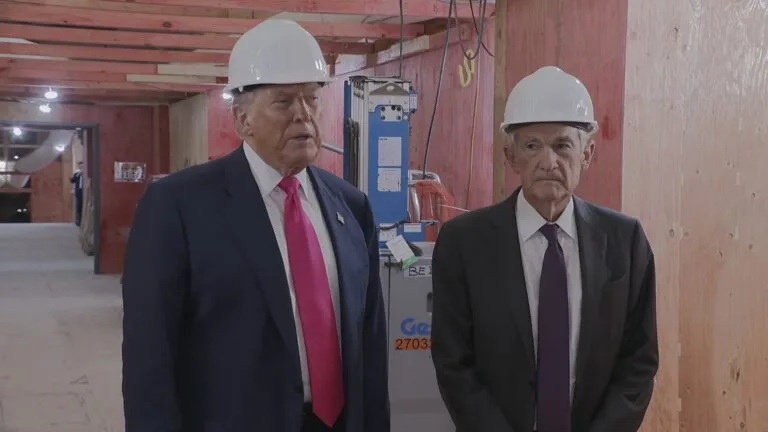
Today, the president has decided to take a tour of the Federal Reserve headquarters.
FEMALE NEWSREADER:
—and it comes as there’s mounting criticism and scrutiny of Fed Chair Powell.
DONALD TRUMP:
Well, thank you very much, everybody. And it feels very good, actually, to be back on a construction site.
JAMES JACOBY:
A month after Powell’s testimony, President Trump made a surprise visit to Fed headquarters.
NEEL KASHKARI:
I watched it live. I happened to have it on in my office when it happened live.
DONALD TRUMP:
I just want to see one thing happen, very simple: Interest rates have to come down.
COLBY SMITH:
And this was like—I don’t even know how to describe it, it was so crazy. [Laughs] This was just such a shocking turn of events. Presidents don’t visit the Fed. That is like not a common thing whatsoever. And so the circumstances were already quite bizarre.
DONALD TRUMP:
—and we’re with the chairman, as you know. Chairman, come on over. And we’re just taking a look at what’s happening…
COLBY SMITH:
This was the first time that we had seen these two in the same camera frame since Trump appointed him as chair all those years ago. And Trump has said a lot of insulting things about Powell. He’s been calling him a ton of personal insults. And here they were kind of going toe-to-toe about the costs of a building.
DONALD TRUMP:
Do you expect any more additional cost overruns?
JEROME POWELL:
Don’t expect them. We’re ready for them.
MOHAMED A. EL-ERIAN:
It was great theater, I must say. And I remember watching Chair Powell’s face.
DONALD TRUMP:
It looks like it’s about $3.1 billion. It went up a little bit—or a lot.
MOHAMED A. EL-ERIAN:
And you had several instances where the president would say something, and Chair Powell would go like this [shakes head “no”].
JEROME POWELL:
I’m not aware of that, Mr. President.
DONALD TRUMP:
Yeah, it just came out.
JEROME POWELL:
Yeah, I haven’t heard that from anybody at the Fed.
DONALD TRUMP:
It just came out.
TIM SCOTT
Our notes had it at about 3.1 as well—3.1, 3.2.
JEROME POWELL:
This came from us?
DONALD TRUMP:
Yes.
MOHAMED A. EL-ERIAN:
I mean, it was things that for me were unthinkable. Even when President Nixon attacked the Fed chair, it was done behind closed doors. But this was a conflict right there. And it was very clear what the president was doing. He was embarrassing Chair Powell.
DONALD TRUMP:
I don’t know who does that.
JEROME POWELL:
You’re including the Martin renovation. You just added in a third building, is what that is. That’s a third building, the William Martin Building.
DONALD TRUMP:
It’s a building that’s being built.
JEROME POWELL:
No, it’s been—It was built five years ago. We finished Martin five years ago.
DONALD TRUMP:
It’s part of the overall work. So, uh—
JEROME POWELL:
It’s not new.
COLBY SMITH:
Trump, whether implicitly or explicitly, was inflating how bad of a problem it was.
I don’t think that we have seen Trump being fact-checked by another member of the broader government. And I think that is what made this interaction just so extraordinary.
FEMALE REPORTER:
As a real estate developer, what would you do with a project manager who would be over budget?
DONALD TRUMP:
Generally speaking, what would I do? I’d fire him.
MALE REPORTER:
Mr. President, are there things the chairman can say to you today that would make you back off some of the earlier criticism?
DONALD TRUMP:
Well, I’d love him to lower interest rates. Other than that, what can I tell you?
JAMES JACOBY:
The president would soon step up the pressure campaign, going after one of the seven officials who sit on the Fed’s board of governors and vote on interest rates.
FEMALE NEWSREADER:
Increasing pressure on the U.S. Federal Reserve ahead of its annual economic symposium.
COLBY SMITH:
Everyone was heading out to Jackson Hole, Wyoming, for the Fed’s annual conference. And as everyone is heading out there, that’s when we see the tweets.
So right as officials are gathering in Jackson Hole, Bill Pulte comes out and says Lisa Cook, one of the governors, has committed mortgage fraud and referred the case to federal prosecutors. And soon after, Trump followed up, also calling for her resignation.
BILL PULTE:
I think it’s a big issue. I don’t think it’s going away. I think she will have to resign, or I think she will be fired.
FEMALE NEWSREADER:
It sounds like the allegation is that she claimed primary residence on two different places at the same time?
BILL PULTE:
That’s correct. You cannot do that in America.
NEEL KASHKARI:
It was so surprising to me. It was so out of left field that somebody is now going to try to dig up something so innocuous and say, “Well, this is now grounds to fire someone.” So it was a shock.
FEMALE NEWSREADER:
The latest person in the president’s crosshairs is Lisa Cook.
NEEL KASHKARI:
I didn’t know if Lisa—Is she going to come to Jackson Hole? Because this has just broken, and it’s surrounded by Fed reporters. And I give her a lot of credit. She came to Jackson Hole. She fully participated. She focused on her job.
I mean, I can’t imagine the individual pressure that she felt. Her picture’s plastered all around the country, and accusations that she’s done something inappropriate are being made.
COLBY SMITH:
Lisa, right off the bat, said that they were unfounded. And she said she was willing to provide all the necessary documentation to show that she did not willfully mislead lenders.
JAMES JACOBY:
President Trump weighed in.
MALE REPORTER:
Are you going to fire Lisa Cook, the Fed governor?
DONALD TRUMP:
Yeah, I’ll fire her if she doesn’t resign. What she did was bad, so I’ll fire her if she doesn’t resign.
JAMES JACOBY:
Then he doubled down on his Truth Social site.
COLBY SMITH:
Trump posts on social media that he’s firing Lisa Cook. This was like an escalation. This was crystallizing the threat and making it real.
FEMALE NEWSREADER:
Cook firing back, saying the president has no authority to fire her and that she will continue to carry out her duties, saying point-blank, “I will not resign.”
JAMES JACOBY:
Cook was never charged with a crime and has remained in her post. She’s submitted evidence to the DOJ to show that any discrepancy on her mortgage application was an inadvertent mistake.
ABBE LOWELL, Defense attorney, Cook v. Trump:
There are prosecutors after this issue came to light who came out and said if this kind of referral for what was alleged against Lisa Cook had been sent to them as a prosecutor, it would have gone into the trash bin.
JAMES JACOBY:
Cook hired Abbe Lowell, one of the most high-profile lawyers in D.C., to represent her.
JAMES JACOBY:
If there is a discrepancy on someone’s mortgage application, an official who has tremendous power and responsibility in this country, isn’t that a legitimate inquiry as to what actually happened here?
ABBE LOWELL:
The short answer to your question is yes. But where is that inquiry? When is it done? What is the opportunity for the person being accused to respond to it? This is a political weaponization for a goal in which there are no boundaries. You make accusations without founding. You don’t give somebody an opportunity to respond properly. You make up a reason that you say gives you grounds to do what you did. In that case, it’s a smear, but it’s more likely to be thought of as a power grab.
MALE NEWSREADER:
Ms. Cook is punching back today, filing a lawsuit against Trump over—
JAMES JACOBY:
Cook and Lowell sued the president, saying the allegations didn’t legally constitute cause and her right to due process was violated.
You’ve said that the president of the United States tried to fire Lisa Cook because he wanted to get control of the Federal Reserve Board. He wanted interest rates to be lower. What evidence do you have of that?
ABBE LOWELL:
We didn’t have to look far for his motive. He said it out loud.
DONALD TRUMP:
You’re going to see things happen in the United States that nobody’s ever seen before.
JAMES JACOBY:
In a cabinet meeting after firing Cook, Trump talked about the impact of the changes he was trying to make at the Fed.
DONALD TRUMP:
We’ll have a majority very shortly, so that’ll be great. Once we have a majority, housing is going to swing, and it’s going to be great. People are paying too high an interest rate. That’s the only—
JAMES JACOBY:
You think that this is all part of an effort by the president and this administration to get his hands on this powerful economic lever?
NEEL KASHKARI:
I think he’s been very clear about that.
JAMES JACOBY:
Is there a chilling effect for other officials at the Federal Reserve? A fear that you might be next?
NEEL KASHKARI:
I think that that’s in the back of everybody’s minds, that if it could happen to Lisa, why couldn’t it happen to me or any of our colleagues? So that’s always there. But it also steels our resolve.
FEMALE NEWSREADER:
President Trump is kicking off an economic tour as many polls show Americans feel negatively about the economy.
JAMES JACOBY:
By the fall of 2025, the Fed had begun making small interest rate reductions. But inflation was still too high, prices were rising and Democrats were hammering the president on affordability.
Trump stepped up his attack on Powell.
DONALD TRUMP:
Too late. You know who “Too-Late” is? Too-Late Powell? Jerome Too-Late. He’s too late with his interest rates for a reason. He’s a bad guy. He’s not a smart guy, but he’s a bad guy. Too late. Is he going to lower rates a little bit finally? Did you see where Jamie Dimon—respected guy—said, “You got to get the rates down, you schmuck”?
JAMES JACOBY:
What’s the danger of lowering rates?
NEEL KASHKARI:
If we lower rates when the economic fundamentals don’t justify it, it’s going to push up inflation. And then people that are already suffering from—Their affordability is hurt by high inflation. And if inflation were to go higher from here, things would become even less affordable.
JAMES JACOBY:
But behind the scenes, the Trump administration was pursuing another way to deal with the Fed and Powell.
DONALD TRUMP:
Well, I’ll tell you, you know, I’ll give the fake news a little breaking news. So I believe, and I may be correct, but we’re checking this. You know, we have a bad head of the Fed, bad. We’re going to be making a change. Fortunately, this guy’s out.
JEROME POWELL:
Good evening. On Friday, the Department of Justice served the Federal Reserve with grand jury subpoenas, threatening a criminal indictment related to my testimony before the Senate Banking Committee last June.
JAMES JACOBY:
On Jan. 11, Powell revealed he was under a criminal investigation by the Justice Department.
JEROME POWELL:
This is about whether the Fed will be able to continue to set interest rates based on evidence and economic conditions, or whether instead monetary policy will be directed by political pressure or intimidation.
CHRISTOPHER LEONARD:
It’s not enough to say this is unprecedented. And to have a kind of an emergency statement put out by the Fed chairman that almost looks like a hostage video was—I mean, unsettling’s not just the right word. It was really shocking.
ANDREW ROSS SORKIN:
To see him so stridently and publicly not only defend himself but to some degree point at the president of the United States. That’s when you knew the fight was on. I mean, the real fight was on.
JEROME POWELL:
Public service sometimes requires standing firm in the face of threats. I will continue to do the job the Senate confirmed me to do, with integrity and a commitment to serving the American people. Thank you.
LEV MENAND, Economist, Fed. Reserve Bank of NY, 2016-17:
He made the judgment that if you don’t stand up to this president and fight back, that drip, drip, drip, the president is going to keep eating away at the legal foundations and the norms that enable government to work properly.
FEMALE NEWSREADER:
A stunning turn of events as several lawmakers from the president’s own party broke with Trump, suggesting his team had gone too far.
MANU RAJU, CNN:
Should they drop the investigation?
SEN. THOM TILLIS (R-NC):
I’m not going to get into that. What I’m going to do is drop any consideration for any board confirmation until it’s done.
JAMES JACOBY:
The backlash was immediate.
SEN. STEVE DAINES (R-MT):
I hope that this investigation wraps up very, very quickly.
MANU RAJU:
And what’s the impact if it isn’t wrapped up quickly?
STEVE DAINES:
It will wrap up quickly. It needs to.
JAMES JACOBY:
It included prominent Republicans.
SEN. JOHN THUNE (R-SD, Majority Leader):
I don’t think you trifle with the Federal Reserve.
SEN. KEVIN CRAMER (R-ND):
I don’t think Jay Powell’s a criminal.
THOM TILLIS:
Seven Republican members say no crime was committed. How hard is that to understand?
JAMES JACOBY:
No one from the Trump administration would agree to interviews about the president’s attack on Powell and the Fed.
But Judy Shelton, who advised Trump in his first term, said his actions have been totally justifiable.
JUDY SHELTON:
This is about a misuse of funds and an ineptness that should alarm people. This is a very powerful government agency. But the scariest part is that this agency feels it is not under any obligation to be accountable.
JAMES JACOBY:
What do you say to those who would question whether the president and the Department of Justice are breaking democratic norms by opening investigations into a Fed chair with whom they have a policy disagreement?
JUDY SHELTON:
Well, they can be fired for cause. So maybe there’s a reason. If you could find a specific cause, and I think this would qualify. What can they be held accountable for? Not inflation. I mean, he never apologized, let alone resigned.
JAMES JACOBY:
Inflation has been above your targets for five years now. If there were a CEO that were missing his or her targets for five years running, someone would get fired, right? There’d be some real accountability for that mistake. Where is the demonstration of accountability for having missed your targets for five years?
NEEL KASHKARI:
Well, one of the demonstrations of accountability is the fact that the governors in Washington are appointed by the president of the United States subject to Senate confirmation. They are appointed on staggered terms. This is Congress’s design to create a slow-moving accountability, meaning over time the board of governors will change. President Trump has already made a number of appointments. Jerome Powell’s term as chair of the board comes to a conclusion in mid-May, when his four-year term concludes. That’s another moment of accountability when Congress will get to express their view, the Senate, on the president’s new appointment.
JAMES JACOBY:
With Jerome Powell’s term as Fed chair winding down, Trump’s efforts to control the central bank have been facing setbacks. A federal judge quashed the Justice Department’s grand jury subpoenas, saying there was “essentially zero evidence” to suspect Powell of a crime.
DONALD TRUMP:
We have a total nincompoop at the Federal Reserve.
JAMES JACOBY:
Trump has kept pushing anyway.
DONALD TRUMP:
I happen to think he’s grossly incompetent.
It’s more than a criminal probe. It’s a criminal probe., I guess, but it’s also a probe on incompetence.
JAMES JACOBY:
The fight with Lisa Cook has made it all the way to the Supreme Court, where even the most conservative justices seemed skeptical of the president’s arguments.
Voice of JUSTICE KAVANAUGH
JUSTICE BRETT KAVANAUGH:
And that would weaken, if not shatter, the independence of the Federal Reserve.
KATHRYN JUDGE:
Justice Kavanaugh was very clear that if the court were willing to accept the government’s view over how little should be required to fire a governor for cause, that would effectively viscerate the future of Federal Reserve independence.
FEMALE NEWSREADER:
President Trump posted his new chairman of the Federal Reserve will be Kevin Warsh.
MALE NEWSREADER:
Who is Kevin Warsh?
JAMES JACOBY:
In the meantime, a shadow has been cast over Trump’s hand-picked replacement for Powell, Kevin Warsh, a conservative former Fed governor and vocal critic of the central bank.
COLBY SMITH:
The big issue for Warsh is that he is battling credibility issues from day one. Because of the circumstances under which he got the job, because of everything the Trump administration had been doing up until this point to pressure the Federal Reserve into cutting interest rates. So it just opened up this question of, well, what was promised in order for Warsh to get the nod? What did he say to the president to appease him? Did he make any promises? And those questions have really dogged Warsh throughout his whole confirmation hearing.
FEMALE NEWSREADER:
Kevin Warsh set for a high-stakes Senate confirmation hearing today—
JAMES JACOBY:
One Senate Democrat called Warsh President Trump’s “sock puppet”—a notion Republicans tried to dispel.
SEN. JOHN KENNEDY (R-LA):
Are you going to be the president’s human sock puppet?
KEVIN WARSH:
Senator, absolutely not.
JOHN KENNEDY:
Have you agreed with the president that you’re going to lower interest rates?
KEVIN WARSH:
Senator, I’m glad you framed it that way. The president never asked me to predetermine, commit, fix, decide on any interest rate decision, in any of our discussions. Nor would I ever agree to do so.
SEN. ELIZABETH WARREN (D-MA):
So independence takes courage. Let’s check out your independence and your courage. We’ll start easy. Mr. Warsh, did Donald Trump lose the 2020 election?
KEVIN WARSH:
Uh, we try to keep politics, if I’m confirmed, out of the Federal Reserve.
ELIZABETH WARREN:
I’m just asking a factual question. I need to know. I need to measure your independence and your courage.
KEVIN WARSH:
Senator, I believe that this body certified that election many years ago.
ELIZABETH WARREN:
That’s not the question I’m asking. I’m asking, did Donald Trump lose in 2020?
KEVIN WARSH:
And I’m suggesting you in 2020 the Fed made a huge inflation problem, and you certified the election.
JAMES JACOBY:
Powell’s term as chairman ends this week, but with the DOJ’s investigation into him in limbo, he’s said he will be keeping his seat on the board, depriving Trump the chance to fill that spot, too.
STEVE LIESMAN, CNBC:
What would you say to the criticism that by remaining on the board you are actually taking a political act and denying President Trump the majority of the board, which as president he would have if you left?
JEROME POWELL:
I don’t see that at all. As I mentioned, I’m literally staying because of the actions that have been taken. I had long planned to be retiring. And the things that have happened really in the last three months have, I think, left me no choice but to stay until I see them through, at least that long.
COLBY SMITH:
The irony of this whole situation is that in a lot of ways, this investigation backfired on Trump. All he has talked about since returning to the White House is how he wants Powell out, that he wanted a new Fed chair. He wanted lower rates. He wanted to turn the page on the Powell tenure.
DONALD TRUMP:
Yes, please, yes.
FEMALE REPORTER:
Do you have any reaction to Federal Reserve Chair Jay Powell staying on the Board of Governors? Were you prepared to take any action on that front?
DONALD TRUMP:
No, I don’t care. If he stays on, he stays on. That doesn’t—I just wanted to make sure that Kevin became the head.
JAMES JACOBY:
With inflation now rising, higher than it was when the president took office, and a costly war in the Middle East, Kevin Warsh’s Fed would not only face a challenging political landscape but an economic one as well.
CHRISTOPHER LEONARD:
Kevin Warsh is going to have to balance economic growth against inflation dangers, probably for months, if not years to come. When you look at all these compounding effects of tariffs, an energy crisis, inflation that was already above the Fed’s target, that job is hard enough alone. At the same time, Warsh is going to walk into a political environment where he knows the White House is willing to attack Fed governors it disagrees with. To pursue criminal charges that the current Federal Reserve chairman says are only politically motivated. And Warsh is going to know that deviation from what the president wants could bring terrible consequences.
COLBY SMITH:
I think it’s hard for anyone to say with any confidence that these attacks on the Fed are over so long as the president is in the White House. We know he wants lower interest rates. We know it will be difficult for Fed officials to deliver that based on the economic backdrop.
And Trump is going to realize that the change in leadership is not going to usher in a whole new approach to policymaking at the Fed. And I think then is when you’ll potentially see the attacks rev back up again. But the target will be Warsh this time, not Powell.
DIRECTED BY James Jacoby
WRITTEN & PRODUCED BY Anya Bourg & James Jacoby
CORRESPONDENT James Jacoby
SENIOR PRODUCER Frank Koughan
EDITED BY Jane Jo Chris O’Coin
DIRECTORS OF PHOTOGRAPHY Jeremy Gould Anthony Smith
ARCHIVAL PRODUCERS Izze Gibson Heather Wilson
ASSOCIATE PRODUCER Jensine Joseph
EXECUTIVE IN CHARGE Stuart Fero
PRODUCTION MANAGER Emily Malley
ADDITIONAL PHOTOGRAPHY Joe Hicks Kevin McKeever Katherine McNamara
CAMERA Christina Helm Matthew Lindahl Kevin Marshall Dave Schnack Vance Spicer
SOUND Patrick Schaefer
ONLINE EDITOR/COLORIST Joey Mullin
SOUND MIX Jon Day
ORIGINAL MUSIC John E. Low
FACT CHECKER Kristina Abovyan
ARCHIVAL PRODUCTION ASSISTANT Ethan Weihl
RIGHTS & CLEARANCES SUPERVISOR Rose Donnelly
ASSISTANT EDITORS Ulysses Adams Gretchen Wells Christine Giordano Julia McCarthy Hinako Barnes
GRAPHICS Dave Lanese
ARCHIVAL MATERIAL Alamy Associated Press Courtesy CNN Dana Verkouteren Getty Images Getty NBC Universal Collection Pond5 REUTERS/Evelyn Hockstein REUTERS/Jim Urquhart Screenocean Shutterstock Veritone Inc.
ADDITIONAL MATERIAL ABC News BBC Bloomberg CBS News CNBC Economic Club of Chicago Fox Business Fox News KNTV KTVU MSNBC NBC News PBS NewsHour Yahoo Finance
SPECIAL THANKS RetroReport Columbia Journalism School
FOR LEFT/RIGHT
EVP, POST PRODUCTION Michael Mezaros
EXECUTIVE PRODUCERS Ken Druckerman Banks Tarver
PRODUCTION FUNDING PROVIDED BY Ford Foundation, The Fialkow Family Foundation, Abrams Foundation, John D. and Catherine T. MacArthur Foundation, Park Foundation, Heising-Simons Foundation, FRONTLINE Trust with major support from Jon and Jo Ann Hagler through the Jon L. Hagler Foundation, and Corey David Sauer, with additional support from Koo & Patricia Yuen and from Laura DeBonis and Scott Nathan. Support for FRONTLINE and for this program provided by the Corporation for Public Broadcasting.
FOR FRONTLINE
POST PRODUCTION MANAGER Tim Meagher
SENIOR EDITOR Barry Clegg
EDITOR Brenna Verre
EDITORS Christine Giordano Joey Mullin
ASSISTANT EDITORS Hinako Barnes Thomas Crosby Julia McCarthy
PRODUCTION ASSISTANT Jenna Bloom
FOR GBH OUTPOST
SENIOR POST PRODUCTION MANAGER Beth Godlin Lillis
SENIOR DIRECTOR OF PRODUCTION TECHNOLOGY Tim Mangini
INTERNS Maeve Brennan Nicholas Doyle Hayley Jones Aidan Sadovi Muhammad Sall Katrina Cheng-Slater
SERIES MUSIC Mason Daring Martin Brody
EXECUTIVE ASSISTANT Ellen O’Neill
DIRECTOR OF IMPACT AND EXTERNAL RELATIONS Erika Howard
SENIOR DIGITAL WRITER Patrice Taddonio
PUBLICITY & AUDIENCE ENGAGEMENT COORDINATOR Julia Heffernan
SOCIAL MEDIA MANAGER Kyle Russo
ASSISTANT DIGITAL EDITOR Ambika Kandasamy
ASSOCIATE DIGITAL EDITOR Mackenzie Wright
DIGITAL PRODUCER / EDITOR Tessa Maguire
DIRECTOR OF MARKETING & COMMUNICATIONS Anne Husted Blatt
ARCHIVES & RIGHTS MANAGER John Campopiano
BUSINESS MANAGER Sean Gigliotti
FOR GBH LEGAL Eric Brass Suzy Carrington Jay Fialkov
SENIOR CONTRACTS MANAGER Gianna DeGiulio
BUSINESS DIRECTOR Sue Tufts
SENIOR DIRECTOR, BUSINESS & OPERATIONS Mary Sullivan
SENIOR DEVELOPER Anthony DeLorenzo
LEAD, DIGITAL DESIGN & INTERACTIVE Dan Nolan
FRONTLINE/COLUMBIA JOURNALISM SCHOOL FELLOWSHIP TOW JOURNALISM FELLOW Jala Everett
FRONTLINE/NEWMARK JOURNALISM SCHOOL AT CUNY FELLOWSHIP TOW JOURNALISM FELLOW Leo Miranda Sunny Nagpaul
FRONTLINE/MISSOURI SCHOOL OF JOURNALISM FELLOWSHIP MURRAY JOURNALISM FELLOW Skye Lucas
PBS CREATIVE VOICES FELLOWSHIP DIGITAL PRODUCER Tasnia Choudhury
AUDIO STRATEGY DIRECTOR Joel Patterson
ARCHIVAL PRODUCER Coral C. Salomón Bartolomei
SENIOR DIGITAL PRODUCER / EDITOR Miles Alvord
SENIOR DOCUMENTARY EDITOR & PRODUCER Michelle Mizner
DIGITAL EDITOR Priyanka Boghani
STORY EDITOR & COORDINATING PRODUCER Katherine Griwert
POST COORDINATING PRODUCER Robin Parmelee
SENIOR EDITOR AT LARGE Louis Wiley Jr.
FOUNDER David Fanning
SPECIAL COUNSEL Dale Cohen
SENIOR PRODUCER, DIGITAL AND AUDIENCE Nicki DeMarco
SENIOR PRODUCERS Dan Edge Frank Koughan
SENIOR EDITOR & DIRECTOR, LOCAL JOURNALISM Erin Texeira
SENIOR SERIES EDITOR Lauren Ezell Kinlaw
MANAGING EDITOR Andrew Metz
EXECUTIVE PRODUCER & EDITOR-IN-CHIEF Raney Aronson-Rath
A FRONTLINE Production with LEFT/RIGHT
© 2026 WGBH Educational Foundation All Rights Reserved
FRONTLINE is a production of GBH which is solely responsible for its content.
Explore
Policies
Teacher Center

Jon and Jo Ann Hagler on behalf of the Jon L. Hagler Foundation
Corey David Sauer
Koo and Patricia Yuen
FRONTLINE is a registered trademark of WGBH Educational Foundation. Web Site Copyright ©1995-2025 WGBH Educational Foundation. PBS is a 501(c)(3) not-for-profit organization.
Funding for FRONTLINE is provided through the support of PBS viewers and by the Corporation for Public Broadcasting, with major support from Ford Foundation, and Fialkow Family Foundation. Additional funding is provided the Abrams Foundation, John D. and Catherine T. MacArthur Foundation, Park Foundation, Heising-Simons Foundation, and the FRONTLINE Trust, with major support from Jon and Jo Ann Hagler on behalf of the Jon L. Hagler Foundation, and Corey David Sauer, and additional support from Koo and Patricia Yuen. FRONTLINE is a registered trademark of WGBH Educational Foundation. Web Site Copyright ©1995-2026 WGBH Educational Foundation. PBS is a 501(c)(3) not-for-profit organization.