Head of U.S. Indian Health Agency Vows to Fix Issues That Allowed Pedophile Doctor to Evade Punishment
March 12, 2019
Share
In partnership with:

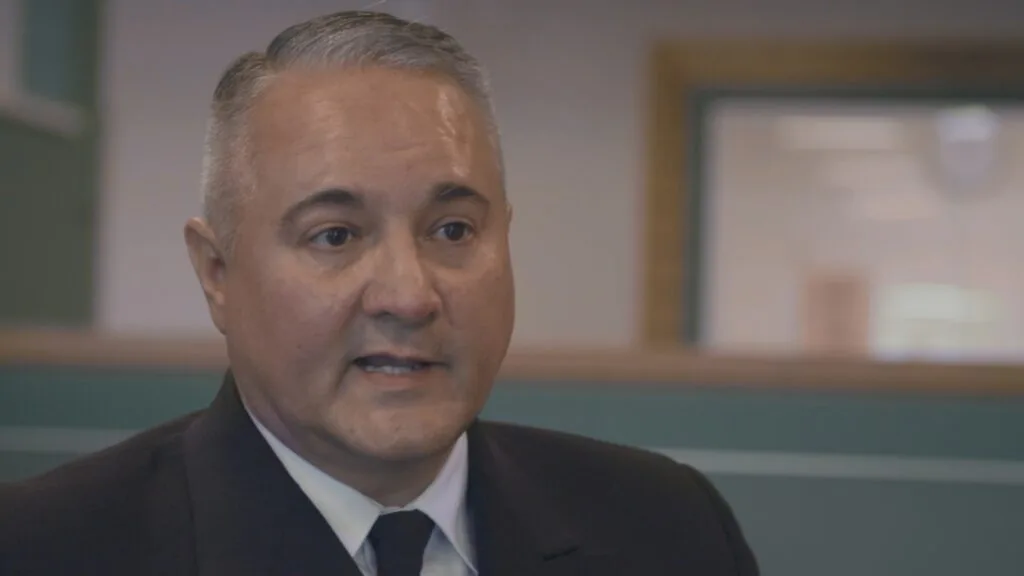
The top U.S. Indian Health Service official pledged before Congress on Tuesday to fix problems that allowed a doctor who sexually abused children while working for the agency to evade punishment.
The remarks by Rear Adm. Michael Weahkee came as lawmakers pressed him on the broadening fallout after a joint investigation by The Wall Street Journal and FRONTLINE revealed the agency had mishandled the pedophile pediatrician for decades.
When senior officials at one IHS office determined that Stanley Patrick Weber might be molesting children, the agency transferred him to another hospital on a different reservation, the investigation found.
Adm. Weahkee, the acting IHS director since 2017, said transfers of problem staff would end: “It will not be tolerated to pass that bad lemon while I am in this seat.”
At the hearing of the Senate Committee on Indian Affairs, Sens. John Hoeven, the North Dakota Republican chairman, and New Mexico Democrat Tom Udall, the vice chairman, both called on Adm. Weahkee to address the scandal surrounding Mr. Weber, who was convicted of child sexual assault in September.
“We need to get to the bottom of this ordeal,” Mr. Hoeven said.
The two senators had asked the federal health department’s watchdog arm in a letter late last month to investigate the IHS’s handling of the Weber affair. The agency’s inspector general has said it received the requests.
“Who in IHS leadership failed to document and remove Weber from his position within the Service?” said Mr. Udall. He asked Adm. Weahkee to commit on the spot to ensuring that future allegations against IHS staff are investigated, and that whistleblowers in the agency aren’t subject to retaliation.
Adm. Weahkee promised to do so, and he detailed plans to hire a contractor that would conduct an independent investigation into “where the breakdowns occurred and who should be held accountable.”
Adm. Weahkee said the agency was aware of past investigations, including by the Federal Bureau of Investigation, that didn’t substantiate complaints about Mr. Weber.
He added that recent scrutiny of the agency and new efforts to encourage employees have unearthed other possible cases. “We have become aware of additional instances of issues that needed to be resolved and we have moved forward on several termination actions as a result,” he said.
Mr. Weber was convicted in Montana of sexually abusing two boys and faces another federal trial this year for similar abuses in South Dakota. He is appealing the Montana verdict.
The scandal overtook a portion of the hearing meant to focus more broadly on the government operations in Indian country.
Mr. Udall asked a Government Accountability Office official, who also testified at the hearing, to initiate a review into the transfer of problem doctors and employees at the agency.
Whether Congress or the IHS’s leadership will keep up pressure to overhaul its operations remains unclear, some people close to the matter say.
Jerilyn Church, chief executive for the Great Plains Tribal Chairmen’s Health Board, said she was “horrified” by the Weber case. And she said she was frustrated that after years of congressional hearings—including on issues related to transferring problem employees—such problems still existed at the Indian health agency.
“I don’t know what more it’s going to take to make things right within IHS,” said Ms. Church. “How many hearings do we have to have?”
The Wall Street Journal
The Wall Street Journal
Email:
dan.frosch@wsj.comSupport provided by:
Learn More
Related Documentaries

Latest Documentaries




Related Stories

Predator on the Reservation
Related Stories
Predator on the Reservation
Explore
Policies
Teacher Center

Jon and Jo Ann Hagler on behalf of the Jon L. Hagler Foundation
Corey David Sauer
Koo and Patricia Yuen
FRONTLINE is a registered trademark of WGBH Educational Foundation. Web Site Copyright ©1995-2025 WGBH Educational Foundation. PBS is a 501(c)(3) not-for-profit organization.
Funding for FRONTLINE is provided through the support of PBS viewers and by the Corporation for Public Broadcasting, with major support from Ford Foundation, and Fialkow Family Foundation. Additional funding is provided the Abrams Foundation, John D. and Catherine T. MacArthur Foundation, Park Foundation, Heising-Simons Foundation, and the FRONTLINE Trust, with major support from Jon and Jo Ann Hagler on behalf of the Jon L. Hagler Foundation, and Corey David Sauer, and additional support from Koo and Patricia Yuen. FRONTLINE is a registered trademark of WGBH Educational Foundation. Web Site Copyright ©1995-2026 WGBH Educational Foundation. PBS is a 501(c)(3) not-for-profit organization.