HHS Official Says Agency Lost Track of Nearly 1,500 Unaccompanied Minors
April 26, 2018
Share
A top official from the Department of Health and Human Services came under fire during congressional testimony on Thursday over how the agency tracks unaccompanied minors after they are released to family or other sponsors inside the United States.
Steven Wagner, the acting assistant secretary of the agency’s Administration for Children and Families, faced a barrage of questions from senators on the Permanent Subcommittee on Investigations over why HHS does not track unaccompanied minors who fail to appear at their immigration court hearings. The agency has faced increased scrutiny following a scathing 2016 report from the committee that found it failed to protect unaccompanied minors from traffickers and other abuses.
“It’s just a system that has so many gaps, so many opportunities for these children to fall between the cracks, that we just don’t know what’s going on — how much trafficking or abuse or simply immigration law violations are occurring,” said the committee’s Republican chairman, Sen. Rob Portman.
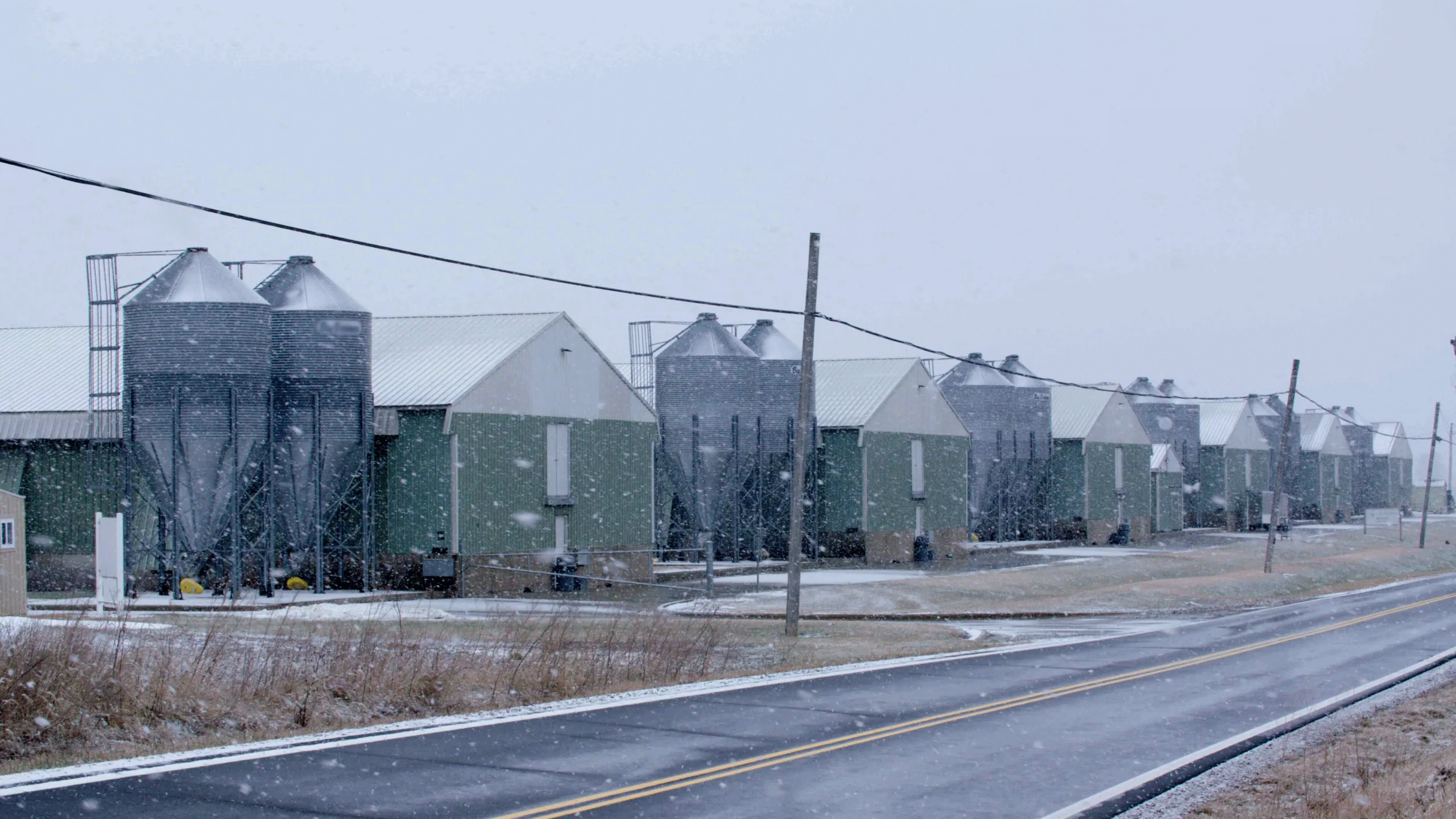
In 2014, at least 10 trafficking victims, including eight minors, were discovered during a raid by federal and local law enforcement in Portman’s home state of Ohio. As FRONTLINE examined in the recent documentary Trafficked in America, HHS had released several minors to the traffickers. The committee said the case was due to policies and procedures that were “inadequate to protect the children in the agency’s care.”
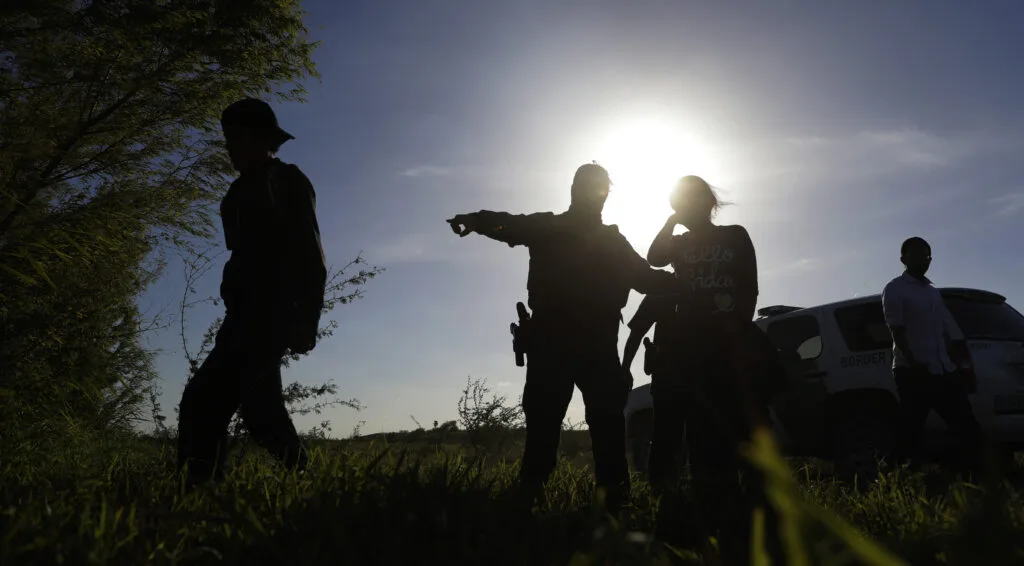
After unaccompanied minors arrive in the United States, often to reunite with family members or to flee violence or poverty in their home countries, they are typically transferred from border patrol or customs officers to the custody of HHS, which often reunites the minors with a relative or another sponsor. The department is supposed to place check-in phone calls 30 days after a minor’s placement, but during the hearing, Wagner acknowledged gaps in that system.
Between October and December 2017, he said, the agency was unable to locate almost 1,500 out of the 7,635 minors that it attempted to reach — or about 19 percent. Over two dozen had run away, according to Wagner, who said the agency did not have the capacity to track them down.
Sponsors are meant to ensure that minors show up at their immigration hearings. Sen. Claire McCaskill (D-Mo.) pressed Wagner on why more than half of unaccompanied minors in 2017 did not show up to their immigration hearings. When asked how HHS tracks the missing children, Wagner said that finding out whether children have attended their immigration hearing is not part of its protocol.
“We do not know who is showing up and who isn’t,” he said. “We don’t know those kids … We don’t follow up to ensure they go to the hearing.”
Wagner told the committee that since February 2016, HHS has gone to greater lengths to verify the identity of potential sponsors of unaccompanied minors, and worked to crack down on the ability of sponsors to use fraudulent documents during the placement process. A new agreement reached this month between HHS and the Department of Homeland Security establishes policies for the agencies to better share information to help screen potential sponsors.
Senators also expressed concern that state and local officials are not usually notified when unaccompanied minors are placed in their jurisdiction. Wagner said that it was an “issue of practicality” that would require contacting a substantial list of local agencies.
“If a child is being, for instance, kept at home and abused by a sponsor, and a local school doesn’t even know the child is supposed to be going there, then some of the usual triggers that we have for protecting children can’t be triggered,” Sen. Maggie Hassan (D-N.H.) said.
Wagner agreed to look into notifying states and localities, as did James McCament, the deputy under secretary for the Office of Strategy, Policy and Plans at the Department of Homeland Security.
Throughout the session, senators grew frustrated that more than a year had passed since the two agencies had agreed to deliver a joint memo outlining their roles in protecting minors.
“It has been protracted, absolutely,” said McCament.
“Get this done,” Senator Thomas Carper (D-Del.) told officials from both agencies. “Way too much time has passed.”
In an interview with FRONTLINE for Trafficked in America, Portman said that HHS cannot ignore its responsibility for unaccompanied minors.
“We’ve got these kids,” he said. “They’re here. They’re living on our soil. And for us to just, you know, assume someone else is going to take care of them and throw them to the wolves, which is what HHS was doing, is flat-out wrong. I don’t care what you think about immigration policy, it’s wrong.”
Correction: An earlier version of this incorrectly said that the Department of Health and Human Services was unable to locate almost 1,500 out of the 7,635 minors it attempted to reach between October 2016 and December 2017. The agency attempted to reach these minors between October and December 2017.

Former Tow Journalism Fellow, FRONTLINE/Columbia Journalism School Fellowships
Support provided by:
Learn More
Related Documentaries
Latest Documentaries



Related Stories
Trafficked in America
Related Stories
Trafficked in America
Explore
Policies
Teacher Center

Jon and Jo Ann Hagler on behalf of the Jon L. Hagler Foundation
Corey David Sauer
Koo and Patricia Yuen
FRONTLINE is a registered trademark of WGBH Educational Foundation. Web Site Copyright ©1995-2025 WGBH Educational Foundation. PBS is a 501(c)(3) not-for-profit organization.
Funding for FRONTLINE is provided through the support of PBS viewers and by the Corporation for Public Broadcasting, with major support from Ford Foundation, and Fialkow Family Foundation. Additional funding is provided the Abrams Foundation, John D. and Catherine T. MacArthur Foundation, Park Foundation, Heising-Simons Foundation, and the FRONTLINE Trust, with major support from Jon and Jo Ann Hagler on behalf of the Jon L. Hagler Foundation, and Corey David Sauer, and additional support from Koo and Patricia Yuen. FRONTLINE is a registered trademark of WGBH Educational Foundation. Web Site Copyright ©1995-2026 WGBH Educational Foundation. PBS is a 501(c)(3) not-for-profit organization.