Inside the Discovery of New Activity at Pickaxe Mountain, Iran’s Deep-Underground Suspected Nuclear Site
In June, the U.S. bombed key Iranian nuclear sites. Then came increased activity somewhere else, as the new documentary 'Strike on Iran: The Nuclear Question' reports in forensic detail.
December 16, 2025
Share
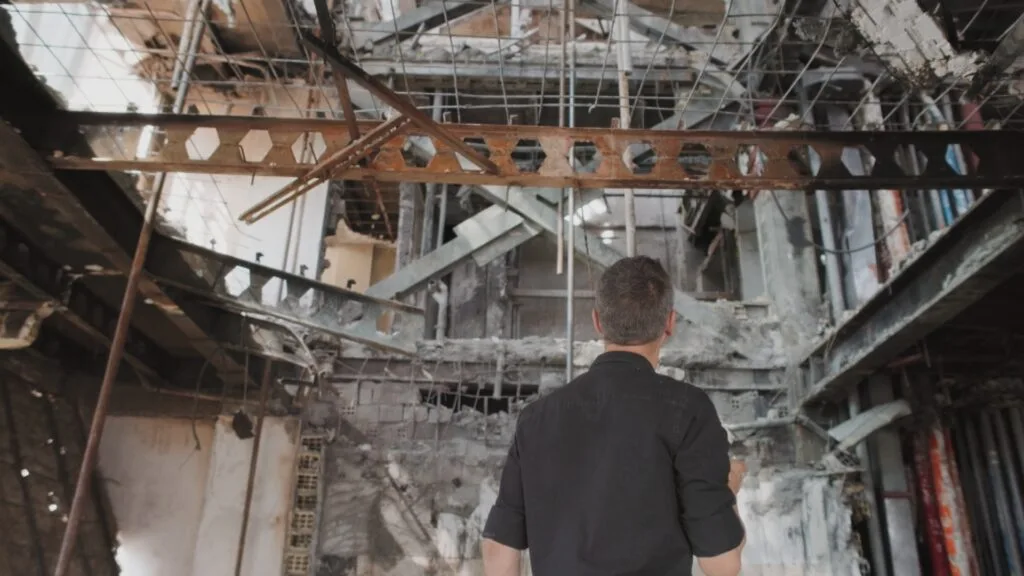
It was called Operation Midnight Hammer: a June 22, 2025, U.S. military blitz that dropped powerful munitions on three key Iranian nuclear facilities, Fordow, Natanz and Isfahan.
The U.S. and Israel said the strikes, part of Israel’s 12-day war with Iran, had severely damaged the facilities and dealt a significant blow to the country’s nuclear program.
As a new documentary premiering Dec. 16 on PBS reports in forensic detail, The Washington Post, working with FRONTLINE, soon detected increased activity at a different site in Iran — one believed to be buried deeper than any of the facilities that were bombed.
“With this film, we set out to examine how much Operation Midnight Hammer and the 12-day war have set back Iran’s nuclear program,” said Sebastian Walker, correspondent and producer of Strike on Iran: The Nuclear Question. “But the new activity detected by the investigative team raises the question of whether these strikes may have pushed Iran’s nuclear program further underground.”
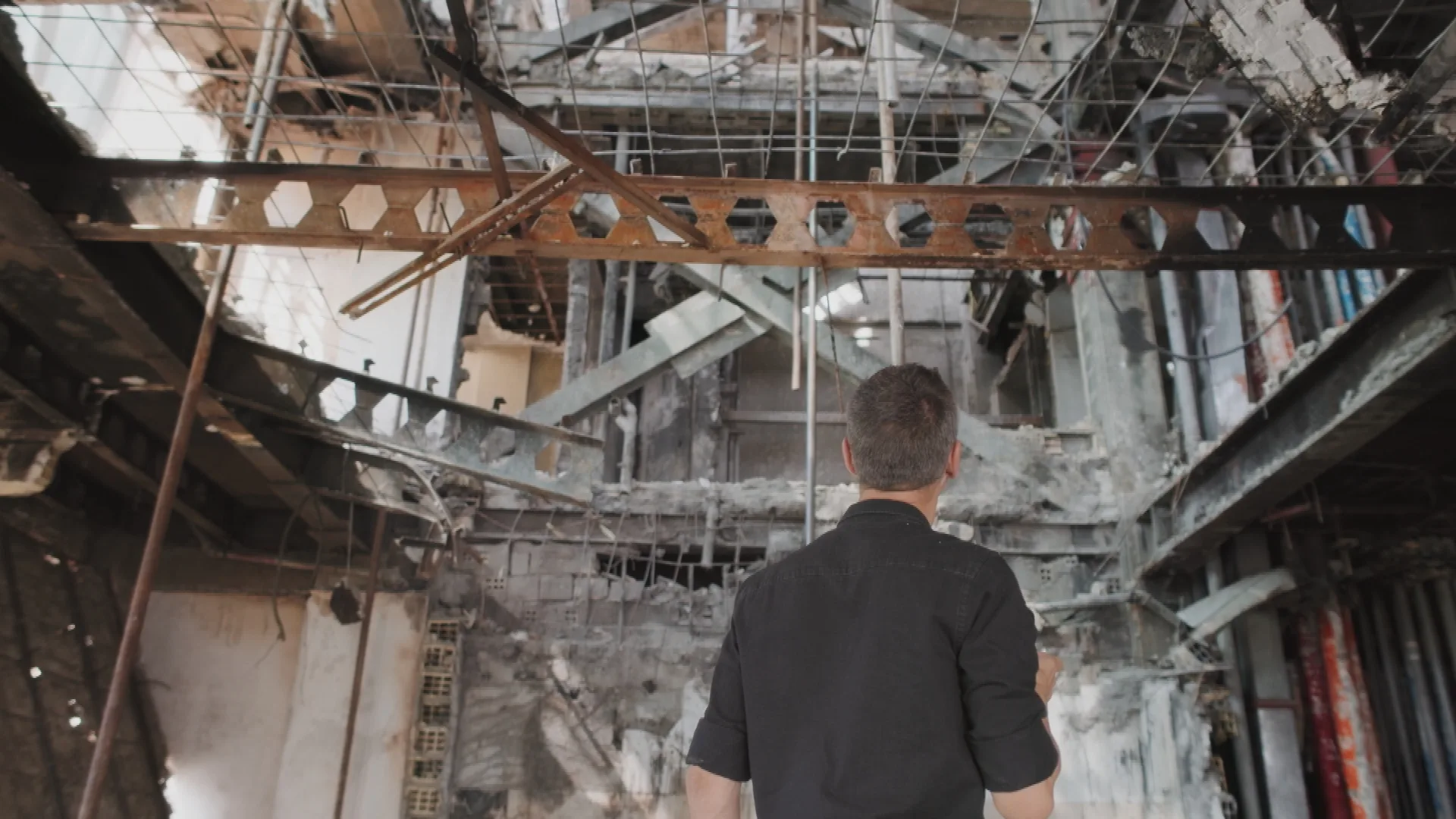
The discovery of new activity, first reported by The Post, unfolds in the above video drawn from Strike on Iran, an immersive investigation of Iran’s nuclear program in the aftermath of the war from FRONTLINE in partnership with The Washington Post as well as the nonprofit organizations Evident Media and Bellingcat. The documentary collaboration draws on Walker’s on-the-ground reporting in Iran with director and producer Adam Desiderio, and forensic analysis of satellite imagery, munitions data, and other open sources by The Post, Evident Media and Bellingcat.
In the video, as Walker navigates challenging reporting conditions in Iran, a colleague at The Post alerts him that their team is noticing increased activity at a location nearby via satellite imagery. That location, known as Pickaxe Mountain, is about a mile from Natanz.
Though he’s not allowed to go there, Walker finds a way to take photos of Pickaxe Mountain from afar. He sends them back to the team as a consensus emerges: The site is now being fortified and expanded.
Satellite imagery shows that two tunnel entrances have been covered with dirt and rock, which experts say hardens them against possible airstrikes. Piles of excavated material next to the entrances have increased in size, indicating continued tunneling activity. And satellite imagery also shows the presence of heavy equipment and construction vehicles.
"The new activity detected by the investigative team raises the question of whether these strikes may have pushed Iran's nuclear program further underground.”
In Tehran, Walker takes the team’s findings to one of the most powerful officials in the country: Ali Larijani, secretary of Iran’s Supreme National Security Council.
“There’s a site south of Natanz where international observers have seen new reinforcements of the entrance,” Walker tells Larijani. “There’s been some activity noticed there — it’s known as Pickaxe Mountain. Is there new activity that these strikes have created? Is there anything you can tell us about that site?”
Larijani responds, “No, nothing in particular. We haven’t removed the rubble from any of those locations. But in the future we may remove the rubble and continue the regular activities we had before.”
Iran’s government, which denies that it is pursuing a nuclear weapon, has said the purpose of Pickaxe Mountain is to house a production plant for assembling centrifuges.
“The ability for the regime to reconstruct centrifuges is going to be important for their ability to bounce back, which puts more eyes on Pickaxe,” Jarrett Ley of The Washington Post says in the video. “And if indeed there is centrifuge construction taking place there, what that means is that they’ll be able to come back relatively quickly.”
Analysts also suspect that Pickaxe’s dimensions and estimated depth could be used for uranium enrichment, or for storing near-weapons-grade uranium.
As the documentary reports, prior to the start of the 12-day war, the International Atomic Energy Agency (IAEA), the United Nations’ nuclear watchdog, had said that Iran had increased its stockpile of near weapons-grade enriched uranium, though it hadn’t found evidence of a systematic nuclear weapons program. International inspectors have not visited Pickaxe Mountain, and Iran has not allowed inspectors to visit the bombed nuclear sites since the war.
In the documentary, Walker asks Rafael Grossi, the head of the IAEA, if there’s a risk that the war has had the effect of pushing Iran’s nuclear program and its potential ambitions further underground.
“If time passes and inspections do not resume, well, then there will be doubts,” Grossi says. “And I mean, I’m not saying that there will be an immediate consequence, but certainly the situation will become a source of a greater concern in terms of non-proliferation or the potential activities leading to a nuclear weapon.”
Editor’s Note: The film Strike on Iran includes an updated translation of a comment from Ali Larijani, then secretary of Iran’s Supreme National Security Council. Originally, his comment, about a site known as Pickaxe Mountain, was translated as: “No, nothing; we haven’t abandoned any of those locations. But in the future they could possibly continue to run as they do currently or be shut down.” The updated translation is, “No, nothing in particular. We haven’t removed the rubble from any of those locations. But in the future we may remove the rubble and continue the regular activities we had before.”
For the full story, watch Strike on Iran: The Nuclear Question. The documentary will be available to watch starting Dec. 16, 2025. Watch at 10/9c on FRONTLINE’s YouTube channel and on PBS stations (check local listings), or stream at pbs.org/frontline and in the PBS App. The documentary will also be available on the PBS Documentaries Prime Video Channel. Strike on Iran is a FRONTLINE production with Mongoose Pictures in association with The Washington Post, Evident Media and Bellingcat. It is written, produced and directed by Adam Desiderio and Sebastian Walker. The correspondent is Sebastian Walker. The reporters are Nilo Tabrizy, Jarrett Ley, Souad Mekhennet, Trevor Ball, Carlos Gonzales and Sebastian Vandermeersch. The senior producers are Dan Edge and Eamonn Matthews. The editor-in-chief and executive producer of FRONTLINE is Raney Aronson-Rath.
Reporting the truth takes determination.
While journalism is under fire around the world, your gift ensures that our investigations stay fearless and free.

Senior Digital Writer, FRONTLINE
Related Documentaries
Latest Documentaries



Related Stories
Strike on Iran: The Nuclear Question
Related Stories
Strike on Iran: The Nuclear Question
Explore
Policies
Teacher Center

Jon and Jo Ann Hagler on behalf of the Jon L. Hagler Foundation
Corey David Sauer
Koo and Patricia Yuen
FRONTLINE is a registered trademark of WGBH Educational Foundation. Web Site Copyright ©1995-2025 WGBH Educational Foundation. PBS is a 501(c)(3) not-for-profit organization.
Funding for FRONTLINE is provided through the support of PBS viewers and by the Corporation for Public Broadcasting, with major support from Ford Foundation, and The Fialkow Family Foundation. Additional funding is provided the Abrams Foundation, Park Foundation, John D. and Catherine T. MacArthur Foundation, Heising-Simons Foundation, and the FRONTLINE Trust, with major support from Jon and Jo Ann Hagler on behalf of the Jon L. Hagler Foundation, and Corey David Sauer, and additional support from Koo and Patricia Yuen. FRONTLINE is a registered trademark of WGBH Educational Foundation. Web Site Copyright ©1995-2026 WGBH Educational Foundation. PBS is a 501(c)(3) not-for-profit organization.