A Dangerous Journey, and a Death in the Desert
More than 20 years ago, FRONTLINE investigated the death of a Zapotec migrant on his journey from Mexico to the U.S. The resulting documentary is now streaming on YouTube for the first time.
August 19, 2026
Share
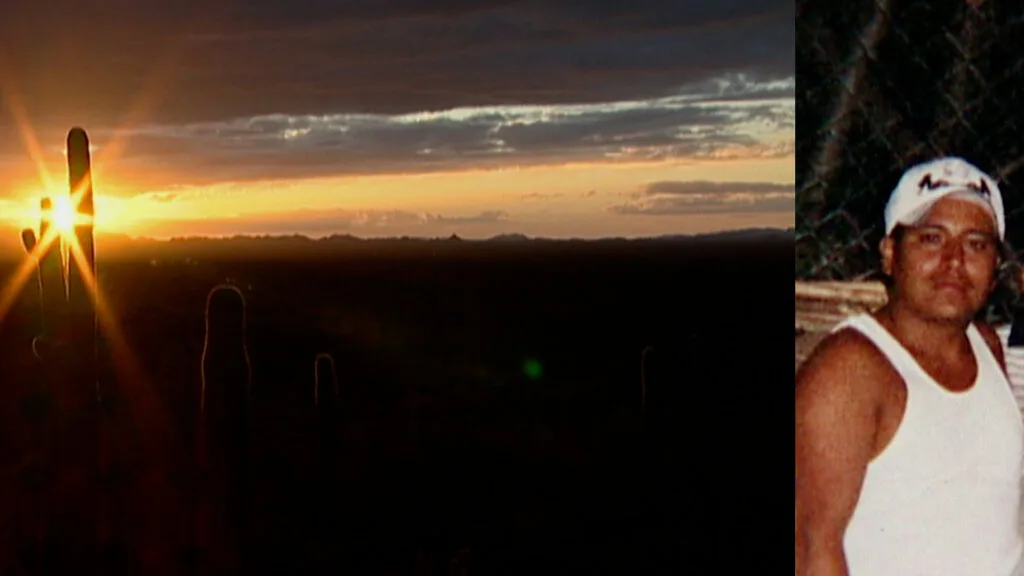
Each month, thousands of migrants cross the U.S.-Mexico southwest border, many of them making a dangerous journey through Arizona’s desert borderlands with temperatures that can reach 170 degrees on the surface.
In 2003, 29-year-old Matias Juan Garcia Zavaleta decided to make the trip from his home in Oaxaca, Mexico, along with his brother and cousin in search of work. But after walking through the desert’s intense heat over the course of two nights, a dehydrated Garcia collapsed.
“‘Keep trying,’ I told him,” Garcia’s brother said in FRONTLINE’s documentary Mexico: A Death in the Desert, recalling some of the last words he told Garcia. “‘We’re going to cross the border to make a better life.’”
Although Garcia’s brother and his cousin carried Garcia through the final miles of the desert, he died from dehydration only 40 yards from Highway 85 in southwestern Arizona. That year, the film reports, Garcia was one of at least 200 migrants who died in the Arizona desert.
A Death in the Desert originally aired in 2004 as part of FRONTLINE/World, a special FRONTLINE series that ran from 2002-2010 and was developed in partnership with GBH in Boston and KQED in San Francisco. The documentary is now streaming on FRONTLINE’s YouTube channel for the first time as part of an effort to make the series’ archive widely accessible.
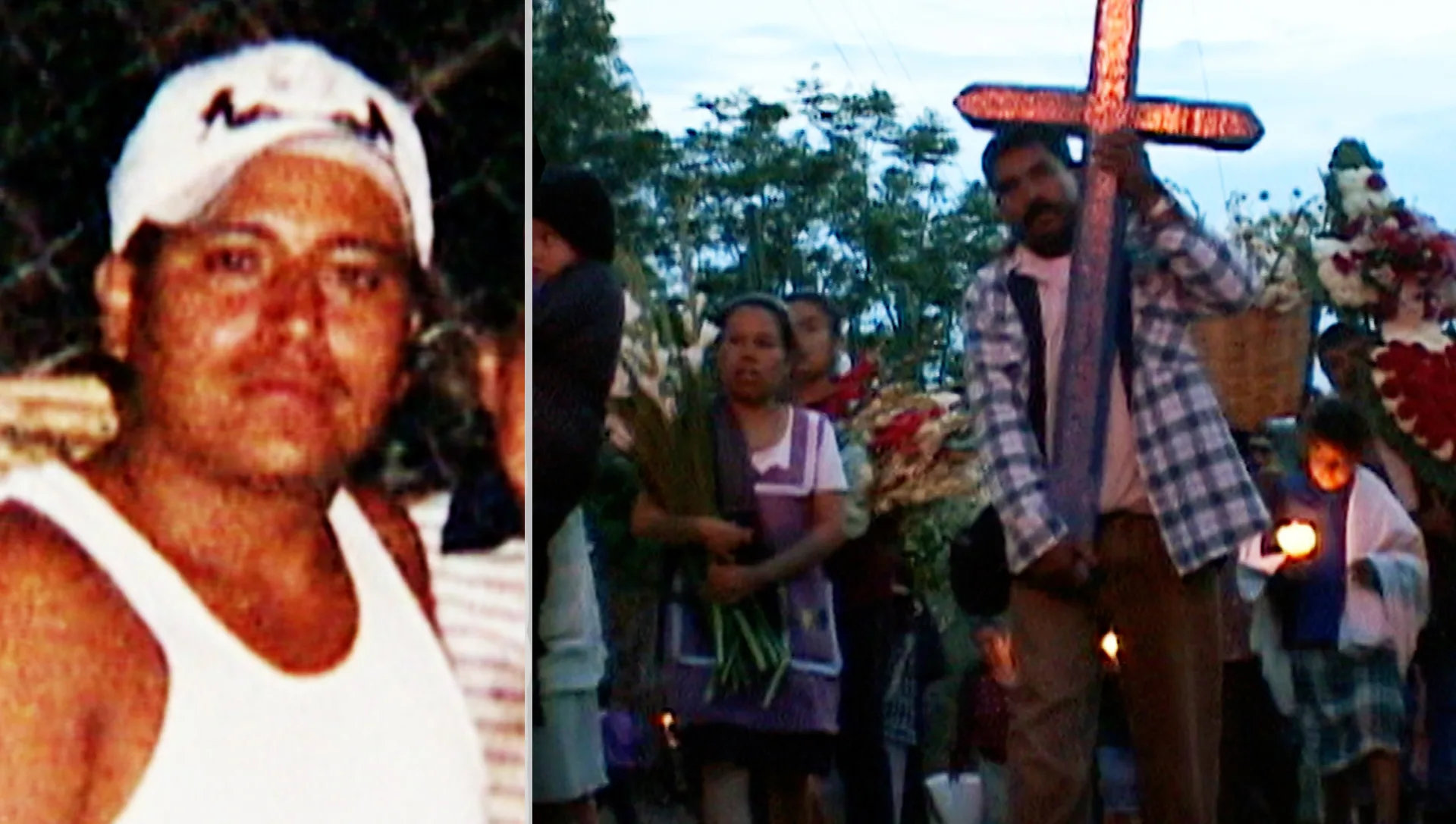
At the time A Death in the Desert was filmed, reporter Claudine LoMonaco had been in Arizona covering the increasing number of migrants who had died trying to cross to the United States — but she wanted to dig deeper.
“I knew so little about any of them,” she said in the documentary.
Along with producer and reporter Mary Spicuzza, LoMonaco traveled to a Zapotec village in the Mexican state of Oaxaca to talk to Garcia’s family on the anniversary of his death and “piece together” his life.
What they found unfolds in the documentary. The oldest of five, Garcia started helping his father in the fields at the age of eight. By 16, he began crossing the border into California to support his family, taking on seasonal work. He would leave in the spring, but always be back by the fall.
“Because he was the oldest, he was like our father,” Garcia’s brother told LoMonaco in the documentary. “He supported us since we were little.”
But after years of making the trip, Garcia decided he would stop crossing to spend more time with his two children and wife. “He didn’t want to be away from us — from the family,” his widow told FRONTLINE.
Garcia began growing chilies to support his family instead. But an unanticipated frost that fall destroyed the crops and left him in debt. As the film reported, Garcia felt he had no choice but to cross the treacherous desert one more time.
It would end up being his last journey.
The trip across the border wasn’t always so dangerous, Garcia’s uncle, who had completed the trip several times, told FRONTLINE. Migrants used to be able to cross more easily into the U.S. through Tijuana, until 1994, when the U.S. and Mexico entered the North American Free Trade Agreement, LoMonaco reported in the film.
“At the same time the U.S. opened the border to trade, it made it harder for people to get across with a new strategy called Operation Gatekeeper,” she said. As part of that strategy, Border Patrol reinforced an old fence with a series of new walls between Tijuana and San Diego, hoping to push migrants into the desert and discourage them from entering the country illegally.
Instead, thousands of migrants started to cross the border through the desert, first through California, then through Arizona, LoMonaco reported in the documentary.
In 2025, the number of encounters Border Patrol had with migrants at the southwest border fell to the lowest level in more than 50 years. Humane Borders, a nonprofit organization, uses data from medical examiners in southern Arizona counties to compile maps of people thought to have died crossing the border. It recorded 103 deaths last year, noting that the figures were not comprehensive.
In the documentary, Garcia’s mother said her son still visits her in her dreams.
“Mama, I’m thirsty,” he begs her. “Do you have any water?”
Watch the documentary
Mexico: A Death in the Desert
Retracing the tragic journey of Matias Garcia, a chili pepper farmer who crossed the U.S.-Mexico border looking for work and died in the Arizona desert

Tow Journalism Fellow, FRONTLINE/Columbia Journalism School Fellowship, FRONTLINE
Email:
alonso_vidal@wgbh.orgSupport provided by:
Learn More
Related Documentaries


Latest Documentaries



Related Stories
Mexico: A Death in the Desert
Related Stories
Mexico: A Death in the Desert
Explore
Policies
Teacher Center

Jon and Jo Ann Hagler on behalf of the Jon L. Hagler Foundation
Corey David Sauer
Koo and Patricia Yuen
FRONTLINE is a registered trademark of WGBH Educational Foundation. Web Site Copyright ©1995-2025 WGBH Educational Foundation. PBS is a 501(c)(3) not-for-profit organization.
Funding for FRONTLINE is provided through the support of PBS viewers and by the Corporation for Public Broadcasting, with major support from Ford Foundation, and Fialkow Family Foundation. Additional funding is provided the Abrams Foundation, John D. and Catherine T. MacArthur Foundation, Park Foundation, Heising-Simons Foundation, and the FRONTLINE Trust, with major support from Jon and Jo Ann Hagler on behalf of the Jon L. Hagler Foundation, and Corey David Sauer, and additional support from Koo and Patricia Yuen. FRONTLINE is a registered trademark of WGBH Educational Foundation. Web Site Copyright ©1995-2026 WGBH Educational Foundation. PBS is a 501(c)(3) not-for-profit organization.