Inside the Battle Over High Prescription Drug Costs in the U.S.
In one corner: U.S. consumers fed up with high drug prices. In the other: pharmaceutical companies arguing that price controls stifle innovation. ‘The Other Drug War,’ a 2003 documentary tracing the history of the battle over prescription drug affordability, is newly available on FRONTLINE’s YouTube channel.
February 24, 2026
Share
This month, the Trump administration launched TrumpRx, a website the administration said would help people in the U.S. buy prescription drugs at affordable prices.
It was the latest development in an ongoing, decades-long battle over the high cost of prescription medication in the U.S. — a fight FRONTLINE went inside in The Other Drug War. This classic and still-resonant 2003 documentary is now available for the first time on FRONTLINE’s YouTube channel, as part of a multiyear effort to release the series’ archival films for digital streaming.
Produced and directed by Jon Palfreman and Barbara Moran, the documentary examined the fight between major pharmaceutical companies and American consumers who were fed up with paying the highest prescription drug prices in the world.
Seniors in Search of Affordable Medication
In its memorable opening scene, The Other Drug War introduced a group of frustrated U.S. seniors traveling by bus from Maine to Canada: “The passengers on this bus are drug traffickers, but they are not interested in cocaine or heroin,” the narrator said.
Instead, with prescription drugs not covered under Medicare, the seniors were crossing the border to find the medications they needed for their health, at a fraction of the cost they’d pay in the United States.
“I think it’s disgusting,” Maine senior Carleen Simpson said in the film. “Every country practically in the world gets drugs cheaper than we do.”
Through interviews with consumers, legislators, scientists, industry leaders and analysts, the documentary probed why that was the case — exploring the tension between the high cost of scientific innovation and consumers’ need for affordable prescription drugs, and the debate over the role the government should play.
While government price controls keep drugs more affordable in many other countries, pharmaceutical industry leaders have long argued that applying such controls in the U.S. would put new cures for everything from cancer to Alzheimer’s at risk.
The cost of developing and researching new drugs, they said in the film, was enormous — so when rare blockbuster drugs emerged, companies also had to recoup the cost of developing all the drugs that never made it to market. But critics have long made the case that price controls would not threaten new drug discovery, citing the industry’s profit margins.
Drugs Now Off the Market, One for Safety Reasons
Since The Other Drug War aired, two of the FDA-approved medications the documentary touched on have been recalled.
Back in 2003, the Eli Lilly drug Xigris was thought to be life-saving for people with severe sepsis. An analyst hailed it in the film as an example of the kind of drug that likely wouldn’t have been developed if government price controls existed. But Xigris was voluntarily withdrawn from the market in 2011 after study results showed it was not effective.
Problems with another drug went further. The Merck blockbuster Vioxx was then seen as a game-changing arthritis medication, but Merck voluntarily removed it from the market in 2004 after a study showed a significantly heightened risk of cardiac events and strokes with long-term use. The recall was described at the time as the largest withdrawal of a prescription drug in history, and what the company had known about Vioxx’s cardiovascular risks soon came under scrutiny.
In 2007, denying wrongdoing and liability, Merck agreed to pay $4.85 billion to settle thousands of Vioxx-related lawsuits. Then, in 2011, the U.S. Department of Justice and Merck announced a nearly $1 billion resolution of civil claims and criminal charges related to the company’s promotion of Vioxx. Merck agreed to plead guilty to one misdemeanor and did not admit any other wrongdoing or liability.
Ongoing Efforts to Reduce Drug Prices
In the years since the film aired, the broader debate over drug pricing and the role the U.S. government should play has continued to rage as drug prices have climbed.
The documentary chronicled the efforts of two states, Maine and Oregon, to reduce escalating drug costs in the face of strong opposition from the pharmaceutical industry. Both of the resulting state programs are still in effect today.
On the federal level, soon after the documentary aired, Congress passed industry-supported legislation enacting a privatized Medicare prescription drug benefit. It lowered participants’ out-of-pocket costs, but has also faced criticism, including for preventing the government from being able to set drug prices.
In recent years, part of 2022’s Inflation Reduction Act allowed the Department of Health and Human Services to negotiate prices of certain drugs covered under Medicare for the first time, a development pharmaceutical companies opposed. Negotiated prices for 10 drugs went into effect for 2026, with $1.5 billion in projected savings for consumers. The list is expected to expand in the years to come.
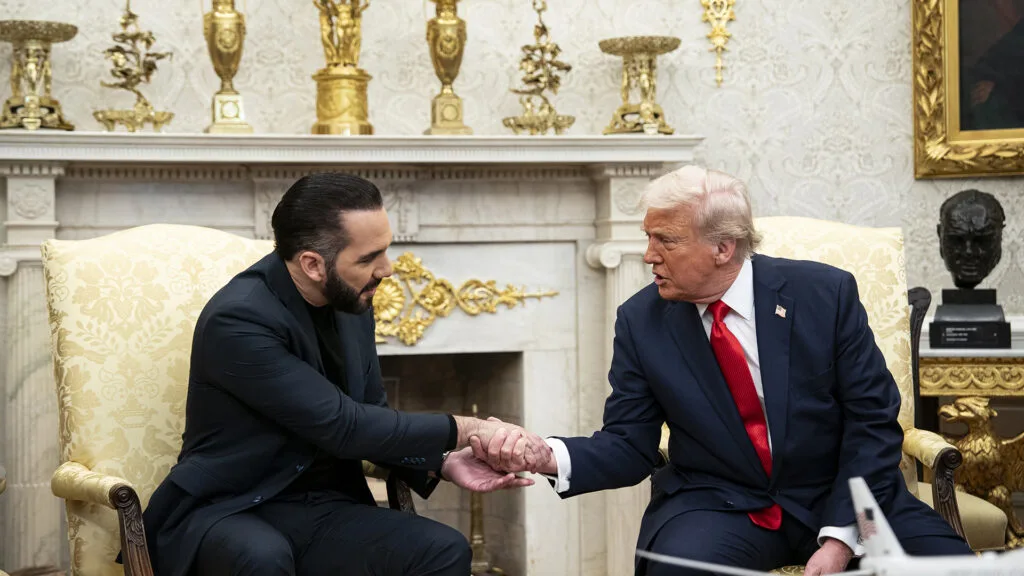
The second Trump administration issued an executive order in 2025 aimed at ensuring U.S. consumers no longer paid more for prescription drugs than consumers in other countries, and later announced pricing deals with major pharmaceutical companies. A spending package passed by Congress this month again took aim at lowering drug prices.
In the meantime, the issues at the heart of The Other Drug War continue to be relevant more than 20 years later.
A KFF poll released last month found that health care costs — including prescription drugs — are at the top of U.S. consumers’ list of household financial worries, above rent, mortgage payments and food costs.
Keep Our Journalism Strong. Donate Today.
Your support makes it possible for FRONTLINE to produce bold investigative documentaries on the issues that matter most. Donate today to help sustain this work through the months and years ahead.
Senior Digital Writer, FRONTLINE
Related Documentaries

Latest Documentaries



Explore
Policies
Teacher Center

Jon and Jo Ann Hagler on behalf of the Jon L. Hagler Foundation
Corey David Sauer
Koo and Patricia Yuen
FRONTLINE is a registered trademark of WGBH Educational Foundation. Web Site Copyright ©1995-2025 WGBH Educational Foundation. PBS is a 501(c)(3) not-for-profit organization.
Funding for FRONTLINE is provided through the support of PBS viewers and by the Corporation for Public Broadcasting, with major support from Ford Foundation, and The Fialkow Family Foundation, as part of the Plum Bush Foundation. Additional funding is provided the Abrams Foundation, Park Foundation, John D. and Catherine T. MacArthur Foundation, Heising-Simons Foundation, and the FRONTLINE Trust, with major support from Jon and Jo Ann Hagler on behalf of the Jon L. Hagler Foundation, and Corey David Sauer, and additional support from Koo and Patricia Yuen. FRONTLINE is a registered trademark of WGBH Educational Foundation. Web Site Copyright ©1995-2025 WGBH Educational Foundation. PBS is a 501(c)(3) not-for-profit organization.