Monday, Sept. 21, 2026
The Washington Post
The Trump administration has authorized or pledged at least $410 million to facilitate agreements with 31 countries, mostly in Africa and Latin America, as of the end of June, according to internal government records reviewed by The Washington Post. The documents, which have not been previously reported, provide the most comprehensive picture to date of the Trump administration’s fast-growing third-country network.
Under the arrangements, the U.S. has expelled migrants to countries across the globe where they have no previous connection. Early deals included flights to Costa Rica carrying migrants from China, Russia, Iran and Afghanistan and a flight to the tiny African kingdom of Eswatini with migrants from Vietnam, Laos, Cuba and Jamaica.
Read More (subscription required)
A bearded young man with an arm covered in tattoos, Saleh Fard is among the 299 migrants whom the United States deported to Panama just weeks after President Donald Trump was inaugurated in January 2025. Like Saleh Fard, none of them had any prior connection to this small country at the southern end of Central America.
Instead, they became subjects of a new strategy for Trump’s second-term immigration policy: As part of deals brokered by the State Department using financial incentives and political pressure, more than 25,000 people have been removed from the U.S. and shipped not back to their home nations, but to “third countries.”
Read More (subscription required)
Forbidden Stories
Iranians in Panama, Laotians in Eswatini, Venezuelans in Liberia. Since President Donald Trump took office in 2025, his administration has signed bilateral agreements with 35 countries to deport to them people who aren’t originally from there. Some 25,000 people have since been removed to countries they have no ties to. But the mechanics of third country removals are couched in layers of administrative, diplomatic, and financial secrecy.
Read More
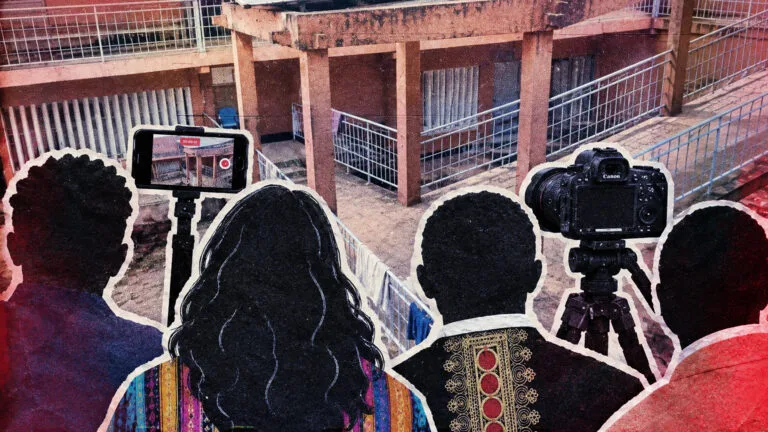
On Feb. 17, 2026, four Cameroonian journalists were detained in Yaoundé for entering a center secretly holding deportees from the United States. After a six-month investigation, Forbidden Stories is publishing the testimonies of two women the journalists interviewed before being arrested, along with details of a secret immigration agreement between Washington and Yaoundé.
Read More
The Deportation Project
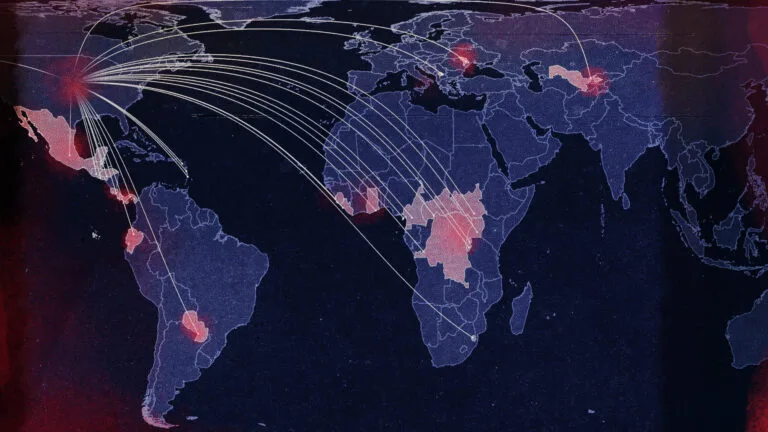
Between 2025 and August 2026, the Trump administration deported over 25,000 people to countries other than their country of origin. Very few of these removals were publicly announced by the US. The Deportation Project tracked them, and depicted them in this map.
Read More
The Guardian
Nika, who had fled Iran 18 months earlier after protesting against its regime, had imagined the US as a place of sanctuary. Iran was already one of the most repressive countries in the world when she left, and its horrors had only deepened since then: security forces gunned down thousands of other demonstrators this year, then Donald Trump’s administration launched the war there.
After more than a year locked up in a US immigration detention centre, Nika, whose name the Guardian has changed to protect her family in Iran, was granted legal protections and freed on a judge’s orders. Within two weeks, the Department of Homeland Security had rearrested her, and days later she was on the plane heading 7,000 miles east.
Read More
The Trump administration has struck 35 deals allowing it to deport migrants and asylum seekers to countries that are not their own and where they often have no connections.
Human rights lawyers say the administration is using a loophole: under US law it is illegal to send people back to countries where they are likely to be persecuted, and so the Department of Homeland Security is deporting migrants and asylum seekers to third countries instead.
Read More
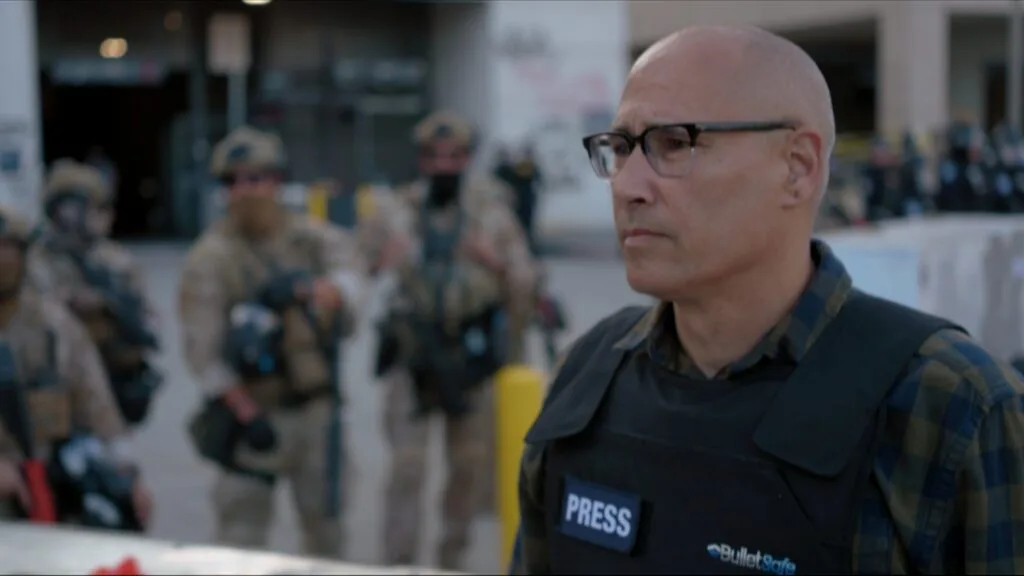
In Georgia, ICE agents arrested Mario Guevara, an Emmy award-winning journalist from El Salvador. He had lived in Atlanta for nearly two decades, running an independent Spanish-language outlet and documenting immigration enforcement operations on TikTok. Guevara was covering a “No Kings” protest in June 2025 at the time of his arrest. He spent more than 100 days in detention, mostly in isolation. “They didn’t want me to hear the stories of other fellow prisoners and that’s why they locked me up alone,” he told Forbidden Stories.
Read More
France 24
Born in the state of Tigray in the north of Ethiopia, Barbara left her country after war broke out between federal government forces and the region’s Tigray People’s Liberation Front. The conflict is believed to have killed more than 600,000 people between 2020 and 2024.
Fleeing persecution, she travelled to Brazil at the end of 2024 before making her way to the US border by bus. The young woman was detained by border police on arrival and sent to an immigration detention centre in Louisiana.
Several months later, a judge granted her “withholding of removal”, a legal protection distinct from asylum that nonetheless prevents recipients from being deported to their home country on the grounds that they would more likely than not face persecution.
Despite this measure, Barbara would remain in the detention centre for several more months — until she was abruptly bundled on board a flight to Cameroon on April 28, 2026.
Read More
Divergentes
Landing in San José was a huge relief for Santiago. From the very beginning, the International Organization for Migration (IOM) and the Costa Rican government treated them “very differently” from how they had been treated in the United States, where he and his wife spent eight days detained at a center in El Paso and were separated for the first three. When they got off the deportation plane, their handcuffs were removed, they were given a document that read “Welcome to Costa Rica,” and they were taken to the hotel, where Santiago was reunited with something he hadn’t seen since leaving Colombia: a made bed.
Read More
Inhlase
Roberto Mosquera del Peral stepped off the aircraft in Eswatini in July 2025, he did not know where he was.
He had been moved through a chain of American detention facilities before being placed on a flight with four other men. They were transferred through Djibouti and eventually brought to the small southern African kingdom.
For Mosquera, the journey ended at Matsapha Correctional Complex, a maximum-security prison outside Manzini.
He had not committed a crime in Eswatini. He had not been sentenced by an Eswatini court. Yet that was where the United States had sent him.
Read More
It was called a Memorandum of Understanding Between the Government of the United States of America and the Government of Eswatini Concerning the Removal of Third Country Nationals.
Under its terms, the United States agreed to provide Eswatini with US$5.1 million to build its border and migration-management capacity.
In return, Eswatini agreed to facilitate the removal of up to 160 third-country nationals from the United States.
Read More
Radio France Internationale
Glenda y su familia supieron que Elmer estaba en el país a través de un video en el que la presidencia de El Salvador promocionaba la llegada de los vuelos militares con supuestos pandilleros deportados desde Estados Unidos.
“Gracias a Dios que pudimos reconocerlo en el video. Él es el último que aparece cuando lo bajan del avión y lo suben a un bus. Mi hermano venía en el segundo vuelo que aterrizó el 31 de marzo de 2025. Además, él había hablado con una tía que vive en los Estados Unidos y le había dicho que lo iban a retornar al país, que le mandara ropa. La tía pudo reconocer que la ropa que ella le envió es la que trae puesta. Eso es lo único que nos ha mantenido con la esperanza de que lo vimos y de que sí vino al país”, dice Glenda.
Leer y escuchar en español