The Crown Prince & the President
June 30, 2026
1h 24m
FRONTLINE examines the alliance between Saudi Crown Prince Mohammed bin Salman and President Donald Trump
The Crown Prince & the President
June 30, 2026
1h 24m
Share
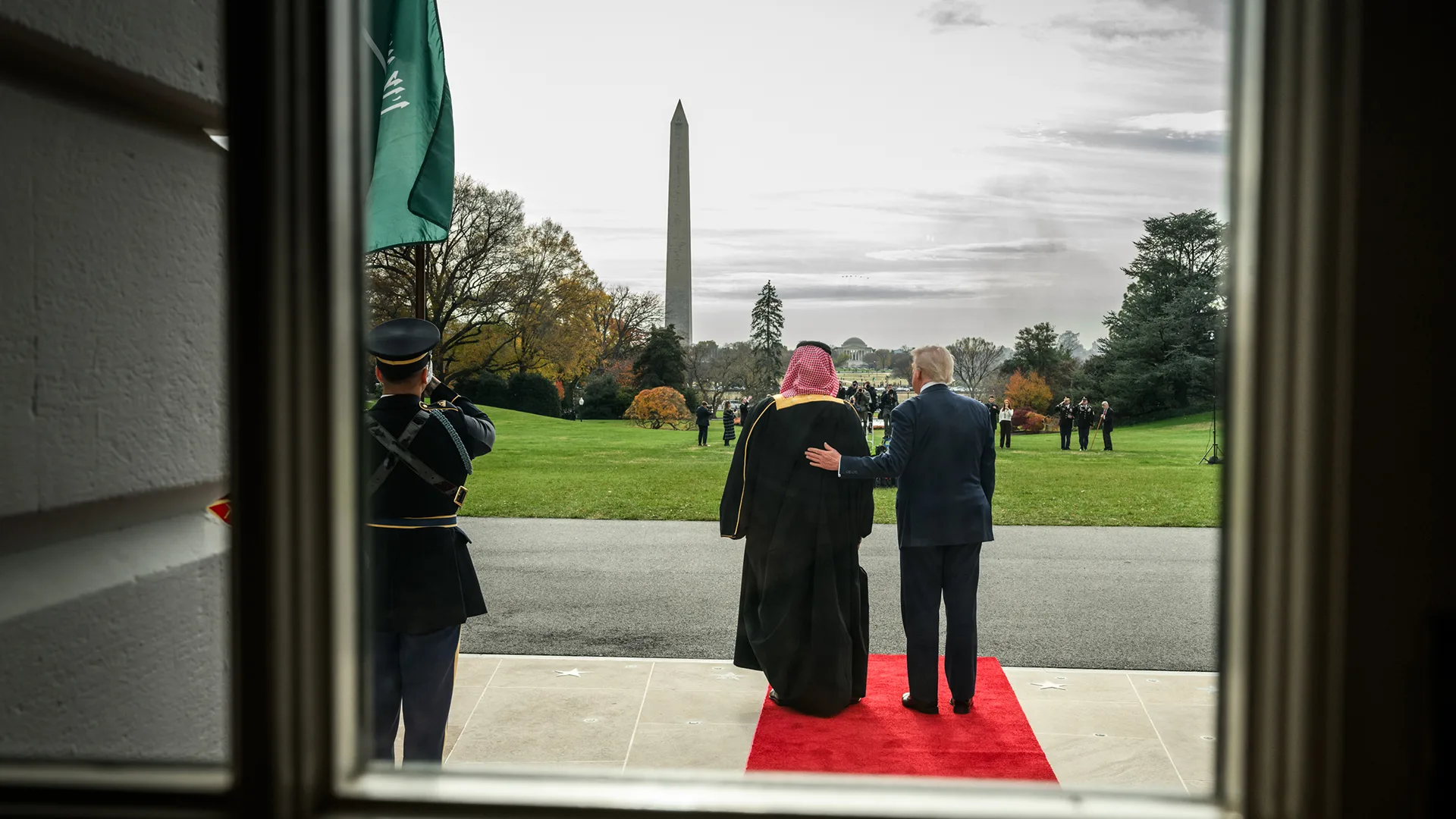
FRONTLINE examines the alliance between Saudi Crown Prince Mohammed bin Salman and President Donald Trump. Based on more than 100 interviews done by correspondent Martin Smith, the documentary examines the forces binding the two men and their countries together, and what each stands to gain — from ambitions for a new Middle East, to arms deals, investments and personal profit.
Directed by
Produced by
Correspondent
Transcript
Credits
Journalistic Standards
Support provided by:
Learn More
Most Watched


The FRONTLINE Newsletter
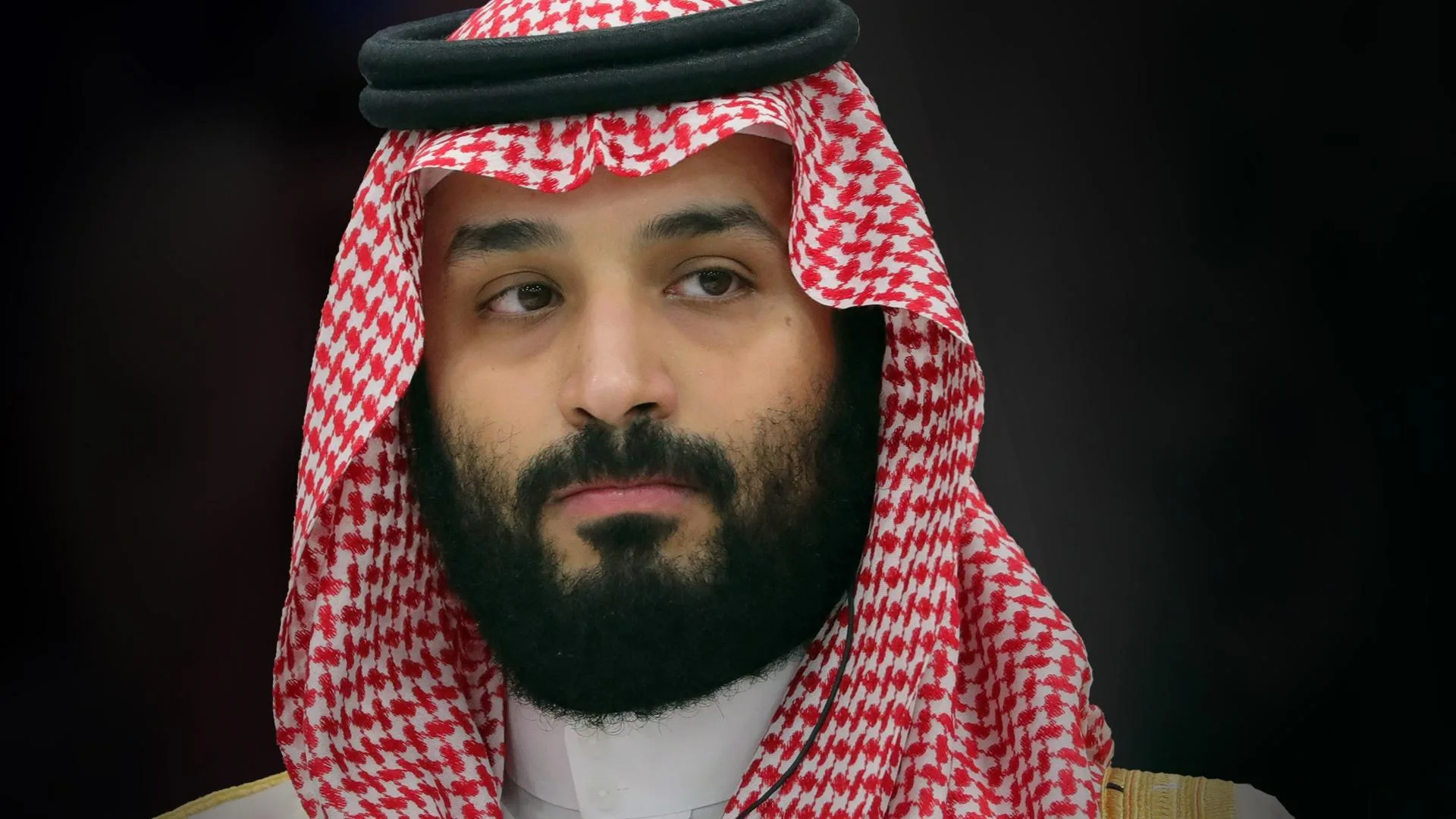
The Crown Prince of Saudi Arabia
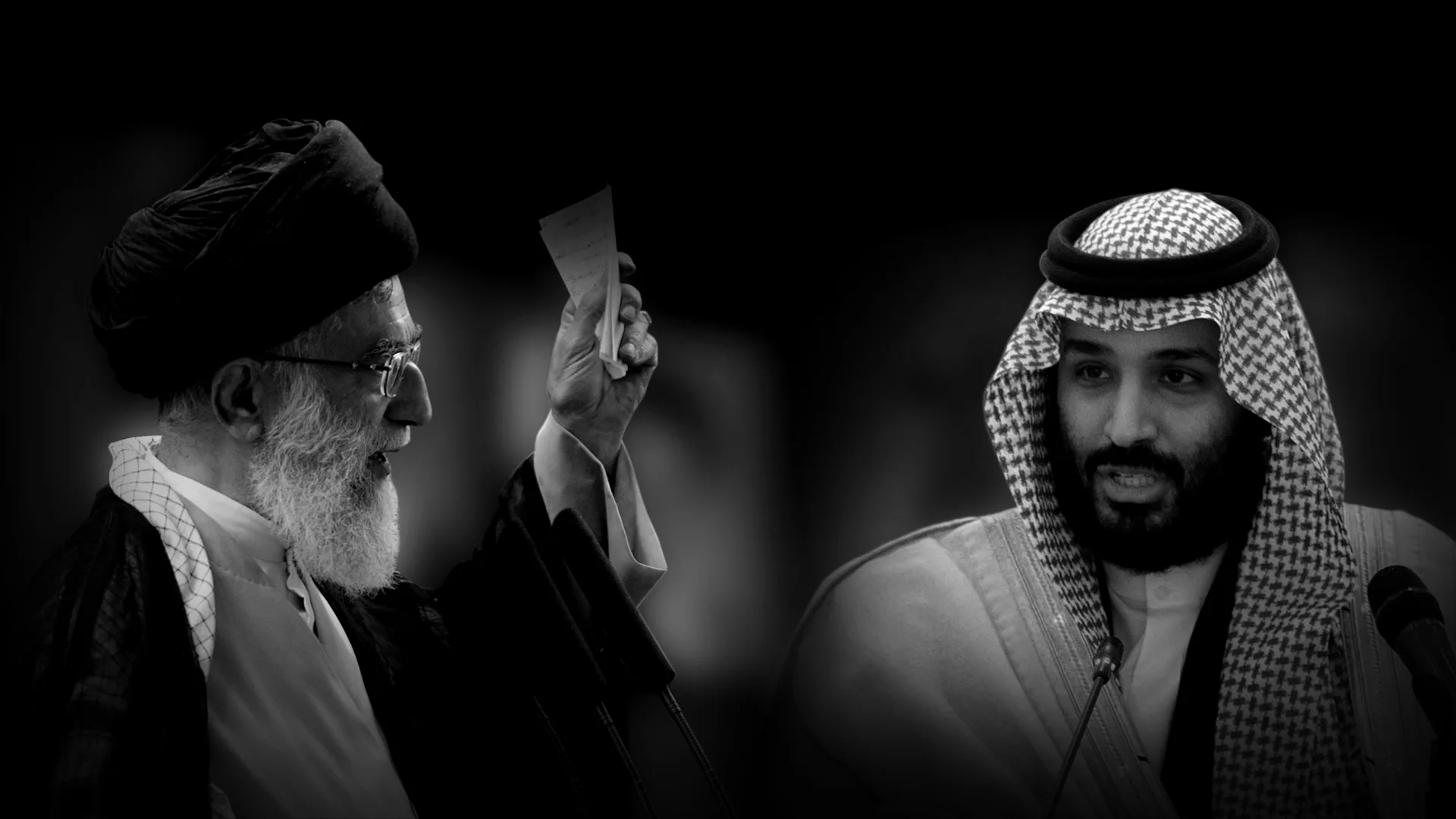
Bitter Rivals
Related Stories
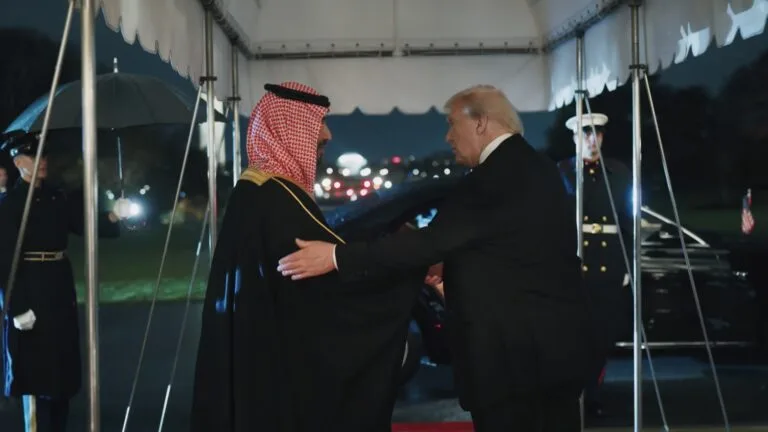
Where to Watch FRONTLINE’s Documentary on the Trump Administration & Saudi Arabia
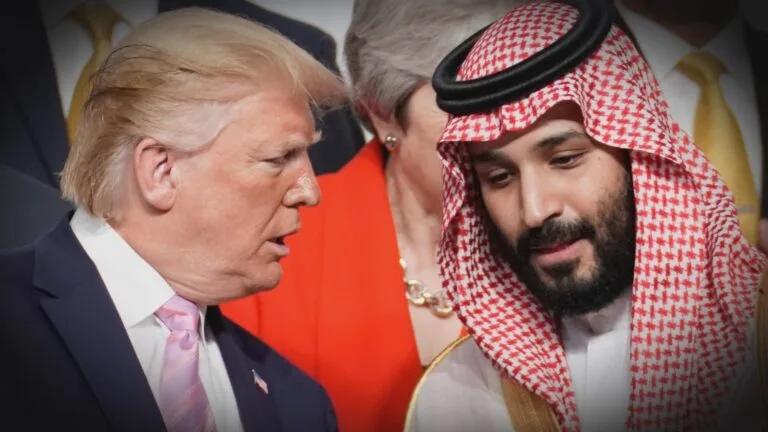
Documenting the Alliance Between Trump and Saudi Crown Prince MBS
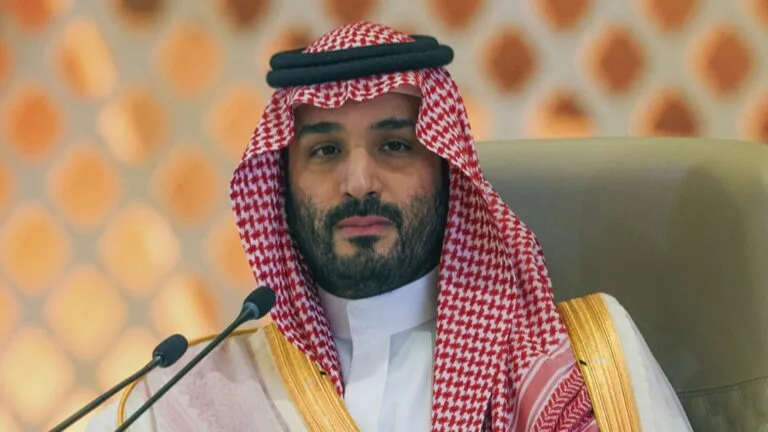
How Mohammed bin Salman Has Wielded Saudi Arabia’s Wealth
The Crown Prince of Saudi Arabia
Bitter Rivals
Related Stories
Where to Watch FRONTLINE’s Documentary on the Trump Administration & Saudi Arabia
Documenting the Alliance Between Trump and Saudi Crown Prince MBS
How Mohammed bin Salman Has Wielded Saudi Arabia’s Wealth
The Crown Prince of Saudi Arabia
Bitter Rivals
This program contains graphic imagery. Viewer discretion is advised.
BERNARD HAYKEL, Princeton University:
President Trump thinks that MBS is a great thing for Saudi Arabia, that he’s doing a wonderful job, that he’s investing in the United States. He sees that there’s kind of a realist calculation about what America’s interests are. And it is to remain very closely allied with MBS.
NARRATOR:
Correspondent Martin Smith examines the alliance between Mohammed bin Salman and Donald Trump.
MARTIN SMITH, Correspondent:
Why did President Trump see the Saudis as important to his “America First” agenda?
VICTORIA COATES, National Security Council, 2017-20:
President Trump saw Saudi Arabia as really the linchpin to the modern Middle East.
PRESIDENT DONALD TRUMP:
They buy apartments from me. They spend forty million, fifty million. Am I supposed to dislike them? I like them very much.
NARRATOR:
Now on FRONTLINE: The Crown Prince & the President.
November 2025
MALE NEWSREADER:
President Trump is hosting the Saudi crown prince at the White House today.
MALE NEWSREADER:
The crown prince is arriving around 11 a.m. for a series of meetings.
MALE NEWSREADER:
For years, MBS, as he’s widely known, was shunned on the world stage. Now President Trump will bestow on the 40-year-old ruler the pomp and pageantry usually reserved for an official state visit.
WHITE HOUSE ANNOUNCER:
Ladies and gentlemen, the president of the United States.
MALE NEWSREADER:
This is his first visit to the United States since the 2018 murder of Washington Post journalist Jamal Khashoggi, which U.S. intelligence assessed the crown prince knew about even though he’s denied it.
MALE NEWSREADER:
Quite the welcome at the White House for the Saudi crown prince.
FEMALE NEWSREADER:
Aircraft, flying in formation over President Trump, who literally rolled out the red carpet to welcome Mohammed bin Salman.
FEMALE NEWSREADER:
This is the grandest reception that essentially we’ve seen for any foreign leader during this second Trump term.
MALE NEWSREADER:
And why? Well, it’s all about the money.
FEMALE NEWSREADER:
From Saudi plans to invest billions of dollars in the United States to a joint security agreement.
PRESIDENT DONALD TRUMP:
We have a extremely respected man in the Oval Office today, and a friend of mine for a long time. … What he’s done is incredible in terms of human rights and everything else. … You’ve agreed to invest $600 billion into the United States. … Thank you very much.
MOHAMMED BIN SALMAN:
Thank you, Mr. President. … We believe in the future of America, and we believe in what you’re doing, Mr. President. … Today and tomorrow we going to announce that we are going to increase that $600 billion to almost $1 trillion of real investment and real opportunity.
DONALD TRUMP:
I like that very much.
MARY BRUCE, ABC News:
Mr. President. Mr. President. Is it appropriate, Mr. President, for your family to be doing business in Saudi Arabia while you’re president? Is that a conflict of interest? And, Your Royal Highness, the U.S. intelligence concluded that you orchestrated the brutal murder of a journalist. Why should Americans trust you?
DONALD TRUMP:
Who are you with?
MARY BRUCE:
ABC News, sir.
DONALD TRUMP:
Fake news. ABC, fake news. One of the worst—
MARY BRUCE:
But the question is legitimate, sir.
DONALD TRUMP:
One of the worst in the business, but I’ll answer your question.
MARY BRUCE:
Thank you.
DONALD TRUMP:
I have nothing to do with the family business. … What my family does is fine. … As far as this gentleman is concerned, he’s done a phenomenal job. You’re mentioning somebody that was extremely controversial. A lot of people didn’t like that gentleman that you’re talking about. Whether you liked him or didn’t like him, things happen, but he knew nothing about it, and we can leave it at that. You don’t have to embarrass our guest by asking a question like that.
DAVID KIRKPATRICK, The New Yorker:
Last November, in 2025, President Trump welcomed him very warmly at the White House. The crown prince certainly must have felt better to be welcomed back into the White House. When he shook hands with MBS, Trump said something like, “I don’t mind shaking that hand. I don’t care where it’s been.”
DONALD TRUMP:
I grab that hand. I don’t care the hell where that hand’s been. I grab that hand. [Laughter]
DAVID KIRKPATRICK:
He was basically alluding to the blood on MBS’s hands and saying, “I still don’t mind shaking it.”
MARTIN SMITH:
I have covered the U.S.-Saudi relationship for over 20 years.
DONALD TRUMP:
We’re delighted to have you with us at the White House. Very special, very very special.
MARTIN SMITH:
I have seen many ups and downs. But the friendship under Trump is something altogether different.
This is a story about the alliance between Crown Prince Mohammed bin Salman, or MBS, and President Donald Trump. It is based on over 100 interviews I have done here and abroad. What forces bind these men and their countries together? And to what end?
DONALD TRUMP:
Donald J. Trump is calling for a total and complete shutdown of Muslims entering the United States. [Applause]
MARTIN SMITH:
In the beginning, a close friendship between Donald Trump and Saudi Arabia—a deeply conservative Muslim country, home to 15 of the 19 9/11 hijackers—seemed unlikely.
During his 2016 campaign, Trump stoked anti-Muslim fears. “America First” was his mantra.
CROWD [chanting]:
USA! USA! USA!
DONALD TRUMP:
And if I win I’ve made it known, they’re going back. We can’t have them. They’re going back.
TRUMP SUPPORTER [chanting]:
We want Trump. We want Trump.
MARTIN SMITH:
In 2016, he rails against Muslims and he promises that his administration is going to put American interests first and we’re not going to embroil ourselves in the Middle East in particular.
RANDA SLIM, The Stimson Center:
For Trump there are Muslims, and there are Muslims. There are the Muslims who, according to him, are preying on the social services and the social safety net of this country.
DONALD TRUMP:
I want surveillance of certain mosques, OK? If that’s OK. I want surveillance.
RANDA SLIM:
And there are the Muslims with a bottomless well of wealth that can enrich him, enrich his family, enrich, contribute to his businesses, that can come in the country, build the factories that he wants to build for his supporters, invest in infrastructure and buy our weapons.
DONALD TRUMP:
They got nothing but money. If the right person asks them, they’d pay a fortune.
RANDA SLIM:
In his mindset, there are his people, and there are the other people, and the Saudi royal family are his people.
DONALD TRUMP:
Saudi Arabia, and I get along great with all of them. They buy apartments from me. They spend 40 million, 50 million. Am I supposed to dislike them? I like them very much. But you know, Saudi Arabia makes $1 billion a day. A day!
MARTIN SMITH:
Why did President Trump see the Saudis as important to his “America First” agenda?
VICTORIA COATES, National Security Council, 2017-20:
President Trump saw Saudi Arabia as really the linchpin to the modern Middle East.
MARTIN SMITH:
Victoria Coates was Trump’s deputy national security adviser for Middle Eastern affairs.
VICTORIA COATES:
When President Trump came into office he saw the relationship in some disrepair, and so he saw a real opportunity there, and also in the person of the crown prince a future leader who was very interested in modernizing the kingdom.
1. Courtship
November 2016
MARTIN SMITH:
It was just after Trump’s 2016 surprise election that the Saudis sent a delegation to New York. They were looking to reset relations with the U.S.
I sat down with Middle East envoy Martin Indyk in 2019. He has since passed away.
MARTIN INDYK, Middle East Special Envoy, 2013-14:
Suddenly, here is a new president coming in. Nobody really knows what he’s going to do—except a lot of the things he said seemed to be quite worrying. And they needed contact. And so that the real challenge for the Saudis was to try to find a way in.
DAVID KIRKPATRICK:
And they identified the son-in-law of the president, Jared Kushner, and most of the people around Trump as basically a blank slate in terms of their approach to the region. Not deep in their knowledge, coming to it fresh and with a very transactional mindset. And they came with a checkbook, hoping that by making some investments in red states, they could win the favor of the new Trump administration.
MARTIN SMITH:
Khalid Al-Falih, a high-level Saudi official, was among several Saudis who reached out to the incoming administration.
Did you meet with Jared Kushner?
KHALID AL-FALIH, CEO, Saudi Aramco, 2009-15:
I have met with Jared Kushner a couple of times, yes.
MARTIN SMITH:
You identified, or the team that you were part of identified, Jared Kushner as a promising interlocutor. Can you recount what happened?
KHALID AL-FALIH:
Well, first of all, it is natural between any two allies as governments change to reach out to them. You try to understand what are the priorities and how can you strengthen the relationship. We were enthusiastic this is a government that is going to be pro-business, pro-investment. And of course we are a big investor. We had great interest in the U.S.
F. GREGORY GAUSE, Middle East Institute:
The appointment of Jared Kushner, unofficially, even during the transition period, as his contact was probably seen with relief. These are family monarchies, right, in Saudi Arabia and the smaller states. And the idea that President Trump would send his son-in-law I think they probably found reassuring, and certainly a direct conduit to the man, not having to go through layers of State Department and things like that.
MARTIN SMITH:
Kushner did not respond to our request for an interview, but he has spoken publicly about an early encounter with the Saudis. On one podcast, he said a member of the Saudi delegation brought up his inexperience.
JARED KUSHNER:
The guy I was with, “Jared,” he says, “You don’t know much about Saudi Arabia, do you?” I said, “No, no, no, I don’t. It’s just really what I’ve kind of been told or what I read.” And he says, “OK… We want to be great allies with America.”
MARTIN SMITH:
Do you know about that meeting?
BERNARD HAYKEL, Princeton University:
Yes, of course. I heard about it from Jared Kushner himself.
He asked them for a document. They produced a document.
MARTIN SMITH:
What were they offering?
BERNARD HAYKEL:
Basically, an extremely strong strategic relationship, financial investments. They wanted to turn the page with the United States and build an entirely new relationship.
DAVID KIRKPATRICK:
And they came home with a report to the royal court that said this new president has a very transactional mindset, more so than other administrations. That’s how he and the people around him approach the world.
MARTIN SMITH:
Prior to Trump’s victory, Kushner was a real estate developer who headed a firm he inherited from his father, a New Jersey real estate baron who’d been convicted of multiple counts of tax evasion and witness tampering.
BRADLEY HOPE, Author, Blood and Oil:
Obviously, Jared Kushner is a very interesting character because his father was arrested, and it put him as kind of the person in charge of the family business at a very young age, when he was still in law school. And he took over this real estate business that his father had created while his father was in prison and was on trial and in prison.
MARTIN SMITH:
The Kushner family’s fortunes would soon turn. In 2006, his father was released from prison, and shortly after, Jared fell for Ivanka Trump over a business lunch.
After they married, Kushner would become one of President Trump’s top advisers.
DAVID IGNATIUS, Columnist, The Washington Post:
He’s become our principal negotiator with Iran, Ukraine, certainly in Gaza.
DONALD TRUMP:
Jared Kushner will be in charge of that.
DAVID IGNATIUS:
I don’t think that was initially what he planned. I think he is a business guy who kind of wandered into the Arab world. That wasn’t his initial plan. But he got in deeper and deeper.
MARTIN SMITH:
As a grandson of Holocaust survivors, Kushner was an Orthodox Jew who already had close ties to Israel through business investments and a personal relationship with Israel’s Prime Minister Benjamin Netanyahu.
CURT MILLS, The American Conservative:
The president has the right to appoint basically who he wants.
MARTIN SMITH:
Curt Mills is the executive director of The American Conservative, an influential right-leaning magazine.
CURT MILLS:
I don’t think Kushner having limited diplomatic experience should have been disqualifying. I think what was concerning is that he was tripling down on favoring one side of the region against the other.
MARTIN SMITH:
Israel.
CURT MILLS:
Israel and its allies, yeah.
MARTIN SMITH:
Do you think he was getting educated by the Israelis as to what opportunity the Saudis might present?
CURT MILLS:
I don’t think you have to go too deep. I mean, the relationship between Kushner and the Netanyahu family is very, very, very strong. And so instruction, education, symbiotic information, all there.
MARTIN SMITH:
Kushner has dismissed concerns about his close ties to Israel. And early on, Trump put him in charge of forging a new Middle East peace plan.
VICTORIA COATES:
Bear in mind that in the first term, the president’s first remit to Jared was to get to a Palestinian deal. We spent a year working on the peace plan, and I was the NSC liaison for Jared and for Jason Greenblatt during that process. And that was a good faith effort.
MARTIN SMITH:
Jason Greenblatt. For over 20 years, Greenblatt worked closely with Trump, eventually rising to become executive vice president and chief legal officer of the Trump Organization. After he was elected, Trump assigned Greenblatt to work with Kushner.
But you had no Middle East experience?
JASON GREENBLATT, Middle East Special Envoy, 2017-19:
Same answer as Jared, no Middle East experience. If anything, I was de-experienced, right? I had my pro-Israel, my negative Saudi.
Our immediate task was to try to solve the Israeli-Palestinian conflict, which by definition to us didn’t just include an agreement with the Israelis and the Palestinians, but as many of the Arab countries as possible.
MARTIN SMITH:
While preparing for the job, they consulted some of the veterans of Middle East diplomacy.
But in the end, they rejected their advice.
JARED KUSHNER:
The people who were trying to explain to me how to do the job, who I sought their opinions out, number one, had no track record of success, and number two, were giving me advice that just didn’t make logical sense.
MARTIN INDYK:
I don’t think Kushner felt that he needed to get briefed by anybody who had expertise in the region. They didn’t think they had anything to learn from us. On the contrary, they thought—they viewed us as failures, particularly when it came to the peace process.
MARTIN SMITH:
“We don’t need to listen to them.”
MARTIN INDYK:
Right. And no, they had no interest in listening to us.
JASON GREENBLATT:
I’ll pause a little bit, because Martin is no longer with us, and I don’t want to say anything unkind, because I liked him genuinely as a person. I spent a lot of time with Martin. I heard him out. And I found the conversations useful, like everything is useful when you’re trying to absorb like a sponge. But there’s a difference between listening and learning and accepting. Just because we didn’t think Martin’s way was correct doesn’t mean we didn’t listen and try to understand it. They feel upset that we didn’t take their advice and run with it.
MARTIN SMITH:
I also spoke with John Bolton, Trump’s former national security adviser, who has since become a vocal critic.
Did you ever have any concerns about Kushner’s ability? Was that an issue?
JOHN BOLTON, National Security Adviser, 2018-19:
Well, it depended on what he was doing. And since a lot of it looked to be more a dilettante’s interest in this issue or that issue or the other issue, as I say, it didn’t really distract my attention. He did get into some things in terms of immigration policy, for example, to try and help Trump out. But it was really very hard to define what he was there to do, until he began to work on his Middle East peace plan.
MARTIN SMITH:
Struggling to get Palestinians and Israelis to come to terms, Kushner would push to get Arab states to recognize Israel. Saudi Arabia was considered the key.
MICHAEL RATNEY, Ambassador to Saudi Arabia, 2023-25:
Saudi Arabia was considered sort of the big prize, the big kahuna of all of this.
MARTIN SMITH:
Why?
MICHAEL RATNEY:
Largest country in the Arab world, major role in Islam because they are the home of Mecca and Medina. A lot of other countries would look to Saudi Arabia. So I think if they forged a deal between Israel and Saudi Arabia, I think President Trump would have thought it would be a feather in his cap.
MARTIN SMITH:
Kushner proposed that President Trump accept a Saudi invitation to go to Riyadh for his first foreign trip.
The trip was opposed by many advisers.
Give me a sense of the debate that was going on inside the administration over that trip.
JASON GREENBLATT:
Well, the pros are we can’t pretend they’re not important—we need a strong, good relationship with Saudi Arabia. They’re going to be essential to any kind of peace process with the Palestinians. We need oil. We need money. We need them to buy our defense. But there were others who felt that they were bad guys. So they just felt it was not the right move.
MARTIN SMITH:
What did you think of that decision?
JOSEPH WESTPHAL, Ambassador to Saudi Arabia, 2014-17:
I thought it was crazy.
MARTIN SMITH:
Joseph Westphal was ambassador to Saudi Arabia under President Obama.
JOSEPH WESTPHAL:
I thought it was good that he went to Saudi Arabia, not to be the first country. I think he should have followed the tradition of coming to, going to Mexico and Canada first.
MARTIN SMITH:
But objections to the Saudi trip were dismissed. Kushner would become the administration’s primary contact with the Saudis. In the run-up to the trip, he even exchanged text messages with MBS.
Jared Kushner becomes a kind of point person. Was that ever something that raised your eyebrows?
JOHN BOLTON:
Well, Jared could perform whatever function he wanted to, because his father-in-law was the president. It was not a problem for me. He was much more a problem, I think, at the State Department
MARTIN SMITH:
In February of 2017, I had my first visit with MBS in his palace office. He spoke off the record, but what was clear is that he was very excited that President Trump was coming to Saudi Arabia.
2. Seduction
May 2017
MARTIN SMITH:
When Trump arrived in Riyadh, MBS and his father, King Salman, pulled out all the stops.
They wanted Trump’s loyalty as much as Trump and Kushner wanted them.
FEMALE NEWSREADER:
The grandeur of this welcome is so different from past presidents.
FEMALE NEWSREADER:
Really just showing how excited this country is that President Trump has chosen Saudi Arabia to make his first stop.
BRUCE RIEDEL, CIA, 1977-2006:
The Saudis knew how to play Donald Trump. They’d seen this kind of person before, and in many ways he’s kind of a mirror image of many Saudi princes.
MALE NEWSREADER:
Everywhere you look there are posters welcoming Donald Trump.
BRUCE RIEDEL:
You put his picture up on big posters on the side of skyscrapers.
FEMALE NEWSREADER:
Pretty amazing welcome ceremony that President Trump is receiving.
BRUCE RIEDEL:
You put on the sword dance.
You put on a big display. You play to his ego, and he will do what you want him to do.
MALE ANNOUNCER:
King Salman bin Abdulaziz Al Saud confers King Abdulaziz Medal on President Donald Trump of the United States.
BEN HUBBARD, Author, MBS: The Rise to Power:
Trump was over the moon about this trip, by all accounts. He just thought it was like the coolest thing that ever happened. He was welcomed by the king, all of these various things. I think it gave him this huge international stamp of approval that I think he would have had a hard time getting in many other countries.
BRUCE RIEDEL:
To give credit to Mohammed bin Salman, of his many sought-after accomplishments, the grooming and wooing of Donald Trump has to be pretty close to the top.
MARTIN SMITH:
The trip to Saudi Arabia, you’re on it, right? Give me some sense of what you were hoping to achieve.
JASON GREENBLATT:
Well, the first is to develop a real relationship, a rapport between the president and the leadership in Saudi. I don’t recall and I doubt if Israel, normalization with Israel came up. In fact, I’m 99% sure it wouldn’t have come up.
MARTIN SMITH:
At the time of the visit, MBS was still not in line to assume power from his father, King Salman.
SARAH LEAH WHITSON, Human rights lawyer:
Mohammed bin Salman was not yet crown prince, but clearly Mohammed bin Salman was being teed up for a more important role as the favored son of King Salman.
MARTIN SMITH:
Standing in his way was the then-crown prince, Mohammed bin Nayef, or MBN. MBN had been America’s trusted partner in the fight against Al Qaeda after 9/11.
BERNARD HAYKEL:
MBN was a darling of the CIA. When MBS showed up and represented a real threat to MBN as the next ruler of Saudi Arabia, a lot of the intelligence people got very, very upset and worried. And what MBS wanted to do was to say to the Trump people, “I am the guy who’s going to rule Saudi Arabia, and I’m better.”
CURT MILLS:
MBN was what, he was Obama’s man. He was John Brennan’s man, right? CIA director under Obama. And so the idea of dumping this guy, who had been pretty tight with the Obama set, or perceived to be as such, I think was an easy sell.
MARTIN SMITH:
Were you aware of him moving into position to become the crown prince? Were you aware of the tension between him and Mohammed bin Nayef?
JASON GREENBLATT:
I have to be careful how I talk about it, obviously, because I can’t disclose things that I can’t disclose. But we heard whispers, we heard movements, but until it happened, we didn’t know.
MARTIN SMITH:
You didn’t have a sense that MBN was on the way out?
JASON GREENBLATT:
I can’t really get into things like that, but I would say the little sense that I might have had meant nothing until it actually happened.
MARTIN SMITH:
A top aide to MBN was Saad Aljabri. Aljabri’s eldest son, Khalid, told me how MBS was aiming to rid the kingdom of his rival.
KHALID ALJABRI, Saudi exile:
Understanding that Mohammed bin Salman wanted to be king of Saudi Arabia and that the last hurdle happens to be my dad’s boss, obviously it was going to get ugly.
MARTIN SMITH:
This trip takes place. How did you see the Saudi-U.S. relationship taking shape at this point? I mean, you can sort of sense what’s going on.
KHALID ALJABRI:
My dad was actually kind of warned and advised to leave the kingdom.
MARTIN SMITH:
MBN’s days were numbered. MBS was the future.
PETER BAKER, The New York Times:
And this rising, new de facto ruler is positioning himself as a reformer. He talks about women having more rights in society. He talks about westernizing culture a little bit, letting movies play. He gets rid of the religious police, saying we’re going to have a new paradigm. And that’s very attractive to a lot of Americans who are saying, this is a guy who’s going to finally do what’s long overdue in Saudi Arabia.
MARTIN SMITH:
But at the time of the trip, Saudi Arabia was still operating as it had for decades. Women were living very restricted lives. Political rights, due process and free speech were largely absent.
How much did Trump or his administration understand about the kind of country they were visiting?
BEN HUBBARD:
There’s not much reason to think Trump was particularly concerned at the time that Saudi women couldn’t drive, or that they still had these, quote, unquote, “guardianship laws,” where, basically, women needed a male relative to sign on any sort of major life decision, whether it was getting married or things like that, traveling abroad. I don’t think that it probably made all that much difference for Trump. I just think that for Trump, these weren’t things that he was going to allow to disrupt what he saw as this blooming relationship with this powerful and incredibly wealthy Middle Eastern country.
DONALD TRUMP:
Yesterday, we signed historic agreements with the kingdom.
MARTIN SMITH:
Trump ended his trip on a high note. At a summit meeting of regional leaders, Trump talked about a large Saudi arms deal.
DONALD TRUMP:
This landmark agreement includes the announcement of a $110 billion Saudi-funded defense purchase.
MARTIN SMITH:
And Trump also promised the Saudis he would not meddle in their internal affairs.
BERNARD HAYKEL:
He’s actually said it openly. In the speech he gave in Riyadh, he said, “We’re not going to come here and dictate to you how you should run your countries and live your lives.”
DONALD TRUMP:
America will not seek to impose our way of life on others.
MARTIN SMITH:
In Saudi, May 2017, President Trump gives a speech. Human rights advocates and others have seen that as giving a green light to MBS to crack down on opposition within the country.
VICTORIA COATES:
Certainly President Trump has not prioritized human rights as you might understand them in, say, a President Carter context as a tool of statecraft. The United States can lead by example. And I think he wants to do that. But I think he also saw in MBS somebody who wanted to improve the lives of everyday Saudis.
MARTIN SMITH:
You reject the notion that in any way the president’s approach on human rights abroad emboldened the crown prince or any other autocrat in the region?
JASON GREENBLATT:
I think what they do in that region, they do regardless of what the president says.
KHALID ALJABRI:
If you look at it, it’s pretty clear. He was unleashed right after the Trump visit. Authoritarians are astute observers, and they will perceive the lack of conversation on human rights as a green light and a tacit approval to do whatever they wish.
MARTIN SMITH:
We talked to the son of the former intelligence chief of MBN, Aljabri. He says, if you look at it, it’s pretty clear. MBS was unleashed right after the Trump visit. You think that’s fair?
CURT MILLS:
It’s probably a little personalized, but I don’t think it’s spiritually incorrect.
Trump wanted that. I don’t think Trump has basically any opposition to crackdowns within societies. He doesn’t think that’s America’s business. I think he goes further in that he may actually sympathize with the crackdowns themselves.
3. Crackdown
June 2017
MARTIN SMITH:
Just one month after Trump’s visit, Mohammed bin Nayef was summoned to a meeting with MBS. Saudi TV broadcast this carefully choreographed scene.
DAVID IGNATIUS:
Essentially, what MBS did was to make a show of kissing Mohammed bin Nayef’s ring, as if he was being submissive.
MOHAMMED BIN NAYEF:
[Speaking Arabic] May God help you.
MOHAMMED BIN SALMAN:
[Speaking Arabic] May God prolong your life.
MOHAMMED BIN NAYEF:
[Speaking Arabic] I am relieved now and may God help you.
MOHAMMED BIN SALMAN:
[Speaking Arabic] We never take for granted your direction and guidance.
MOHAMMED BIN NAYEF:
[Speaking Arabic] Good luck to all.
MOHAMMED BIN SALMAN:
[Speaking Arabic] We will always seek your guidance.
DAVID IGNATIUS:
Soon enough, MBN was imprisoned, stripped of his title as crown prince and in comes MBS. That was a moment I remember clearly as just a hinge moment. Suddenly, Mohammed bin Salman not only has the passion for change, but this ability as crown prince to have the whip hand.
FEMALE NEWSREADER:
Mohammed bin Salman next in line for the throne. The new crown prince is 31 years old—
MARTIN SMITH:
MBS was now firmly in charge.
Within hours of the news, Trump called the crown prince to congratulate him.
Over the next year, dozens of men and women who were perceived as enemies of the state were rounded up, many thrown in prison. Others were able to flee the country.
Saad Aljabri would eventually escape to Canada, and his son Khalid had already moved to the U.S. But two of his siblings were still in Riyadh.
KHALID ALJABRI:
You know, I’m from a big family. My mom and dad and two girls and six boys. All of us were outside the kingdom. The only two that were remaining were my brother and sister, Sarah and Omar. They were 16 and 17 at that point, just in Saudi waiting for their U.S. student visa interview.
MARTIN SMITH:
So they could come for an education in the U.S.
KHALID ALJABRI:
Yes, yes, absolutely, and join me in Boston.
On the first day that Mohammed bin Salman became crown prince, in the airport, as they were trying to come to the U.S., they were told that you can’t leave the kingdom. And for us, we realized that as a family, we have a bull’s-eye on our back. Ultimately, my siblings were disappeared, and this March it will be six years. And nobody has seen them or visited them since then.
JOSEPH WESTPHAL:
Terrible, unwarranted, unnecessary, totally. Jabri was, yes, he was a pain to Mohammed bin Salman. He was a critic. He was argumentative.
MARTIN SMITH:
But as you know, being a critic in a system is a healthy thing.
JOSEPH WESTPHAL:
Yeah, it’s totally unwarranted. Totally unnecessary. It would never have diminished MBS’s power, authority or leadership to have those young people leave the country.
SARAH LEAH WHITSON:
Not only did Mohammed bin Salman threaten former Saudi official Saad Aljabri, and continue to torment and harass his family, continue to hold his two children hostage in Saudi Arabia, but there was also attempts and attacks on Saudi dissidents in London in the United Kingdom, including the head of a Saudi human rights organization, whose son was threatened by Saudi agents. Hundreds of Saudi royals remain under travel ban in Saudi Arabia. They cannot leave, for no reason at all, other than this is how you keep them quiet and complacent.
FEMALE NEWSREADER:
—what has been described as a coordinated crackdown on dissent in the country.
JOSEPH WESTPHAL:
He is part of a monarchy. They are susceptible to opposition, although there’s no history of that in Saudi Arabia, not like Iran or other places where people go out in the streets and protest. It just doesn’t happen. And maybe, maybe part of the reason that all this is done is to secure that kind of peace in the streets.
MARTIN INDYK:
His tolerance for any kind of dissent was zero. We in the West or the United States don’t really appreciate fully how sensitive autocratic leaders in the Middle East are to their dissidents, and I think that in the case of Mohammed bin Salman, he was hypersensitive to the criticism.
MARTIN SMITH:
There are significant cultural and social reforms going forward in the kingdom. Concerts, freedoms, social and cultural. But politically you’ve been cracking down on dissent.
ADEL AL-JUBEIR, Saudi Foreign Minister, 2015-18:
I wouldn’t characterize it as such. I think we have had a major, major program of reform.
MARTIN SMITH:
I interviewed Adel al-Jubeir in 2018. He was then Saudi Arabia’s minister of foreign affairs.
ADEL AL-JUBEIR:
His royal highness the crown prince is the driving force behind it, and he’s opening up the country socially. And we’re moving towards having a more accountable, more efficient, more transparent government. The arrests that have taken place have taken place as a consequence of violations of the laws. And these cases are now in the courts.
MARTIN SMITH:
There’s no question that MBS was a modernizer. But on the political front, on free speech, on the handling of dissidents, he was quite tough. Many people were thrown into prisons, and there are those who say that it was President Trump who emboldened the crown prince to know that he could get away with the crackdown that he imposed right after he became the crown prince.
VICTORIA COATES:
I would take a different view on that. I’m certainly not arguing that Saudi Arabia is a liberal democracy. They’re not, and nor do they wish to be. Do I agree with every choice he made? No, not necessarily.
MARTIN SMITH:
Was there a time during that period, during the crackdown, that the president or Kushner took the crown prince aside and said, “Hey, look, you’ve got to do a better job”?
VICTORIA COATES:
Not to my knowledge. They were very frank in the conversations I was party to about their concerns. But it was not a human rights issue per se.
MARTIN SMITH:
As MBS’s crackdown continued, a prominent Saudi journalist, Jamal Khashoggi, worried he’d be next.
SARAH LEAH WHITSON:
Suddenly seeing that journalists, writers, intellectuals, who were respected and tolerated in Saudi society and could write their views in various Saudi newspapers, no longer could. And he was horrified by what was happening, but also afraid for himself.
MARTIN SMITH:
Initially, when MBS came to power, Khashoggi was encouraged by the talk of reform and modernization.
JAMAL KHASHOGGI:
And he is seen as a savior by young Saudis and by me.
F. GREGORY GAUSE:
Khashoggi was quite supportive at the beginning with the loosening up of social life, right? The removal of a lot of these very onerous restrictions in terms of what you could do in public, particularly what women could do in public, but the idea that this was not also paired with some loosening up of political rights I think very much disappointed him.
MARTIN SMITH:
Khashoggi criticized MBS for his, quote, “overly enthusiastic embrace” of Trump. MBS moved to silence him.
Khashoggi fled to the U.S.
At the time, Karen Attiah was an editor at The Washington Post.
KAREN ATTIAH, The Washington Post, 2014-25:
We were hearing the reports about the crackdown, and I saw Jamal Khashoggi’s name being quoted in a few pieces about the situation. And I just figured, well, why not reach out to him. And so I gave him a call.
MARTIN SMITH:
When Khashoggi settled in Washington, D.C., in 2017, I sat down to talk with him. Before all our cameras were rolling he spoke personally for a moment. He told me he was uncertain about what he would do here.
JAMAL KHASHOGGI:
So basically what I am doing right now is just restructuring my life. I don’t want to be a dissident. But in the same time, I don’t want to go back home, and also, I could be banned from traveling.
MARTIN SMITH:
Soon after, Khashoggi decided what to do. He published his first column in the Washington Post in September 2017.
MALE VOICE [reading Jamal Khashoggi article]:
Saudi Arabia wasn’t always this repressive. Now it’s unbearable. It is all quite shocking. But this has not been business as usual in my country.
MAGGIE MITCHELL SALEM, Friend of Jamal Khashoggi:
You know, when he started writing in the Post, I think he wanted to believe that MBS was surrounded by people who were giving him bad advice. And so he was using that platform to try to speak directly to his leader, to give him advice like you would to a nephew, a young man who’s starting out in his career and making some—taking some actions that are ill-advised. And as time progressed, of course, he knew MBS was being himself, very true to himself. And the nature of his writing changed.
MALE VOICE [reading Jamal Khashoggi article]:
Mohammed bin Salman spoke of making our country more open. I have left my home, my family and my job, and I am raising my voice. To do otherwise would betray those who languish in prison.
MARTIN SMITH:
Did you recognize at that point that there was any danger in this for him?
KAREN ATTIAH:
Mortal danger? No. Personal sacrifices? Yes, of course.
MARTIN SMITH:
Then came Nov. 4, 2017, just five months into Mohammed bin Salman’s rise to power.
MALE NEWSREADER:
Incredible times in Saudi Arabia.
FEMALE NEWSREADER:
Some of the detainees reportedly held here, Riyadh’s glamorous Ritz-Carlton.
MALE NEWSREADER:
—especially the older guard, are extremely worried by these changes that are happening very fast by—
DAVID KIRKPATRICK:
The crown prince did something truly mind-boggling, which was to round up a number of his wealthy royal cousins and to more or less imprison them in the Ritz-Carlton Hotel. It was kind of a shakedown. He called it an anti-corruption purge, but basically he was demanding that they turn over assets to him—to the state, which is him—in exchange for their freedom.
MARTIN SMITH:
Do you believe anybody was coerced physically at the Ritz-Carlton?
NORMAN ROULE, CIA, 1980-2017:
I don’t know.
MARTIN SMITH:
It’s possible.
NORMAN ROULE:
Anything’s possible. All I can say is that the exercise was to bring in very senior members of the Saudi financial business community and say, “You have money which doesn’t belong to you, it belongs to the Saudi people. We would like that back. Now go out and live your life the way you did previously.”
MARTIN SMITH:
President Trump weighed in, supporting the round-up.
I think the president tweeted something about these people who had been milking the kingdom and they deserved—I guess, the implication is they deserved what they got.
KHALID ALJABRI:
And that speaks to the point that when you feel you have the endorsement of the United States, effectively you feel you have a carte blanche to pursue whatever you want, both domestically and regionally.
DAVID KIRKPATRICK:
Jared Kushner, about a week prior to this big event, had made a private, unusual, unannounced visit to Saudi Arabia at the prince’s desert retreat. And they apparently talked late into the night and even played video games together. What they discussed, we don’t actually know. But there has been quite a bit of speculation, not all of which I can confirm, that those two events were correlated. That the prince in some way sought permission from Jared Kushner before carrying out this shakedown of the royal family, or perhaps simply wanted to feel secure in his support within the White House before he moved ahead with this takeover.
MARTIN SMITH:
Well, certainly he was steeped in planning for this event. This is not something that just was a one- or two-day planning event.
DAVID KIRKPATRICK:
We don’t know that he got permission from Jared Kushner. But you’re right. It’s inconceivable that after Jared left, he thought on a whim, “Huh, why don’t I round up the rest of my family and shake them down for billions of dollars?” No, that was clearly in the works before that meeting in the desert with Jared Kushner.
MARTIN SMITH:
Do you know anything about that trip and what was discussed?
JASON GREENBLATT:
I was on that trip. Usual topics of conversation: peace, stability, oil, money. You know, everything you would expect.
MARTIN SMITH:
It’s been called “the shakedown at the Ritz-Carlton.” That had to be in the works. Did that come up?
JASON GREENBLATT:
No. I was with them for a very significant amount of time. I can’t speak to the times I wasn’t in the room, but I was in the room a very significant amount of the time.
MARTIN SMITH:
Writing in The Washington Post, Khashoggi compared the Ritz interrogations to Hitler’s “Night of the Long Knives.”
MALE VOICE [reading Jamal Khashoggi article]:
What is absolutely clear after Saturday’s “Night of the Long Knives” is that Crown Prince Mohammed bin Salman is centralizing all power within his position as crown prince.
Many of us living outside Saudi Arabia will not return home for fear of the same fate.
MARTIN SMITH:
There were reports of harsh treatment, beatings and even death.
TURKI AL-FAISAL, Saudi Ambassador to the U.S., 2005-07:
I heard those reports, but I’ve never seen any reflection of that.
MARTIN SMITH:
You have no suspicion about beatings?
TURKI AL-FAISAL:
None whatsoever, none whatsoever.
MARTIN SMITH:
In the wake of the roundup, I pressed a former Saudi intelligence chief about it.
TURKI AL-FAISAL:
And the fact that these people were put up in the Ritz-Carlton to me indicates that the intention is not to [laughs] to inflict physical or emotional harm on them. But rather to get to the truth.
MARTIN SMITH:
Like Kushner, I had a WhatsApp connection with MBS. And just after the arrests at the Ritz-Carlton, I asked the crown prince if he would give me an interview.
MOHAMMED BIN SALMAN [via SMS]:
I can’t do on record now but you know you are welcome anytime to talk about anything . . .
MARTIN SMITH [via SMS]:
Well, good to hear back. Thanks. I will think about whether an off the record interview is helpful.
MOHAMMED BIN SALMAN [via SMS]:
Anytime, just let me know.
MARTIN SMITH [via SMS]:
I will add that the entire world is waiting to hear the answers only you can give.
4. Murder
October 2018
MARTIN SMITH:
The jailing of critics or dissidents is common enough, even among U.S. allies, like Turkey or Egypt. But no event sparked outrage as much as what happened in October of 2018. That month, Jamal Khashoggi walked into the Saudi consulate in Istanbul to pick up some paperwork for an upcoming wedding.
FEMALE NEWSREADER:
Jamal Khashoggi. He went missing on Tuesday. He went to the consulate building of Saudi Arabia in Istanbul—
MALE NEWSREADER:
Speaking on Turkish television, Ms. Cengiz explained that he was going to the consulate to collect documents for the marriage, and for that she felt guilty—
KHALID ALJABRI:
I had a WhatsApp group of some friends. One of them shared a screenshot of a tweet by a Saudi exile who basically said Jamal Khashoggi had entered the Saudi consulate in Istanbul and hasn’t appeared. And my first reaction was like, please don’t let it be what I think it is.
MARTIN SMITH:
This is the room inside the consulate where Khashoggi was taken. At first the kingdom’s story was that he had walked out of the building alive and had gone missing somewhere in Turkey.
Turkish officials were furious.
RAGIP SOYLU, Middle East Eye:
They’re like, instead of their providing answers to us, they’re actually saying that, “Uh-oh, it’s your problem now. He’s missing in Turkey.” That was a tipping point for Turkish officials.
MARTIN SMITH:
At the pro-government Turkish newspaper Sabah, reporters started getting details from Turkish intelligence and the police. Nazif Karaman.
NAZIF KARAMAN:
[Speaking Turkish] Soon, we received information from one of our sources about two passenger jets which were owned by the Saudi government and used in this case.
MARTIN SMITH:
By the time the reporters had learned about the two Saudi planes, the jets had left Istanbul. But they learned of a recording.
RAGIP SOYLU:
I just couldn’t come to myself for a couple of minutes. I just couldn’t believe the fact that they cut him into pieces.
MARTIN SMITH:
In Washington, President Trump and his advisers were deciding how they were going to react.
JOHN BOLTON:
The reaction, obviously, was blowing up around the world, and we had to decide what our posture would be, to decide what we thought the cause of the murder had been. And I was surprised to find, almost immediately, without discussion, that Trump had decided that we were going to stick with the Saudis on it. Not berate them in public, but that we were going to support the Saudis.
MARTIN SMITH:
I talked to John Bolton, and he said that immediately the president said, “Look, we’re staying with Saudi Arabia.” There was no talk of doing anything really about it. And he said, “I was shocked.”
VICTORIA COATES:
That is John’s characterization. I don’t recall him expressing any of that to me. It sort of culminates in this statement from the president, a public statement on this, in which he says we all decry what happened in that consulate in Istanbul. But I cannot put the security of the American people at risk over one incident that I disapprove of. I consider that to be one of the most important statements that explains what America First means to him. And I know it came directly from him.
MARTIN SMITH:
I texted MBS.
[via SMS]: Hello sir. Martin here. What can you tell us about Khashoggi? Anything?
[via SMS]: Turks are saying he was killed in your consulate in Istanbul.]
No response.
A few days later, I tried again.
[via SMS]: I am not sure how to interpret your silence. Do you believe that Jamal is alive?
Again, no response. But that same day, MBS answered a call from Jared Kushner and John Bolton.
JOHN BOLTON:
Jared had him on his cell phone.
MARTIN SMITH:
And recount that conversation, what you said to the crown prince and what he said in response.
JOHN BOLTON:
Well, I said my advice would be to find out what the facts were and get it all out as quickly as possible and get it behind us.
MARTIN SMITH:
How did he respond to that?
JOHN BOLTON:
I think he sounded affirmative.
MARTIN SMITH:
Two weeks after Khashoggi’s disappearance, the Saudis changed their story and said he’d been murdered in a rogue operation and that MBS knew nothing about it.
How is it possible that Mohammed bin Salman did not know of this operation?
NORMAN ROULE:
It’s very unlikely he did not know of at least a rendition. I can easily imagine that the decision-making might’ve been as simple as saying, “We have this dissident. We will conduct a rendition operation from Istanbul,” and being told, “Go ahead.”
MARTIN SMITH:
So you have contacts within Saudi Arabia at high levels that tell you that this was a rendition?
NORMAN ROULE:
Yes.
MARTIN SMITH:
The Saudis insisted they were investigating who was responsible for the murder.
You’re saying that this is being investigated by the public prosecutor.
ADEL AL-JUBEIR:
Yes.
MARTIN SMITH:
But at the same time, you have declared it a rogue operation. So you’ve reached a conclusion that this was a rogue operation before the investigation is complete.
ADEL AL-JUBEIR:
Of course it’s a rogue operation. Nobody authorized this. Who would authorize the murder of a citizen in—
MARTIN SMITH:
How do we know until there is an investigation?
ADEL AL-JUBEIR:
It seems to me that you have made up your mind before you watched our due process—
MARTIN SMITH:
You’ve made up your mind that it’s a rogue operation.
ADEL AL-JUBEIR:
It is a rogue operation because there is no authorization for them to commit this crime. There was no authorization for them to commit this crime. That’s why it’s a rogue operation.
FEMALE REPORTER:
Have you heard that tape? And does it conclusively point to the crown prince as ordering the killing of Jamal Khashoggi?
JOHN BOLTON:
No, I haven’t listened to it. And I guess I should ask you why do you think I should? What do you think I’ll learn from it?
FEMALE REPORTER:
Well, you’re the national security adviser—
JOHN BOLTON:
What was the tape going to tell you? He was dead at the time.
MARTIN SMITH:
He was dead at the time, but we we know that the guys that carried out the murder at the time were reporting back to the royal court.
JOHN BOLTON:
I don’t speak Arabic.
MARTIN SMITH:
Yeah, but you work with translators.
JOHN BOLTON:
I know what was on the tape. I just didn’t feel I had to listen to it. I just think that’s violence porn. You know, you can decide to get into the specifics of it, or you can do basically what Trump did, which is to say we’re going to stick with the kingdom, and the commentators can commentate.
MARTIN SMITH:
That we had to consider our interests over the death of—the murder of this one guy.
JOHN BOLTON:
Assuming everything turned out to be contrary to what the official line was, it was still an American interest to keep the relationship with the Saudis.
KHALID ALJABRI:
Saudi Arabia was always an absolute monarchy. It’s a hypercentralized state. Nothing good or bad can happen without at least the knowledge of people at the top of the pyramid. I think that’s fair to say. Also, as a physician, why do you send a forensic pathologist to a crime scene? If you want to drug somebody, send an anesthetist. They’re pretty good with IVs, they know them. But sending somebody who only deals with dead bodies kind of gives it up.
MARTIN SMITH:
MBS had stopped answering my texts, so two and a half months after the murder, I went to see him. He was at a car race just outside of Riyadh, surrounded by friends.
I asked him about Khashoggi’s murder. My camera was outside, but he said, “It happened under my watch. I get all the responsibility, because it happened under my watch. I really take it very seriously. I don’t want to tell you, no, I didn’t do it, or I did do it, or whatever. That’s just words.”
I then asked him how it could happen without him knowing about it.
“Accidents happen. Can you imagine? We have 20 million people. We have 3 million government employees. I am not Google or a supercomputer to watch over 3 million.”
I asked, they can take one of your planes?
“I have officials, ministers to follow things, and they’re responsible. They have the authority to do that.”
He didn’t say much more.
But when the CIA finished their investigation, they concluded that the crown prince had ordered either a kidnapping or a murder.
PETER BAKER, Co-author, The Divider:
Trump’s first response is to basically to accept his friend’s word, right? His friend MBS, the crown prince, says he didn’t do it. He must not have done it then. Except here you have the same thing where the CIA says, No, we actually have got an assessment here. Our assessment says this was, in fact, an authorized operation by the Saudi government, and it was authorized, we believe, by the crown prince himself. And Trump dismisses that.
This is a problem for him. Does it make it harder for him to do the things he wants to do? Does it make MBS politically radioactive in a way that will interfere with Trump’s own strategic goals for the region? And it does for a while.
DONALD TRUMP:
They do point out certain things, and in pointing out those things, you can conclude that maybe he did or maybe he didn’t. But that was another part of the false reporting.
JASON GREENBLATT:
By the way, I’ve seen CIA assessments that were wrong, many times. And you have MBS who said he didn’t do it. I’m not a judge. I’m not a jury. I don’t know what happened.
MARTIN SMITH:
What did it do to your efforts to draw Saudi Arabia closer to Israel? Did it have any impact?
JASON GREENBLATT:
I don’t think so. I mean, terrible thing though it was, we still have to do business, right?
MARTIN SMITH:
Did you talk with the crown prince afterwards?
JASON GREENBLATT:
We met him many times afterwards. Things were still going on. Until I left the White House at the end of 2019, we had plenty of conversations.
MARTIN SMITH:
Did you ask him directly about the murder?
JASON GREENBLATT:
Not my role to do that.
MARTIN SMITH:
What is the meaning for Americans of Trump’s protection of Mohammed bin Salman?
MAGGIE MITCHELL SALEM:
We stand for something as a country.
MARTIN SMITH:
Like free speech.
MAGGIE MITCHELL SALEM:
Free speech. For Trump to so boldly excuse and embrace a leader who murdered, in the most gruesome way you can imagine, one of his own people, for simply writing columns, for our president to turn his back on that—We are a beacon. We remain a beacon. And that’s what it should mean to Americans.
MALE REPORTER:
Are you letting the Saudis get away with murder?
DONALD TRUMP:
No, no, no, no. This is about America First. They’re paying us $400 billion-plus to purchase and invest in our country. . . . We are with Saudi Arabia. We’re staying with Saudi Arabia. . . . Have a good time everybody, thank you.
MARTIN SMITH:
Trump was staying with Saudi Arabia. But MBS found himself unwelcome in the West for years to come.
In 2020, before leaving office, Trump announced some progress in getting Arab states to recognize Israel.
DONALD TRUMP:
After decades of division and conflict, we mark the dawn of a new Middle East. . . . In a few moments, these visionary leaders will sign the first two peace deals between Israel and the Arab state in more than a quarter century.
MARTIN SMITH:
First the UAE and Bahrain signed peace deals under what were called the Abraham Accords. Morocco and Sudan would soon follow.
But Kushner and his team were not able to convince the Saudis.
Once in office, President Biden would continue pressing the Saudis to join the Abraham Accords.
5. Money
January 2021
MARTIN SMITH:
Soon after Trump’s first term ended, Jared Kushner moved to Florida.
MALE NEWSREADER:
Two days after the election, Jared Kushner woke up and told Ivanka, “Hey, we’re moving to Miami.”
FEMALE NEWSREADER:
Ivanka Trump and Jared Kushner purchased a two-acre waterfront lot for $32 million.
MALE NEWSREADER:
Indian Creek Island is the most expensive neighborhood in America.
MARTIN SMITH:
And here he established a new company, Affinity Partners.
DAVID KIRKPATRICK:
What surprised me was that instead of going back into real estate, Jared Kushner went into a new business, which is private equity, quite a lucrative business. And his first step was reaching out to Crown Prince Mohammed bin Salman to help fund his new private equity business.
MARTIN SMITH:
Initially, the board overseeing Saudi Arabia’s investments through the kingdom’s Public Investment Fund was reluctant.
DAVID KIRKPATRICK:
The advisory committee, who are the leading lights of Saudi investment world, as well as a couple of international businessmen that they’ve brought in, thought that it was a bad idea.
RUSS BUETTNER, The New York Times:
Why would this massive fund that has access to every investment organization in the world look at the landscape and say, “Let’s go with this young fellow who’s never really done this kind of work before, and let’s put $2 billion in his pocket and see see what he can do with it.”
MARTIN SMITH:
Board minutes outlined their concerns.
MALE VOICE [reading PIF minutes]:
These risks have been flagged, including the risk of having limited experience in private equity and the inability for Affinity to provide any quantifiable investment track-record.
DAVID KIRKPATRICK:
Despite all of these negative opinions from that panel of advisers, the crown prince, who chairs the board that governs the Public Investment Fund, nonetheless said, thumbs up.
MARTIN SMITH:
Was that payback? Or was it a bet on the future? What was it?
PETER BAKER:
We can only guess as to the motivation, but it kind of speaks for itself, right? Jared had been instrumental in protecting them from consequences from the Jamal Khashoggi murder, and perhaps they saw a future Trump administration coming back.
DAN PRIMACK, Axios:
Jared Kushner.
MARTIN SMITH:
In this Q&A forum, Kushner was asked whether the Khashoggi murder made him at all wary of taking Saudi money.
DAN PRIMACK:
Lots and lots of private equity firms, other folks are trying to raise money from Saudi Arabia. Some, however, stopped after the Jamal Khashoggi murder.
JARED KUSHNER:
Are we really still doing this, Dan? I mean—
DAN PRIMACK:
Yeah, absolutely.
JARED KUSHNER:
So let’s go to this. I have not seen the DNI report that the Biden administration put out there. And number two is, look, I know the person who I dealt with. I think he’s a visionary leader. I think what he’s done in that region is transformational.
MARTIN SMITH:
At the time, the Saudi sovereign wealth, or Public Investment Fund—the PIF—made a slew of other aggressive investments.
Promotional video
PIF ADVERTISEMENT:
PIF is one of the world’s largest and fastest-growing sovereign wealth funds.
The United States is PIF’s most important market outside of Saudi Arabia.
PIF is invested in better.
F. GREGORY GAUSE:
One of the big things that Mohammed bin Salman did when he came in was take a very, very conservative sovereign wealth policy and he turned it into a major, right, now trillion dollars in assets, a player in the world sovereign wealth funds.
SARAH LEAH WHITSON:
Mohammed bin Salman, particularly in the wake of the ostracism that he faced after the murder of Khashoggi, massively expanded investments in U.S. businesses reflect both the kingdom’s desire to globally become players and use the state’s assets, the Saudi people’s assets, to buy diverse assets around the world, but also as a leverage of influence and control.
Promotional video
BRADLEY HOPE:
In the modern times, you don’t need an army, you need a sovereign wealth fund. And that really is quite true, I think, if you’re if you’re a small country, especially. They have these big funds, and it’s kind of how they wield influence and power in the world.
BRETT BAIER, Fox News:
In the Trump administration, you had a really close relationship with the president’s senior adviser and son-in-law Jared Kushner after he left.
MARTIN SMITH:
The crown prince was asked about the propriety of his investment on Fox News.
BRETT BAIER:
Do you think that sends the wrong message even if there wasn’t a tit for tat, an “I’ll give you this and you get that”?
MOHAMMED BIN SALMAN:
We look to opportunities and investment. We have investment, a lot of investment around the globe with a lot of peoples and with economical opportunity.
BRETT BAIER:
So if Trump becomes president again, you’ll leave the two billion with Jared Kushner?
MOHAMMED BIN SALMAN:
It’s a commitment that PIF have, and when PIF have commitment with any investor around the globe, keep it.
MARTIN SMITH:
Kushner was not the only bet MBS made.
He wasn’t alone. Steve Mnuchin also walks into a billion dollars.
PETER BAKER, The New York Times:
Steve Mnuchin, the Treasury secretary, also walks into Saudi and gets a billion-dollar investment. He’s like a piggy bank for former American officials.
MARTIN SMITH:
It’s incredible.
PETER BAKER:
It’s incredible. And normally would be the cause of a great storm of controversy, and there would be hearings, there would be investigations. There would certainly be a lot of commentary and criticism. And it kind of came and went.
MARTIN SMITH:
Mnuchin and Kushner have brushed off concerns about conflicts of interest. They were private citizens at the time.
MALE NEWSREADER:
Breaking news, we are projecting at this hour the 47th president of the United States, Donald Trump.
FEMALE NEWSREADER:
The former president’s comeback will be complete with a win in Wisconsin.
DONALD TRUMP:
America has given us an unprecedented and powerful mandate.
MALE NEWSREADER:
An extraordinary political comeback.
MALE NEWSREADER:
Saudi Arabia, United Arab Emirates, Russia, all very pleased.
MARTIN SMITH:
After Trump was reelected in 2024, Kushner would eventually again become a senior adviser to the president, focused on Middle East diplomacy.
At the time, his firm, Affinity Partners, was reportedly taking in tens of millions of dollars a year in fees from the Saudis. Kushner says he did not take any salary from the U.S. government for his work.
What’s the danger of taking Saudi money? And what’s the danger to ordinary Americans? Why should they care?
SARAH LEAH WHITSON:
First of all, if Jared Kushner was a private citizen engaged only in private business, I wouldn’t be particularly concerned. The fact that he’s still effectively on the Saudi payroll while making decisions about whatever it is that the U.S. decides to do, while so entangled with the Saudi government, is a very basic conflict of interest.
MARTIN SMITH:
What do you say to those who say that this is just a glaring conflict of interest?
VICTORIA COATES:
I would say that the records of the company are open and that if you see any kind of illegal activity it should be investigated. I’ve seen no evidence of that.
MARTIN SMITH:
It doesn’t have to be illegal to be a conflict of interest. There’s certainly an appearance problem here.
VICTORIA COATES:
There may well be an appearance problem, but I mean, then it’s been a problem for, I guess, 10 years now, and that didn’t prevent the American people from resoundingly reelecting President Trump in 2024.
MALE REPORTER:
How did the White House decide that it is appropriate for Jared Kushner to be working on matters that involve Qatar, the UAE, Saudi Arabia, three countries that combined have given him more than $2.5 billion for his investment firm?
KAROLINE LEAVITT:
I think it’s frankly despicable that you’re trying to suggest that it’s inappropriate for Jared Kushner, who is widely respected around the world and has great trust and relationships with these critical partners in these countries, and so Jared is donating his energy and his time to our government, to the president of the United States, to secure world peace. And that is a very noble thing.
MARTIN SMITH:
You’re critical of the work that Kushner was doing?
CURT MILLS:
For sure. Yeah, I mean, it’s very hard to argue that Kushner’s involvement in politics has been net good for the administration or net good for the United States. I think he is using his cards to potentially line his own pocket. This is not Burisma, right? This is not Hunter Biden stuff. This is serious money.
MARTIN SMITH:
During the second Trump term, Trump’s two sons, Don Jr. and Eric, also started receiving money from Saudi sources. They announced two developments in the capital, Riyadh, and a tower rising along the skyline of Jeddah, each one carrying the Trump brand.
DAR GLOBAL ADVERTISEMENT:
Trump International, the ultimate postcode.
RUSS BUETTNER, Co-author, Lucky Loser:
Don Jr. described it as almost free money. They just say you can put my name on this thing. You’re going to give us a big up-front fee, and if the thing’s successful, you’ll give us a piece of the profits in the out years.
MARTIN SMITH:
In a press release, Eric Trump said the Trump Organization, which he manages with his brother Don Jr., is, quote, “dedicated not just to meeting, but vastly exceeding its legal and ethical obligations.”
The sole owner of the Trump Organization is the president, and by law he’s not subject to conflict of interest statutes.
Trump has said he’s removed himself from the operations of the company and promised to donate some profits back to the U.S. Treasury.
JASON GREENBLATT:
In the first term, they actually foreswore all international deals, and yet they raked them through the coals. I think this time, Eric Trump was probably the one who said this, if we gave up billions of dollars and still got raked through the coals, and it’s legal for me to do this, why shouldn’t I do it? I think that’s a reasonable position. If they’re not breaking the law, why should they be rewarded with making less money just because President Trump is the president and there happened to be his sons?
MARTIN SMITH:
But the increase in Trump’s personal wealth—from an array of sources, including Saudi deals and others, like crypto—has been estimated in the billions.
RUSS BUETTNER:
This amount is greater than the sum total of everything Donald Trump received for being on The Apprentice, for licensing deals coming from The Apprentice, for his inheritance and for his best lucky investment. So that’s more in one year than he received from the best financial pots of gold of his life over a 25-year period, all coming all at once. And the idea that that’s not broken through, and that there’s not examinations into that going on, is really historically stunning, and I think also a testimony to where our Congress is right now.
JOHN LYONS, Australian Broadcasting Corporation:
President Trump, you’re generally regarded to be the wealthiest man who’s ever occupied the White House.
DONALD TRUMP:
I hope so.
JOHN LYONS:
How much wealthier are you now than when you returned to the White House?
DONALD TRUMP:
Well, I don’t know. The deals I made, for the most part, other than what my kids are doing—you know, they’re running my business. But most of the deals that I’ve made were made before. And that’s what I’ve done for a life, I’ve—
JOHN LYONS:
But you are also—
DONALD TRUMP:
You know what the activity—Where are you from?
JOHN LYONS:
I’m from the Australian Broadcasting Corporation, Four Corners program.
DONALD TRUMP:
Australia’s—You’re hurting Australia, right—In my opinion, you are hurting Australia very much right now.
JOHN LYONS:
President Trump—
DONALD TRUMP:
I’m going to tell them about you. You set a very bad tone. Go ahead, John.
JOHN LYONS:
Well, President Trump, when the UAE does a deal like that, when the UAE does a deal, what does it want in return?
DONALD TRUMP:
Quiet.
6. War
FEMALE NEWSREADER:
Donald Trump campaigned on a “no new wars” pledge.
FEMALE NEWSREADER:
Everything is about America First.
MARTIN SMITH:
Despite all of Trump’s business success in the Middle East—
MALE NEWSREADER:
—America’s best interests—
MARTIN SMITH:
—peace in the region has remained as elusive as ever.
FEMALE NEWSREADER:
He was very clear: No new wars.
FEMALE NEWSREADER:
Hamas has launched a surprise attack within Israel’s borders. At least 100 taken hostage.
MARTIN SMITH:
Oct. 7, 2023. President Biden was finally getting close to a deal between Israel and the Saudis under the Abraham Accords when Hamas mounted an assault on Israel.
FEMALE NEWSREADER:
An unprecedented, multi-pronged terror attack.
MARTIN SMITH:
Some 1,200 people were slaughtered; 251 were taken hostage.
MALE NEWSREADER:
A deep, deep wound in Israel.
MALE NEWSREADER:
The worst slaughter of Jews since the Holocaust.
MARTIN SMITH:
Kushner’s plan for a Saudi-Israel alliance was shattered.
JULIAN BARNES, The New York Times:
The Oct. 7 attacks, as we know, upended the entire region. Israel was badly attacked, and then Israel begins their military campaign against Gaza with overwhelming force, leading to the deaths of thousands of Palestinians, and there was no way in that environment that Saudi Arabia and Israel were going to be able to make, formally make a peace deal. There was just—The public opposition would have been through the roof.
DAVID IGNATIUS:
MBS reacted to the Gaza war, understandably, in some ways, thinking, I just don’t feel comfortable aligning with an Israel that’s been so repressive against the Palestinian population. Certainly the public in Saudi Arabia supported that.
MARTIN SMITH:
Two months into the war, the very day that Jared Kushner and Ivanka Trump visited a destroyed Kibbutz near Gaza, a rare poll from Saudi Arabia was released. It showed that 96% of Saudis supported cutting all ties with Israel in protest over Israel’s bombing campaign in Gaza.
The crown prince got the message.
MOHAMMED BIN SALMAN:
[Speaking Arabic] The kingdom reiterates its condemnation and categorical rejection of the genocide Israel is committing against our brotherly Palestinian people.
RANDA SLIM:
Among the Saudi youth, this issue is extremely important. And so he knew that there are certain limits to how far he can push with normalization as long as he cannot deliver what he said he needs to deliver for the Palestinians.
MICHAEL RATNEY:
MBS keeps his ear to the street. He knows what his constituencies are thinking. If you have an environment in which Palestinians are being killed in large numbers in Gaza, the idea that MBS, just because he saw a strategic value in a normalization deal, could just jam it on his population was never true.
MARTIN SMITH:
Some observers put the blame on Kushner’s Abraham Accords.
CURT MILLS:
I think the clear flaw from the beginning of the Abraham Accords was it did nothing to settle the fate of the Palestinian people. I don’t think the Abraham Accords happen without Jared Kushner. But if there was any leading intellectual critique of them, it was that they abandoned Palestine. They abandoned the Palestinian people.
MARTIN SMITH:
Curt Mills of American Conservative laid the events of Oct. 7 at the feet of Jared Kushner.
VICTORIA COATES:
Well, that’s completely inconsistent with my experience with Jared. Jared is sincerely interested in the future of the Palestinian people and worked hard to come up with a deal that would be satisfactory because in his mind, to my understanding, this is also the best thing for Israel.
MARTIN SMITH:
What was in the Abraham Accords for the Palestinians?
JASON GREENBLATT, Author, In the Path of Abraham:
Specifically, nothing. But if they had actually put their hand up and said, “Hey, we can be the glue here. We know Israel. We know the Arabs. We speak Hebrew, some of us. We speak Arabic. We could be great partners here for everybody,” that would have been a huge benefit to them. Every which way we ever dealt with the Palestinians, they were never interested—the leadership, not the people. They weren’t interested in talking to us anymore.
FEMALE NEWSREADER:
Significant U.S. military assets—
MALE NEWSREADER:
Aircraft carrier USS Abraham Lincoln—
FEMALE NEWSREADER:
Is the U.S. about to strike Iran?
MALE NEWSREADER:
It looks like we’re positioning assets for a strike.
MARTIN SMITH:
A year into Trump’s second term, the region was heading towards its biggest escalation yet: an all-out war with Iran, Hamas’s chief sponsor and Israel’s mortal enemy.
DONALD TRUMP:
A short time ago, the United States military began major combat operations in Iran. Our objective is to defend the American people by eliminating imminent threats from the Iranian regime.
MARTIN SMITH:
Despite having pledged no new wars, in early 2026, Trump joined Israel and went to war against Iran.
DONALD TRUMP:
They’ve rejected every opportunity to renounce their nuclear ambitions. Instead, they attempted to rebuild their nuclear program and to continue developing long-range missiles.
MARTIN SMITH:
Do you think that Mohammed bin Salman wanted this war?
JOSEPH WESTPHAL:
Based on what I know of him and how he thinks, I don’t think he wanted this war. I don’t think in any way this war helps Saudi Arabia. Obviously, it’s not helping to move their oil. It’s not helping their economy.
MARTIN SMITH:
But once the war started, MBS was in a bind.
JULIAN BARNES:
Once it starts, MBS is calling constantly to push Donald Trump to finish the job. At key moments when Trump is considering pulling back, MBS is counseling a more aggressive stance.
MARTIN SMITH:
How many calls did MBS make to Trump, urging him to continue? Approximately.
JULIAN BARNES:
I know of at least three during a one-week period before the ceasefire. But I am sure that it’s far more than that. MBS was pushing for a tougher line, for a continuation of this war.
MARTIN SMITH:
Then, as the war dragged on, MBS saw the damage Saudi Arabia was incurring. He denies he ever urged Trump to continue.
We hear that he’s calling Donald Trump many times in a week and telling him to finish the job and keep it up.
MICHAEL RATNEY:
I think they’re confounded about what to do. My sense is, truly they didn’t want this war. And now we’re seeing what happened. They’re getting rockets and drones attacking their energy infrastructure, potentially civilian population centers. They’re not sure what the United States is going to do about it. So I think it injects a huge amount of uncertainty in the relationship that was needless.
MARTIN SMITH:
I can only imagine that Kushner is sobered by what’s unfolded since 2017.
JULIAN BARNES:
Definitely has to be sobered. But look, he’s a super-ambitious guy. He does not give up easily. And you could also understand, you could also see that he sees grains of hope of something that seemed impossible in 2024 being achievable in 2027. He has kept at this, and there’s no evidence he’s let the dream die.
MARTIN SMITH:
While the war in Iran was still raging, Saudi Arabia’s Public Investment Fund hosted a conference in the heart of Miami. Don Trump Jr., Steve Mnuchin and Jared Kushner were there. The purpose of the meeting was to promote business ties.
President Trump headlined the conference.
DONALD TRUMP:
Tonight we’re closer than ever to the rise of the Middle East.
MARTIN SMITH:
In a speech lasting over 70 minutes, he declared victory over Iran.
DONALD TRUMP:
For 47 years, Iran has been known as the bully of the Middle East, but they are not the bully any longer. They’re on the run.
MARTIN SMITH:
He praised the U.S.-Saudi relationship.
DONALD TRUMP:
It all started with our historic visit to the Kingdom of Saudi Arabia.
MARTIN SMITH:
And he singled out the crown prince.
DONALD TRUMP:
I want to thank my friend, the Crown Prince Mohammed, who is a fantastic man and a great friend of mine. And a friend of all of yours, I think.
MARTIN SMITH:
The future, he said, was bright.
DONALD TRUMP:
I’m confident that this partnership will continue to grow and thrive because under President Trump, America once again fights and competes for one thing: We fight to win. We fight for justice, and we fight to win.
Despite a ceasefire signed on June 17th, hostilities with Iran continue.
Jared Kushner has been helping lead peace negotiations.
Behind the scenes, MBS has also been involved.
Five Saudi men received death sentences for the murder of Jamal Khashoggi.
They were later commuted to 20-year prison terms.
WRITTEN, PRODUCED & DIRECTED BY Marcela Gaviria & Martin Smith
CO-PRODUCED BY Scott Anger Jennifer Brooks
CORRESPONDENT Martin Smith
EDITED BY Jennifer Brooks
DIRECTORS OF PHOTOGRAPHY Scott Anger Timothy Grucza
SECOND EDITOR Scott Anger
ASSOCIATE PRODUCERS Josephine Bradlee Elizabeth Hope Williams
ORIGINAL MUSIC François-Paul Aïche
ADDITIONAL EDITING Drew Pattinson
ASSISTANT EDITORS Hinako Barnes Christine Giordano Julia McCarthy
WRITERS [2019] Martin Smith & Linda Hirsch
PRODUCERS (2019) Linda Hirsch Sara Obeidat
EDITORS (2019) Hannes Hosp Fanny Lee
ONLINE EDITOR/COLORIST Jim Ferguson
SOUND MIX Jim Sullivan
ADDITIONAL ONLINE EDITOR/COLORIST Joey Mullin
PRODUCTION ACCOUNTANT Helen KC Yung
GRAPHICS Alisa Placas Fruitman John Pompa
RESEARCH Dan Glaun
ARCHIVAL CONSULTANT Izze Gibson
VOICE-OVER Jeremiah Kissel
TRANSLATION Nada Fadhil
ARCHIVAL MATERIAL ABC News Videosource Alamy Associated Press Australian Broadcasting Corporation Library Sales Axiom Images Carmine Galasso/The Record via USA TODAY NETWORK Courtesy CNN Fox News Archives Getty Images Jaber Jehad Badwan MELANIE METZ/The New York Times/Redux NBC News POND5 REUTERS/Ahmed Yosri REUTERS/Hamad I Mohammed REUTERS/Jonathan Ernst REUTERS/Kevin Lamarque REUTERS/Lucas Jackson Screenocean/Reuters Shutterstock TAMIR KALIFA/The New York Times/Redux Thaer Ghanaim/PPO/Handout via REUTERS Veryape.tv
ADDITIONAL MATERIAL Al Arabiya News Channel Axios BBC News Bedaya TV Bitcoin Magazine CBS Miami CBS News Channel 24 Saudi News Channel 4 CNBC ComeAndDo C-SPAN Dar Al Arkan DarGlobal DWS News EuroNews FII Institute Fox News Inside Edition Israel National News Arutz Sheva Jamal Khashoggi Joseph Westphal JustinSun TRON Khalid Aljabri Lex Fridman MSNOW NBC News Omrania KSA PBS NewsHour Sky News The American Conservative The Washington Post TRT World Wall Street Journal Washington Institute for Near East Policy Natan Weill / Knesset Press Office Victoria Coates Joseph Westphal WION ZAADC
PRODUCTION FUNDING PROVIDED BY Ford Foundation, Fialkow Family Foundation, Abrams Foundation, John D. and Catherine T. MacArthur Foundation, Park Foundation, Heising-Simons Foundation, FRONTLINE Trust with major support from Jon and Jo Ann Hagler through the Jon L. Hagler Foundation, and Corey David Sauer, with additional support from Koo & Patricia Yuen and from Laura DeBonis & Scott Nathan.
FOR FRONTLINE
POST PRODUCTION MANAGER Tim Meagher
SENIOR EDITOR Barry Clegg
EDITOR Brenna Verre
EDITORS Christine Giordano Joey Mullin
ASSISTANT EDITORS Hinako Barnes Thomas Crosby Julia McCarthy
PRODUCTION ASSISTANT Jenna Bloom
FOR GBH OUTPOST
SENIOR POST PRODUCTION MANAGER Beth Godlin Lillis
SENIOR DIRECTOR OF PRODUCTION TECHNOLOGY Tim Mangini
INTERNS Nicholas Doyle Katrina Cheng-Slater Lucia Cook Hayley Jones Olivia Martinez-Moule Nicole Murphy Nicole Ramos
SERIES MUSIC Mason Daring Martin Brody
EXECUTIVE ASSISTANT Ellen O’Neill
DIRECTOR OF IMPACT AND EXTERNAL RELATIONS Erika Howard
SENIOR DIGITAL WRITER Patrice Taddonio
PUBLICITY & AUDIENCE ENGAGEMENT COORDINATOR Julia Heffernan
SOCIAL MEDIA MANAGER Kyle Russo
ASSISTANT DIGITAL EDITOR Ambika Kandasamy
ASSOCIATE DIGITAL EDITOR Mackenzie Wright
DIGITAL PRODUCER / EDITOR Tessa Maguire
ARCHIVES & RIGHTS MANAGER John Campopiano
BUSINESS ASSOCIATE Emma Obregon Dominguez
BUSINESS MANAGER Sean Gigliotti
FOR GBH LEGAL Eric Brass Suzy Carrington Jay Fialkov
SENIOR CONTRACTS MANAGER Gianna DeGiulio
BUSINESS DIRECTOR Sue Tufts
SENIOR DIRECTOR, BUSINESS & OPERATIONS Mary Sullivan
SENIOR DEVELOPER Anthony DeLorenzo
LEAD, DIGITAL DESIGN & INTERACTIVE Dan Nolan
FRONTLINE/COLUMBIA JOURNALISM SCHOOL FELLOWSHIP TOW JOURNALISM FELLOW Alonso Vidal
FRONTLINE/NEWMARK JOURNALISM SCHOOL AT CUNY FELLOWSHIP TOW JOURNALISM FELLOW Leo Miranda
FRONTLINE/MISSOURI SCHOOL OF JOURNALISM FELLOWSHIP MURRAY JOURNALISM FELLOW Skye Lucas
AUDIO STRATEGY DIRECTOR Joel Patterson
ARCHIVAL PRODUCER Coral C. Salomón Bartolomei
SENIOR DIGITAL PRODUCER / EDITOR Miles Alvord
SENIOR DOCUMENTARY EDITOR & PRODUCER Michelle Mizner
DIGITAL EDITOR Priyanka Boghani
STORY EDITOR & COORDINATING PRODUCER Katherine Griwert
SENIOR SUPERVISING PRODUCER & EDITOR Robin Parmelee
SENIOR EDITOR AT LARGE Louis Wiley Jr.
FOUNDER David Fanning
SPECIAL COUNSEL Dale Cohen
SENIOR PRODUCER, DIGITAL AND AUDIENCE Nicki DeMarco
SENIOR PRODUCERS Dan Edge Frank Koughan
SENIOR EDITOR & DIRECTOR, LOCAL JOURNALISM Erin Texeira
SENIOR SERIES EDITOR Lauren Ezell Kinlaw
MANAGING EDITOR Andrew Metz
EXECUTIVE PRODUCER & EDITOR-IN-CHIEF Raney Aronson-Rath
A FRONTLINE Production with Rain Media
© 2026 WGBH Educational Foundation All Rights Reserved
FRONTLINE is a production of GBH which is solely responsible for its content.
Explore
Policies
Teacher Center

Jon and Jo Ann Hagler on behalf of the Jon L. Hagler Foundation
Corey David Sauer
Koo and Patricia Yuen
FRONTLINE is a registered trademark of WGBH Educational Foundation. Web Site Copyright ©1995-2025 WGBH Educational Foundation. PBS is a 501(c)(3) not-for-profit organization.
Funding for FRONTLINE is provided through the support of PBS viewers and by the Corporation for Public Broadcasting, with major support from Ford Foundation, and The Fialkow Family Foundation. Additional funding is provided the Abrams Foundation, Park Foundation, John D. and Catherine T. MacArthur Foundation, Heising-Simons Foundation, and the FRONTLINE Trust, with major support from Jon and Jo Ann Hagler on behalf of the Jon L. Hagler Foundation, and Corey David Sauer, and additional support from Koo and Patricia Yuen. FRONTLINE is a registered trademark of WGBH Educational Foundation. Web Site Copyright ©1995-2026 WGBH Educational Foundation. PBS is a 501(c)(3) not-for-profit organization.