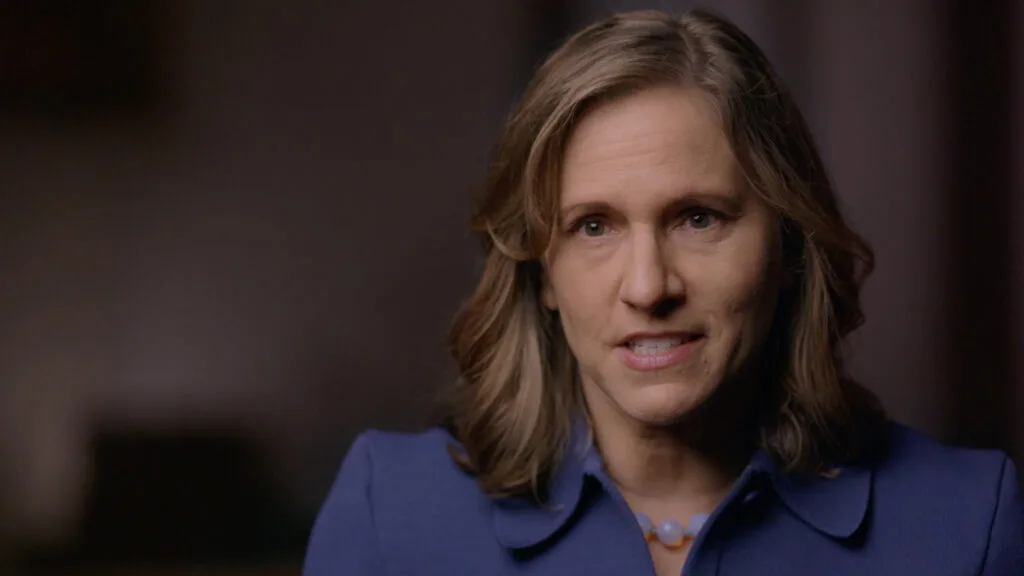
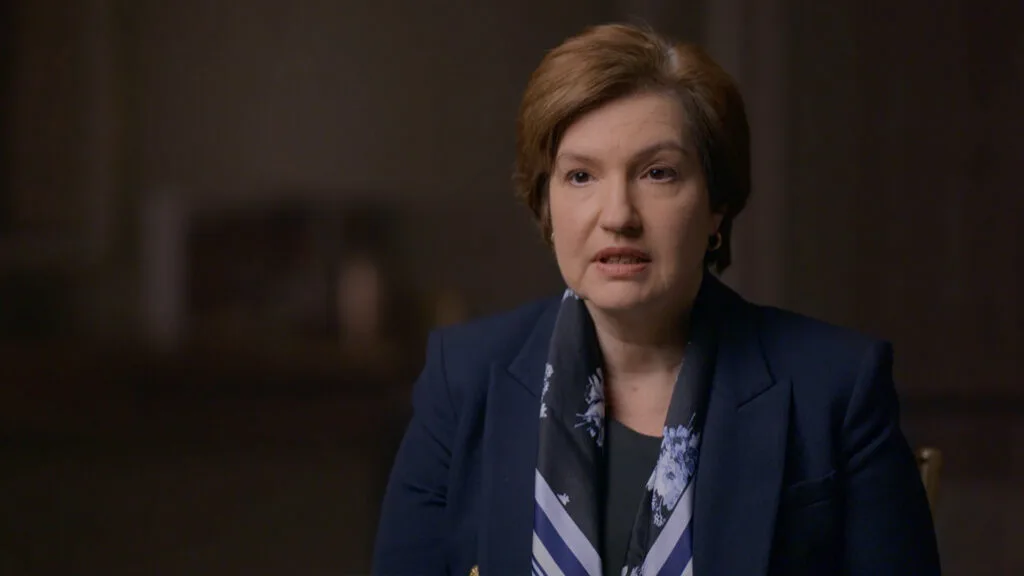
Carol Bruce is currently a litigator focused on white collar criminal defense. She has served as special counsel to the U.S. Senate Select Committee on Ethics, and an independent counsel appointed by a panel of the U.S. Court of Appeals for the D.C. Circuit. For 10 years, she was an assistant U.S. attorney for the District of Columbia.
This is the transcript of an interview with FRONTLINE’s Michael Kirk conducted on June 1, 2018. It has been edited for clarity and length.
Help me understand the climate here [in Washington], the way attorneys are different here than they might be as the people [Trump has] come across in Atlantic City or New York.
Oh, I've never thought of that before, so I’ll just give you off the cuff.
Good.
In Washington, I've practiced my entire professional life in Washington, D.C., first as a federal prosecutor for 10 years in the U.S. Attorney’s Office and then in private practice, cycling back out two or three times to do independent counsel investigations and a special counsel investigation in the Senate.That is quintessential Washington, D.C., practice, for white-collar criminal defense and civil litigators.I wouldn’t say we see the world differently than people, but we’re just very rules-oriented.We’re very rule-of-law oriented.We see this as the capital city that it is.And you think back to our Founding Fathers, and what they envisioned in terms of rule of law in this country, and we sort of feel that in our blood.
Part of that means that we do not say: “It doesn’t matter what the case is about.It only matters if you know the judge."I've never thought that in my whole career.It’s never occurred to me, that I should market my services or I should persuade an existing client that I can accomplish something because I have connections with the judge.That’s sort of the thing you expect in a country that’s not a democracy, that doesn’t have the rule of law, that treats access to the justice or access to the courts as something where you have to have the currency.And the currency is your knowledge of the judge and the judge’s knowledge of you, and the fact that the judge would do you favors, or the judge will cut you a deal that you might not otherwise get if you didn’t know him.That’s, to me, that’s an abhorrent concept.
Yes, it is good for courts to know your reputation as a lawyer, and it’s good for you to have a good reputation, and you only build a good reputation by being a good lawyer.That’s the way it’s done in Washington, anyway, at least in my experience.I'm not talking about lobbying, and I'm not disparaging lobbyists by saying that.I'm talking about trial lawyers in Washington.Nobody’s running for office in D.C. because we are not a state.There's no governor.And oftentimes, it’s a steppingstone to become governor or senator or a congressman by being a prosecutor, by being a federal prosecutor.
If you look out throughout the country, U.S. attorneys or former assistant U.S. attorneys are running for office, as they should.But in Washington, D.C., those of us who practice law here, and those of us who were or are federal prosecutors, see it as totally as public service.
When you say rule of law, what's the dummy’s version of rule of law?
It means that you have laws, you have regulations, you have the concept of the common law, what we all understand to be right and wrong, what would amount to a crime or not a crime.Like, everyone knows that someone who commits murder should be prosecuted, and you have a court and a process for that, a presumption of innocence, a burden of proof on the government to prove their case, a process, procedures.I know it sounds boring, but that’s what we wrap ourselves in, the fact that there is a process; when somebody is accused of something, that there's a process for investigating it to make sure you have evidence to support the accusation.If you have the evidence, and it’s evidence you believe will prevail at a trial, then you can bring charges as a prosecutor.And if you get to that point, then you have to put your proof in front of a jury.
All of that process-oriented stuff, that comes out of the Constitution.The right to a jury trial, the right to be free from illegal search and seizure, the right to have counsel advise you in criminal cases, all of those rights in the Constitution are transformed into reality every day here in Washington and in most cities around the country.But the lawyers handling those cases, whether they're the prosecutors or the defense attorneys defending against them, are doing it in a climate where they really are looking at cases that have been brought before.We call it precedence in the law.They're relying on statutory statutes and making arguments about the correctness of the statute or the application of the statute in this instance.That’s what trial lawyers do.
In the criminal cases, it’s especially important that you are talking about a process where the individual who is under investigation, or the circumstances that are under investigation—we can say that—where we don’t know who did what, we only know that there is an event that has happened, so we are looking into it.There's a murder.I’ll just keep going back to that.There's a murder.We don’t know who did it.So there's an investigation, and there's a whole process in that investigation, and then there's, if somebody’s actually charged with a crime, or accused of a crime, then there's a process in that investigation, that point.
The lawyer’s job is to make sure that the individual gets a fair trial, and hopefully that the individual isn't convicted.And the prosecutor’s job is just the opposite.So it’s an adversary system of justice, and it’s one that is respected by every lawyer I know who practices, where we know what our roles are within the system, and we also know where the lines are in terms of ethical conduct as a lawyer.
So when you're a man who comes out of a different kind of more rough-and-tumble, transactional, overtly transactional environment and use of attorneys, and you become president of the United States, what does that man need to know about—let’s be specific—the independence, the wall that’s, I think, supposed to exist between the Justice Department, the attorney general, even though he appoints the attorney general, the director of the Federal Bureau of Investigation, and law enforcement agencies?What is the norm and value here as that person who hasn’t ever interacted—I mean, the only thing he’s ever done is had people work for him.So you come to town, and there is this wall that you believe exists, and he needs to be educated about it.Does the wall exist in the law, or does the wall exist in value and norms?
I don’t know.I’d have to go study the United States Code on this, but I don’t know that there are any specific rules or laws that declare that a president or any executive official should not directly approach the Department of Justice and ask questions or interfere with or try to get involved in some way in an investigation.
It's a sort of a rule of the road, right?
It’s a norm, as you said.It’s not just a norm that people invented in the 20th century; it’s been around for a very long time.The understanding that the Justice Department should be not an independent agency technically—I mean, they were all getting the same paycheck every other executive branch official is getting from Uncle Sam, so they're part of the executive branch.But they occupy a very special place in this town and in the country, the Justice Department and all the U.S. attorneys around the nation.And that special place is, you’ve entrusted in these people enormous, awesome power to investigate federal criminal conduct, and to then use a grand jury, present evidence to a grand jury in secret.The purpose of the grand jury, the historical purpose, and I believe it still continues today, the purpose of the grand jury is to protect you if you are under investigation from an overzealous prosecutor.The Justice Department lawyers know that, and the U.S. attorneys know that.
So their job, they have to convince those people that they have presented enough evidence to warrant an indictment of someone.That’s a major, awesome responsibility.Some will joke about how a grand jury will indict a ham sandwich, will indict anything the prosecutor asks.Well, it is true: the jury has one proponent in front of them, the prosecutor.But the prosecutor has to live with the indictment.Once they’ve returned an indictment, then they have the awesome responsibility of proceeding in the case to present evidence to a court and to a jury, a petit jury, to try to convict the person or the entity of the crime.
That’s a whole process, the investigative process, the indictment process, and then the jury trial process, that you do not want any political influence [over] or interference with.That gets you into a place where we shouldn’t be, and where most of us lawyers in Washington who practice in this area would be very uncomfortable.
When people who work at the Justice Department watch the first months—you may not be able to answer this question in the detail that I'm asking it, but you’ll figure it out.From the dossier conversation with Jim Comey to the awkward handshake, pulling Comey across the Blue Room, the loyalty dinner, the so-called loyalty dinner on Jan. 27 after Sally Yates, the assistant attorney general, acting attorney general, goes over to talk to [White House Counsel] Don McGahn about [National Security Adviser Michael] Flynn, lots of stuff is happening, [and] that line that you’ve just articulated is kind of going like this.And you’ve got a brand-new president who says, “I hope I can count on you for loyalty,” to the FBI director, who is by now keeping contemporaneous notes about his interactions with the president.
When you think about people at the Justice Department watching and the FBI watching these events as closely as they were, to the extent that they knew the details, what would they be worried about?
Well, I think we’ve heard Mr. Comey speak to that and about what his worry was.I would think that anyone in his position would share his concern.You’d asked before, coming to Washington, having consumed legal services of a different sort in New York, where the expectation was that the lawyer was working for you, which the lawyer is—he’s working for the client, or she’s working for the client—but that you can get what you want through your lawyer, when you come to Washington, when you're in this situation, where you're new to the norms of the Justice Department and the need to stay clear of investigative processes that impact you as a president, it would seem to me that, if I'm not mistaken, Mr. Comey, one of his first conversations with the president was to suggest to him that this is not something we should be speaking about or that I can speak with you about.He was giving him, I think, polite notice that, whoa, we should not be having this conversation.
It would seem to me that his own White House counsel either did or should have—certainly should have advised him of what the norms are in dealing with the Justice Department; that you don’t interfere, you don’t try to influence, and you especially don’t assume that they work for you personally as an individual consumer of legal services.That would be my reaction, is that there—that the reaction Mr. Comey had, and this has nothing to do with whether Mr. Comey was right or wrong in how he handled matters, but just his reaction that he’s expressed in his testimony before Congress and elsewhere is the reaction, I think, most people in the FBI and certainly the lawyers in the Justice Department would have.“Why are we having this conversation?I'm sorry.I'm loyal to the United States Constitution, of course, and I certainly will treat you with respect that you are due in the office that you hold as president of the United States, but this is not about personal loyalty, and it shouldn’t even be part of the conversation."
What's the danger that you perceive, and others who understand this perceive, in the president of the United States, any president, really, getting too cozy with the director of the FBI?
Well, see, I don’t have the same discomfort with the idea that an FBI director would have meetings at the White House with the president.I don’t have any discomfort with that at all.I would expect there would be some level of a relationship so that the FBI director can discern the policies or the direction that the president would like to go, his priorities in law enforcement.I think that’s all fair.The president is not completely divorced from any concerns about where we’re spending our taxpayer money in enforcing the law.Should it be on immigration enforcement?Should it be on white-collar corporate enforcement?And where should the FBI be spending—I think that’s OK and appropriate for a president to have interests and concerns about that.
But I think, again, and this goes back to my first comments about process.Even though it’s not written in stone, it’s not written in the statute books, it’s probably not even written in regulations, the understanding in Washington is that you deal through your top aides with the Justice Department, top aides in the Justice Department, or you deal one-on-one with the attorney general, the deputy attorney general, the associate attorney general yourself.
But when I say one-on-one, I would also underscore the need to have other people in the room, so that people are not put—these are powerful positions we’re talking about, the attorney general of the United States and the president of the United States, or the president of the United States and the director of the FBI.It’s always best to have other people in the room with you, whether it’s staff—your staff, the other person’s staff—instead of just the two of you.That is something that I find to be very uncomfortable for me, to see that that has happened.
Yes.In fact, we have a real-world example of that occurring, where [presidential adviser] Jared Kushner and Attorney General [Jeff] Sessions and James Comey are having a meeting.Mike Flynn has been fired, and the president asks Jared Kushner to leave and asks Jeff Sessions, who’s lingering, shoos him out of the room, and holds Comey alone in the room, and says: “Mike Flynn’s a good guy.Can you go easy on him?"
Now, see, the problem with that is that you have two people who are involved in that conversation, and that’s a very uncomfortable spot for Mr. Comey to be in.But it also presents a problem for anybody investigating what happened in this case, is that you have—I mean, I had that situation in the investigation of the sitting secretary of the interior, [Bruce Babbitt, in President Bill Clinton’s Cabinet] when I was the independent counsel investigating his conduct.A friend of his came to see him about a matter that the friend was concerned about, and unfortunately, the secretary did not have staff in the room, so you have two different versions of the events of what was said.You also have the secretary in that instance being put in a really awkward position, because he was being asked to do something that he ultimately didn’t do.But it was a difficult position for him.
That’s obviously one way to look at this particular situation is that there's a reason the president cleared the room, didn’t want the attorney general to be party to the conversation.That’s the obvious perception, and it’s easy to make it.It’s too easy to make it.Comey leaves the situation, goes back, writes more notes to the FBI, and then meets with the attorney general, Jeff Sessions, and says: “Please don’t ever leave me alone with the president of the United States.You cannot leave me alone with the president of the United States."
Well, see, there's Mr. Comey, again—and I think kudos to him to be advising this new attorney general, who’s never served as attorney general before, of another norm, that we should not be in rooms alone.And it’s not because we’re distrustful of one another; it’s just that it’s important that there be an understanding of what happened in important meetings, and especially in these sort of meetings, these social encounters, where you can take somebody off to the side and say something in private to them.But to have the chief—not law enforcement officer, because that’s the attorney general, but the chief of the FBI, the director of the FBI, alone with the president, who is a new president, who is not accustomed to—it’s not just a question of not being accustomed to the ways of Washington, but who is accustomed to having things done his way, and [who] has been, according to all accounts, including Mr. Trump’s account, expects loyalty, and expects people to work for him, not necessarily for the American people, but to work for him and what he wants, then that’s something you’d want to avoid, is being in a room alone, so that other people could witness the events and witness whatever is going to be said.
And Sessions, for United States attorney in Alabama, Justice Department experience, United States senator for a couple of decades, early adopter of Donald Trump, traveled with him a lot, spent a lot of time with him, but presumably Attorney General Sessions at the time understood, as a creature of the swamp, understood his role and responsibility, as you’ve articulated it earlier, to help create a firewall there.
You would think he would have known that.He wouldn’t have needed any advice from Mr. Comey after the fact about it.You would think that his instincts would have told him to stay.But then—and I'm not defending Mr. Sessions, but when he’s waved away by the new president of the United States, who has just appointed him, it’s an awkward, difficult moment, I'm sure.Should he have stayed?Yes.And should he have, in the future?I don’t know what future interactions there have been, where there's been one-on-one.But I'm not going to judge him because he made the decision to keep walking.
He recuses himself from the Russia probe.You're very experienced in this world.The decision to recuse, was it pretty open and shut?
Absolutely.There's no question about it.Even though there isn't an independent counsel statute in existence anymore, there's just the Justice Department regulations; there are—and this goes not only into the world of norms, what's normal, but it’s very clear that if there's a personal, financial, political interest that you have as attorney general, and you’ve had some involvement in a matter that’s under investigation, then you should recuse yourself.It was no question that he did the right thing by that recusal.
The president, of course, reacts very badly, as we've read in The New York Times this week.The president asks the White House counsel to go ask the attorney general to re-recuse himself and become a full participant as the attorney general.
Unrecuse himself.
Unrecuse himself.Did I say “re”?I thought so when I was saying it.Unrecuse himself.
Right.
Appropriate?
No.Once he’s recused, unless there is some development in the case to demonstrate that the matters that he was involved in in the campaign or during the transition period are no longer the focus of the investigation, then there might be some.I'm just suggesting there may be some remote reason why somebody could find themselves in a situation where the investigation did not go into the areas that the attorney general was conflicted in.But it seems to me, from all we’ve heard from the public record, the filings in court that have been done by the special counsel, as well as the testimony on Capitol Hill and other reliable sources, that the whole Russian part of this investigation, which was the principal mandate that [U.S. Deputy Attorney General] Rod Rosenstein gave to Mr. [Robert] Mueller, has had intersections with the conduct of Attorney General Sessions.So I don’t see any way in which, at any time, he would have been in a position to un-recuse himself, and it seems to me he’s made the same decision.Mr. Sessions has the same realization.
The fascinating thing about this story is the extent to which there's a kind of intersection of politics and the law, the immutability of the law, the fungibility of parts of the law, and certainly the politics of the situation of this president, and the naïve politics in some regards.As Comey reveals more and more that the campaign is under investigation, finally he reveals in testimony that it’s out in the open.The president says, “The least you can do is say I'm not under investigation."There are things that would prohibit, just practices alone that would prohibit the director of the FBI from assuring the president that he didn’t know where the investigation is going.And why do that?Then you’ve got to retract it publicly.And now we’re back in Clinton land, all of those things in play.
You also have a president who’s publicly attacking, by a year ago now, in May and April, the director of the FBI and Sessions in some ways.That’s the politics of the situation bouncing up against the legality of the situation.… Does that cross some important line in your mind?
Well, if the reason, if it’s proven that the reason that Mr. Comey was fired was because of what Mr. Trump told [NBC News’] Lester Holt, because of the Russia investigation that was getting on his nerves, and he was tired of it, and wanted to get that monkey off his back, that’s the sort of thing that in any other context, if he wasn’t president, if he was just an individual who was under investigation for conspiring to violate a law, that person would definitely become the subject, if not the target, of an obstruction of justice investigation.
And the elements of obstruction of justice are?
Are that there is an ongoing investigation.The investigation is of certain conduct.It’s not just sort of this vague notion of an investigation, but it’s an investigation of conduct that was involved in this case in the campaign, the 2016 campaign, of foreign interference with our election process, electoral process, and that the people conducting the investigation are doing it in a confidential way, with presumably with the use of the grand jury system, and that they, if a lawyer came in, for example, representing an individual, and said, “Will you give my client a break?Can you tell me whether or not my client is a subject or a target?,” the prosecutors wouldn’t have to answer that question.If the prosecutor went in to speak with that attorney’s client, and the defense attorney said, “Well, before my client speaks with you, tell me, is he a witness, a subject or a target?,” then the prosecutor should tell the lawyer what that individual is.
But here you have a situation, when you're talking about the president of the United States asking, “Am I a target, or am I under investigation?,” that is extraordinary.I've never heard of such a thing.And no, that is not the norm.
By then, we’re not that far into January.But the transition has taken place.He has a number of lawyers around him, new White House counsel, other lawyers advising him, people who are non-lawyers advising.You don’t have to be a lawyer to know that that was not the normal thing to do.
He fires Comey, famously fires Comey.… Let’s talk for a moment about the involvement of Rod Rosenstein and the way that—we don’t have to be really specific here, but the way that [it] was a super pickle for Rosenstein to be in this, pulled into the Oval Office.The president says, I guess instructs him to write something that will allow them to fire Comey, maybe not.Maybe Rosenstein doesn’t know what it is.Tell me about that position that Rosenstein is in, not only in specific terms, but in general.…
Well, I've known Rod for years.I have a lot of respect for Rod.I don’t know exactly what happened during that meeting, and I don’t know exactly what happened thereafter.I don’t know when that memo was written.I don’t know whether it was written after that meeting.
… If he had had those thoughts, which I assume he did, if Rod had had—I haven't talked to Rod about this.But if Rod had—if you read the memo that he wrote, it’s not a memo that says, “Dear Mr. President, this is the reason why I think you should fire Jim Comey."Instead, it just hearkens back to the way in which Mr. Comey handled the Clinton investigation, and it’s all about Hillary Clinton.It just seems implausible to me, and I think to most lawyers who have followed it, that somebody would be providing Mr. Trump with that as a justification for firing Mr. Comey, as if Donald Trump cared about whether or not Hillary Clinton was mistreated or that case was mishandled [or] that she was hurt by the FBI’s action.
That’s the way that memo reads, is that she was hurt by the FBI director’s going out before the election and speaking about the reopening [of] an investigation.But as I recall the memo, it dealt more with how it was handled over the summer of 2016 and that his conduct—meaning James Comey’s conduct in handling the Clinton investigation—was harmful to Hillary Clinton, so therefore, he should be fired.That just seems implausible.So that’s why I wonder, when was that memo actually written?Was it really written after the fact, or is that something he had written, or he had thought well before having that meeting with Mr. Trump?My reading of the events—and there's new information coming out all the time about this, especially the [former FBI Deputy Director Andrew] McCabe memos that are then written after talking to Rosenstein there—it’s this sense of, the president said, “See if you can work…”—apparently said, “See if you can work Russia into it when you're writing the memo, too."
I don’t remember Russia being in the memo.
It’s not in the memo.
No.
But McCabe’s memo says Rosenstein remembered, in the meeting with McCabe, when they were lawyering it, or whatever they were doing with it, “See if you can work Russia into it."To those of us who were doing what we’re doing, that’s like a big, bright shining “Wait a minute."It’s not so surprising, given what he says to Lester Holt and the Russians [Ambassador Sergey Kislyak and Foreign Minister Sergey Lavrov] the next day, so it’s only really a one-day event, except to the extent that it goes to my inquiry, which is, the president’s ongoing efforts to breach the wall between the Justice Department, the Federal Bureau of Investigation and his White House.
Well, that was your obstruction of justice question.I'm not part of the investigation, so I don’t know the details that they have.But it would be a great big worry for me, as a prosecutor, whether you're a special counsel or whether you're a federal prosecutor, that somebody in a position of power, of authority, would try to affect the progress of an investigation, would try to bring it to an end by eliminating the leader of the investigation.
There's a certain foolhardiness in that, as if there was a belief that, you know, you knock off the director, no one else is going to fill that void who would share his belief that this was an important area requiring investigation.When I was a prosecutor, I saw myself as being fungible, really.Even though I thought it was darn good what I did, I realized that I was just a—and I don’t mean to denigrate the work of a prosecutor, but I was just a player on a stage.That was my role, to be the prosecutor, to seek justice for the United States of America, and to put my evidence forward, and to collect the evidence in advance of a grand jury indictment, to make sure I had sufficient evidence.
Back again to the process that I spoke of earlier, that’s what we did, and that’s what Mr. Comey did.That’s what the FBI does every day: They go after the facts.They dig and dig and dig, and to satisfy themselves that they're going in the right direction, and they're going in the direction the facts are taking them.
And when you have somebody in a position of power who’s your boss, the president of the United States, trying to intercede in that and to stop that, and one of the ways he’s trying to stop it is by eliminating the director, and then using that memo, Rod’s memo, which, again, is so implausible reason for the firing, it does raise serious questions as to whether or not he did, in fact, obstruct justice with that act alone.
Put me in Rosenstein’s place now.Special counsel is a plausible option.Maybe it’s a foregone conclusion.You don’t have the attorney general as counsel in this.I guess you can't say, “What do you think, boss?,” although he will write, eventually, on the paper.I know you haven't spoken to him about it.Nobody probably has.But what's the inevitable, if it is an inevitable?Let’s put it this way: Is it an inevitable outcome that the deputy attorney general would create a special counsel to look into what happened here, especially after Comey is fired?
I think so.I think it was inevitable, and I'm glad it moved as quickly as it did.If you go back through history, the appointment of special counsel and independent counsel, you know that sometimes that’s a very long process.Events are publicized.Look at Watergate.Go back that far.That was a burglary that took place, what, in June of 1973?Or no, it wasn’t—
2.
2, 2, right.It was [’7]2.And it wasn’t until after the election that the burglars were indicted, and then they were brought to justice.And then it was months later that we learned that, aha, there's more involved to this than just a street burglary.
Third-rate burglary.
Third-rate burglary.And then you had Elliot Richardson moving from the Defense Department, where he was secretary, to become the attorney general because of the resignation of John Mitchell.It was momentous times.But a lot of time took place there before.Then there was some clamoring at that point for a special prosecutor to be appointed.And there was no independent counsel statutes, so they had to rely upon the same Justice Department regulations that Rod Rosenstein relied upon in appointing a special counsel.
Of course Rod had at his disposal the Janet Reno regulations that came after other independent counsel investigations, so there are—there are additional regulations now governing the appointment of a special counsel.But it all enabled him to move quickly, to make that appointment.They didn’t have to do any preliminary investigation.They didn’t have to do an initial investigation.They knew, the Justice Department knew, and Rod knew, that there was an investigation already underway and that that investigation needed to be protected.And it also needed to be moved outside of the Department of Justice, because of the sensitivities that came about with the firing of Mr. Comey and the concerns about the reason for the firing.
Just as a point of order for me, the difference between an independent counsel … and a special counsel is about supervision of judges versus the attorney general and the apparatus of justice?
Yes.The difference between the two, as of today, is that with the independent counsel, there really was a very prolonged period.There was a 30-day initial investigation.And if you found that there was a substantial, credible evidence to go forward, then the attorney general had—and the Justice Department could proceed with a preliminary investigation.But there were all sorts of restrictions on that.The preliminary investigation, you couldn't use subpoenas; you couldn't use a grand jury; you couldn't give immunity; you couldn't enter into plea deals.You couldn't even consider a person's state of mind in making a decision whether or not they were culpable or not culpable in either dismissing the case or in going forward.
So it was very restrictive, and the only cases that got through that process were the ones that we've all seen.The Ken Starr [Whitewater] investigation was a result of that process and others.So we'll call it the triggering has changed.The triggering now, the triggering of a referral now is very little explanation or justification that the attorney general has to give for making a referral to a special counsel, just that they think it's in the public interest to do it, and when there are, as I said earlier, conflicts that are personal in nature, that are financial in nature, or that are political in nature.
Here, definitely the political conflict was there, and personal conflict was there for the attorney general, but also for the Department of Justice as a whole, because after all, we're talking about the president.I can't imagine an investigation of the president of the United States that would be conducted by the Justice Department.
And the difference between just giving it to a U.S. attorney and saying, “Go, go get ’em, tiger,” and a special counsel?What is the essential…?
The U.S. attorneys have to be—they're submitted to the “advice and consent” function of the Senate, so they have to have their nominations confirmed.So they're separately hired, if you will, but they are part of the whole Department of Justice universe, so they are working for the president.
I can't imagine a situation where a president would be investigated by his Justice Department and brought in a U.S. attorney.Now, what has happened in the past is that U.S. attorneys themselves—Rod Rosenstein was one who did this; he was a U.S. attorney in Baltimore, and he was appointed as a special counsel at the same time to investigate a particular matter.So that does happen, but it would happen with respect to, let's say, the torture tapes at the CIA, and assistant U.S. attorney from I think it was Connecticut was appointed to investigate that as a special counsel.So the decision was made, “Well, we can handle this as a Justice Department and as a U.S. Attorney's Office,” because there are no personal financial, political, real conflicts here.
Some would argue, “Well, that investigation maybe should have been done on the outside,” because it really implicated the policies that the Justice Department was advocating at the time.We're talking about not just Guantanamo Bay detainees but the detainees in general from the Afghan and Iraq War, but mainly the Afghan war.That would be the distinction.
There have been a number of special counsel who had been appointed, who were either current U.S. attorneys.[Patrick] Fitzgerald in Chicago did the [Scooter] Libby investigation while he was a U.S. attorney, and others.But again, that investigation, if it hadn't been Pat who was appointed to do it, if it had been somebody else, you might've seen a hue and a cry.But it was partly [because] his own personal reputation is ethical and independent that did not raise a stir in his appointment.
It sounds like … the reason that the special counsel exists in this case and in others is its proximity to the direct line of authority.It's you're out of the—
You're out of the direct line.And under the current Justice Department regulations that came into effect under Janet Reno—this was after the sunsetting of the independent counsel statute and the absence of any guidance whatsoever, [which] was deemed to be not satisfactory, so the Justice Department on its own developed regulations to try to fill that void of the death of the independent counsel statute.And under that statute—under the regulations, rather, you are creating an independent office of a special counsel.
But they are requiring the kind of consultation that wasn't required under the independent counsel statute to the point where there is a provision that says, if the attorney general—and here we'll have to say the acting attorney general, Rod Rosenstein, the deputy attorney general, if he decides that what he's hearing about, just in sort of—they don't have a formal reporting function to him.They're supposed to report when they feel it’s important to report to Rod.If he hears that they're taking a certain tack or certain investigative approach that he disapproves of, and I—you'd have to look at the language.It's really tak[ing] issue with—and if Rod feels comfortable instructing them not to take that investigative lead, he can do that under the regulations.
That gives people a lot of comfort that the Justice Department is maintaining at least some connection with this investigation.It's not an investigation that is sort of untethered and in outer space and in a universe of its own.It's within the Justice Department to that extent that there is a connection with a very high-level official in the Justice Department who can protest if that person feels that the special counsel is going off on a lark, is not following the usual practices and procedures of the Justice Department.
I will say that, even though there wasn't a requirement for that kind of reporting under the independent counsel statute, that I certainly took advantage of the expertise and the wisdom of Justice Department lawyers when I was an independent counsel and when I was a deputy independent counsel investigating a sitting attorney general, because in both instances, I was investigating sitting Cabinet officers.In both instances, I wanted to make sure that we were complying with Justice Department policies, not to go to them to get improper influence over my prosecutorial decisions, but to get their experience and, as I said, their wisdom.
I suppose it also matters who you pick as the special counsel.You want to get somebody who's familiar with the Justice Department and the ups and the downs and the mores [and] the rules and the values, but also is an independently oriented person who can stay between the white lines and get it done.
Such a person appears to be, reputationally anyway—you may have insight into this—Robert Mueller III.
Absolutely. I think he’s probably one of the best appointments that have been made of a special counsel in our history.I really do, because of the depth of his experience, both in the Justice Department and the FBI itself.And he's been in private practice, so he's seen it from all sides, and he's enjoyed a very good reputation throughout his career.There was, under the independent counsel statute, there were guidelines, if you will, about qualifications for an independent counsel—not much, just we should have a qualified person, a person who has experience.
Let me ask you about the composition of Mueller’s investigators.He builds what a lot of people have told us with great specificity, the prosecutorial A-team, absolutely all-star team.Give me a sense of—you don't have to be very specific here, unless you want to be—who are they?What did they do?What are their specialties?What does it tell you about the scale and scope of what he's doing?What does that composition of that all-star team tell you about what he's doing and how they're going to proceed?
Well, it seems like, right from the start, right from the get-go, he made the decision that he wanted to have an appellate lawyer.Now you'd say, why, when you're just doing an investigation, why do you have one of the finest appellate lawyers in the country on your team, that you pluck from the Justice Department and have on your team?To me the answer is pretty, pretty obvious, as a former independent counsel, and that is, you want to do it right.Whatever you're doing, whatever your investigation is, you want to be able to say to yourself, all the way along the trail, that you're applying the law correctly, that the way you're approaching this, with your legal arguments, and the way you're applying the law to the facts, [is] something you can defend in a court of law and something that will be defensible on appeal.
He had to know, at the very start, that he's dealing with some novel issues.That would be the novel issue of a president having the kind of conversation he had with Mr. Comey before he was fired, the loyalty conversation.These are new issues.And when I say novel, they are novel because of the actors.Again, if somebody was trying to obstruct justice and they weren't president of the United States, if they were trying to stop an investigation from going forward, that's what happens.People try to stop investigations.They conceal evidence.They tamper with witnesses.They lie, and they otherwise try to stop an investigation from going forward.
But when you have a president being in a position where there's some allegation that, during this meeting that you've discussed, the meeting with Mr. Comey, that he made certain requests of him, and then thereafter he was dissatisfied with, I suppose, the answers and the direction of the investigation, and then made the decision to fire him, some would say—and that seems to be one of the allegations— that he was obstructing justice.
The first thing you do is you hire an appellate lawyer to research that and to analyze that and to give his experience and his judgment on it.The rest of the A-team are lawyers who were—one who was very involved in the Enron investigation years ago so has a great deal of familiarity with financial investigations.Others on the team also have a great deal of experience with investigation into financial matters.So you're chasing money; you're tracing and chasing money between individuals and between entities all over the world, and that requires a lot of experience.So he’s got some of the best lawyers for that.No, I don't think he has many from the private sector, and the ones that he has from the private sector were people who, again, served at the Justice Department, most of them, at some point, so they have experience on both sides of the aisle in terms of prosecuting and defending.
It's good to have lawyers who have defense experience, because—while I've done both, and I can tell you, it gives you a broad perspective, so that when you’re representing the United States again, when you have that honor to represent the United States—you know how defense attorneys think.And if you put yourself in their shoes, if I were the defense attorney, I would claim that you've overstepped in this investigation, or I would claim that you have insufficient evidence, and this is why you have insufficient evidence.
As you build your case as a prosecutor, you're always thinking not just about your case theory, but also about what the evidence is to support that theory, and what the defense’s likely objections or likely defense theory will be, so that you can anticipate, preempt, counter that theory or rebut that theory.You're prepared on all levels to deal with it.And that's what you get with a first-class team, are people who are going to be focused on different aspects of the investigation.
So you have parallel tracks going at the same time.You're not just sort of dumbly, numbly going down one path.There are so many tentacles that are naturally [part of] an investigation of this sort.It’s not like they’re—as some people have criticized special counsel; I think it can be a very misplaced criticism—that they’re just turning over every rock, and they're just trying to get the president.I don't see it that way at all.I see it instead as, yes, turning over as many rocks as possible, because there's so much in these sorts of cases concealment that goes on that it requires a lot of time and a lot of care to break through that concealment and to get to the evidence, whether it's the financial evidence I just talked about or whether it is personal evidence of individual conversations and individual exchanges of emails, in which parties are actually performing the criminal acts that you have been told happened.
You have to, with a big team—he doesn't have a big team; he has a relatively … small team.But with the team that he has, some are probably dedicated to one aspect of the investigation, and others are dedicated to another, and then they come together, they compare notes, and they see, is this one large story that we have here?And that's … a challenge.
It seems like this is a real black box.I mean, I did a lot of films around the Whitewater-to-Lewinsky territory, and Ken Starr's group was not a black box.We could get almost any piece of information we ever wanted, within reason.It seems like they're not leaking.They're not out in the open.He feels like the kind of guy that would fire you in a heartbeat if you leak something, but I don’t know that for sure.You may have a better feel for that than I do about the importance of a black box and Mueller as the leader of the team, and stressing that.
Well, we talked earlier about the grand jury system.And the whole purpose of [the grand jury system] is to protect the individuals who are under investigation from an overzealous prosecutor.You want to have that sort of buffer system.Let the people decide whether or not you're right in the allegations you're making as a prosecutor.But when it comes to contact with the media, when it comes to making any external statements about investigation, my whole M.O, my modus operandi, throughout my career as a prosecutor, and also as independent counsel and special counsel, is that it has no place in that world to make public comments about an investigation during the course of the investigation.
Even in the face of “witch hunt,” you know, all—the Fox News, the push, push, push, and who are these people; “I'm going to fire Mueller”; “I'm going to fire Sessions,” that noise doesn't rattle you?
Well, it … would be disturbing if I were in his shoes, Bob Mueller’s shoes.I'd be unhappy about it.I'd be thinking this is utter nonsense, that it's just an effort to distract people from whatever stories they are hearing because of public acts of returning indictments, going to court.Those are public acts that the special counsel is involved in, and those are reported on, as well they should be.
But his job is to keep his eye on the ball, is to avoid being distracted by those sound bites and the accusations of witch hunt and the like, and to just keep pressing forward in search of the truth as best he can find it, of what happened, resisting the urge.I frankly never felt the urge to fight back publicly whenever there would be any kind of a statement made.Fortunately I didn't have to.There were enough other independent counsel in the city who were conducting investigation at the same time, so I could fly under the radar, so to speak.But even when I was a prosecutor and I had very high-visibility cases, I resisted the urge to speak on them, because again, I had respect for the process, and that the people who were under investigation, they didn't have a forum within which to speak, other than just to stand on a street corner and scream about it.
So why would I go out there in public?And why would Bob Mueller go out in public, and either leak information about what he's doing, which is so unfair to do to individuals or—and it also could be disruptive to the investigation.That, to me, would be the biggest concern, is I wouldn't want to leak or to give openly information when you're still investigating a matter that could then signal to somebody else that they ought to keep their mouth shut, or they—or even the contrary, that they should come forward.
All my dealings, and all of his dealings should be, and his are, focused on the case and the integrity of handling the case in such a way that it remain under wraps until it is time for it to become public.Then there is a forum, and the person has an opportunity to respond and to demand his day in court if they want it.
We've talked about obstruction.Now let’s talk about collusion—the difference, how you prove it, what you need in an evidentiary way to demonstrate it.
Well, I don't know that collusion itself is a crime.People get together and decide together to do things.It only becomes a crime when it's under the laws of conspiracy in this country.And other countries, many countries don't have a law of conspiracy.I won't say we’re unique, but it is an important feature of the criminal law.So I don't call it collusion; I call it conspiracy.
The conspiracy would be that two people, two different people, and here you'd say it would be the Russians and the campaign, if that's what the focus is, that they conspired together to violate the law.That's what it is.Conspiracy is a crime where people agree together to have an object that they want to accomplish and [then] they work together to do that, and they take a few what we call overt acts in furtherance of that conspiracy.
So this is why, when The New York Times calls the White House last summer—the president is at the G-20 talking to Putin—and asked for a statement about the Don Jr.-Russian attorney-[adviser Jared] Kushner-[former campaign manager Paul] Manafort meeting the summer before, during the campaign, lights went off among all the lawyers that were associated for Kushner, for Don Jr., for Manafort, and Marc Kasowitz, who was, at the time, representing the president.
There's the president up on Air Force One, writing a statement with [former White House communications director] Hope Hicks that basically isn't true.It's sort of true.It's true-ish but doesn't go to the heart of what actually happened there.That's why why this story of that moment seems to be something everybody, including Mueller, has jumped on after it was reported.
And one person resigned, as I recall, after the—
[Former legal team spokesperson] Mark Corallo.
Yeah.It is the fact that people are working together.That’s a very concerning thing when you have that sort of event happen.But they have to have a criminal—they could actually be conspiring together to do something that ordinarily wouldn't be a crime, but because of the nature of what they're doing has now become a crime.So they're conspiring to—and I'm not talking about the airplane now, but conspiring to fix an election, conspiring to fix the contract, the price fixing.You know, when companies get together to price-fix in the antitrust world, that's pretty serious.You can't do it without a conspiracy, right?
Against the law to work with the Russians?
Well, with the Russians, it’s not against the law to be in touch with the Russians or to work with them in the commercial world, but when you're talking about a presidential election, and having foreign influence in a presidential election, yeah, there's a problem with that big time.
It’s in and around this world, this time in the world, that Marc Kasowitz, the president's attorney, comes down from New York.He finally has a New York attorney in Washington who's ready to take a swing, and he does something that will become a bigger idea later on now.That is that he takes the legal and the political and makes them personal.He goes after Mueller; he says there's Democrats who are those lawyers on the all-star team.He begins to attack the institution itself, Sessions himself, Rosenstein himself.This is the full frontal assault that by now we're familiar with.Feels like a kind of undermining process that's underway, and his attorney is leading the charge.
Yes.And it's unprecedented in our lifetime, at least certainly mine.I have enough confidence in our institutions that they'll survive.I say that, and some mornings I wake up, and I feel like I'm trying to convince myself of that, because this sort of conduct is so unprecedented and so unusual and so inappropriate.If you are president of the United States, and you have concerns about the Justice Department, if you really think there's some corruption in the Justice Department, or you really think that people are politically motivated, it’s never been that before.
But suddenly, here we are in 2018, and if there's a belief that these long-serving public servants are politically motivated in what they're doing, and you strike out at them through the media instead of perhaps working with your Justice Department to see if is there a problem—are there some people who are deviating from the normal process of the Justice Department and taking a political approach to something as important as the conduct of the president?—there has to be a way of, if there is a genuine concern about that, there has to be a way for his lawyers and for him himself to express it in a professional and a serious way with people within the Justice Department that, whether it's the attorney general, the deputy attorney general or others.But to do it in such a public fashion and through tweets, through Twitter storms, through public statements that are so derogatory and offensive, I do worry that it’s undermining the public's view.It’s corrosive.It has to have, after a period of time, corrode the public's view of the institutions.
And it's also harming the morale within the Department of Justice, I'm sure, to a certain extent, and within the FBI.But I keep coming back to confidence that they will endure and get through this, these agencies and these very good people who are—when I think of how much they put online every day, the FBI agents especially, and doing their job, I think that they're strong enough individuals and strong enough institutions that they will get through this.
At some moment, Mr. Mueller turns to the Southern District of New York and says, “Here's some information for you; this isn't in our purview."Rosenstein apparently indicates that that's right; let’s send it up there.It's one of those cases that you described, where Mueller goes forward and says: “We're into this territory.What do you think?Should we be here?"Something.Rosenstein says, “I think it would be better somewhere else."They send it up.Maybe it's a gambit; maybe it's something.Make sense for me, will you, from what you can tell from outside, how the turn up to Michael Cohen, Stormy Daniels, Karen McDougal, the business side of Trump’s businesses, and the extraordinary warrants to get at a lot of the stuff that Cohen has—his phones, his records—as a lawyer, the president's lawyer, make sense of all of that for me, will you?What does that turn represent in the saga we've been describing to each other?
Well, you know, when you go back again to the independent counsel statute, or you just deal with the existing regulations, there is a thing called scope of investigation, so that when an independent counsel, when a special counsel is appointed, there is a scope of investigation that they're supposed to be entrusted with.There was a very specific letter written by Mr. Rosenstein to Mr. Mueller, telling him what the scope of his investigation would be, and that scope included not just the Russian investigation as we know it, whether they interfered in the election, and the campaign and the election, but also anything that would arise out of that.That doesn't give him a blank check to go after anything he wants to.It doesn't mean it opens up the whole world of criminal conduct for him to explore.But it literally means matters that arise out, like obstruction of justice, like perjury, like related offenses, I think the wording was, or related matters.
As they go down the path of conducting a criminal investigation, … they're going to bump into, stumble into—you can't help but, in these large investigations, whether it's done by the Justice Department or it's done by a special counsel, you can't help it sometimes, but you stumble into other matters, other criminal matters that are related or have related characters.
It seems to me that when it gets to the point where it's mostly related characters—in other words, the Stormy Daniels matter, if I were the special counsel, I might say: “Well, this is all very interesting, and it certainly does suggest that there was some inappropriate conduct happening, but it doesn't feel to me is if it's very related, at least at this moment, to my mandate, the scope of my investigation, so I'm going to suggest that it be sent to the Southern District, or sent to the attorney general of New York, or whatever the referral is, to a state prosecutor or to another federal prosecutor, because, after all, many of the events took place physically in New York.They certainly have a hook on the case in that respect.So let them.They're perfectly capable of doing this, and this is removed from the area that I'm investigating.And even though it may have implications for the president and for the White House, and that should be of concern to me, too, as a special prosecutor, I don't want to create a conflict with another federal office by having them start investigating something they probably shouldn't be investigating because it relates directly to the president."
If Mueller went through that thought process and said, “This is something that would be more appropriately handled in New York,” and I think he did go through that thought process, then it makes sense to hand it off.It doesn't mean it's handed off forever.It could be handed back if in the Southern District they get to the point where they discover a direct link to the campaign into other inappropriate conduct.But that, Mueller is investigating.They could hand it back to him or hand a portion of it back to him.But no, it is a normal thing for prosecutors to do.
And the idea of the president and an interview.Obviously Mr. Mueller has indicated that it would be important to him that he talked to the president about these matters.There was a difference of opinion between [former Trump lawyers John] Dowd and [Ty] Cobb, without going specifically to them.It's an opinion.It is that the president has a forceful opinion that he would like to sit down and at least answer some of the questions, and seems to believe that if he could just talk to them it would all go away, at least his vulnerability in the area.… From your perspective, how important is it to Mueller's case, probably, to have the president answer questions in this case?
Well, first just go back for a moment to the role of Ty and John and advising him.Any person who is representing a figure, a public figure, is going to spend a lot of time with that individual, developing what the evidence is from the individual's perspective, and as well as trying to work with the prosecutors to understand what the allegations are, as much as they will tell, as much as they will share with them.
And to do the whole appropriate process thing of—you mentioned document productions.I mean, the White House as an institution, has an obligation to produce documents.Individuals, if they're suspected of wrongdoing, if they’re targets, they don't have to produce any documents.They have a Fifth Amendment privilege to protect them against the production of documents.But it seems to me like a very normal process was underway with Mr. Cobb and Mr. Dowd, where there was document productions that would be done by the White House, and people were being made available to testify from the White House.That is very normal in a case, and that is the way it should be done.
But you get down to the question of, what about my client?Should my client come forward and meet with prosecutors?Every lawyer makes a different decision, a different calculation as to the wisdom of that.If at all possible, if it makes sense for the client—I'm only speaking of that perspective now—to go in and meet with the prosecutors.I, as an attorney, am always in favor of that.
If I feel my client has a story to tell, my client has a defense to share, to put these cards on the table, as they say, to be very open and receptive to questioning from the prosecutor, if I have, after spending a lot of time with that client, going through the documents, talking to other witnesses, making my own assessment, I've decided as a defense attorney that this is in my client's interest, I want them to get to know him personally.I want them to see him in a true setting and to have that interaction.
Even a man who was on television every single day, I want them to work with him one-on-one.I have to believe, as a defense attorney, that my client's going to actually assist himself in that effort, and he's not going to harm himself in that effort.He's not going to inculpate himself, incriminate himself, say things that are going to be used against him.What's the point of going in to meet with Bob Mueller if you're concerned that your client is going to say something that's going to get him into even more trouble if he's in trouble already?That’s the calculus you always use as a defense attorney.
And I'm assuming that that was the calculus that was being used by both Cobb and Dowd.Whether they agreed or disagreed on it, I don't know, on whether he should go in.And I won't give my view because I don't know; I don't know the client.But I know from Mueller’s point of view, your question was, does he need his interview?No, he doesn't need to interview the president.Should he be able to interview him?Yes.He's the president of the greatest country on earth, and many of these things that are under investigation concern such a serious part of our democracy, the election process, that he was the candidate.He's the president.He should be answering questions about it.I have no doubt about that.But from a criminal law perspective, as if I were his attorney, I might be arguing against him going in if I felt he was going to incriminate himself.
And one thing that’s certain: The Mueller people know the answers to the questions that they're going to ask him.
Yes.Yeah, they do.But they're fair questions to ask, you know.We understand what all these other people who were in the plane say about what happened.We need to know your version of what happened. … But even if a prosecutor has come to a tentative view of something, they can change their minds.I would think that they're not extending the offer of an interview, of a meeting just to set him up, to say things that are contradictory of the evidence they have.If they're doing that, then why bother?Don't do that.But if you really do have a sincere interest in wanting to know what the president's perspective is on something, and what he will say at a trial if he were called in his own defense, or if it was a trial of somebody else and he was called as a witness, that's just such a normal exercise, and to want to meet with him and question him.