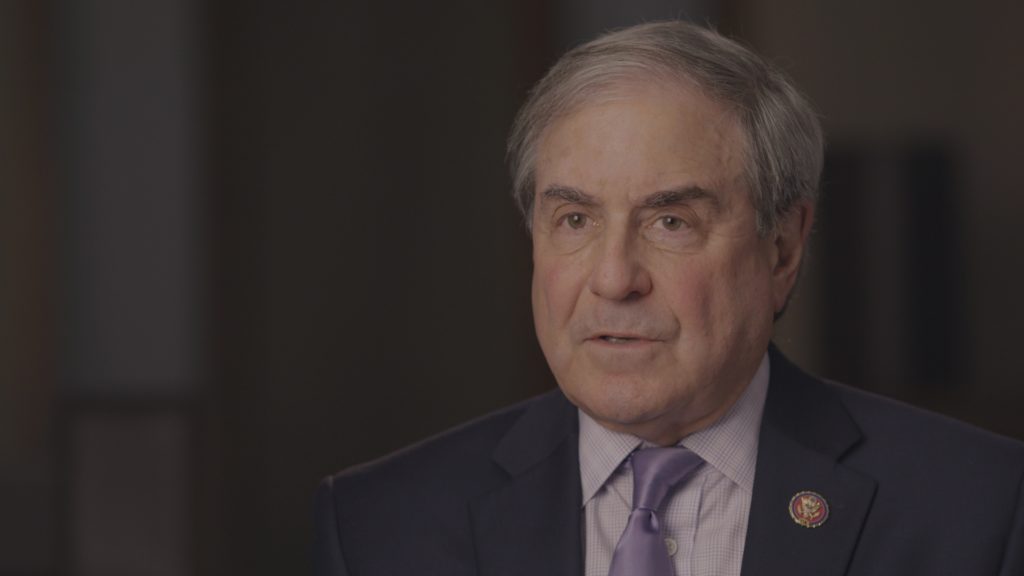
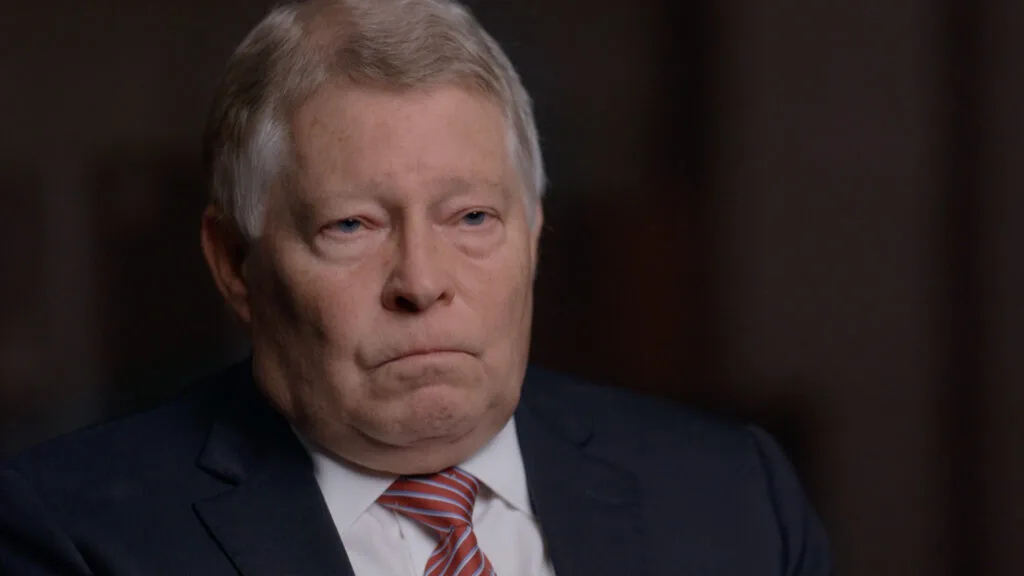
Who was young Mitch McConnell when you first met him?
Well, young Mitch McConnell was pretty much the same thing you see now, somebody who really didn't care about anything except political success.He, as a young man, was someone who I've said got up every morning at 5:00, and the first thing he thought about was, what can I do today to advance my political interests?He has been focused in a way that I don't think anybody has been focused on a career, maybe other than Tiger Woods.
How old was he then, and what was he doing?
OK, so he would have been at that time about 25 or 26 and had just gotten out of law school.Had spent some time interning in Washington for John Sherman Cooper (R-Ky.), who was a U.S. senator.And that summer of ’68, he and I traveled the state of Kentucky setting up college campus organizations for a candidate for U.S. Senate named Marlow Cook.And at that time, Kentucky was one of the first states to have the 18-year-old vote, so it was actually an important strategy.But I got to know Mitch fairly well, and again, Mitch as a young man really only had one passion, one hobby, one interest, and that was politics.
So it’s ’68.What are the issues in ’68 that you guys were pushing around?
That was very interesting, because ’68, of course, I would say the biggest issue was Vietnam, and that was a very tumultuous year with the Democratic convention in Chicago that basically went up in smoke and with riots.I mean, Vietnam was the overwhelming issue, and civil rights was an important issue as well.
But those weren't really the issues that we dealt with in the campaign in Kentucky.Marlow Cook was a Louisville Catholic, and in a basically non-Catholic, rural state, it was quite a challenge for him and for us to push his candidacy.But he got a break.In like a 13-way primary on the Democratic side, there were 12 men and one woman, and the woman won.So the only thing worse than being a Catholic in Kentucky in 1968 was being a woman, and Marlow was able to win.
Marlow Cook is a sort of moderate to liberal.
Exactly, yeah.Marlow today would definitely not be comfortable in the Republican Party.He would have been a Democrat.He died three years ago, and Marlow was like a second father to me, and I talked to him often over the years.And I doubt over the last 20 years of his life he voted for a Republican because the Republican Party had moved so far to the right.
This idea that McConnell back in those days was an antiwar, pro-abortion, pro-choice, but very pro-civil rights.Is that just redoing the biography, or is it true?
No, it’s true.He was elected as county executive in Jefferson County, which is the Louisville area, in 1977.He was very much pro-choice.We had a busing controversy.Forced busing came to Louisville in 1975, and he was not one who demagogued the issue as some other politicians did.So he was accepting—I'm not sure he really—nobody really went out and said, “This is a great thing,” but he was accepting of it.And he was for collective bargaining for public employees.He was for full disclosure of campaign donors.He even talked about the possibility of going to public financing of campaigns.So he was very different in those younger years from a policy position.
People tell us he was in the Rotunda for the signing of the Voting Rights Act.True?
That’s probably right.I don't know that for a fact, because he was here working for John Sherman Cooper as an intern then.So that would have been right.And John Sherman Cooper was a very progressive Republican at the time.
We're also trying to get a fix on when he becomes this Mitch McConnell in terms of his politics.So he’s that guy: Vietnam, abortion, civil rights, some other things.He goes to work at the Department of Justice in the Nixon administration, and even when he was for Cook, he was involved in the Judiciary Committee.So he’s got judges on the mind, it seems like, back in there.He gets to DOJ, and it’s [Antonin] Scalia and [Robert] Bork who are sort of in that world he’s in.So help me understand: Who was that Mitch McConnell?What was happening to him then?
Well, Mitch was working for Marlow Cook.Marlow Cook was successful in a ’68 campaign, and Mitch was his chief policy person, what would be the legislative director today.And there were two very critical Supreme Court nomination battles during that time when Mitch was there.One was Clement Haynsworth, and another one, Harrold Carswell.Both of them were rejected, but my boss, subsequent boss, Marlow Cook, voted for Haynsworth and against Carswell.
And I'm sure Mitch was very, very important in those decisions.And Mitch’s and Marlow’s decision was based not on philosophy at all; it was basically on judicial competence.And Mitch had said: “Haynsworth is a very competent jurist.Carswell is not.Carswell’s decisions have been overturned a huge percentage of the time.”But that was his—he was very much engaged in those, and I think that was probably the first time he got immersed in the whole question of appointment battles and the whole judicial nomination issue.
…So he’s there [in the Justice Department]; he’s learning from Scalia, learning from Bork.Obviously that philosophy is at great odds with Marlow Cook’s political philosophy?
Well, I think anybody who has watched Mitch over the years, as I have, will readily understand that Mitch doesn’t really care about political philosophy.That's not why he’s interested in politics.He’s only interested in the game.I don’t like to psychoanalyze people, but Mitch had polio as a kid.He loved sports but couldn’t play, and I think politics became his sport.It’s not necessarily about what he could accomplish policywise; it was how much he could win and how much power he could achieve, and I think that's been his MO from early on until now.
So he would do things, I guess, to get elected?
Yes.
Including walking away from civil rights, or walk[ing] away from some of these other things?Or would he keep them and—?
The only issue in the last 50 years that I've seen Mitch be genuinely passionate about where I thought he truly believed in a position was the First Amendment.And he, for instance, actually defended flag burning as something that was protected by the First Amendment.And of course, now in the campaign finance area, he considers money to be free speech, and a lot of people differ with him on that.
But that area of the First Amendment is the only area where I've really seen genuine passion for an issue.I think he is interested in the court, but I don't think he’s really all that interested in the court to achieve a political objective—I mean, a policy objective or a philosophical objective.I think he’s interested in it because he knows that court battles are important political battles.And we saw that with Merrick Garland when he was willing to take all the abuse of holding that nomination up for 10 months and, in my opinion, being totally disingenuous about the reasons for it and invoking the “Biden Rule” and all sorts of nonsense that he really misrepresented.
So I'm not sure that he cared whether it was Merrick Garland or not, but it was a battle that he saw as worth fighting in a political year.And I think I would say the same things about [Brett] Kavanaugh and Neil Gorsuch.I don't think it mattered to him who they were or what they would mean for the court, but it was good for not just his personal politics, but also the party’s politics.
And now, as the protector of the Republican majority in the Senate, I think that's really important to him.It’s not just his getting re-elected, but it’s also making sure he doesn't lose his majority.
He knows it’s good business.
He knows it’s good business.
Mitch McConnell’s First Senate Run
Let’s go backward to his first run.We've seen the hound dog ad, and we know that Roger Ailes worked with him on it.Take me there.What was Mitch McConnell, the candidate, like in Kentucky in those days?
Well, Mitch McConnell, again, as a local officeholder in Jefferson County, which is Louisville, was a pretty progressive guy, young, Catholic, and was not somebody that was particularly charismatic, but someone who was pretty well thought of as a competent manager of government.And I'm not sure at that point anybody thought he was U.S. Senate-ready—not that they may not have thought he was ultimately U.S. Senate material, but that he was ready at that point to be elected to the Senate.
But he saw vulnerability there in Dee Huddleston that not many people recognized, and that was that Dee had really gone Washington and had not tended to the home fires.And he played that up in the hound dog ad, which was the hound dog is out looking for Dee Huddleston—where’s Dee?—and it resonated, and he won an astounding upset victory.There weren't many people who gave Mitch a chance in that race, and it certainly stunned Dee Huddleston and most political observers.
Why did he win?
Well, it was 1984.I think part of it had to do with Reagan, and that gave him a boost at the top of the ticket because Reagan was popular in Kentucky.I think Dee probably overlooked the ballot structure impact that year, and Mitch took a shot, and it paid off.And that was true of his first race for local office.He took a shot against a relatively popular incumbent who most people thought was going to end up as president of the United States, a guy named Todd Hollenbach, and he was able to upset Todd.So you’ve got to give him credit.When he took that first race in ’77, and then to go after Dee in ’84, it was a long shot that paid off in both cases.
So he’s a winner, and he wants to win.That basically boils it down?
Right.And he knows how to win.As I said before, there's nobody who’s more focused on political conquest than he is.There may not have been anybody who has spent his entire life calculating.He knows more than everybody else about the dynamics in any political situation.He’s extremely, extremely immersed in the most minute aspects of politics.So in Kentucky, he would know who’s running for county surveyor in a certain county, and if he thought that having a relationship with that candidate was worthwhile, he would do it.So he works hard, always has worked hard, and he’s a tough adversary politically.There's no question about it.
Mitch McConnell’s Focus on Politics over Policy
But it’s not policy; it’s politics.
He’s never been interested in policy.You look at his Senate record; the only things that he basically holds out as his accomplishments are things that related to the state economy, mostly.So he was instrumental in getting the tobacco buyout program passed in the Senate, and that helped a lot of Kentucky tobacco growers.And more recently, he was very interested in getting legalization of hemp growing into the farm bill because Kentucky has a great opportunity to benefit from growing hemp.
There are things involving—we have a nuclear facility in Paducah, Ky., that was decommissioned, and he got a lot of money to finance that.We have an arms depot, the Blue Grass Army Depot near Lexington, where he was able to get funds to decommission that facility.
So his accomplishments basically relate to Kentucky interests.But if you talk about foreign policy, you talk about any of the culture wars issues, he's never involved in those.He stays as far away from them as possible, because he really doesn't have an interest in them.
So judges, judges, judges?
He is interested in judges.When President Obama was president and I was the only Democrat in Kentucky at the federal level, we had judicial openings, I would send names that I was recommending for those positions.And the Obama White House would say, “You can send us all the names you want, but we have to deal with Mitch, so basically he’s going to tell us who we can nominate.”And he is that concerned with those positions more than anything else.
Why?
Again, I think it probably goes back to those early years when he wasn't involved in Supreme Court nomination issues, and that became something he was committed to.And he also sees political opportunity in those.Again, I don't think he’s trying to move the country in any particular direction philosophically.That's not the way he thinks.But he sure cares about who’s on the court.
Power, power, power then, I guess, huh?
Yeah.
The Nomination of Robert Bork
Let’s talk about Bork for a minute, Judge Bork.He’s a freshman senator, probably the greenest senator there is at the time.Bork is losing famously on television, being sort of taken down by Democrats, by [Ted] Kennedy (D-Mass.). They're after him.And McConnell, much to our surprise, we look him up to find videotape of him at the time, and he’s like threatening the Democrats.He’s saying, “All right, if that's the way you want to play it, the day is coming when we're going to do this.”Is that a Mitch McConnell you recognize?
Well, he probably wouldn’t do that today.He wouldn’t do it as aggressively as that.But he understands—he thinks ahead; let's put it that way.He’s always thought way ahead, and he understands that the table is turned, that different parties are in power at different times and that what you might do at one point may come back to haunt you, which is why he has now said he’s not going to overturn the 60-vote rule in the Senate because he knows it could come back to haunt him in 2020 or some time in the future.So he’s very forward-looking.
I would say there are very few people who are steps ahead of him in his political calculations.He’s usually always a step or two ahead of most people.
So what he’s doing when he’s watching Bork go down is not feel sad that a swing seat of Justice [Lewis] Powell, or whoever it was, is going into the hands of a conservative or not a conservative.
No.
It’s not important to him.It’s about something else.
Right.I mean, I think there are things that he would be concerned about, but they're all politically related.So I'm sure he can be concerned about a Supreme Court nominee who was for public financing of campaign or was almost ready to overturn Citizens United.Those are things he might be concerned about.But again, I think the issues that he would be concerned about in a justice relate to political competition and not necessarily to direction for the country.
Mitch McConnell’s Relationship with Donald Trump
…But he meets Trump, and in some way, he helps Trump get that list of Federalist Society judges that he can wave around, and that gives Trump great power with his base, I guess?This is all pretty standard, the Mitch McConnell you're talking about?
Yeah, exactly.I'm sure Mitch looked at Neil Gorsuch and said: “He’s a competent jurist.You can't criticize his judicial temperament.Fine.”That's all he would need to know.And again, it’s a victory for him; it’s a victory for Republicans because where it was going to be Merrick Garland, they got a judge who at least [was] perceived to be significantly more conservative.I don't think Donald Trump cares about justices.He wouldn’t know the first thing about them.He knows he doesn't like the 9th Circuit.We know that.
So he makes a relationship with Trump work, even though Trump beats the hell out of him after the Affordable Care Act defeat where [John] McCain (R-Ariz.) drops the thumb on it and just is abusive to McConnell.McConnell takes a licking and keeps on ticking.
Mitch is very thick-skinned, and he understands the game.He's a very sophisticated, mature political player.And I've not talked to Mitch about Donald Trump except I'm convinced that Mitch is horrified by what he sees in the White House.He’s horrified.But he is representing a state where Donald Trump is still fairly popular, still over 50 percent popularity, still extremely popular in the Republican base, and Mitch is up for election in 2020, so he’s got to be careful what he does vis-à-vis Donald Trump…
So when we watch McConnell through the Kavanaugh moment with the clock ticking and the midterms coming and canceling the August recess, keeping the wheels of the hearing rolling, we're really watching a tactical genius at work here.We're not watching a big-idea guy; we're watching somebody do what people used to say Tip O’Neill (D-Mass.) could do and others could do.He’s making the trains run on time.
Exactly right.Mitch McConnell is a tactical genius.He is the ultimate inside player, and I think he’s probably not the most popular guy in the Republican Conference in the Senate, but they understand that he knows how to make things happen, and they also know that he’s ultimately concerned about maintaining that majority, so he’s going to protect his members.And I think you're seeing that—you see that in the debate over the shutdown where he’s kind of backed away from that.So even though the Republican Senate unanimously approved the Republican spending bills, now he won't bring up the same things because Trump backed away.But there's another thing working there, and that is he doesn't want to force his members to cast votes that may be problematic for them.And that's going to be, I think, one of the themes you'll see throughout 2019 and 2020, because now the Democratic House is going to send him a lot of very, very popular measures, and he’s going to have to be the ultimate obstructionist.And he’ll do that and take the heat for it, I think, because he wants to protect his other members, and that's why he’s been able to stay in that position, and nobody would challenge him to be majority leader.
Mitch McConnell’s Control of the Republican Caucus
How does he hold onto his caucus?He is a tough guy?
I don’t really consider him a tough guy.I do consider him someone who people are afraid of.
How’s that?
And that's a subtle distinction.
Exactly.I'm waiting.
Yeah, because I think they understand how tactically sophisticated Mitch is and how talented he is at that role and that they need him there.They need him there.They don’t need a McCain or a Mitt Romney or a Jeff Flake (R-Ariz.) or somebody who’s going to be—or a Chuck Schumer (D-N.Y.) type, somebody who’s going to be the mouthpiece and get them all in trouble.And I think that's one of the reasons that he maintains his power is they know Mitch is never going to put them in a spot by some statement he makes or some position he takes.I think that's how he maintains power.They like the workhorse and not the show horse.
John Yarmuth’s Relationship with Mitch McConnell
What happened between you two?
Well, Mitch and I actually ran for office together in 1981.He was running for re-election as county executive and recruited me to run for a county commissioner’s spot.That was the legislative body of the county.It was the county executive and three county commissioners, so he recruited me to run against a Democratic incumbent, and I decided to do it, thought that his coattails would be maybe sufficiently long that I could pull an upset of an incumbent.And that turned out not to work.His coattails weren't that long.
But after that, I started questioning the direction of the Republican Party.Reagan was then in office, started cozying up to the religious right.Pat Robertson and Jerry Falwell seemed to be running the policy shop in the White House, so I drifted farther and farther away from the Republican Party and then left the party in 1985.
And of course at that point Mitch and I lost any political connection.And we had never had much of a social connection in any way.I can't say we were particularly friends, but we were political allies for a while.
In recent years, I was in journalism before I got into the House.I was very critical on many occasions of Mitch’s policies and activities, so there's been a chill on the relationship, I think.But again, Mitch understands the political-theater aspect of politics, and he understands that it’s not personal.So we end up on planes together all the time going back and forth.We're civil; there's no hostile relationship.His wife, [Secretary of Transportation] Elaine Chao, is very gracious.We get along fine as well.
But I'm always in the position in Kentucky of being asked to respond to things and words that Mitch has uttered, things that he’s done and words that he’s said.So I'm constantly being his, I guess, number one critic, and that makes for a little bit of tense relationship.
…
… When you first meet McConnell, what was his real skill? He’s interested in politics, and he’s playing it like a sport, but what does he bring to it that other staffers or other people involved in politics might not have?
Again, when I met Mitch in 1968, I’d never met anyone at that age who was so obsessed with the political world and who was so knowledgeable about the political world and who thought so tactically about campaigning and what you had to do to win.And he didn't seem to be interested in anything else.I mean, he is a University of Louisville sports fan, but I don't know that that’s really something that occupies much of his time or his energy.
If you see him on the plane going back and forth, he has a stack of newspaper clippings a couple inches think, and he pores through every one of them.And again, they can be about the most minute aspect of politics in Kentucky or a major national issue as well.That's really his obsession with politics, at that age, when I was not obsessed at all.I was still in college when I met him, so that kind of obsession at that age was pretty impressive to me—not necessarily in a positive way.Just impressed me.
Did the polio affect him?Did he talk about it?
He didn't talk about it much, but I think from all reports and from biographies that have been written about him, it had a major impact on him in that he was basically in—he was in the house all the time, so he had to find other ways to stimulate himself.And that was part of his political interest, that that's what he focused on because he couldn’t be outside playing baseball or basketball or whatever.So I think in terms of the lifestyle that it relegated him to as a child, [it] was very, very significant.
Yeah, I’ll say.
My last question is as McConnell is rising up through the Senate and becoming the minority leader at first during the Obama administration, and he’s seen as the face of obstruction and the one-term president and blocking judges, as you're watching that, how does that fit into the McConnell that you know and the McConnell story?Is that who he is?Is that who he wants to be?
Yeah, I thought that the way he acted throughout the Obama administration was perfectly consistent with the Mitch McConnell I've known.His concern was, at that point, was what can I do to diminish the Obama administration, the president’s name, so that we can elect a Republican president in 2012, and then elect a Republican Senate?And that anything he could do in that spot, and in the Senate, you're actually much more powerful, I think, as minority leader than you are as a majority leader with the 60-vote rule.So he saw an opportunity again to bolster Republican chances by obstructing most of what the Obama administration wanted to do, and he did a fairly good job of that.
And Trump comes in, and then he’s got, by the obstruction, he had over 100 open slots for judges and one, of course, one very famous Supreme Court slot to fill.And then he goes all out and changes the rules to put through as many judges as possible.Just talk about some of the success that he had and why.
Well, I think most of the success that Mitch has had is because he recognizes when he's holding the power levers, and he’s not the least bit ashamed of exploiting his advantage.He’s basically immune to criticism.He will take the tough shots, as he did with Merrick Garland, and he’s unapologetic about the political moves he makes.
He’s gotten away with it by being re-elected a lot of times in Kentucky, and we’ll see whether he can get one more out of 2020 if he wants to.But it’s perfectly consistent with the way he’s always been.It’s, “What do I need to do to win this game?”And in those situations, he doesn't care whether people—what they call him as long as he wins.
Politics and the Court
…You've stated you're worried about the credibility of the Supreme Court, how it politicizes the court.Explain.
Well, to me in recent years the battles over Supreme Court justices have basically become proxy fights for partisan politics.So it’s never really been about the nominee or his or her philosophy or his or her judicial temperament.It’s all been about the battle between the right and the left, Republicans and Democrats, and who can win.So I think the public has begun to think of the Supreme Court as a reflection of the partisan divide in the country and not as the impartial court that I think the Founding Fathers anticipated and desired.
And who’s at fault?
Well, I think it’s the tenor of the times, and everything is seen through a partisan political lens or a tribal political lens right now.So every battle becomes about winning and not necessarily about what benefits the country.
And you’ve got a man for all seasons there in Mitch McConnell.