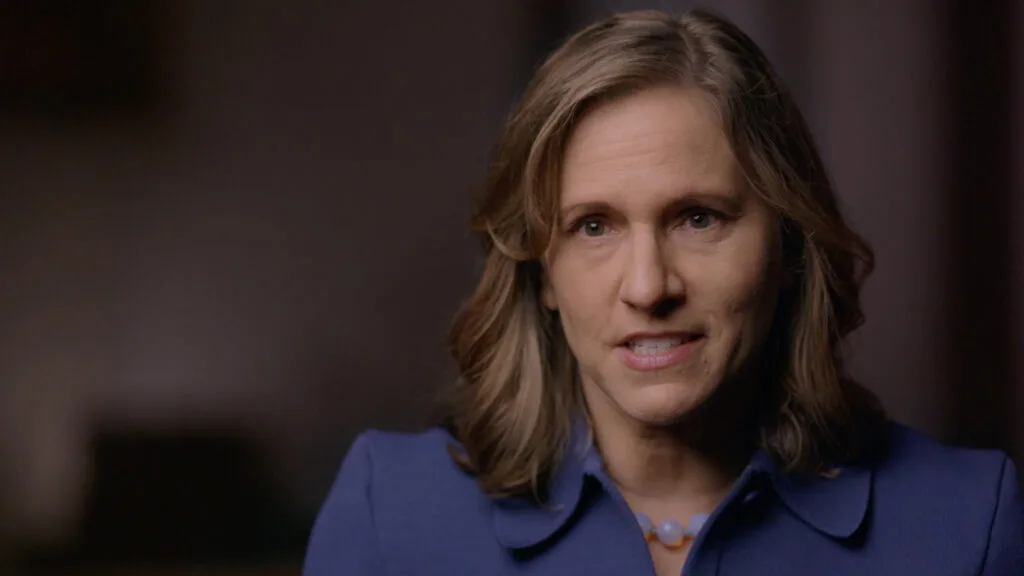
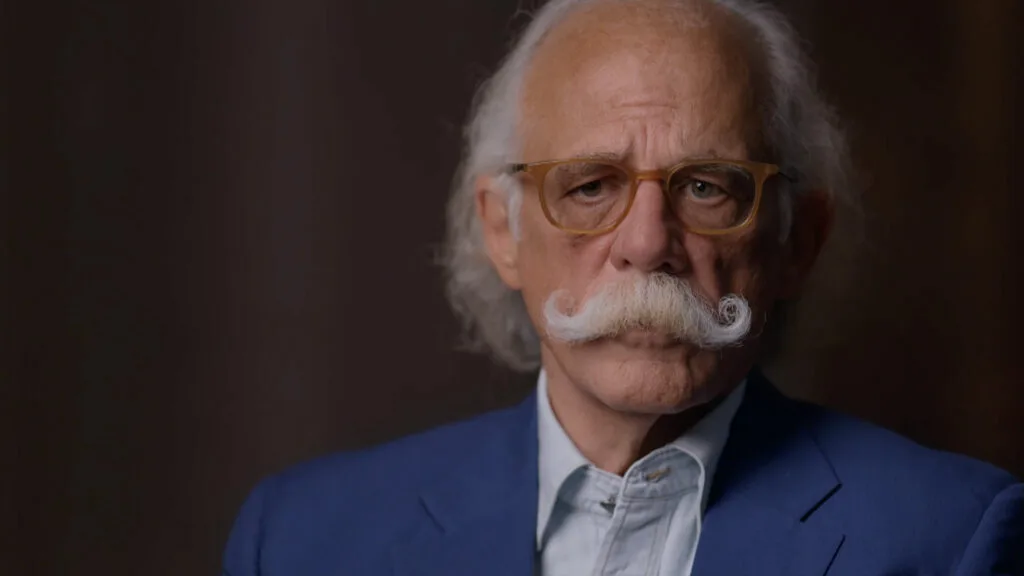
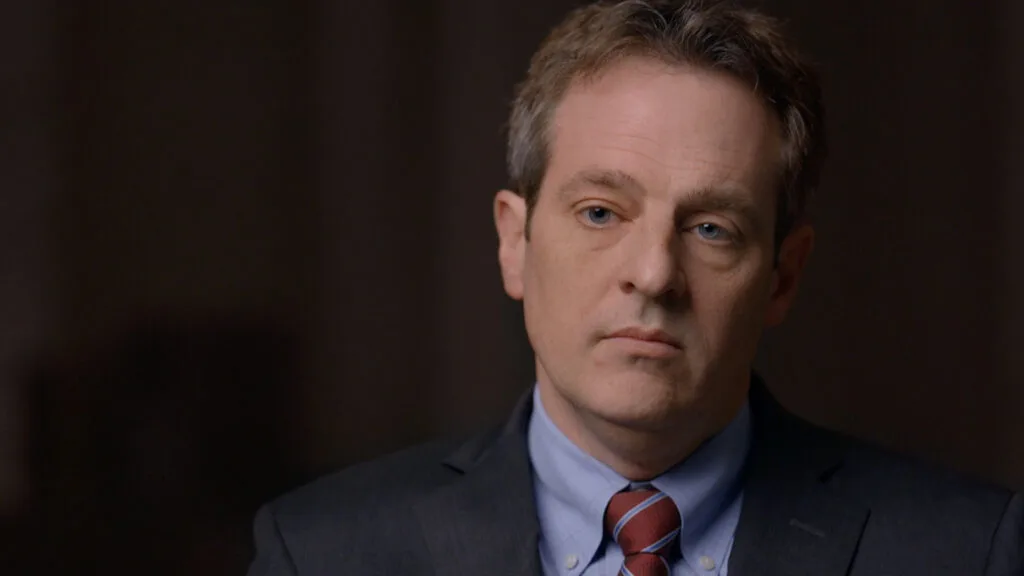
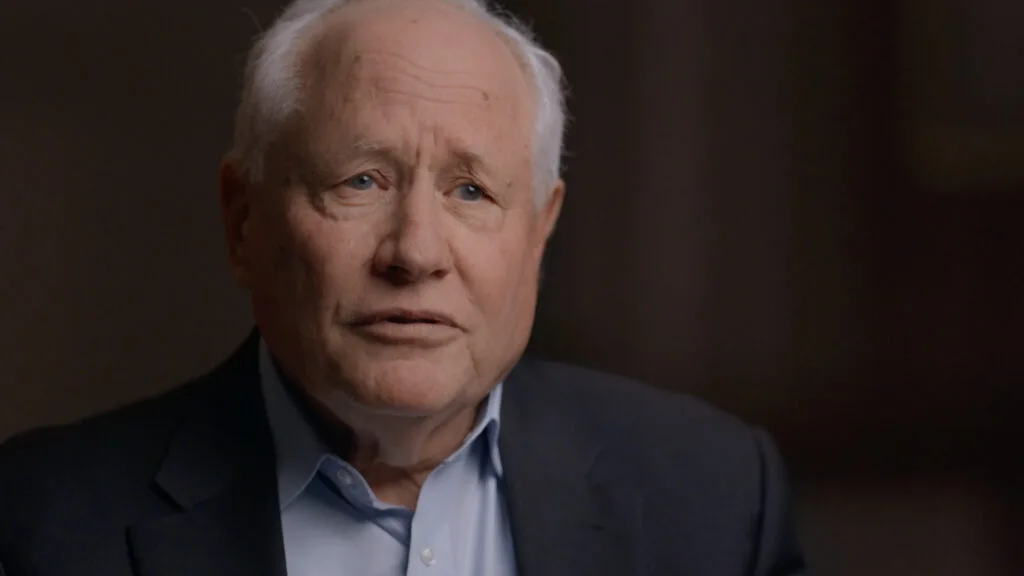
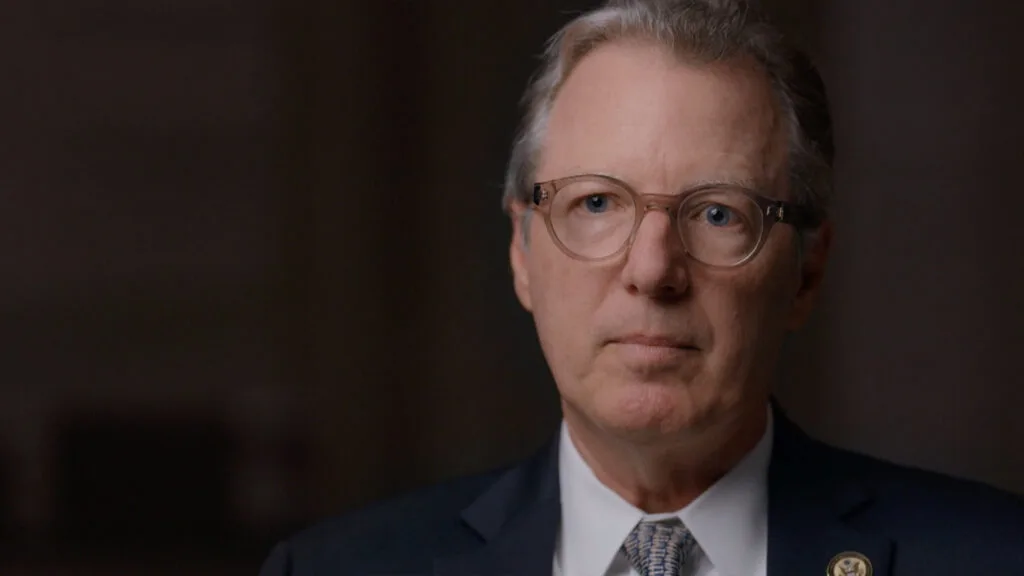
So, Senator, Trump comes to Washington with a very different view of the law, of the rule of law.He’s come up through business and real estate in Manhattan.He’s got involvement in about 4,500 cases, so he’s very involved with lawyers.But he’s got a very different attitude, and a very different attitude than lawyers and the government officials in Washington.Talk a little bit about that.When he comes to Washington, what is apparent, certainly from the campaign, what is apparent about his view toward the rule of law and how it differs with Washington?
Well, my background was that I spent more than 20 years in business before I first ran for public office, so I came with a business background as well.When I came with a business background, [I] prided myself on the fact that we had not been participants in lawsuits, that I’d actually had a partnership with my partners and my venture capital fund, where we had great pride that we operated on a handshake and never had a contract.
So the notion that Mr. Trump, who seemed to have prided himself not only on his bankruptcies but his ability to evade the rules or regulations or restrictions—and I understand in real estate, you’ve got zoning; you’ve got local ordinances.You do have, and in New York City in particular, a web to get through.But there's an awful lot of folks in New York’s real estate that I know that still abide by the rules and regulations.It feels like Mr. Trump brought this notion that, in a sense—and I think he made some comment like this during the campaign—almost as if only suckers pay taxes, or only suckers followed the rules of law, and if you could bypass the rule of law or bypass your legal obligations to pay taxes, that that was somehow a sign of his ingenuity or his, in a sense, qualifications for the job.
That is pretty unique in American history.I mean, we have people from both political parties that have run, and even folks who have had a business background, but no one with as much disdain for rule of law, and disdain for rules and regulations, as Mr. Trump.
… When you're watching him on the campaign, and he’s ranting against judges or the DOJ or institutions in general in Washington, did it send up red flags to you?How did you view that?
Well, of course.I think it sent up red flags to all of us who were involved in the notion that we need to have respect for rule of law, respect for our institutions, respect for law enforcement, respect for the FBI.I recall very distinctly the president using racial slurs against a judge who was overseeing a case where he’d been sued.Uniformly, people pushed back.But as you see oftentimes with Trump, one thing about him is, he doesn’t hide his feelings very well.He may walk back a comment when he comes under enormous pressure.This was, for example, the Mexican-American judge, [Gonzalo Curiel], I believe, out of Indiana, who was overseeing one of his suits.He finally got enough pushback from other Republican leaders that he walked back some of those comments.
But it was clear that walkback was for political convenience, not [because] he understood the violation of trust by calling out somebody’s ethnic background who was, frankly, overseeing one of his cases.He will be willing to use any tool, regardless of whether it’s legal or not, to try to gain an advantage , since he views everything, whether his business or now the notion of governance, as a—no such thing as a mutual-win circumstance.It has to be a circumstance where one party wins, the other party loses.And his willingness to get that win, he’s willing to disregard all notions of propriety or what we've all viewed as kind of the rules of the road.
Something he learned from Roy Cohn, I guess.
Well, whether it was from Roy Cohn or whether it was from his activities in New York real estate.But the truth is, you can't give him an out just because he’s a New York City real estate guy.There are plenty of New York City real estate folks who have played by the rules, who give back to their community.They may be pushing and driving forces, but they also realize the whole city has to prosper if they're going to prosper.
It feels to me, from what I've read and seen, that Mr. Trump was about him prospering, his family prospering, and even his charitable operations, which had been questioned and are now under investigation, seemed pretty thin and oftentimes to be totally self-serving, rather than serving, for example, the greater needs of New York City.
I'm going to jump around because we only have a certain amount of time, so let’s talk about the [James] Comey firing.So May 9, 2017, …why is it important to understand what the firing meant and how it defined the president’s view toward the investigation, toward the FBI, toward, in general, the rule of law?
Well, here we had a president that, starting on his Inauguration Day—I thought once he got inaugurated, he would become more normal—starting on his Inauguration Day, or the day after, starting to misrepresent everything, from size of the crowd to any of the early indications that there were problems in his administration.Remember, it took him literally weeks to fire his then-national security adviser, Michael Flynn, Michael Flynn, who had led cheers of “Lock her up!” during the campaign—again, something that would be inappropriate for a senior ranking military official, no matter which side of the aisle they were on—but clearly had tried to use his influence with then-FBI Director Comey, a long-term law enforcement professional, a known Republican, someone that the Democrats frankly, in many ways, viewed with a great deal of suspicion since he had reopened the investigation into Hillary Clinton.The fact that Comey was doing his job, doing an investigation into the Russian interference, which if Trump had any sense of propriety, or even if he had any sense of “How do you get this off his plate?,” he should have not said anything about it.He shouldn’t have shown such obsession with the Russia investigation.
But he couldn’t stop himself, which obviously raises a lot of questions.But then, [he] did not only fire Comey, but to fire Comey in such a classless way as to not even give him the courtesy of a phone call.And then the most outrageous thing: to brag about it a couple days later in front of the Russian foreign minister [Sergey Lavrov] and the Russian ambassador [Sergey Kislyak].But I think people forget that meeting in the White House, where there, again, there was no American press—there was only Russian cameras allowed—and the president bragging about firing the FBI director because of the Russian thing, and gave the real reason that he was obsessed about this, again, contradicting and leaving his own people out to dry, since the original reason that was given all didn’t pass the smell test, but was based upon the idea that somehow he was firing Comey because Comey had not been fair to Hillary Clinton.
Again, that didn’t pass anyone’s smell test, but he did force his officials to use that excuse.And boy, oh boy, for him then to undercut that excuse both on national TV and then with the Russians themselves a few days later did not reflect a lot of class, to say the least.
[U.S. Deputy Attorney General Rod] Rosenstein is in an unusual situation, because of the president sort of putting it on him, to some extent, in the beginning.But the decision to appoint a special counsel, especially Bob Mueller, how important was that?What was behind it?And why Mueller?
Well, we had these stories that kept breaking, almost on a weekly basis.We had stories about the firing of Comey.We had stories about his son-in-law [Jared Kushner]’s meeting with Russians to establish secret backchannels through the Russian diplomats.We had the stories of his NSA director being fired because of nonreported contacts with the Russians and others.There wasn’t a week that went by that there wasn’t another piece of this story breaking out.
So it was very appropriate for Rod Rosenstein—again, a career official, a known career Republican—to go out and say, “Let’s pick the most independent guy possible."In Bob Mueller there was someone who was well-respected on both sides of the aisle, a former FBI director, again, a known Republican.And at first, what happened was, even the White House seemed to greet that with some degree of, OK, this seems to be right.Surely here on the Hill, there was a great sigh of relief from folks in both political parties, because we thought Bob Mueller would bring the integrity to want a straight and narrow process.
And you know, here we are, a year-plus later, and Mr. Mueller has done something that’s pretty, pretty remarkable.He’s run a process that has not responded to the press.He’s run a process that’s not had any leaks.He’s run a process that, based upon any, I think, lawyer appreciation would say: “Hey, you’ve got 30 indictments.You’ve got to think four to five guilty pleas."That’s a pretty good product already.And there's still a great deal of belief from me and others that there's much more to come, because many of the individuals who are now cooperating with the Mueller investigation, we've not seen the outgrowth or the work product of that cooperation.
After [the] Michael Cohen raids, there's a change of direction in the philosophy, the tactics being used by the White House.[Rudy] Giuliani is coming onboard.Trump is going out, doing rallies again, and he’s talking about the system is corrupt; that this is a witch hunt.Again, the witch hunt.He’s undercutting Mueller, and his people are loving it.I wanted to ask you specifically this.He’s undercutting Mueller.He’s undercutting the DOJ. He’s undercutting the FBI.He’s undercutting the press.What's the worry?What is the damage to that?
Well, let’s first of all acknowledge that these actions against Mueller, the FBI, the Department of Justice, the press, they didn’t start in the aftermath of his election.Remember, this was the only presidential candidate in American history that said, before the election, that he might not accept the will of the people, because even before the election, he was sending signals to his supporters saying the election system might be rigged.I have vivid memories at one of the debates where he was asked straight out, “Will you accept the will of the people, the will of the electoral college?"That’s a no-brainer question.That’s an obvious “Yes, of course.I'm a candidate running in a democratic system."But he hedged his bets even before the election.
That should have sent a warning signal to all of us that this was a guy that had no respect for rule of law, had no respect for our traditions.And then, when he later, as the investigation moved forward, you might even understand, as kind of a caged individual, kind of clawing out, trying to attack the Mueller investigation, but to go beyond that and make broad-based baseless attacks against basically the integrity of the whole FBI, the integrity of the whole Justice Department, really says he doesn’t have respect for rule of law.
Our country is a country that depends upon, at the end of the day, our faith in our institutions, our faith that our legal system is going to give you a fair break.And what I'm afraid that Mr. Trump is doing with these broad-based, ad hominem attacks, he, in a sense, is saying, if the system is rigged, you as an individual—he is acting as a president—can get to choose which laws they want to follow and which laws they don’t want to follow, because if there's not an institution that’s bigger than Donald Trump, then he gets to become the arbiter.
Now, I would argue that’s because he may be afraid of where this investigation is headed.Someone who has nothing to hide doesn’t go out and attack the system, attack the process, and at its core, attack our basic democratic principles.
That’s where we’re going next.So Giuliani is hired, his new pit bull basically, someone he sort of feels gets him.And Giuliani is very clear on the first media appearances that … there is a strategy, that there's a political battle going on, and what is at stake is the presidency, and what is important to do is to win the public over, and if that means undermining Mueller and the DOJ and the FBI, that’s acceptable, because they are in a fight for the life of the presidency here.And you know, in case this goes red/blue, is the way he put it, if this is what's necessary, this is what’s necessary.
When you hear the president’s lawyer sort of defining it so clearly as the willingness to undercut the institutions that protect the rule of law, what are you thinking?
Well, I'm thinking we’re in uncharted territory.I mean, we saw this shift when more traditional lawyers were put aside.Giuliani came in.And we saw a coordinated effort from the White House, from some of Mr. Trump’s allies in the House of Representatives, you had it in an echo chamber on one of our news channels, that reinforced this message.It’s what drove me to go to the floor of the Senate before the Christmas holidays and try to put as much of a marker down as I could, that firing Mueller, firing Rosenstein, would be a red line that this White House should not cross, and calling upon all of my colleagues, Democrats and Republicans alike, to stand up for rule of law, stand up for allowing the Mueller investigation to finish.And, for a moment in time, we did have that rally.But what's happened has been, the intermittent voices that have spoken up in favor of protecting Mueller—and I think you’ve seen the White House back off a little bit from the direct threats of firing, but this constant megaphone, and with an individual like Mr. Trump who, regardless of whether good press or bad press, wants to dominate the news cycle, his constant messaging has had some level of effect, it appears to me, in both the public’s trust in the FBI and the public’s trust in the Mueller investigation.
The thing that scares me so much is that, you know, we’re a government made up in trusted institutions.At the end of the day, another president comes in, you can change policies; you can replenish funds to a program that’s been cut.What you can't restore is the genie that comes out of the bottle when people start to trust whether the institutions that go beyond any individual president and any particular political party, when people start to say, “It’s OK not to trust those institutions,” basic fairness, and the basic rules that govern our society, that is a very, very dangerous area.
In my home state—it’s not a perfect analogy, but in Virginia, in the late ’50s and the early ’60s, in the aftermath of the Supreme Court’s decision in Brown v. Board of Education requiring desegregation of our public schools, there were jurisdictions in Virginia—it was called massive resistance—that chose to basically ignore the law and not desegregate.They closed down school systems.And finally—it didn’t just happen in Virginia, but it happened in many places—it took a very strong President Eisenhower, at that point, bringing in and saying, “No, we have rules of law.We’re going to enforce those rules of law.You as a community or a state are not going to be able to pick and choose what laws you want to follow,” because countries, when they go down that path—this is not the first time.History is full of nations that have lost greatness, that have turned to anarchy or turned to a breakdown of society when people walk away from their faith in their institutions, particularly their faith in their criminal justice and their law enforcement institutions.
There is a movement in the GOP that maybe you can help define.Certainly, back in July of 2017, there was much more support for Mueller.There was, when the president was talking about firing [Attorney General Jeff] Sessions, Sen. [Chuck] Grassley (R-Iowa), certainly, and others supported him, saying, “There's not going to be a process to bring in another AG if you fire him."So there was pushback.
By the time we get to July of this year, you’ve got these hearings going on, like the [FBI agent Peter] Strzok hearings in the House, where the GOP or members of the GOP are embracing Trump’s view of the FBI and the conspiracy within the FBI, and you have those amazing hearings, where the GOP is seeing one man who is biased and sort of defining that as proof that the entire FBI is biased against the president.What does that say to you?
Well, Jim, it’s a little surreal.I’d made an effort to try to go out and visit a number of our FBI agents in Virginia.For the most part, these folks, they probably lean politically more on the Republican side, and they can't believe the president of the United States is, in a sense, undermining an institution that’s going to be 100 years old this year, that has always been kind of regarded as the pillar of integrity.Their heads are spinning a bit.
And you have seen this constant drumbeat.Now listen, I wish Mueller would move quicker.But what we have seen with Mueller, particularly with the indictments of the 12 Russian spies back in the summer, was that that was a level of legal workmanship and meticulous detail that really is unprecedented, demonstrating beyond a shadow of a doubt that Russian agents attacked America at our most vulnerable spot, our democracy.We have had voices like our intelligence committee that has come out, in a bipartisan fashion, and reaffirmed the findings that, yes, Russians attacked.Yes, they attacked to try to help Trump and hurt Clinton.
But among folks who follow this back on a daily basis, I think people are hearing that.But when you have the president of the United States, with his large megaphone, making these constant onslaught, and it is reinforced by certain allies, it is very, very troubling.… I think legitimate folks who are concerned about rule of law in both parties are concerned.
What we have seen, I think, is moments along the way, over this last year, where Mr. Trump has finally hit—either he’s overstepped his grounds, or he’s hit the moral gag reflex.Some of that came early on with the threat of firing Sessions.More of that came, for example, [with] the president’s policies of trying to separate kids from their parents at the border.We saw, again, some reaction from many of my Republican colleagues with the president’s horribly embarrassing kowtowing to Vladimir Putin after the so-called Helsinki summit.
But it feels that each outrage pushes the boundary a little bit further.And my Republican colleagues who may tweet against the president, that may not be enough when we’re talking about the integrity of our legal system.If there was something that was done wrong by the Mueller investigation, let’s call it out.I believe some of the individuals that were involved, the irony is, my understanding is, when any of their statements came to the attention of Mr. Mueller, they immediately got fired.That part of the story Mr. Trump leaves out.
You can't have this selective picking of bits of information and a complete disregard for the facts and still have a criminal justice system that Americans are going to respect and are going to allow their loved ones or others to feel they're going to get a fair shake from.
So Rosenstein, the day after the Strzok hearings, amazingly enough, announces the 12 indictments.He briefs the president about it, enormous amount of detail in those indictments.People, places, times, emails—enormous amount of detail to prove what the indictments state.The president is briefed on it.He then goes over to Helsinki.Soon after, he’s standing beside Putin, and he’s siding with Putin over the IC (intelligence community), over the FBI.And he’s denigrating Mueller; he’s denigrating the investigations.How is that possible?
It is almost unfathomable to me, the arrogance of Donald Trump.This guy thinks, either through the power of his persuasion, that any interaction, he’s going to come out on top.And he almost prides himself on lack of preparation.We've been talking about respect for rule of law and our law enforcement institutions.I can tell you, in even greater detail, his disrespect for the intelligence community, whose major task is not to give policy but to give the facts, speak truth to power.
What is evident with Mr. Trump is he has no respect not only for rule of law, but he has very little regard for facts.He gets something in his mind, and he’s going to say it, stick to it.And if that means the casualty, in the case of Helsinki, is to throw the intelligence community under the bus, to throw his director of national intelligence under the bus, so be it, because in Donald Trump’s mind, there's no interaction that he won't come out on top.
But the truth is, if we look at most recently the two interactions he’s had with world leaders, where he’s tried to go in and do these one-on-one sessions, he went in with Kim Jung Un, a relative neophyte from North Korea, came out promising that the world is now safer because of his meeting, when, in fact, the intelligence community has said: “No, North Korea is not disarming.They continue to be a threat.They disrespected our secretary of state in follow-up meetings."
And in the case of Putin—and many of us warned, Vladimir Putin is a trained KGB agent.He’s been on the world stage for 18 years.The one piece of intelligence we know about Putin is, he knows his facts.My fear is that Trump came in and got totally played as a fool.We don’t know, still, at least at the time of this filming, what was promised in that meeting.I have huge concerns that Vladimir Putin came in with maps of Syria or maps of Ukraine, and in Trump’s arrogance of not wanting to deal with the facts, [he] might have accepted variations of a Putin story that would leave our country and our allies in a less safe space.
And if there is ever to be, again, a meeting of Trump with any serious international leader, particularly an international leader that’s an adversary, there has to be other Americans in the room.This is a national security threat to leave Donald Trump one-on-one with Vladimir Putin.And the truth is, virtually everyone in the Trump administration knew that going into that meeting, and I've been disappointed that more of them wouldn’t have raised those concerns and, frankly, forced to have the secretary of state or forced to have our ambassador, forced to have someone else in the room to try to not allow this president to get played.
His supporters will say and have told us: “Don’t listen.The words don’t matter.The actions do."And they, over and over and over, say, “Trump has been harder on Russia than any other president in the past couple of decades."
It’s just factually not true.The only reason we have tough sanctions on Russia is because Congress didn’t trust this president to impose the sanctions that have been put in place by Obama.We increased those sanctions against the will of the administration, because we didn’t trust this president.And the truth is, words do matter, particularly when they're the words of the president of the United States.The rest of the world looks to us for leadership.
On the day of the Helsinki summit, I was having a meeting with Sen. [Marco] Rubio (R-Fla.), bipartisan, with parliamentarians from across Europe, places like Latvia, Estonia, the Ukraine, Sweden, Britain, the Spanish, the Czechs, the Poles—even the Canadians were there—that were all concerned about Russian electoral interference.They were stunned seeing the American president kowtow to Vladimir Putin.And one of the things that, again, that I don’t Mr. Trump understands is we are all for, with our NATO allies, them paying more of their fair share.But we have alliances with NATO, not only because of national defense, but we also have alliances because we’re democracies, because we respect rule of law, because we respect one man-one vote, because we respect a free press.These are common values that we have in the West.
And what we hear out of Donald Trump is not appreciation for those values, but almost an envy of the kind of authoritarian regime that Putin has, where there is no free press; where enemies of the regime there are either jailed or, in the case of people on foreign soil, assassinated; where there is power concentrated in a single individual and a clique of oligarchs who have disproportionate amount of power.If that is what Trump is envious of, and if that’s his vision for our country, then every one of us need to be on guard.
So as Trump continues to undermine the investigation, undermine the institutions that protect the rule of law, there is a backlash, to some extent, by the press being more editorial and more vocal, members of the IC, leadership like [former CIA Director John] Brennan coming out and saying it’s traitorous what happened in Helsinki.There's a rougher edge.There seems to be almost a belief that if you're going to fight somebody like Trump, you have to use Trump’s methods.… Do you see any dangers in that?
I think, Jim, that’s a very fair question, and I think a lot of us are trying to sort it through.I don’t want our political debate to denigrate to simply name-calling.But I also think we’ve got to fight for the institutions we believe in.Trump clearly is willing to use any tactic, any tool, to advance not even a particular ideological agenda, but to advance a “Donald Trump First” agenda; not an “America First” agenda, a “Donald Trump First” agenda.
One of the reasons, though, why I've spent so much time trying to keep the Senate Intelligence Committee investigation into this matter bipartisan, because if and when Mueller finishes, and particularly if there's a lot more there, we’re going to need people of goodwill in both political parties to step up.At the end of the day, I think even many of Trump’s supporters, they may like the stirring the pot and breaking some of the china that he does, but I don’t believe the vast majority of the Trump supporters actually believe it’s in America’s best interest to kowtow to Russia.I don’t believe the majority of the Trump supporters believe that we should denigrate rule of law and our law enforcement officers.
I believe that they will stand up if evidence is proven, but we need to have people of goodwill of both political parties do that.And that’s why this, even in these challenging times, [we need] the bipartisan ability for our committee to kind of reinforce, yes, we have proof.It’s proof not only coming from the intelligence community.It’s proof coming from Mr. Trump’s own appointees.It’s [proof] coming from Republican and Democratic members that Russia didn’t meddle; they attacked our system.They will attack us again.And they did it not because it’s their favor of one party or the other, but they thought it was in their best interest to have Donald Trump as president.That should send at least a feeling of concern among every American, regardless of whether you support the president’s individual policies.
Do you feel that there's a danger, as this continues, as the undercutting of the institutions happen, as the president is able to sort of push the GOP in his direction, is there a possibility, at some point, that Trump’s law, which is the title of the film, will win over in the long term the rule of law and have lasting effects?
I think it’s a very real threat.I think this willingness to disregard our institutions—and let’s face it: All of our institutions are being questioned at this point.And as I said, you can replace money in a project; you can replace a bad EPA administrator.But the genie in the bottle of people losing trust in their institutions, or the ability of our allies to trust that America will be there to lead the world, those are things that are not easily replaceable.
What makes this so much a bigger challenge and more, I think, all of us, whether we’re in the public sector as elected officials and others, are still reeling, is that we have a whole new system of dissemination of information through social media that doesn’t put any filter.And I think we still have not seen the full effect not only of what the Russians are able to do, but what a small group of individuals, magnified in social media, can do to change the narrative and to reinforce the kind of institution-bashing approach that Mr. Trump has brought.
So yes, I’ve got problems with Mr. Trump, but I also think we’re going to need to put some guardrails on social media, not to limit people’s access to information, but to put up some at least blinking light indicators, if information is absolutely false, or is being misrepresented, or if you're being contacted by a bot rather than a human being.There are certain guideposts that I think we could find some bipartisan consensus on, because we see this populist on the right this time.You could see the pendulum swing completely the other way to a populist on the left that might use these same tactics.
So if we believe in rule of law, if we believe in our Constitution, if we believe that, at the end of the day, we can settle our disputes in a rational way, where both sides may have to take half a loaf to at least move the ball forward, or part of a loaf, not sacrificing your principles, but being willing to have country first, it’s going to take more than just an examination of Trump.It’s going to take an examination of how people communicate and how people get their news.