Overview of Current Ivory Law
Ivory regulations evolve over time across federal, state, and international jurisdictions. This overview serves as an educational summary; please consult the U.S. Fish & Wildlife Service for official, up-to-date compliance requirements.
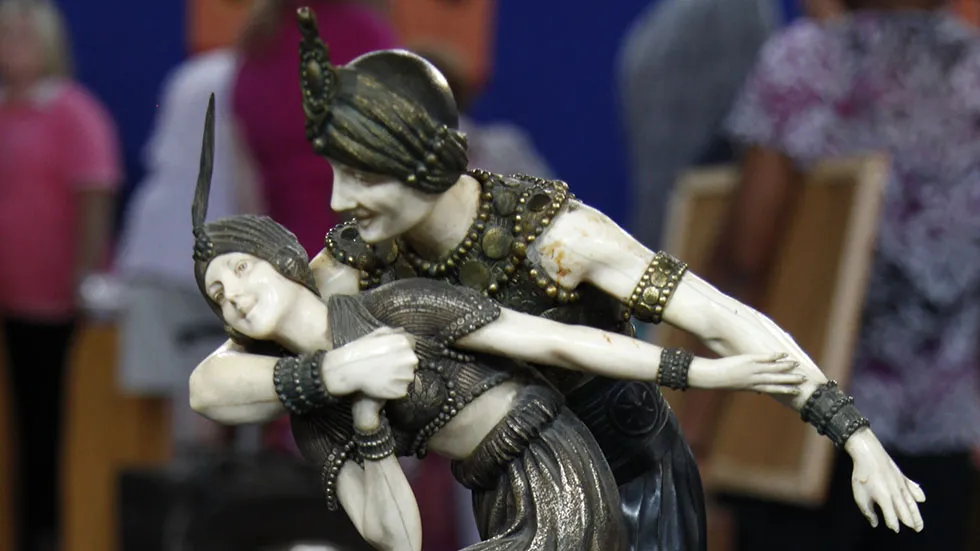
Demetre Chiparus created this bronze, marble and ivory statue in the early 20th-century.
Sep 23, 2026
Originally published on: Jun 22, 2015
Editor's Note: This digest is for general educational purposes only and does not constitute legal advice. Because federal and state regulations change over time, anyone buying, selling, or transferring ivory items should consult the U.S. Fish and Wildlife Service or a qualified legal expert prior to undertaking a transaction.
KEY POINTS FROM THIS ARTICLE:
- Strict Federal Limits: Commercial import of African elephant ivory is prohibited, while commercial sales across state lines require meeting either the strict 100-year ESA Antique Exemption or the 200-gram De Minimis Rule (pre-1990 legal import).
- Species Matters: African and Asian elephants are governed under different statutory protections—Asian elephant ivory is listed as Endangered and does not qualify for the De Minimis exception.
- State Bans Overrule Federal Rules: Numerous U.S. states (including NY, CA, NJ, MA, HI, IL, WA, NV) have enacted local ivory bans that are significantly stricter than federal law and often prohibit local sales regardless of age or de minimis status.
- Documentation Is Mandatory: The legal burden of proof rests entirely on the owner/seller to provide verifiable provenance showing legal entry and age.
Of all the antique objects we appraise on ANTIQUES ROADSHOW, few elicit as big a viewer response as items that contain ivory. Almost all of the emails and letters we receive on the subject address in one way or another the legal questions that inevitably arise around ivory.
There is an assumption in the general public that ivory is, at least in some circumstances, illegal, since the elephant species from which ivory is taken are endangered or threatened. But unless you regularly deal with ivory as part of your job, this assumption is often little more than a vague suspicion.
In fact, even expert ivory appraisers are often hazy on the law. This is through no fault of their own: The legal regime that regulates the trade in ivory is notoriously complex, arising from the intersection of federal statutory law, executive-branch orders, and the guidelines imposed by international conservation treaties. As animal populations fluctuate, so do the laws.
In an effort to help interested viewers stay informed about the state of ivory regulations, ANTIQUES ROADSHOW has worked with the U.S. Fish and Wildlife Service to prepare a digest of the current laws governing possession, sale, transfer, import and export of elephant ivory. We will continue to monitor these regulations in consultation with the USFWS and update this page as new or changing information becomes available.
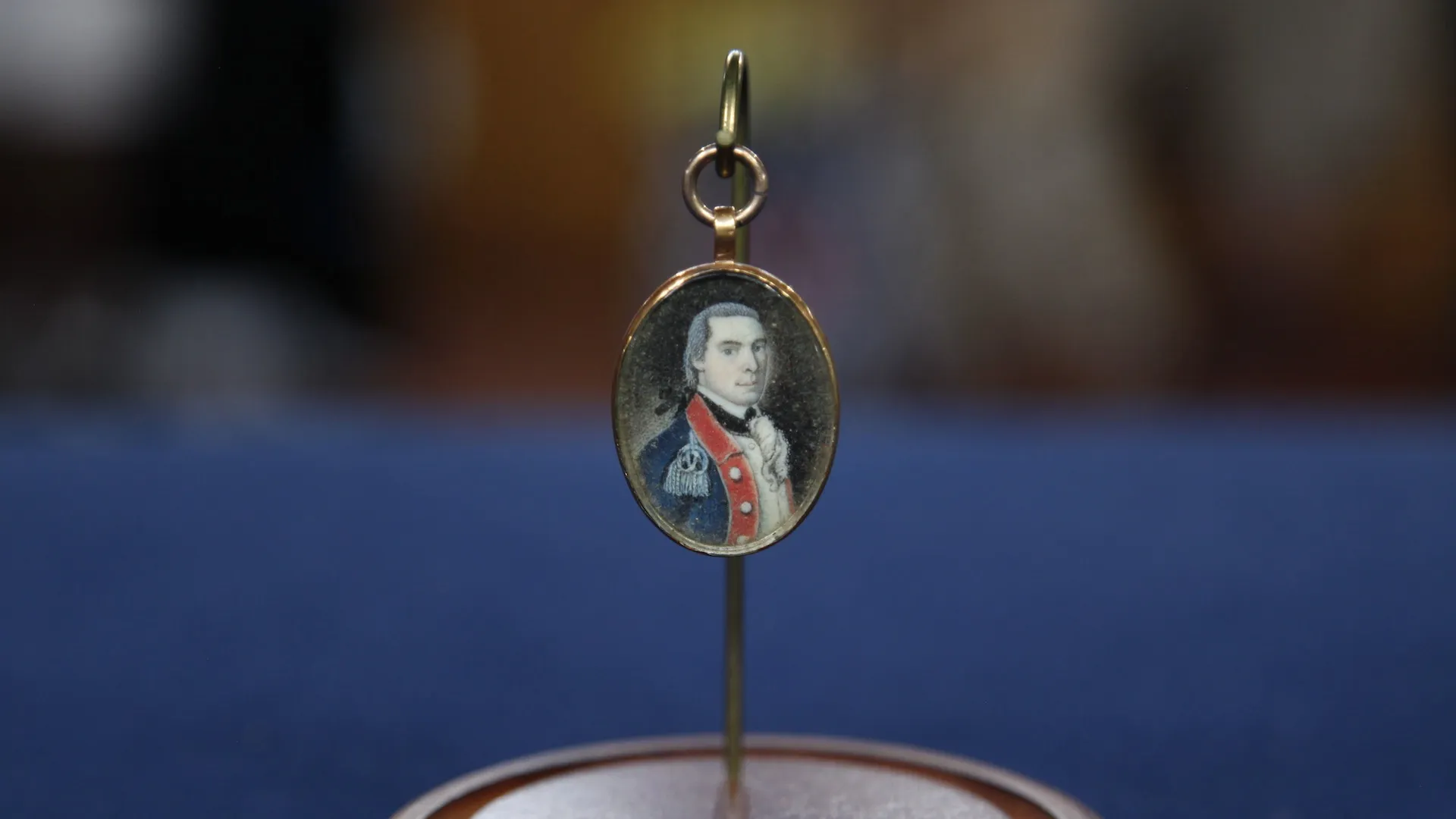
The import, export and sale of antiques containing ivory is highly regulated. This miniature portrait is oil on ivory, dating from the late 18th century.
1. African Elephant Ivory Regulations
Federal restrictions governing African elephant ivory derive primarily from Director’s Order 210 and Section 4(d) rules under the Endangered Species Act (ESA).
Import
- Commercial Import: Prohibited. There is no legal import of African elephant ivory into the United States for commercial purposes — regardless of whether it is raw ivory, worked ivory, an antique, or a newly created object.
- Non-Commercial Import: May be permitted under strictly limited circumstances if the ivory was removed from the wild prior to February 26, 1976, was legally acquired, and falls into one of these specific categories:
- Musical instruments played in a professional or official capacity.
- Personal items transferred as part of a household move or inheritance.
- Sport-hunted trophies (limited to a maximum of two per year, accompanied by valid USFWS and host-country permits).
Export
- Commercial Export: Allowed only if the item qualifies as an ESA Antique (see criteria below).
- Non-Commercial Export: Allowed if the item qualifies as an ESA Antique OR if it meets all of the following conditions:
- Created prior to 1978 (when the African elephant was listed under the ESA).
- Has not been bought or sold since 1978.
- Is exported as part of a household move, inheritance, or for scientific/museum purposes.
- Note: Exporting raw African elephant ivory remains illegal for any purpose.
Interstate Commerce (Sales Across State Lines)
To be legally sold across state lines within the U.S., an item containing African elephant ivory must meet one of two federal criteria:
- ESA Antique Exemption: The item meets all federal antique requirements.
- De Minimis Exemption: The item is not an antique, but meets all of the following strict parameters:
- The ivory was legally imported prior to January 18, 1990.
- The ivory is a fixed component of a manufactured article (e.g., piano keys, inlaid furniture, walking sticks, or knife handles).
- The ivory component makes up a small portion of the item (less than 200 grams total weight).
- The ivory was manufactured prior to July 6, 2016.
☞ See also: USFWS Elephant Ivory FAQs »
2. Asian Elephant Ivory Regulations
Asian elephants have been listed as Endangered under the ESA since 1976, subjecting Asian elephant ivory to stricter federal statutory controls.
Commercial Trade (Import, Export, Interstate)
An item containing Asian elephant ivory can only be commercially traded across state lines or internationally if it qualifies under the ESA Antique Exemption. There is no de minimis exception for Asian elephant ivory.
Intrastate Commerce (Sales Within a Single State)
Under federal law, items containing Asian elephant ivory may be sold within a state only if accompanied by CITES pre-convention documentation demonstrating that the ivory was legally removed from the wild prior to July 1, 1975 (or listed under CITES Appendix I prior to that date).
3. What Defines an "ESA Antique"?
To qualify for the ESA Antique Exemption (applicable to both African and Asian elephant ivory), an item must meet all four of the following requirements:
- Age: It must be at least 100 years old.
- Integrity: It must not have been modified or repaired with any part of an ESA-listed species after December 28, 1973.
- Importation Record: It was either imported into the U.S. prior to 1982, or imported after 1982 through one of 13 specific ports designated for ESA antiques.
- Provenance: The owner/seller must be able to provide verifiable documentation proving the item's age and legal entry into commerce.
4. Note on State & International Laws
State-Level Bans
Federal regulations set the baseline for trade between states and countries, but individual U.S. states have enacted their own restrictions.
A significant number of states — including New York, California, New Jersey, Massachusetts, Hawaii, Illinois, Washington, and Nevada — have passed state laws banning or heavily restricting intrastate sales of elephant ivory. In many cases, state laws do not recognize the federal de minimis rule and require much older provenance or special state permits to sell ivory locally. Always check your local state environmental agency laws before listing or selling an ivory item.
International Trade (e.g., UK & EU Rules)
If you are buying or selling outside the U.S., be aware that international regulations vary significantly. For example, the UK Ivory Act 2018 enacted a near-total ban on commercial ivory dealing, permitting sales only for extremely narrow categories (such as pre-1918 portrait miniatures, pre-1975 musical instruments, or items of extraordinary museum-level significance registered with the Department for Environment, Food and Rural Affairs).
5. Marine Mammal Ivory (Walrus & Narwhal)
Ivory derived from marine mammals is governed separately under the Marine Mammal Protection Act (MMPA) of 1972.
- Alaska Native Handicrafts: Authentic articles of handicrafts and clothing created by Alaska Natives (using marine mammal ivory taken legally) may be sold commercially.
- Raw Ivory: Non-Alaska Natives cannot buy, sell, or trade raw marine mammal ivory. Raw walrus ivory found on beaches by non-Natives may only be possessed if tagged at a USFWS office within 30 days of finding and cannot be transferred without written USFWS permission.
Related Resources
- Convention on International Trade in Endangered Species (CITES)
- Endangered Species Act (U.S. Code: Title 16, Ch. 35)
- Protected Species Parts (NOAA/U.S. Department of Commerce)
- Migratory Bird Treaty Act (USFWS)
- Marine Mammal Parts and Products in Alaska (NOAA)
- Laws & Policies: Marine Mammal Protection Act (NOAA)
- Alaska's Right To Ivory Sales and Tradition (ARTIST) Act
Editor’s Note — The information on this page was last updated on September 23, 2026.
This digest is for general educational purposes only and does not constitute legal advice. Federal and state regulations are subject to revision and change over time. It is ANTIQUES ROADSHOW's goal to monitor and report on such changes in a timely way; however, anyone seeking to buy, sell, or transfer ivory items should consult a qualified legal expert and the website of the U.S. Fish and Wildlife Service for the most up-to-date information on these topics.
The most recent updates to this overview were developed using official U.S. Fish and Wildlife Service resources, with research synthesis and content organization aided by Google Gemini under editorial supervision by ANTIQUES ROADSHOW staff.
Ben Phelan is a freelance writer in Louisville, Kentucky. He has been a contributor to ANTIQUES ROADSHOW Online since 2007.
Luke Crafton is ANTIQUES ROADSHOW's director of digital content and managing editor of the series website. Luke has been a producer with ROADSHOW since 2006.