Skip to main content Skip to footer site map
S33E9

Worlds of Ursula K. Le Guin

Premiere: 8/2/2019 | 1:05:49 | TV-PG |

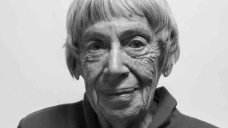
Explore the remarkable life and legacy of late feminist author Ursula K. Le Guin whose groundbreaking work, including “The Left Hand of Darkness,” transformed American literature by bringing science fiction into the literary mainstream.

Streaming until: 7/23/2027 @ 11:59 PM EDT

WATCH PREVIEW

WATCH FULL EPISODE

About the Episode

Best known for her science fiction and “Earthsea” fantasy series, celebrated and beloved author Ursula Kroeber Le Guin (1929–2018) wrote 21 novels, 11 volumes of short stories, four collections of essays, 12 children’s books, six volumes of poetry and four of translation during her life. American Masters presents the first documentary film exploring the remarkable life and legacy of the prolific and versatile author: Worlds of Ursula K. Le Guin.

Produced with Le Guin’s participation over the course of a decade, Worlds of Ursula K. Le Guin tells the intimate coming-of-age story of the Portland, Oregon, housewife and mother of three who forever transformed American literature by bringing science fiction into the literary mainstream. Through her influential work, Le Guin opened doors for generations of younger writers like Neil Gaiman, Margaret Atwood, Michael Chabon and David Mitchell — all of whom appear in the film — to explore fantastic elements in their writing.

The film explores the personal and professional life of the notoriously private author through revealing conversations with Le Guin as well as her family, friends and the generations of renowned writers she influenced. Visually rich, Worlds of Ursula K. Le Guin illustrates the dramatic real-world settings that shaped Le Guin’s invented places using lush original animations over her own readings of her work to provide a firsthand experience of her fantastic worlds.

Worlds of Ursula K. Le Guin begins with Le Guin’s early struggle to get published in the overwhelmingly male and realism-dominated climate of the early 1960s. Her first major breakthrough came with the young adult novel “A Wizard of Earthsea,” set in a magical archipelago inhabited by wizards and dragons. Along with groundbreaking novels like “The Left Hand of Darkness” and “The Dispossessed,” “Earthsea” crowned Le Guin as the queen of science fiction by the end of the decade. But as a woman and a genre writer, she still faced marginalization that hobbled her career until the last decade of her life, when she won the National Book Foundation’s lifetime achievement award and became the second living author to have their work anthologized by the Library of America.

The film dives into Le Guin’s childhood, steeped in the myths and stories of Native Americans she heard growing up in Berkeley, California, as the daughter of prominent 19th century anthropologist Alfred Kroeber and writer Theodora Kroeber, author of the influential book “Ishi in Two Worlds.” This deep childhood understanding of cultural relativism infused her work with a unique perspective; her otherworldly societies are all in some way reflections of our own.

At the heart of the film is Le Guin’s intimate journey of self-discovery as she comes into her own as a major feminist author. “What I was doing was being a woman pretending to think like a man,” she says, reflecting on why her early novels put men at the center of the action. But as second-wave feminism crashed into the science fiction world in the 1970s, Le Guin recognized her own internalized notions about heroism and power. Initially defensive, she found truth in the criticisms of her work. When revisiting the realm of “Earthsea,” she turned her gaze to its women, instead of powerful male wizards. The result was a transformation that echoed throughout the rest of her oeuvre. By embracing her own identity and learning to write as a woman, she eventually rose to the height of her literary power. Working across many genres, Le Guin received numerous honors, including the National Book Award, Hugo Award, Nebula Award, PEN-Malamud, and she was voted into the American Academy of Arts and Letters.

Worlds of Ursula K. Le Guin had its world premiere at the Sheffield Documentary Festival and has shown internationally at dozens of festivals, garnering numerous awards.

SHARE
QUOTE
"It was important to think about privilege and power and domination in terms of gender. Which was something that fantasy had not done."
PRODUCTION CREDITS

Worlds of Ursula K. Le Guin is a production of Arwen Curry in association with the Center for Independent Documentary and THIRTEEN’s American Masters for WNET. The film is directed by Arwen Curry, who is also a co-producer with Jason Andrew Cohn and Camille Servan-Schreiber. Michael Kantor is American Masters series executive producer.

About American Masters
Now in its 39th season on PBS, American Masters illuminates the lives and creative journeys of those who have left an indelible impression on our cultural landscape—through compelling, unvarnished stories. Setting the standard for documentary film profiles, the series has earned widespread critical acclaim: 28 Emmy Awards—including 10 for Outstanding Non-Fiction Series and five for Outstanding Non-Fiction Special—two News & Documentary Emmys, 14 Peabodys, three Grammys, two Producers Guild Awards, an Oscar, and many other honors. To further explore the lives and works of more than 250 masters past and present, the American Masters website offers full episodes, film outtakes, filmmaker interviews, the podcast American Masters: Creative Spark, educational resources, digital original series and more. The series is a production of The WNET Group.

American Masters is available for streaming concurrent with broadcast on all station-branded PBS platforms, including PBS.org and the PBS app, available on iOS, Android, Roku streaming devices, Apple TV, Android TV, Amazon Fire TV, Samsung Smart TV, Chromecast and VIZIO. PBS station members can view many series, documentaries and specials via PBS Passport. For more information about PBS Passport, visit the PBS Passport FAQ website.

About The WNET Group

The WNET Group creates inspiring media content and meaningful experiences for diverse audiences nationwide. It is the community-supported home of New York’s THIRTEEN – America’s flagship PBS station – WLIW, THIRTEEN PBS KIDS, WLIW World and Create; NJ PBS, New Jersey’s statewide public television network; Long Island’s only NPR station WLIW-FM; ALL ARTS, the arts and culture media provider; newsroom NJ Spotlight News; and FAST channel PBS Nature. Through these channels and streaming platforms, The WNET Group brings arts, culture, education, news, documentary, entertainment, and DIY programming to more than five million viewers each month. The WNET Group’s award-winning productions include signature PBS series Nature, Great Performances, American Masters, and Amanpour and Company and trusted local news programs like NJ Spotlight News with Briana Vannozzi. Inspiring curiosity and nurturing dreams, The WNET Group’s award-winning Kids’ Media and Education team produces the PBS KIDS series Cyberchase, interactive Mission US history games, and resources for families, teachers and caregivers. A leading nonprofit public media producer for more than 60 years, The WNET Group presents and distributes content that fosters lifelong learning, including initiatives addressing poverty, jobs, economic opportunity, social justice, understanding, and the environment. Through Passport, station members can stream new and archival programming anytime, anywhere. The WNET Group represents the best in public media. Join us. 

UNDERWRITING

Major support for Worlds of Ursula K. Le Guin is provided, in part, by the National Endowment for the Humanities, bringing you the stories that define us. Additional support for is provided by: California Humanities, Berkeley Film Foundation, Alex Borstein, Kent Rasmussen & Celia Ramsay, Paul D. Jarman, Mary Kay Kare, and others.

Support for American Masters is provided by the Corporation for Public Broadcasting, AARP, Rosalind P. Walter Foundation, Burton P. and Judith B. Resnick Foundation, Blanche and Hayward Cirker Charitable Lead Annuity Trust, Koo and Patricia Yuen, Lillian Goldman Programming Endowment, Seton J. Melvin, Thea Petschek Iervolino Foundation, Candace King Weir, Anita and Jay Kaufman, The Philip and Janice Levin Foundation, Kate W. Cassidy Foundation, The Blanche and Irving Laurie Foundation, The Ambrose Monell Foundation, Ellen and James S. Marcus, The Charina Endowment Fund, The André and Elizabeth Kertész Foundation, The Marc Haas Foundation and public television viewers.

TRANSCRIPT

- I don't offer any 10 easy steps to fame and fortune as an author because I know that in art, there are no easy steps.

To learn to make something well can take your whole life and it's worth it.

That'll do, I think.

(attendees laughing) So, shall we do Q and A?

The big thing that has happened to both fantasy and science fiction in my lifetime is that they have come all the way out of that genre closet that they were forced into and are recognized as literature.

- You now have a generation that grew up that doesn't quite understand why these artificial divisions ever existed.

- Le Guin was ahead of her time and we needed to catch back up to her.

- The only question that should matter is, is this any good or not?

I read A Wizard of Earthsea and, just little things rearranged in my head, that's when I powerfully, hungrily, more than anything else I'd ever felt, wanted to be a writer.

- You cannot deny Ursula Le Guin's influence on writers now of all kinds.

And I think that in the final analysis is much more important than whether she was being reviewed as she should have been reviewed in 1975 because she was being read by the people who would grow up to change opinions and change the world.

- It's certainly a remarkable writer who can meet you when you're 10 years old and give you something wonderful to read and still be there for you when you're 45 years old and everywhere in between.

I think she's one of the greatest writers that the 20th century American literary scene produced.

- [David] It's like that famous Earth shot called Earthrise where we see our Earth just rising over the moon, this little, blue, fragile circle.

Ursula's usage of science fiction, I feel is to make these Earthrise photographs so we can perhaps for the first time see our world from a different perspective.

If a world is dreamable, maybe it can be dreamed into being.

(light mellow music) - When I take you to the valley, you'll see the blue hills on the left and the blue hills on the right, the rainbow and the vineyards under the rainbow late in the rainy season and maybe you'll say, there it is, that's it.

But I'll say, a little farther.

We'll go on, I hope, and you'll see the roofs of the little towns and the hillsides yellow with wild oats and maybe you'll say, let's stop here, this is it!

But I'll say, a little farther yet.

We'll go on and you'll hear the quail calling on the mountain by the springs of the river.

And looking back, you'll see the river running downward through the wild hills behind, below and you'll say, isn't that it, the valley?

And all I'll be able to say is, drink this water of the spring, rest here a while.

We have a long way yet to go and I can't go without you.

(light mellow music) (light exciting music) ♪