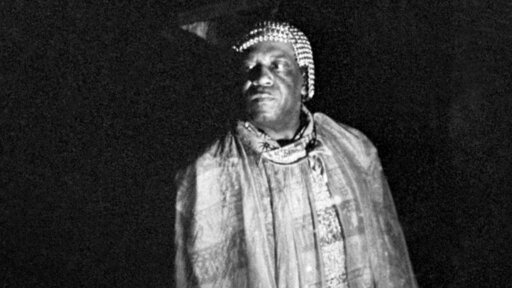
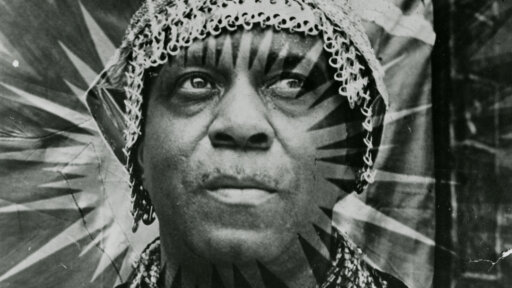
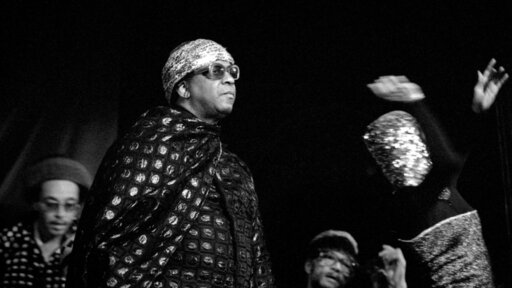
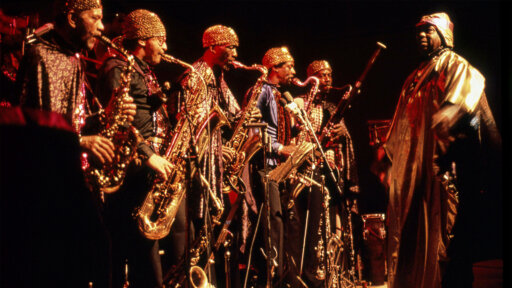
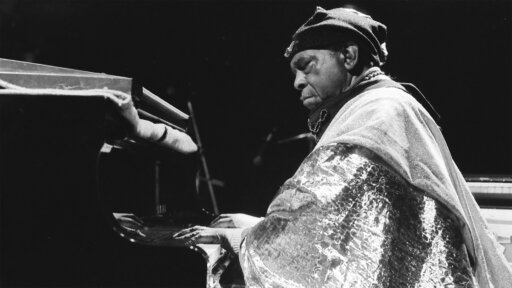
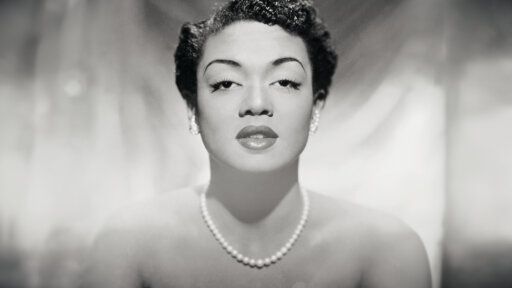
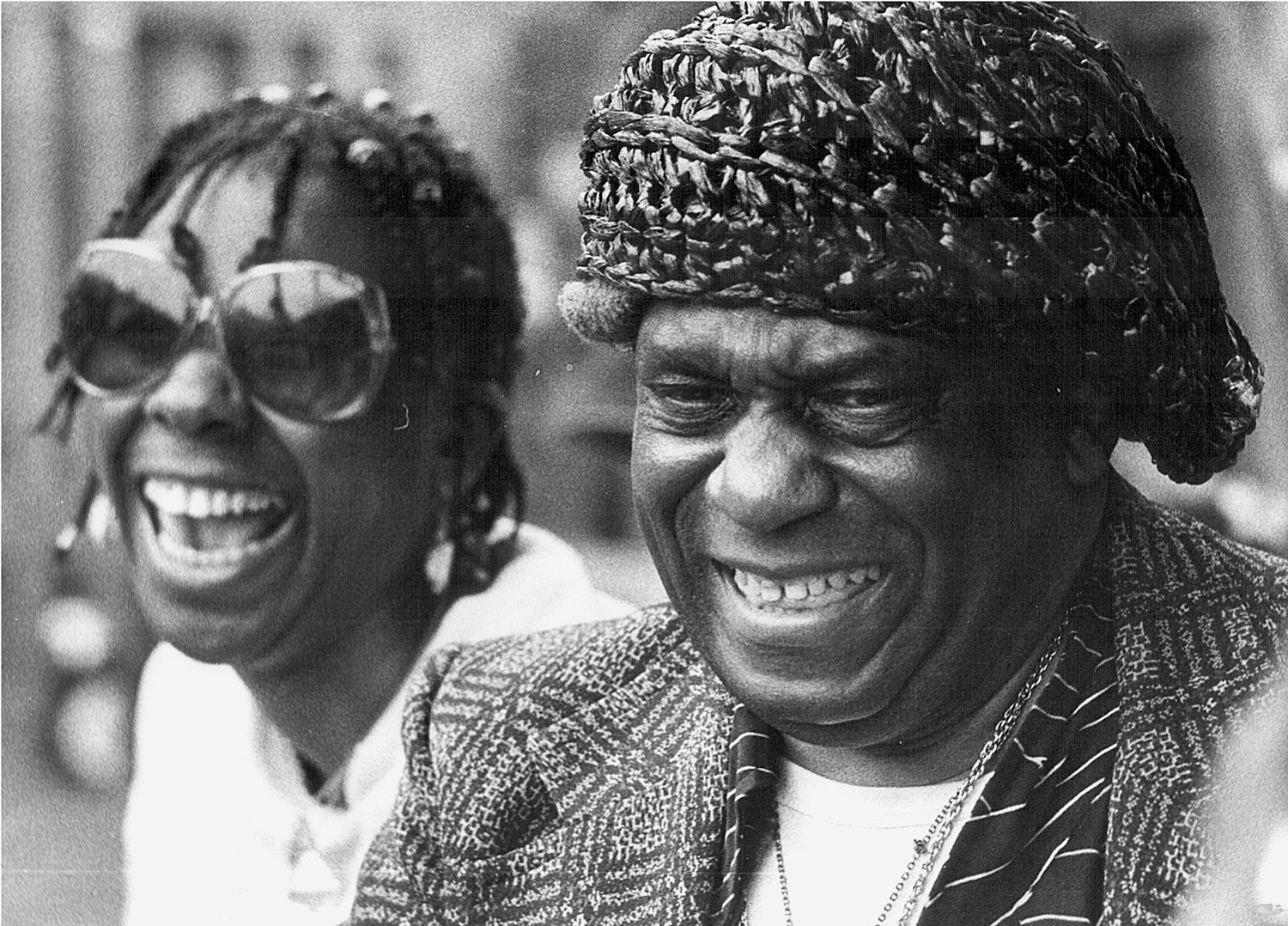
 From swing to bebop to free jazz, Sun Ra bridged myriad musical styles to create a singular avant-garde sound, and with his ever-evolving collective, the Sun Ra Arkestra, he pushed the boundaries of jazz, becoming one of the first Black artists to have his own record label. Remembered as the “Godfather of Afrofuturism,” he fused ancient Egyptian and interstellar metaphors into a powerful musical and spiritual vision that continues to resonate.
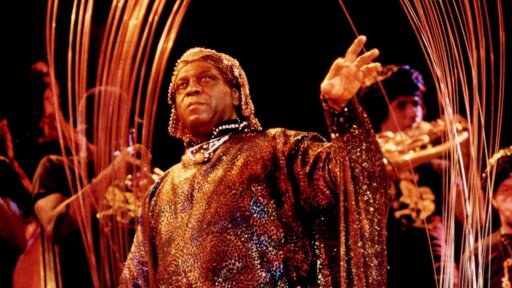
Over the course of his career, he wrote more than 1,000 compositions, released more than 200 self-produced records, and published countless broadsheets and poems. The elaborate road shows of his big band, Sun Ra and His Myth-Science Arkestra, fused music, dance, costumes, and theatrics into unforgettable sonic rituals experienced by audiences the world over.
This timeline explores Sun Ra’s life and the major milestones in his career.
Herman Poole Blount is born on May 22 (Earth arrival day) and named after the magician Black Herman.
At age 10 or 11, Sun Ra receives a piano as a gift and starts composing his music within a year.
Sun Ra starts Industrial High School, the only black secondary school in Birmingham, and the largest in the United States. He earns top grades.
Sun Ra studies music under John “Fess” Whatley whose students are recruited by Lionel Hampton, Louis Armstrong, and Duke Ellington. He later goes on tour with Whatley’s “The Society Troubadours,” a band outside of high school.
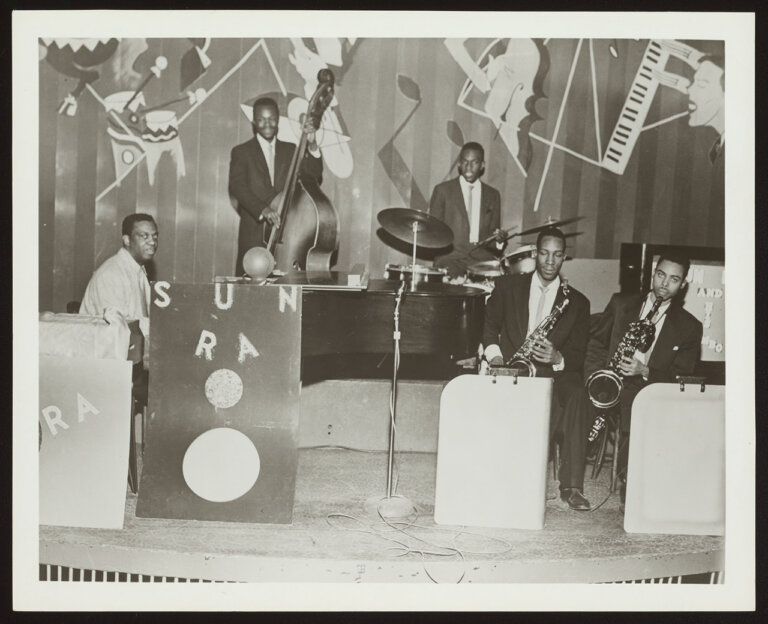
After graduation, Sun Ra forms his own band(s). He mails his composition “Chocolate Avenue” to a New York publisher, which is later recorded by Clarence Williams, but Sun Ra claimed he never received credit. He forms The Sonny Blount Orchestra and performs for a decade (no recordings exist of this).
Sun Ra attends Alabama A&M in Huntsville for 1 year. He majors in music education and studies everything but farming.
Sun Ra experiences a vision, then returns to Birmingham and recruits a band.
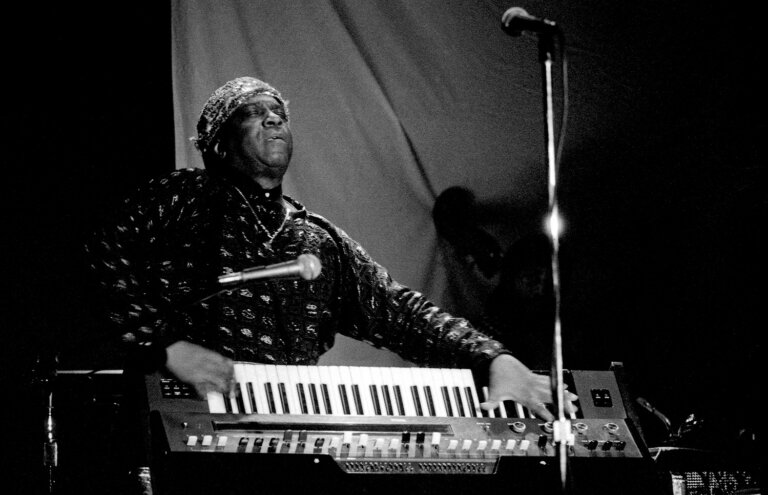
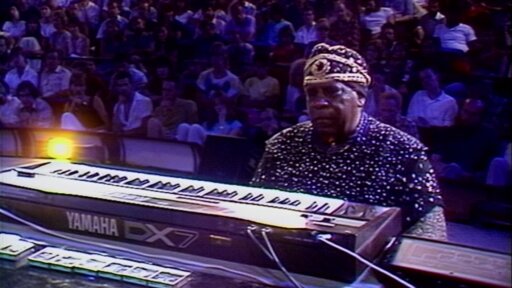
Sun Ra buys his first electronic keyboard, the Hammond Solovox, fom the Forbes Piano Company in Birmingham.
Sun Ra is drafted for WWII and becomes a conscientious objector. He argues his own case, is imprisoned, then sent to camp and eventually discharged.
Sun Ra goes to Nashville for his first recorded appearance with a Nashville artist.
At age 32, Sun Ra leaves Birmingham and doesn’t return for another 40 years.
Sun Ra arrives in Bronzeville, on the South Side of Chicago. He finds work as a sideman, arranging for big bands and doo-wop groups. He spends time in Washington Park amidst Black religious and political groups. He meets Fletcher Henderson, the "king of swing," at Club DeLisa. He arranges and plays for Henderson's house band and becomes the music copyist and rehearsal pianist for floor shows.
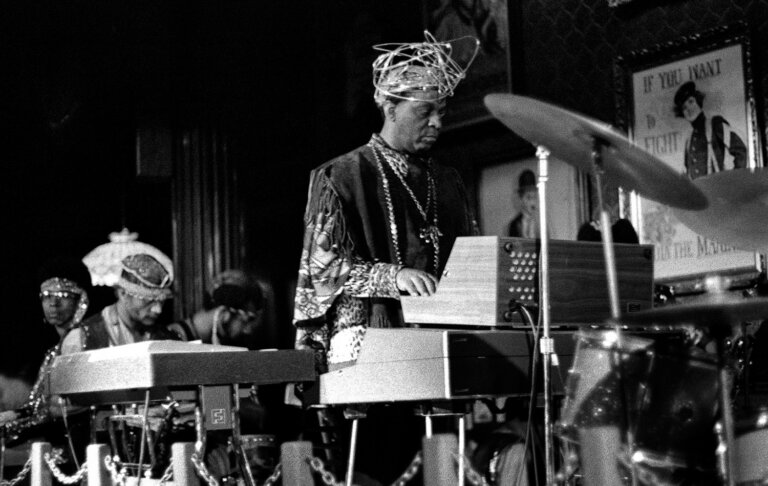
Sun Ra starts Thmei Research, a secret society in South Chicago, with Alton Abraham (his friend and manager-to-be who later bankrolls El Saturn Records) to advance the welfare of society. It combines the mystical traditions of Egyptology, theosophy, numerology, and others among the occult.
Sun Ra proclaims he is not a human and is from an “Angel race.” He legally changes his name to Le Sony'r Ra. He initially forms the “Space Age Trio” and then other bands with various members, including Robert Barry on drums and Pat Patrick on saxophone. Alton Abraham becomes their agent and the band expands to include 4-6 horns and a rhythm section. The band changes names multiple times but eventually settles on Arkestra. Other names include: Cosmic Space Jazz Group, the Myth Science Arkestra, the Solar Arkestra, Solar Myth Arkestra, Intergalactic Arkestra, Intergalactic Research Arkestra, and others.
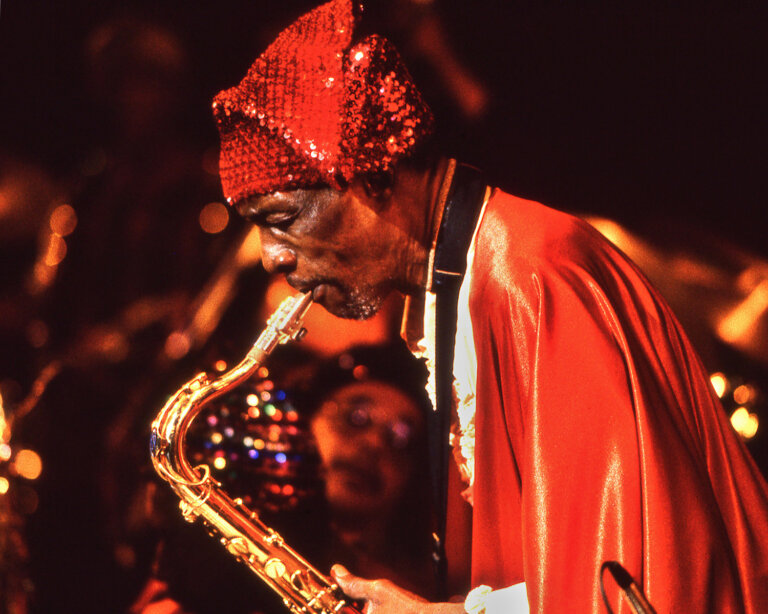
John Gilmore, renowned tenor saxophonist, joins the band. Alton Abraham begins taping rehearsals and performances, and suggests forming a record company and putting out records.
Edward O. Bland starts filming the band at various clubs. This becomes a 33-minute film called “Cry of Jazz.” In these first filmed images of the band, they play club gigs in different styles of jazz while wearing tuxes.
Sun Ra makes his first recording for Transition, “Jazz in Transition.” Marshall Allen later hears this recording.
Saturn puts out numerous singles and two LPs: “Supersonic Jazz” (1956) & “Jazz in Silhouette” (1958)
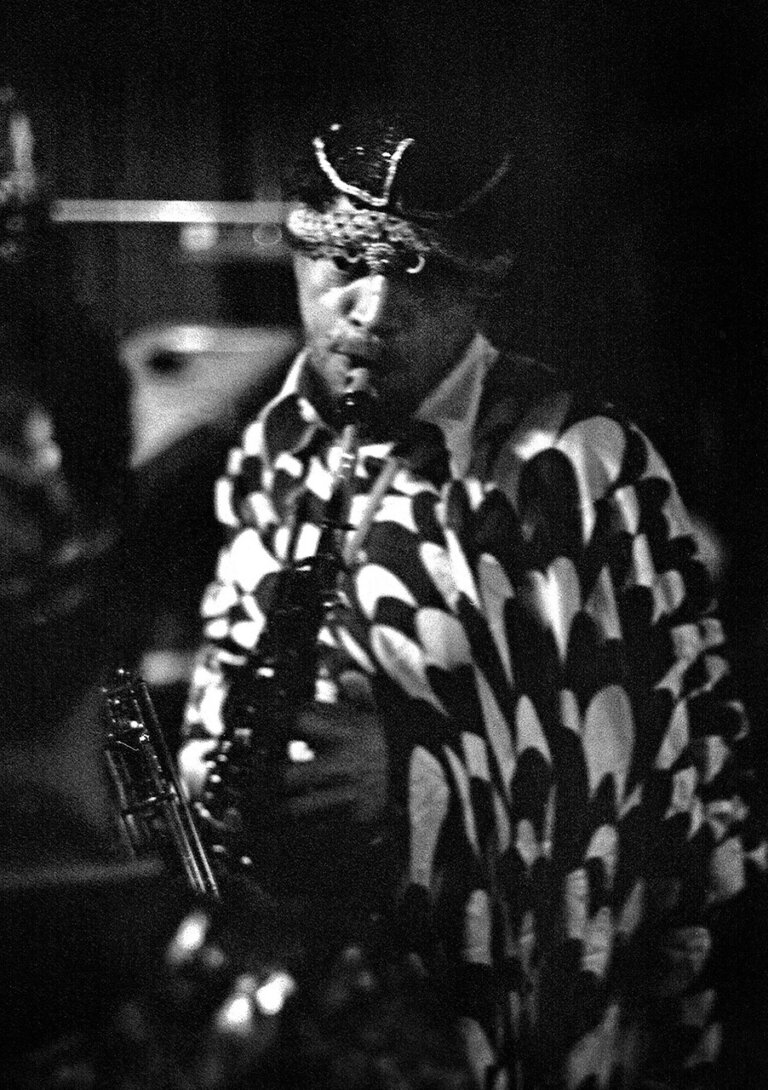
Marshall Allen seeks out Sun Ra and joins the band. Allen had previously played in Paris and with James Moody, and he adds a flute sound to the band. Gilmore, Patrick, and Allen become the core of the Arkestra.
Band members start wearing space-themed costumes, vests, and crocheted hats, some designed by Sun Ra himself.
Though they are issued several years later, the bulk of the material from four LPs is recorded in this period: "Angels and Demons at Play," "Rocket Number Nine Take off for the Planet Venus (Interstellar Low Ways)," "We Travel the Spaceways," "Fate in a Pleasant Mood"
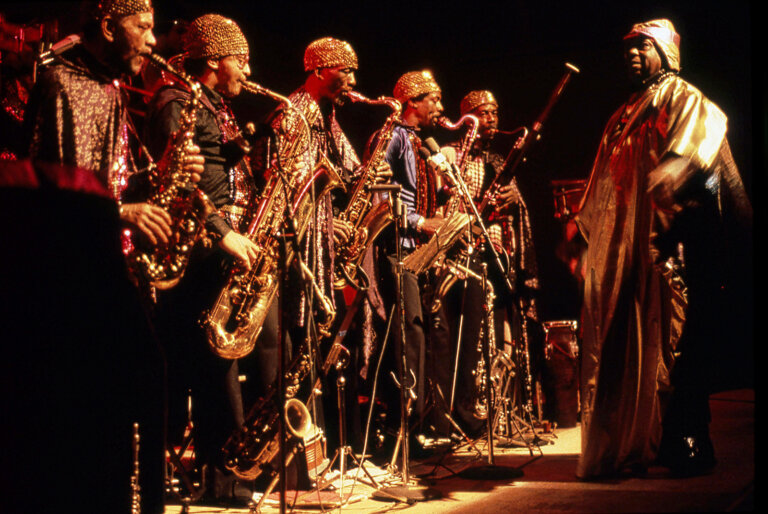
Broke and on the road, the band has mixed success playing gigs in Montreal, Canada until the government refuses to renew their work permits. The band moves to New York and lives communally in the East Village at what is later dubbed the “Sun Palace."
John Gilmore goes on tour with the Jazz Messengers and Sun Ra handpicks Pharoah Sanders to replace him. Gilmore rejoins the band in 1965.
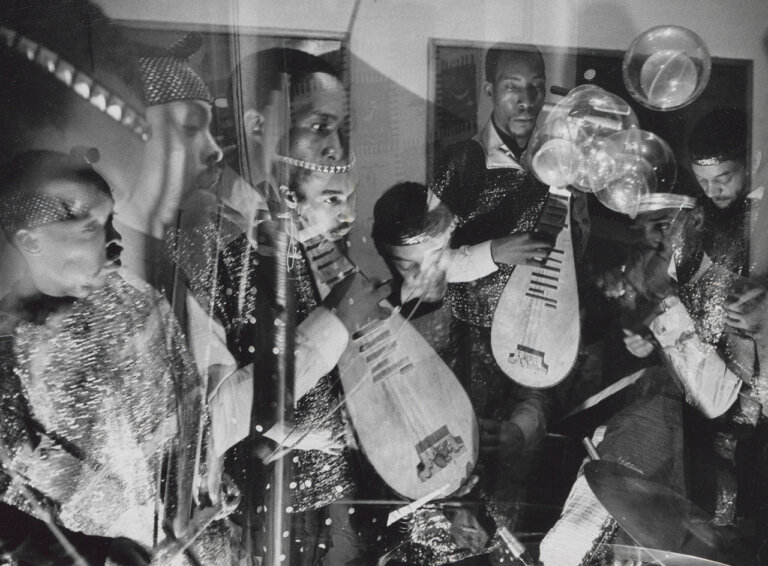
According to scholar and critic Robert Campbell, this is the most fervent period of experimentation for Sun Ra.
Phil Niblock makes the abstract black-and-white film “The Magic Sun” set to Sun Ra’s music.
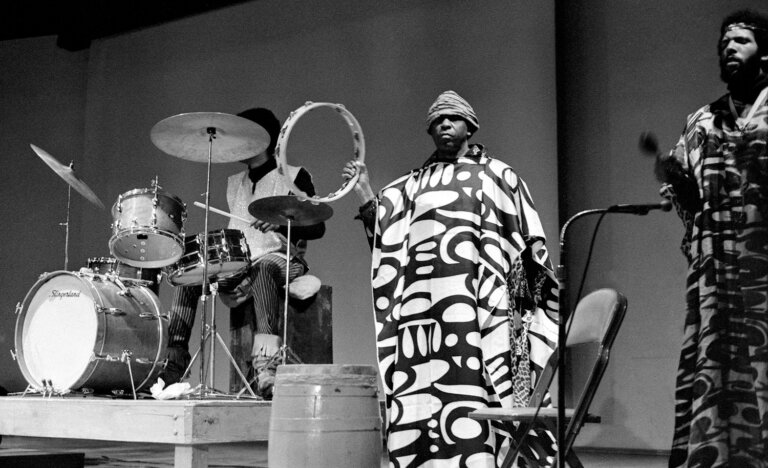
Iconic albums “The Magic City (1965) “Heliocentric Worlds I & II (1965) and “Strange Strings” (1967), in which the band plays instruments from all over the world that they don’t know, are released.
The band plays music on the record of Amiri Baraka's play “A Black Mass.” Sun Ra's poems are published in Black Fire and Umbra and his essay, “My Music is Words,” is published in Cricket.
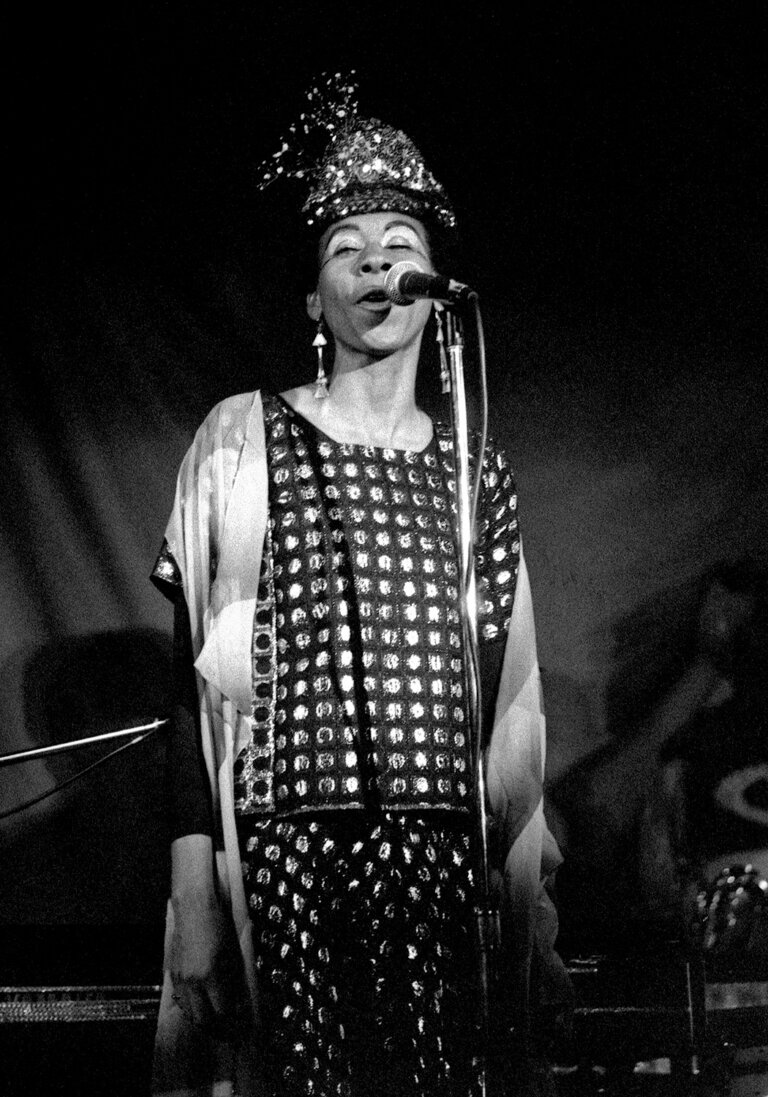
Writer and critic Tam Fiofori becomes the band's manager and engineer. June Tyson, whose background is in musical theater, joins the band around the time her husband, Richard Wilkinson, becomes the road manager.
Apollo 11 lands on the Moon. Esquire publishes a poem by Sun Ra as part of an article listing "50 Helpful Hints" from notable figures about what the first words uttered on the moon should be.
The band loses its lease on the “Sun Palace” and moves to Philadelphia where Allen’s dad owns a house.
A more mainstream sound comes back after 15 years of innovating, yet opportunities continue expanding for the band. On August 3, they play their first European show at the prestigious Fondation Maeght in the south of France with 19 musicians and dancers and elaborate film projections.
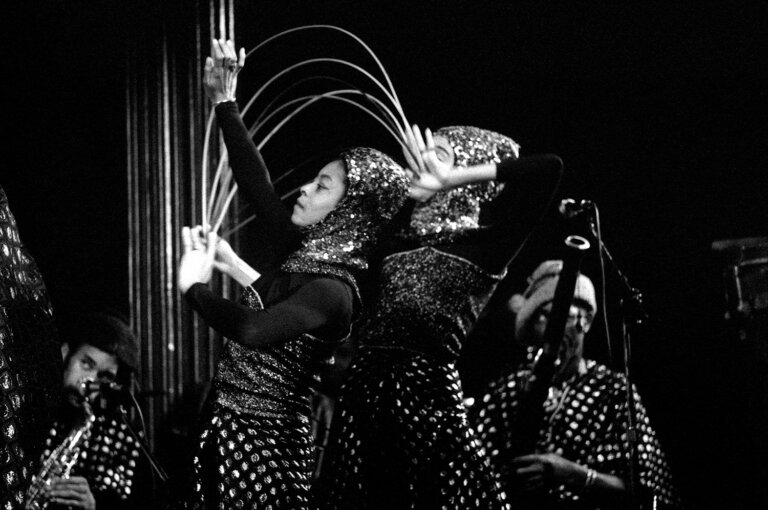
On October 9, the band embarks on a European tour, this time with 20 instrumentalists, acrobats, jugglers, fire eaters, and dancers including Cheryl Banks, Ife Tayo, and Verta Grosvenor. They play major cities including Paris, London, and Berlin.
Sun Ra is named an artist-in-residence at UC Berkeley and offers a spring semester lecture, African-American Studies 198, also known as “Sun Ra 171,” “The Black Man in the Universe,” or “The Black Man and the Cosmos.”
The band embarks on their second European tour with several concerts recorded for radio and television. The go on to Egypt where they film themselves dancing for the pyramids.
“Space is the Place” album and indie movie, directed by John Coney, is released. Sun Ra also self-publishes two volumes of poetry: "The Immeasurable Equation" and "Extensions Out: The Immeasurable Equation Vol. II."
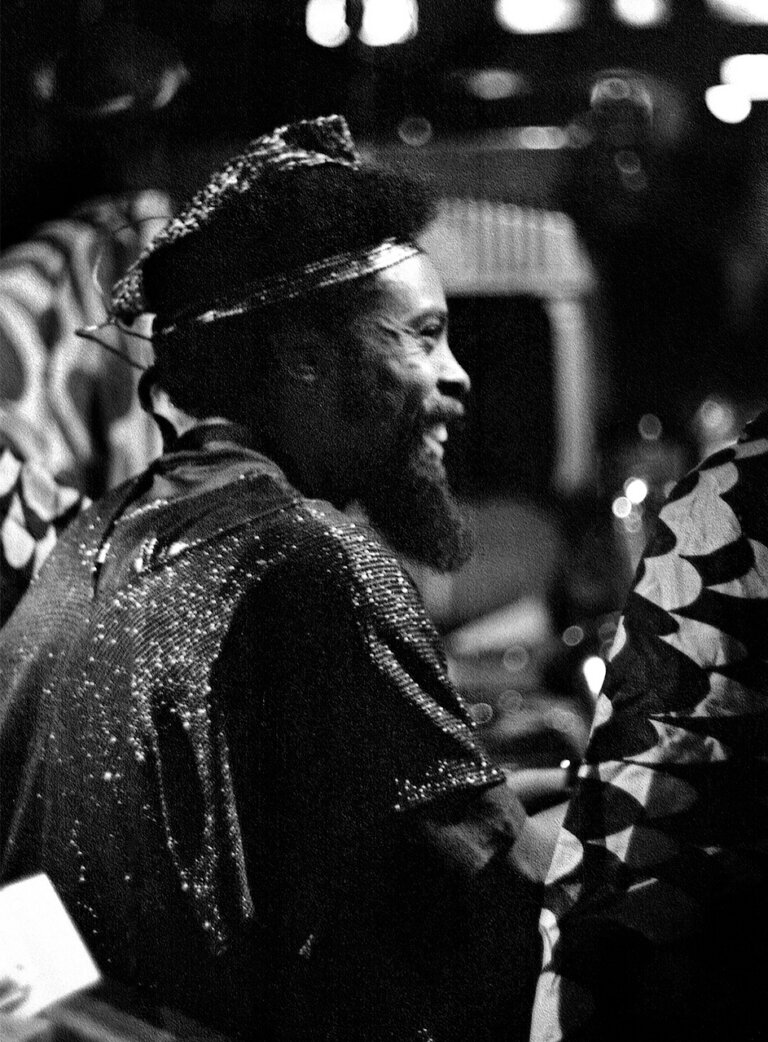
Long-time band members Pat Patrick and Ronnie Boykins depart.
Swing classics, including arrangements by Duke Ellington and Fletcher Henderson, become a staple of the band's live shows. They start pressing records out of the Philadelphia house that include labels and covers hand-drawn by band members.
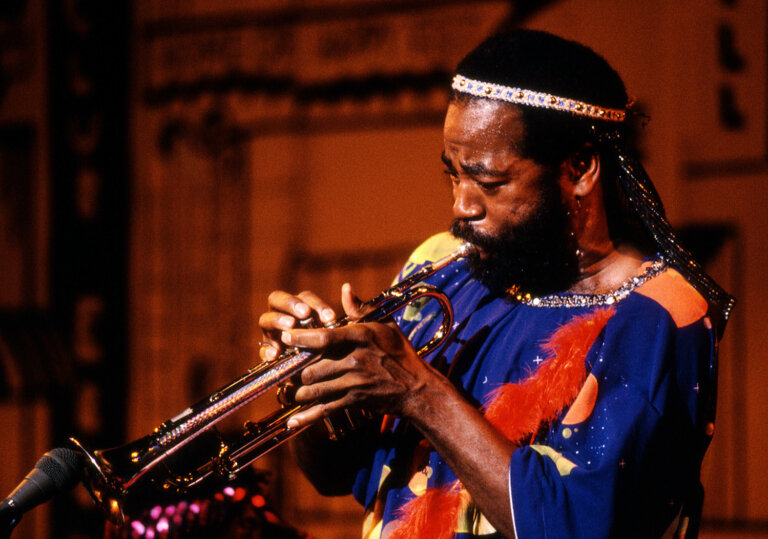
The bands fourth European tour sees the return of Pat Patrick and a renowned band including Ahmed Abdullah and Craig Harris. They play major festivals including Paris and Montreux.
The band travels to West Africa and plays at FESTAC ‘77, the Second World Black and African Festival of Arts and Culture, in Lagos, Nigeria.
Saturn’s Chicago operation shuts down.
Robert Mugge’s documentary, “A Joyful Noise,” which includes performances, interviews, and candid footage, is released.
In guerilla concerts in Egypt, the band plays in front of the pyramids.
Sun Ra suffers a stroke and his health starts to go downhill.
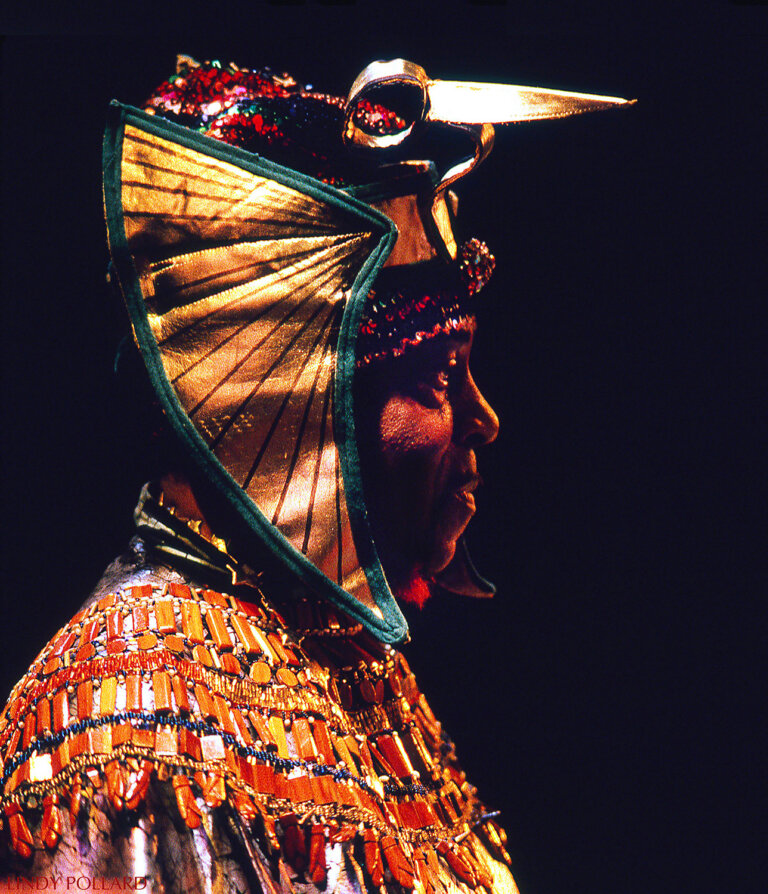
Sun Ra departs Earth, on May 30th, one week after his 79th birthday.