
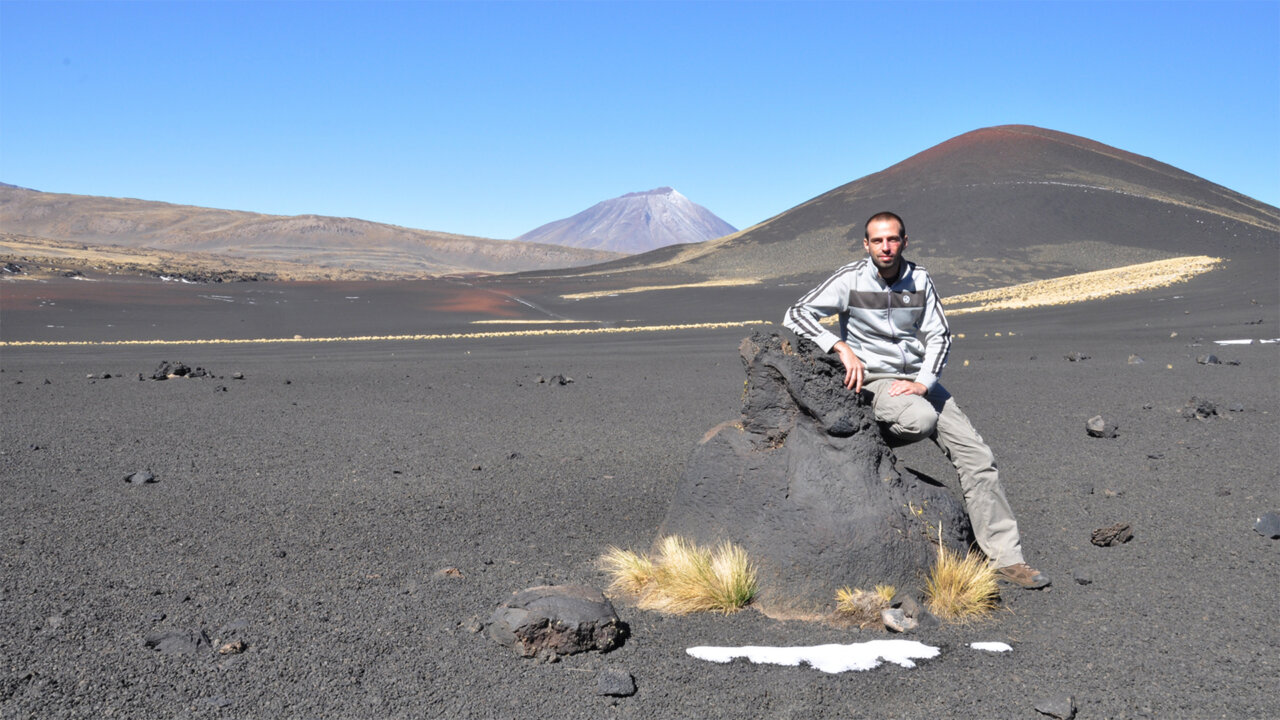
In 2011 I visited Payunia, one of the most pristine landscapes in Patagonia, as a tourist. Now, fifteen years later and working at WCS, I am working to turn this magnificent provincial reserve into a National Park. Photo courtesy Mariano Gonzalez Roglich.
When most people hear the word “Patagonia,” ideas of remoteness, isolation, vastness, emptiness or desert come to mind. To me, Patagonia is home. It is the place where I was born, where I grew up, and where I am now lucky to be back again living and working.
I grew up along the coast of the Rio Negro River in northern Patagonia, Argentina. Glaciers along the Andes provide ample water for this river to flow across hundreds of kilometers of the arid Patagonian steppe, creating a productive oasis.
My family is originally from a small town further south called Jacobacci, where sheep farmers cope with a harsh environment, massive winter snowstorms, and attacks by pumas and foxes on their sheep. Most of my vacations growing up were split between family visits there and the magnificent Andes range to the west.
I have always been an observer of nature. Hiking through Patagonia showed me first-hand that we had plenty of space to improve the way we relate with the species and ecosystems around us.
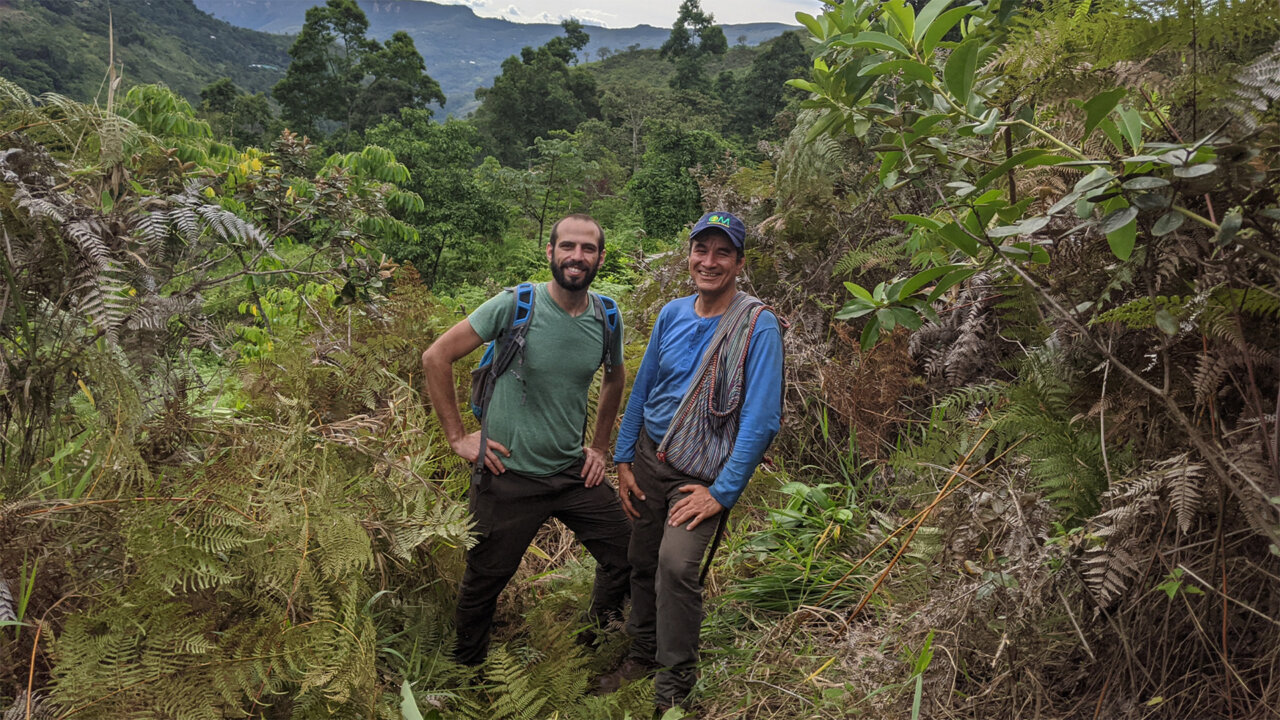
In 2019, I worked with coffee farmers from the Amazonas Department in Northern Peru to assess how regenerative farming practices supported carbon sequestration and biodiversity conservation in this high biodiversity region. Photo courtesy Mariano Gonzalez Roglich.
My academic studies in ecology, conservation, and environmental sciences were my intellectual attempt at trying to better understand how nature works and how we can protect it. Undergraduate work at La Pampa National University and graduate work at the University of Florida and then Duke, clarified that conservation requires working collaboratively—whether with anthropologists and economists or public officials and the private sector.
I put that understanding to work first at the global NGO Conservation International, where I supported countries in Asia, Africa and South America better understand how their grasslands were being degraded, forest cleared, and reservoirs being depleted as a first step to developing regenerative land management practices.
The COVID-19 pandemic was a loud wakeup call alerting the world that neglecting nature in one remote place could have catastrophic consequences globally. It also reminded city dwellers how much we needed nature for our physical, mental, and spiritual health. That was the catalyst for my decision to leave the US and return to Patagonia as Country Director for the Wildlife Conservation Society in Argentina.
WCS had been working in Patagonia for 60 years. A lot has changed in that time. Land degradation has become more prevalent. Extractive industries and energy infrastructure now occur in once remote and pristine land and seascapes. And emerging zoonotic diseases are causing unprecedented mortality in some species. Over 90 percent of southern elephant seal pups died in 2023 due to an outbreak of avian influenza.
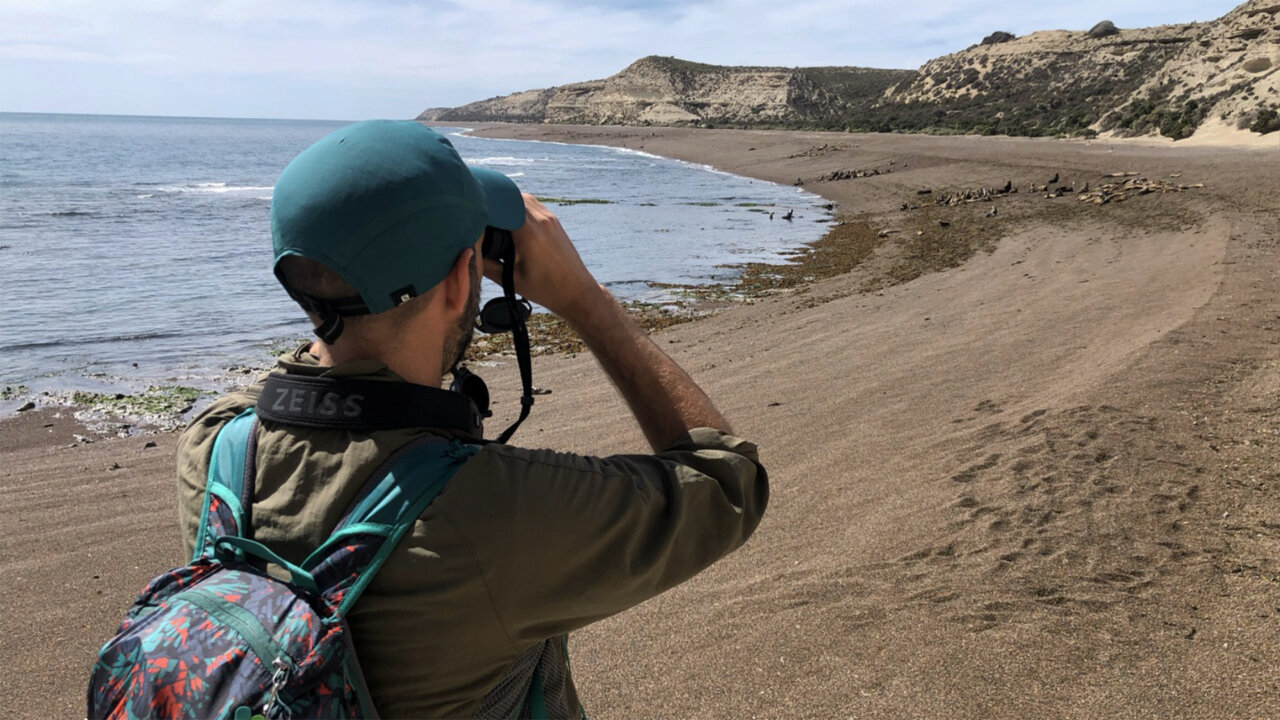
WCS has performed elephant seal census in Patagonia for over 40 years combining beach counts with plane and drone surveys. The 2024 elephant seal census in Península Valdes was key to estimating the impact avian influenza had had the previous year. Photo credit: ©️WCS Argentina
But the changes are not all negative. Thanks to a growing movement to value nature, we see the recovery of many populations only recently at the brink of local extinction. Guanacos, pumas, and foxes on land, and Southern right whales, elephant seals, and sea lions at sea, are just a few examples of nature’s capacity to recover if we help it.
Our driving motto at WCS Argentina is “coexistence.” Coexistence between artisanal fisher people and the resources they use; between whale watching expeditions and the charismatic species people come from far away to appreciate; between the farmers struggling to make a living out of fiber production and the carnivores keeping the ecosystem at balance; and even coexistence between extractive industries supporting the energy transition and the natural system around them.
Values vary. Some of us think all life forms, from simple bacteria to complex healthy ecosystems, have an intrinsic right to exist. Others value nature for the benefits we derive from it. Still others focus on the right of future generations to enjoy what we ourselves enjoy.
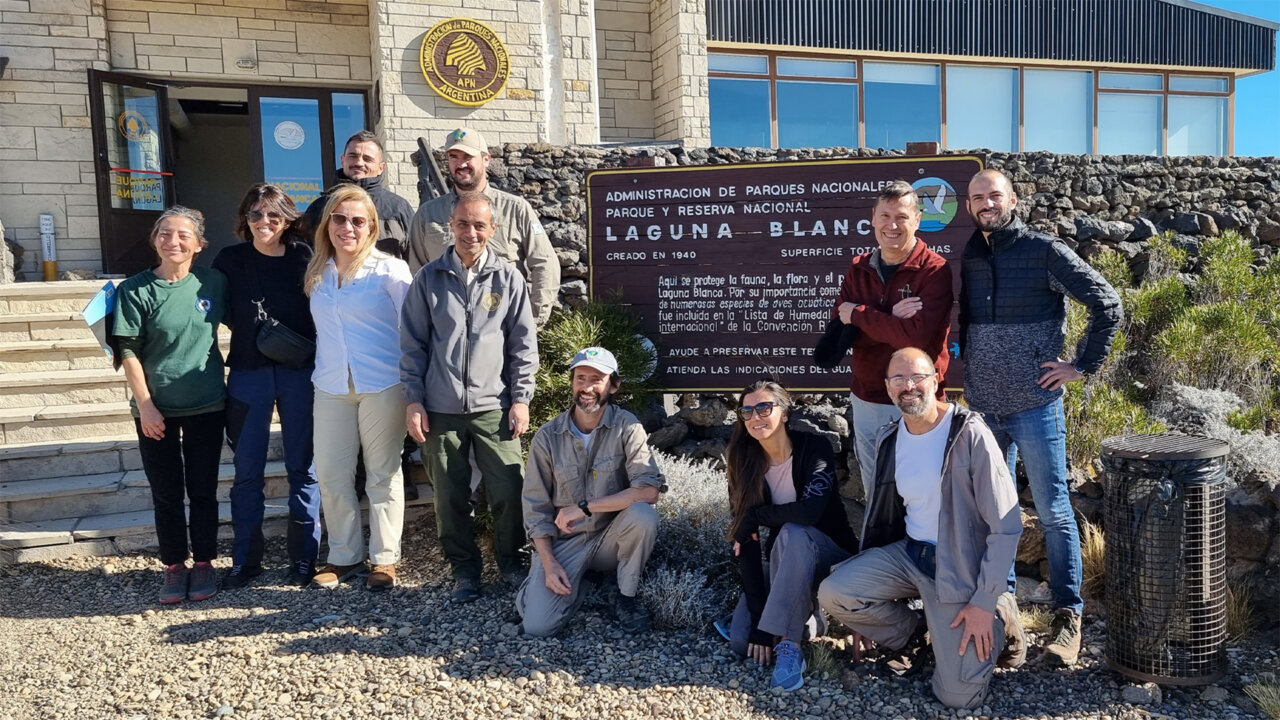
Laguna Blanca National Park is a place where WCS Works has been working with small farmers to produce fiber in a regenerative and wildlife friendly way. This picture shows WCS Argentina team after a productive work session with park rangers.Photo credit: ©️WCS Argentina
My career in conservation has taught me that protecting nature is not about trying to convince others that my values are better than theirs. It is about making connections. About listening more than talking. And about trying to find common ground lasting ways to coexist.
We live in uncertain times that our civilization has never previously experienced. Societies are polarized more than ever. Inequalities are growing. Technology connects and isolates us at the same time. We know little about the impacts AI will have on societies or the environment.
Some say the future looks green because human population will stabilize and we´ll become more efficient on the use of resources, but evidence so far shows ever-growing demands on the natural world.
Whatever the future brings, we know one thing for sure: we need nature. Patagonia was my gateway to discovering nature, allowing me to develop a career devoted to understanding and protecting it while recharging me along the way with its beauty. If you do not have your own gateway to nature, I encourage you to visit the nearest patch of green space you can find. Walk, listen, watch, breath… and connect.