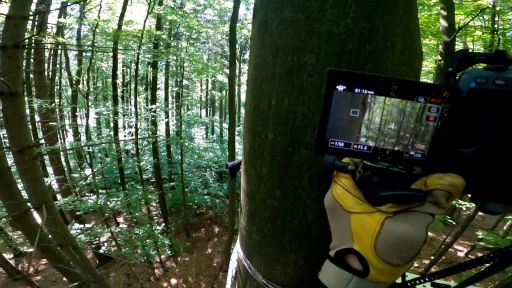
Producer Ann Johnson Prum and cinematographer Mark Carroll travel to western Poland to film the nest of the elusive Black Woodpecker. Working with local Biologist Romuald Mikusek they find a nest over 50 feet high. Using climbing gear Mark ascends the tree to mount cameras ...
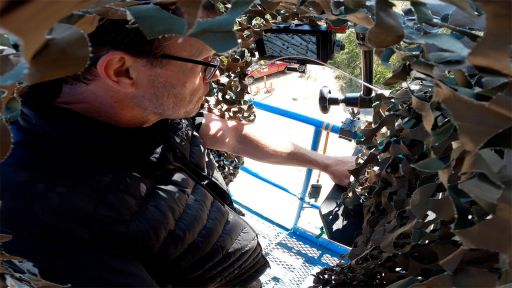
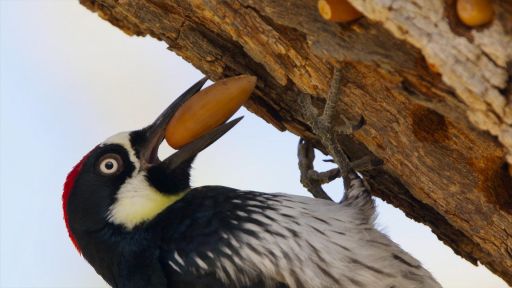
Cinematographer Mark Carroll takes us up in a crane to show us how he was able to capture feeding and caching behavior at the Acorn Woodpecker’s eyeview at the Hastings Natural History preserve in Carmel California.
While filming the ocelot kittens, filmmaker Ben Masters compares his experience as a new parent to the mother ocelot. He later brings his infant into the field to "help" with camera trapping.
Camera trapping shows more than just data, it also captures this ocelot family's day-to-day behaviors. These filmmakers became the first people ever to see what it takes for a wild American ocelot to raise her young.
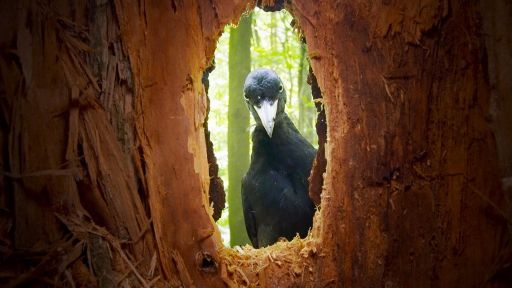
Black woodpeckers in Poland are elusive and have rarely been filmed. A pair of these large, imposing birds make a home in a beech tree, where they feed their hungry chicks.
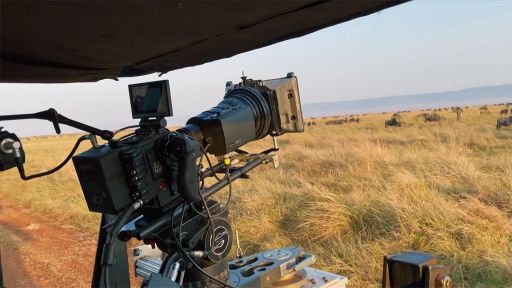
Clement Kiragu, a Kenyan trainee cinematographer on Running with the Beest, recounts the thrills and challenges of working on his first wildlife film. From setting up crucial time-lapses to operating the croc cam, his 64 days in the wilderness are packed with action. Clement also ...
Dive deep into South Texas to meet one of America’s most endangered cats: the ocelot. With about 120 known ocelots remaining, the future of the U.S. ocelot population relies on ranchers, scientists and government agencies working together.
Acorn woodpeckers love to collect acorns and “tattoo” them into the holes they create in trees. Placing these acorns into trees helps this food last throughout the winter. But acorn woodpeckers aren't the only ones who love acorns, so they need to carefully watch their ...
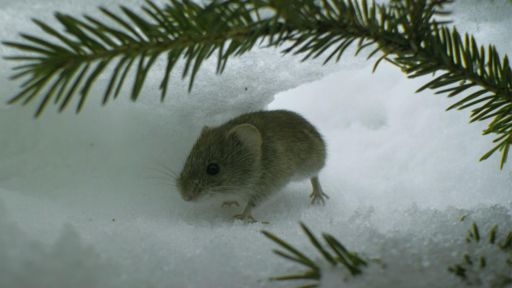
The red-backed vole lives beneath the surface of the snow but there’s one creature that can hear its every move: the great grey owl. And if the owl were not enough of a threat, another predator lurks within the vole's tunnels.