Everyone has heard of honeybees, but what about the 4,000 species of wild, native bees that live alongside honey bees here in North America? These lesser-known, but equally industrious insects not only pollinate our crops but also support healthy, diverse ecosystems across the continent. Unfortunately, ...
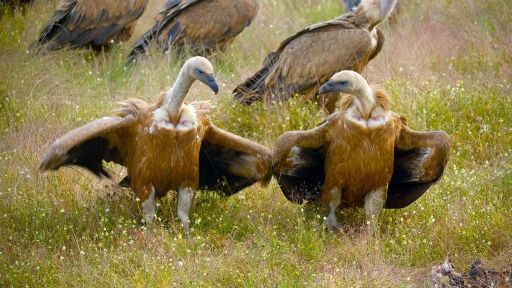
When a piece of carrion is spotted on this side of the border, griffon, black, and bearded vultures descend en masse. A strict ranking system applies at the carcass, but one visitor turns up without an invitation.
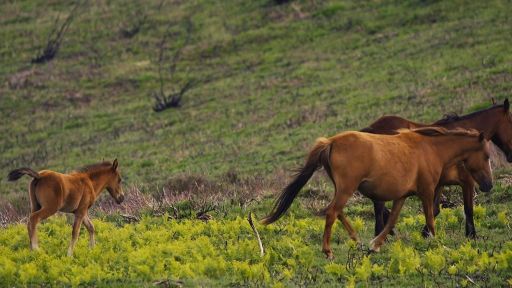
The stars of Portugal's only national park are not newcomers. Wild Garrano horses have lived in the Peneda-Gerês mountains of northern Portugal for 20,000 years.
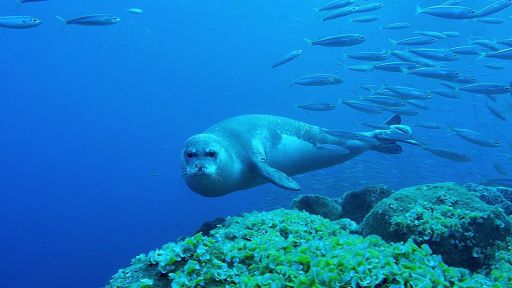
The Mediterranean and the coastal waters of North Africa and western Europe were once home to hundreds of thousands of Mediterranean monk seals. These days just 300 or so remain. Over centuries they have been hunted to the brink of extinction.
A polar bear mother and her cubs search for scraps during a too-hot summer. In the Southern Beaufort Sea, there are only about half as many polar bears as there were 35 years ago. North Alaska has the largest oil field in America, and its ...
The caribou migration is a veritable feast for grizzly bears — if the bears can catch them. Grizzlies hunt all the way to the Arctic Ocean in the summer, but caribou are faster than bears on the open plain.
Within hours of being born, a muskox calf is ready to start exploring. Meanwhile, its mother keeps a careful eye on her newborn. Muskoxen were hunted to extinction in Alaska by 1860 but were reintroduced in the 1930s. There are now a few thousand in ...
A newborn hippo draws unwanted attention from predators like crocodiles and lions. His brave mother is well aware of these threats and keeps him close.