Rabbi James Rudin


BOB ABERNETHY, host: We have a profile now of a man who has spent most of his life working for better relations between Christians and Jews. He is Rabbi James Rudin, for many years until his retirement the head of interreligious affairs for the American Jewish Committee. Rudin has a new book out called “Christians and Jews, Faith to Faith.” One reason he wrote it, he says, is his fear that the cause he has served so long is losing momentum.

We met Rudin at a retreat center near his home in Florida. Once, he promoted better interreligious understanding with top US and foreign leaders. He had 11 meetings with Pope John Paul II and then with Benedict XVI. Rudin may be retired officially, but he is still busy writing, speaking, and leading interfaith meetings, this one of Catholics and Jews.

post02-rabbirudinRABBI JAMES RUDIN (speaking at interfaith meeting): Is it possible to be a faithful Catholic and a faithful Jew, very deep in your soul, in your heart, and still have mutual respect and understanding for the Other, capital O, the Other who is not of our faith?

ABERNETHY: Rudin says the Nazi Holocaust of the 1930s and ’40s taught his generation what can happen when bigotry goes unchecked.

RUDIN: To me it’s a pathology, it’s a cancer—that is anti-Semitism or any religious hatred—and if you don’t treat it, if you don’t treat it as a pathology, it can fester and can be quiet for a while, and then it explodes.

ABERNETHY: Pope John Paul II, along with many others, led the postwar attack on religious prejudice, especially on anti-Semitism. In the year 2000, John Paul prayed at the Western Wall in Jerusalem, Judaism’s holiest site. The note he left asked God’s forgiveness for all those who had caused Jews to suffer. I asked Rudin if he blames Christians for the Holocaust.

RUDIN: I don’t hold today’s Christians guilty, not at all. Most of them were born after ’45. But there is a responsibility to teach it to young Christians growing up today. In Christian Europe, in a Christian society mass murder took place of a religious community, and how did that happen?

ABERNETHY: In churches, synagogues, and schools, often with carefully prepared courses and videos, dialogues explore the issues that separate the two religions, one of them—the words “Old Testament.”

post01-rabbirudinRUDIN: It’s not accurate because it puts Judaism as if it were something old-fashioned, not up to date or, as many Christians believe, has been replaced by Christianity and that the New Testament is superior to the Old Testament, and that’s my beef with it.

ABERNETHY: And what about the understanding many Christians have that the Hebrew Bible foreshadows the coming of Christ?

RUDIN: I want Christians to take the Hebrew Bible or, it’s called, the Old Testament or the Tanakh on its own terms. Do not imply that it was written six- or seven-hundred years before an event and was already predicting an event.

ABERNETHY: What then should evangelical Christians and others do about their conviction that the whole Bible is literally true—God’s word?

RUDIN: Well, that’s not the way Jews and other Christians read the Bible.

ABERNETHY: And the ancient accusation that Jews killed Christ?

RUDIN: That’s one of the most insidious and odious charges, and everybody knows, or everybody should know that Jews under Roman occupation in the land of Israel at that time had no power to execute anybody.

ABERNETHY: Another issue—Jesus’ “Great Commission” to his followers to make disciples of all nations.

RUDIN: Well, I respect that and I understand it, but Jews are already with the Father, already with God—the Covenant—and are not in need of any intermediary.

post03-rabbirudinABERNETHY: And attitudes toward Israel? I asked Rudin whether he thinks some Jews are so supportive of the state of Israel that they can’t criticize its government’s policies.

RUDIN: There are many Jews who are very unhappy with the various policies of the Israeli government and have expressed it. However, there is one thing that the overwhelming number of Jews agree—that Israel must survive as a Jewish state.

ABERNETHY: Rudin says the best results from interfaith dialogue come when participants honestly identify their differences as well as common ground.

RUDIN: I’ve found after 40 years of this that Jews and Christians who really engage one another come out better Christians and better Jews.

ABERNETHY: Rudin preaches a theology that accepts the validity of all religions, all different approaches to the transcendent.

RUDIN: I really believe that God’s plan for the human family is that there are many, many paths to God, and there’s not just one path and one way and one truth, and that’s the hardest thing for Christians and Jews to accept. They can accept neighbors, they can accept working together, marrying one another, they can do all kinds of things, but when push comes to shove they’ll say “my faith is the truth,.” But when you say “my faith is the truth” you are excluding 98 percent of the rest of the world.

post04-rabbirudinABERNETHY: The interfaith group Rudin spoke to was the board of directors of the Center for Christian-Jewish Studies at Florida’s Saint Leo University. Some of the members spoke of the progress they have seen:

INTERFAITH MEETING PARTICIPANT: I go back to my own childhood, where my schoolmates would call me a dirty Jew, and now I have a beloved Catholic son-in-law, and we’re sitting in this group. It’s like day and night.

RUDIN: That’s in one generation

INTERFAITH MEETING PARTICIPANT: In one generation—well, a long one.

ABERNETHY: Others emphasized their concern for the future.

INTERFAITH MEETING PARTICIPANT: My fear is that we have peaked. Now if I’m wrong in this tell me, because a lot of the folks that are engaged in our work here are not necessarily going to be around the next 10 years. The challenge for us is how to bring folks who aren’t 60 years old into this game, right?

ABERNETHY: Rabbi Rudin, too, sees work left to do and not enough younger people interested in doing it.

RUDIN: I think the initial enthusiasm, the first flush of excitement—gee, Christians and Jews meeting together in America and dialogue or in Israel or Europe either—that’s over. And you have a whole new generation of Jews and Christians for whom all this either seems old-fashioned or unnecessary or the job has been done. There’s nothing more to do. Maybe they think we’ve succeeded, but we haven’t.

ABERNETHY: If younger generations feel better relations between Christians and Jews are no longer a top priority, surely one of the reasons is the great improvement in those relations that Rabbi Rudin helped bring about.

Melani McAlister: “Islam is Going to Have a Real Role”

Watch excerpts from an interview about religion’s role in the spreading unrest across the Middle East with Melani McAlister, associate professor of American studies, international affairs, and media and public affairs at George Washington University.


Prisoner Reentry


LUCKY SEVERSON, correspondent: This is a reentry program for inmates about ready to be released back to their communities. It’s funded by the state of Hawaii and the social ministry of the Catholic Archdiocese of Honolulu. Angela Anderson is one of the fortunate participants. She’s been serving time for drug abuse.

ANGELA ANDERSON: When I had got out of jail before, you know, I went directly back to drugs, because that’s really all there was. But here I got structure. I made great friends. You have classes that you have to attend to. You have to live to a schedule.

post07-prisonreentrySEVERSON: What it does is lessen the odds that she’ll go back to prison. In 2009, the latest statistics available, there were 2.3 million Americans serving time behind bars, the highest documented incarceration rate in the world. Since the early 1970s, the prison and jail population has increased by 700 percent. Now, faced with the staggering costs of incarceration, about $55 billion a year, politicians are asking community and faith-based volunteers to help the reentry process for the hundreds of thousands of ex-cons who are coming home. The state of Hawaii is no exception. To reduce the spiraling costs of incarceration, a number of states started exporting inmates to cheaper localities, often to other states and quite often to private for-profit prisons. Over the years, Hawaii has shipped thousands of inmates to the mainland. At latest count, there are over 1800 in one prison in Arizona. But the state has discovered that the costs are considerably greater than projected, and not just in taxpayer dollars.

JUDGE STEVEN ALM: We’ve had a terrible “nimby” problem over the years—not in my backyard—about building another prison.

SEVERSON: Judge Steven Alm started the nationally recognized Project HOPE, a program for probation violators that has cut recidivism rates in half.

post02-prisonreentryALM (speaking to prisoners): But when you’re out in the world probably you’re the one who’s going to be making all these decisions.

SEVERSON: Judge Alm says Hawaii inmates doing time in Arizona are deprived of crucial family support.

ALM: Families are not going to be able to fly up to Arizona to see them. They’re not going to be able to keep that kind of relationship. They’re going to get cut off, and some are going to get cut off from their culture, from their faith organizations. It does create a real problem.

SEVERSON: Some are now reconsidering the wisdom of locking up prisoners from Hawaii almost 4,000 miles from their families. Kat Brady is with the Community Alliance on Prisons.

KAT BRADY: And what they found was that people who served their sentences abroad actually when they’re released and if they get rearrested it’s for violent crimes. Where people who serve their sentences in Hawaii, upon release if they get rearrested it’s usually for a drug crime.

SEVERSON: Nationally, about six out of 10 inmates commit another crime within three years of being released. Brady and others here now think that Hawaiian prisoners serving in Arizona are bringing gang crime back with them. Jeffrey Silva was in Arizona, part of a 10-year sentence for failing a urine drug test while on parole.

post03-prisonreentryJEFFREY SILVA: You feel alienated way out there and stuff like that, so you form friendships with each other and stuff and bonds, and next thing you know it’s a gang.

SEVERSON: Ted Sakai is a former warden and Hawaii public safety director. He says Hawaiians feel a cultural and religious connection to their homeland.

SAKAI: What we have found is that just having somebody you can talk to, just having a connection with your neighbor, church member, with—definitely with somebody in your family can make a big difference.

BRADY: There was a big study done in California, probably the premiere study, and they found that people who are incarcerated who had no visits were six times more likely to be rearrested, where people who had at least three visits from three separate family members a year—their recidivism rate was much lower.

SEVERSON: Nationally this year about 650,000 inmates will be coming home from prison. There are so many and so few services to help them reenter society instead of reentering a life of crime. Here in Hawaii, the local Catholic Church asked for some help from Gene Williams.

GENE WILLIAMS: Faith-based organizations, as a matter of public policy, have been designated first responders by default. But they’re being asked to do it with no resources.

SEVERSON: Are they stepping up?

WILLIAMS: They’re stepping up with collections, with volunteer hours, but there’s a real problem. That’s not sustainable.

post04-prisonreentrySEVERSON: Williams heads a national congregational and community nonprofit organization.

WILLIAMS: And when you’re talking about communities having to absorb and reintegrate people coming back from prison, those costs are astronomical. You have mental health costs, you have housing, social services, family reunification, anger management, drug treatment. There are a whole host of reentry ingredients that faith-based organizations are actually, you know, investing in and providing.

SEVERSON: Les Estrella works with addicted inmates for the Archdiocese of Honolulu. Years ago, he served time for drug abuse.

LES ESTRELLA: Research has shown that faith, as far as recidivism, recovery from substance abuse, you know, mental health, those types of disabilities, is really a good resource. It’s a good place to be, it’s s safe place for the most part.

SEVERSON: This program, operated by Catholic volunteers, provides housing and training for inmates about to reenter their community. Elliott Kaimi served time in Arizona. Now he’s learning job skills.

post08-prisonreentryELLIOTT KAIMI: Yes, this program teaches you how to fill out applications, make resumes. They also teach you how to do what they call a mock trial interview, one on one with a staff, so that way when you do get interviewed you don’t feel nervous.

ANDERSON: You can go in there in the morning, get on the Internet, you check your email, you go to Craig’s List, Hirenet, put in applications. It’s really wonderful.

SEVERSON: Angela got a job working at a homeless shelter.

JAMES RODRIGUES: I’ve been going out from November every day looking for a job.

SEVERSON: Any luck?

RODRIGUES: No, but I still—everyday I put in at least one application a day.

SEVERSON: James Rodrigues is now in a low-security Hawaiian prison that allows him to leave the institution each day to look for work. After the long separation from his parents, they’re quite happy to provide transportation. Gene Williams says faith-based groups are so overburdened with prisoner reentry they need help, too.

WILLIAMS: Faith-based organizations believe in redemption. In many ways, though, that belief system is being exploited. Government can say, “We can’t provide programming for people coming home because we have budget constraints.” But faith-based organizations, if they refuse people they are undermining the very integrity of their institutions, because compassion is part of their mission, and so what you find now are congregations who are struggling, and many who are developing compassion fatigue.

SEVERSON: Meanwhile, Hawaii has a new governor who has pledged to move the prisoners back to the islands and end the contract with the Arizona prison. Whether there will be funding to help with their reentry remains to be seen.

For Religion & Ethics NewsWeekly, I’m Lucky Severson in Hilo, Hawaii.

Ernest Gaines

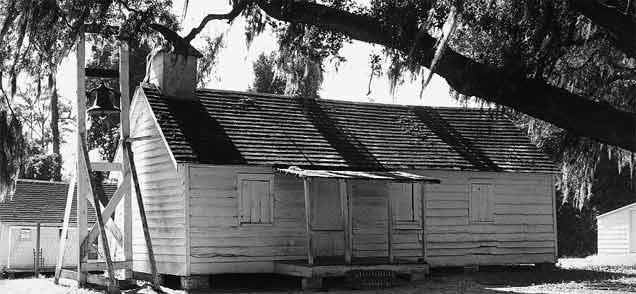
BOB FAW, correspondent: Ernest Gaines is older now, 78, and hobbled by a bad back, but as he slowly makes his way to the church where as a boy he rang the bell at funerals he will not, indeed, cannot forget the debt he owes to his ancestors in this Louisiana bayou country.

ERNEST J. GAINES: Without them, buried back there under those pecan trees, I would not be the writer today, if I would be a writer at all.

FAW: For more than 50 years, he has brought them to life in short stories and novels, some made into major films. Perhaps his most famous novel, “The Autobiography of Miss Jane Pittman,” charts the dawn of the civil rights movement from her days as a slave.

From “The Autobiography of Miss Jane Pittman”: “I’ve been carrying a scar on my back ever since I was a slave.”

FAW: Miss Jane Pittman was inspired by Gaines’s Aunt Augusteen, whom he calls the greatest influence in his life.

FAW: She could not walk.

post01-ernestgainesGAINES: She could not walk. She crawled over the floor all her life, but she did everything in the world for me.

FAW: She could not walk, but you say she taught you how to stand.

GAINES: Right. By her action, by her overcoming all the obstacles.

FAW: Gaines remembers his aunt and other forebears as he sits in the church which he has restored on plantation land where he once picked cotton.

GAINES: When I’m sitting in the church alone, I can hear singing of the old people. I can hear their singing and I can hear their praying, and sometimes I hum one of their songs.

FAW: And Gaines feels so indebted to his elders that on his own property he has also lovingly restored and now maintains this cemetery where many of those elders are buried.

GAINES: I’d always go back to the cemetery and sit on one of those tombs back there, and I felt more at peace at that time than any other time in my life. I could feel their spirit there with me.

FAW: That connection helps explain why Gaines writes so passionately about the people and places in his past—because he worries that past is facing extinction.

From “A Gathering of Old Men”: “That tractor was getting closer and closer to the graveyard, and I got scared that that tractor would plow up them graves and get rid of all the proof that we ever was.”

post02-ernestgainesGAINES: All writers write about the past, and I try to make it come alive so you can see what happened.

FAW: John Lowe, professor of literature at Louisiana State University, is an expert on Ernest Gaines.

PROFESSOR JOHN LOWE: He’s writing for his people. You know, there’s an old African proverb that says no people should be hungry for their own image. That world was missing, and he’s put that world on the stage now.

FAW: There is in that world darkness, then hope. In “A Lesson Before Dying,” an innocent man, Jefferson, will be executed. But before that he learns to face death with dignity.

From “A Lesson Before Dying”: “Good-bye, Mr. Wiggins. Tell the children I’m strong. Tell them I am a man.”

LOWE: His works radiate that spirituality that Gaines has always seen as part of the human condition—that man has to believe in something bigger than himself, and it might be religion, it could be any number of things. Jefferson does walk to the electric chair as a man, because he has come to understand that his life has meaning for other people in the community, and it makes a big difference to them how he handles that situation, and so he does, indeed, endorse something bigger than himself.

FAW: Through Jefferson’s transformation his teacher, Grant Wiggins, also grows and emerges stronger.

From “A Gathering of Old Men”: “Ain’t going to be no lynching tonight.”

FAW: And in “A Gathering of Old Men” an entire community, long beaten down, finds self-respect.

post04-ernestgainesMARCIA GAUDET: There is a sense of hope.

FAW: Marcia Gaudet is the director of the Ernest J. Gaines Center at the University of Louisiana at Lafayette.

GAUDET: It may not be perfectly optimistic hope, but there’s certainly the possibility of hope, and that’s a much more realistic thing.

FAW: Raised a Baptist, Gaines attended Catholic school for three years. He doesn’t want readers to overstate religious symbolism in his work, but many scholars find it there—from Miss Jane Pittman’s religious conversion to the Christ-like figure of Jefferson in “A Lesson before Dying.”

LOWE: Gaines was raised in a religious tradition, and this is a pretty religious state even today, and it’s quite understandable that his work would be permeated everywhere, you know, with this kind of religious symbolism. In the South, our great mythology is the Bible. It’s not Greek or Roman myth like it is in Europe. It’s the Bible.

From: “A Gathering of Old Men”: Go home, Jameson. I don’t want to have to tell you anymore.”

FAW: Black clergymen in Gaines’s novels are sometimes portrayed as sanctimonious and ineffectual. When in “A Gathering of Old Men” a group of black men stand up to white oppression for the first time in their lives, the minister tries to stop them.

From: “A Gathering of Old Men”: “Reverend Jameson, nobody listening to you today. You old bootlegger, shut up.”

post05-ernestgainesLOWE: Gaines understands the importance of the church, particularly during the civil rights movement. But at the same time he’s also aware because of the way the white community imposed it on the slave community to keep blacks in line. I think he has a very mixed attitude about the church.
FAW: For the black church, Gaines is awed by its role as a sanctuary.

GAINES: What I miss today more than anything else—I don’t go to church as much anymore—but that old-time religion, that old singing, that old praying which I love so much. That is the great strength of my being, of my writing.

FAW: Do you regard yourself as a religious person?

GAINES: I think I’m a very religious person. I think I believe in God as much as any man does. I don’t only believe in God, I know there’s God.

FAW: Gaines wrote the first draft of all his novels by hand. While he isn’t writing much now, he still remembers 1948, when he first left the plantation land around False River, carrying with him an imaginary block of wood.

GAINES: The old people told me that okay, you can leave us, but you would carry this, this symbolic big piece of wood that I must struggle with for the rest of my life until I’ve completely finished that wood, which I doubt that I ever will. But there will always be something to chip away and to carve into something nice and beautiful.

FAW: Ernest Gaines—honoring the past, making it come alive because he must.

For Religion & Ethics NewsWeekly this is Bob Faw in Oscar, Louisiana.

Listening to the Song

Read an excerpt from “The Autobiography of Miss Jane Pittman” by Ernest J. Gaines:

post01-gainesexcerpt

It was ’Termination Sunday. ’Termination Sunday is when you tell the church you still carrying the cross and you want meet them ’cross the River Jordan when you die. You start out singing your song. Soon as you have sung a little bit, no more than a chorus, the church joins and sings with you. You can keep your song going long as you want, if it’s a good spirity song, and the church will follow. Yoko used to sing and sing and sing: “Father, I stretch my hand to Thee, no other help I know.’ Then after you get through singing, you talk to the church little bit—tell them you still on your way—then you shake hand with everybody—you can just wave to them sitting way back there—and then you got sit down. Then somebody else get up and they do the same. But he sing a different song. Everybody got his own song. You better not sing somebody else’s song before he do or sing it better even after he do, because you might have trouble on your hand. Sometimes when I don’t feel well enough to go to church, or I want stay home and listen to the ball game, I can sit on my gallery and tell who is telling their ’Termination just listening to the song. And in the years I’ve been living on this place I’ve heard a many songs, I tell you.

Meditation


SHARON SALZBERG (Author and Meditation Teacher): A very, very common foundational exercise in meditation is to just sit down and feel your breath, just the normal, natural flow of the breath wherever it’s appearing, and most people are kind of shocked to discover it’s generally not like a thousand breaths before your mind wanders. It’s generally like two.

We practice letting go, we practice beginning again. No matter how long it has been, no matter where your attention went it’s okay. Just gather our attention back to feeling the breath.

post01-salzbergmeditationWe all get distracted, and I think it’s important to realize that it’s normal, it’s natural, it’s not a sign of failure, it doesn’t mean you are doing badly, because I would say the critical moment in the meditation in that way is the moment we realize we’ve been distracted, and that is a moment where it is so common to just berate ourselves and condemn ourselves and carry on for a very long time, whereas we have this opportunity to just let go and to begin again. So beginning again is, I would say, the essence of the transformation of meditation.

So many times people in Manhattan will say to me, it’s fine for the Buddha sitting under a tree 2500 years ago in India. It’s too bad that I live in Manhattan where it’s too noisy. But if you do live in Manhattan you have to work to make it real right there.

Meditation has been cradled in many, many religious traditions. It’s really about the method. It’s not about a belief system, it’s not about a dogma. It’s about personally utilizing a method to see what benefits you might get.

I come from a family with a great deal of suffering and loss and conflict, and like for many people it was a family system where this was never ever spoken about, so I didn’t know what to do with all of those feelings inside of me, and here was the Buddha saying you are not alone, this is part of life. And the other thing was his completely open invitation to do something about that suffering—not of course the suffering that comes our way through loss and circumstance, but the way we hold it. There are very practical, pragmatic methods that anyone can utilize to transform their own minds.

When we are lost in anger that’s very painful, and greed and fear and jealousy—these are extremely painful states, and if we can make that transition to reframing it we can have some compassion for ourselves, and that’s a good beginning.

So maybe you are at that contentious meeting at work and energy is starting to rise and tempers are starting to go up. You don’t have to say, oh, excuse me for a minute and like go and open a closet door and pull out all your equipment and do the set-up and, you know, light the candle—sorry, Buddha. You don’t even have to close your eyes. No one needs to know you are doing it. Isn’t it amazing that we can have that kind of resourcefulness? We tune in, we connect, we come back.

Practicing Meditation

Read excerpts from “Real Happiness: The Power of Meditation” by meditation teacher Sharon Salzberg (Workman Publishing, 2011):

Practicing Meditation

“My experience is what I agree to attend to,” the pioneering psychologist Williams James wrote at the turn of the twentieth century. “Only those items I notice shape my mind.” At its most basic level, attention—what we allow ourselves to notice—literally determines how we experience and navigate the world. The ability to summon and sustain attention is what allows us to job hunt, juggle, learn math, make pancakes, aim a cue and pocket the eight ball, protect our kids, and perform surgery. It lets us be discerning in our dealings with the world, responsive in our intimate relationships, and honest when we examine our own feelings and motives. Attention determines our degree of intimacy with our ordinary experiences and contours our entire sense of connection to life.

Practicing mindfulness meditation is making the choice to be still—to step into the quiet shade instead of running away from difficult thoughts and feelings. We sometimes call meditation non-doing. Instead of being swept away by our usual conditioned reactions, we’re quiet and watchful, fully present with what is, touching it deeply, being touched by it, and seeing what is happening in the simplest and most direct fashion possible.

Doing nothing really means not doing many of the things we usually do, like holding on to or hiding from our experience, so that we can get new perspectives, new insights, and new sources of strength. Sitting quietly and observing mindfully is a particularly productive way of “doing” nothing. The poet Pablo Neruda speaks of this in his poem “Keeping Quiet”:

…If we were not so single-minded / about keeping our lives moving / and for once could do nothing, / perhaps a huge silence might interrupt this sadness / of never understanding ourselves /…Perhaps the earth can teach us / as when everything seems dead / and later proves to be alive.

Real happiness depends on what we do with our attention. When we train our attention through meditation, we connect to ourselves, to our own true experience, and then we connect to others. The simple act of being completely attentive and present to another person is an act of love, and it fosters unshakable well-being. It is happiness that isn’t bound to a particular situation, happiness that can withstand change.

Through the regular practice of meditation we discover the real happiness of simplicity, of connection, of presence. We cultivate the ability to disengage from unthinking and habitual struggles. We take delight in integrity, and we feel at home in our bodies, our minds, our lives. We see that we really don’t have to look outside of ourselves for a sense of fulfillment. We come closer and closer to living each day in accord with this lovely quotation from Wordsworth: “With an eye made quiet by the power of harmony, and the deep power of joy, we see into the life of things.”

Sharon Salzberg on Meditation

Watch excerpts from producer Susan Grandis Goldstein’s interview in Washington, DC with Sharon Salzberg, cofounder of the Insight Meditation Society in Barre, Massachusetts and author, most recently, of Real Happiness: The Power of Meditation. “If you are breathing, you can meditate,” says Salzberg. Edited by Fred Yi.