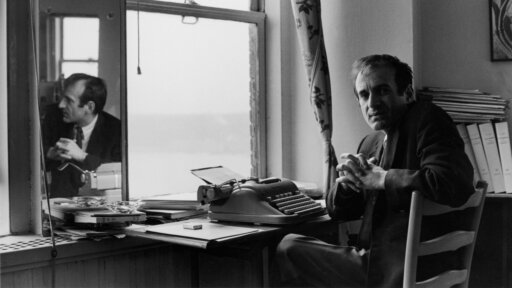
Gore Vidal is a novelist, essayist, playwright, and provocateur whose career has spanned six decades, beginning in the years immediately following World War II and continuing into the early years of the twenty-first century. In addition to a major sequence of seven novels about American history, and such satirical novels as MYRA BRECKINRIDGE and DULUTH, he has written dozens of television plays, film scripts, and even three mystery novels written under a pseudonym. He has also written well over a hundred essays, gathered in several volumes published between 1962 and 2001. Taken as a whole, this seemingly varied work has an uncanny unity, exhibiting a tone of easy familiarity with the world of politics and letters, an urbane wit, and a supreme self-confidence on the part of the writer. Vidal’s lineage in American literature may be traced back to Henry James, the sophisticated American from the upper echelons of society who mingles with European sophisticates, and Mark Twain, the raw humorist and critic of American empire.
Early Years
Vidal was born in 1925 with high political and social connections. His father, Eugene Luther Vidal, worked for the Roosevelt administration as Director of Air Commerce from 1933 until 1937. His maternal grandfather was Senator Thomas Prior Gore of Oklahoma, a Democrat who played an important role in Democratic politics for many decades. Gore Vidal’s mother, Nina Gore Vidal, was divorced in 1935, when Vidal was ten. She then married Hugh D. Auchincloss, a wealthy financier, who in turn divorced her and married Jacqueline Kennedy’s mother, thus establishing a connection between Vidal and the Kennedy clan that persisted through the presidency of John F. Kennedy.
In 1943, after graduating from Phillips Exeter Academy in New Hampshire, he entered the Reserve Corps of the U.S. Army. After a brief training period at the Virginia Military Institute, he joined the Army Transportation Corps as an officer and was sent to the Aleutian Islands. He wrote much of his first novel, WILLIWAW, during a run between Chernowski Bay and Dutch Harbor. Suffering from serious frostbite and arthritis, he was sent back to the States, where he finished the novel while recuperating in a military hospital. In its tight-lipped, minimalist style, WILLIWAW reflects Vidal’s reading of Hemingway and Stephen Crane. For a writer barely out of his teens, the book was an extraordinary achievement. It seemed absolutely authentic and put Vidal on the map of young postwar novelists that included Norman Mailer, John Horne Burns, and Truman Capote.
Post-War Years
Having little money despite his patrician roots, Vidal moved to Guatemala, where the living was cheap. There he shared a house (as a friend) with Anais Nin, who wrote about Vidal in her diaries of that period. By any standard, the postwar years were productive ones for the young Vidal, who published eight novels in succession between 1946 and 1954. These include THE CITY AND THE PILLAR, THE JUDGMENT OF PARIS, and MESSIAH. THE CITY AND THE PILLAR is notable for reasons that go beyond its aesthetic qualities; it counts among the first explicitly gay novels in the history of American fiction. Vidal suffered the consequences of bringing a gay novel before a wide audience in 1948. Indeed, his next five novels were dismissed by the mainstream press. Among the best of these was MESSIAH, a prophetic novel that makes deft use of the modernist technique of the journal within the memoir — a form that Vidal would exploit to good effect in later novels.
After a period in Europe, where he traveled with his friend Tennessee Williams, Vidal settled along the Hudson River in a mansion called Edgewater with his companion, Howard Austen. Among the many projects that occupied him during this period was THE JUDGMENT OF PARIS, one of his most compelling early novels. The ghost of Henry James hovers over this work, set largely in Europe, although its style looks forward to the later Vidal: dryly witty, deeply ironic.
Writing for the Stage and Screen
With single-mindedness, Vidal set out to free himself from economic worries, having made little from his five novels in the wake of THE CITY AND THE PILLAR. Writing as Edgar Box, he published three mystery novels: DEATH IN THE FIFTH POSITION, DEATH BEFORE BEDTIME, and DEATH LIKES IT HOT. These clever fictions, which play off the conventions of the mystery novel with considerable gusto, did not solve their creator’s financial problems. Like Faulkner and Fitzgerald before him, he turned to writing scripts. Vidal took naturally to the new medium of television, producing dozens of scripts in the course of the next decade, which has been called the Golden Age of Television. Perhaps his best original teleplay was VISIT TO A SMALL PLANET, televised on May 8, 1955, which was later adapted into a full-dress Broadway play. The stage performance, which received considerable fanfare when it premiered in 1957 and sustained a run of 338 performances, recalls Oscar Wilde and George Bernard Shaw in its whimsy and scathing satire, though it reverberates with Vidal’s idiosyncratic tone. It remains a minor masterpiece of the period, one permeated with the tones and particular cultural histrionics of the period.
Screenwriting was lucrative, then as now, and Vidal devoted considerable energies over five decades to the genre. His early credits include THE CATERED AFFAIR, I ACCUSE!, and SUDDENLY, LAST SUMMER. He also worked on the script of BEN HUR and doctored a number of other screenplays. In an unexpected turn, he acted as well in several films, including BOB ROBERTS, where he played a worn-out American politician to great effect.
Flirting with Politics
Vidal observed the political world from the sidelines for many years, but this vantage did not satisfy him. Hoping for a more active role, he ran for Congress in 1960 as a Democrat-Liberal in New York’s highly Republican 29th District. In his public speeches, he supported many controversial ideas, including the recognition of Red China, shrinking the Pentagon’s budget, and putting more federal money into education. Given the conservative nature of the region and, more generally, the times, he was defeated, though he won more votes in his district than John F. Kennedy, who headed the Democratic ticket. (In 1982, based more on whimsy than anything else, he ran in the Democratic primary for the U.S. Senate in California; to the surprise of many, he finished second in a crowded field behind Jerry Brown, a well-known political figure in the state.)
After the failed run for office in 1960, Vidal chose to focus again on his career as a novelist. Early in the decade he moved to Italy, where he has remained, though with many short intervals of residence in the United States. In Rome, the library of the American Academy proved useful. There he worked on JULIAN, the first novel that demonstrates his maturity as a writer of fiction with its own signature style. In JULIAN, Vidal writes with massive authority about the ancient Roman world, much as he does when he writes about the American past. It is this authority for which he is probably most valued by his readers.
Returning to the Novel
Vidal’s satirical novels include MYRA BRECKINRIDGE, MYRON, DULUTH, LIVE FROM GOLGOTHA, and THE SMITHSONIAN INSTITUTION. Ferociously bitter and subversive, his satires are lauded for their progressive themes. But it’s in his canny exploration of American history, in such novels as WASHINGTON, D.C., 1876, LINCOLN, and THE GOLDEN AGE, among others, that may be seen by future critics as his principle achievement in fiction.
Writing in THE NEW YORK REVIEW OF BOOKS, the critic Harold Bloom characterizes Vidal as “a masterly American historical novelist, now wholly matured, who has found his truest subject, which is our national political history during precisely those years when our political and military histories were as one, one thing and one thing only: the unwavering will of Abraham Lincoln to keep the states united.” He discusses the weighty novel LINCOLN in the context of Vidal’s developing career, musing on “the still ambiguous question of Vidal’s strength or perhaps competing strengths as a novelist.” Adamantly, Bloom concludes: “LINCOLN, together with the curiously assorted trio of JULIAN, MYRA BRECKINRIDGE, and BURR, demonstrates that his narrative achievement is vastly underestimated by American academic criticism, an injustice he has repaid amply in his essayist attacks upon the academy, and in the sordid intensities of DULUTH.”
Role of the Essayist
Although the novel has preoccupied Vidal and offered a main stage for his writerly activity, he has been an essayist from the mid-fifties to the present. This vein of his work opened with numerous short reviews for various journals, such as THE REPORTER, THE NEW YORK TIMES BOOK REVIEW, and ESQUIRE. These assignments led to larger essays and reviews, many of which became large ruminations on the state of the nation itself. In the 1960s, he became a leading writer for the newly established THE NEW YORK REVIEW OF BOOKS, in whose pages he would address a wide range of cultural and political topics. His sharp and scolding manner, with a tonal range from the highly formal to the sharply colloquial, became a kind of trademark, separating his incidental prose from that of other writers.
Vidal’s career as an essayist culminated in 1993 when he won the National Book Award for UNITED STATES: ESSAYS, 1952-1992. That massive volume unearthed a whole continent of brilliant writing about literature and politics. Over a hundred essays were gathered there, showcasing Vidal as a shrewd, uncompromising observer of American political history, cultural history, and world culture. He wrote about homosexuality, about the French fiction, about such important American figures as William Dean Howells, Scott Fitzgerald, Orson Wells, Eleanor Roosevelt, and Tennessee Williams, most of whom he had actually known. His unique presence on the scene of history lends his essays a feeling of authority and intimacy.
Though cool, elegant, and witty, the essays comment harshly on American politics and foreign policy. Vidal became, in the ’60s, a leading spokesman for the New Left, an iconoclast who was willing to debate William F. Buckley on television and write scathing essays about Richard Nixon. In “Pink Triangle and Yellow Star,” he drew stunning parallels between the persecution of homosexuals and Jews. In “The Holy Family,” he burst the bubble of awe and admiration that had kept the Kennedy family free of criticism for many years. He poked fun at any number of American icons, from Theodore Roosevelt (whom he called “an American sissy”) to Edmund Wilson, the most revered man of letters in the twentieth century. Perhaps more importantly, he singled out neglected writers for praise, raising their profile in the world of letters. Among those he helped to reach a wider audience were Italo Calvino and Dawn Powell, both of whom he knew as friends.
Back into the Fray
In recent years, he has waged a continual war on those who would attempt to diminish freedom. In “Shredding the Bill of Rights,” for example, he says: “It has always been a mark of American freedom that unlike countries under constant Napoleonic surveillance, we are not obliged to carry identification to show to curious officials and pushy police. But now, due to Terrorism, every one of us is stopped at airports and obliged to show an ID which must include a mug shot (something, as Allah knows, no terrorist would ever dare fake).” As usual, his ability to say what everyone secretly knows and to make it unsettling without worrying about the implications, for himself or his reputation, is a particular gift. This habit has won him many admirers and numerous enemies over the years.
It could easily be argued that no American since Mark Twain has performed so ably as a man of letters as Gore Vidal. The American chronicle itself represents a vivid counter-narrative of American history and politics. The satirical novels are unique and add a vein of Swiftian humor to American literature unlike anything that preceded them. His workmanlike achievements as a dramatist and screenwriter were, in their time, notable. Finally, his essays and reviews have earned him a permanent place in American letters and politics. In his memoir, PALIMPSEST, he has left a remarkably entertaining record of his life and times, which are also the life and times of the nation. Although the quality of the work has varied, the total effect of his presence in American literary culture has been considerable.
Bibliography of Works by Gore Vidal
Novels
WILLIWAW, 1946
IN A YELLOW WOOD, 1947
THE CITY AND THE PILLAR, 1948
THE SEASON OF COMFORT, 1949
A SEARCH FOR THE KING, 1949
DARK GREEN, BRIGHT RED, 1950
THE JUDGMENT OF PARIS, 1952
MESSIAH, 1954
JULIAN, 1964
WASHINGTON, D.C., 1967
MYRA BRECKINRIDGE, 1968
TWO SISTERS, 1970
BURR, 1973
MYRON, 1974
1876, 1976
KALKI, 1978
CREATION, 1981
DULUTH, 1983
LINCOLN, 1984
EMPIRE, 1987
HOLLYWOOD, 1990
LIVE FROM GOLGOTHA, 1992
THE SMITHSONIAN INSTITUTION, 1998
THE GOLDEN AGE, 2000
Short Stories
“A Thirsty Evil,” 1956
Plays
“Visit to a Small Planet,” 1957
“The Best Man,” 1960
“Romulus,” 1962
“Weekend,” 1968
“An Evening with Richard Nixon,” 1972
Essays
“Rocking the Boat,” 1962
“Reflections Upon a Sinking Ship,” 1969
“Homage to Daniel Shays,” 1974
“Matters of Fact and of Fiction,” 1977
“The Second American Revolution,” 1982
“Armageddon?” (U.K. only), 1987
“At Home,” 1988
“Screening History,” 1992
“A View from the Diners’ Club” (U.K. only), 1991
“United States,” 1992
“The Last Empire,” 2001
“Dreaming War: Blood For Oil and The Cheney-Bush Junta”, 2002
“Perpetual War for Perpetual Peace”, 2002
Memoir
PALIMPSEST, 1995
Writing as Edgar Box
DEATH IN THE FIFTH POSITION, 1952
DEATH BEFORE BEDTIME, 1953
DEATH LIKES IT HOT, 1954
Works About Gore Vidal
Baker, Susan, GORE VIDAL: A CRITICAL COMPANION. Connecticut: Greenwood Publishing Group, 1997.
Dick, Bernard F. THE APOSTATE ANGEL: A CRITICAL STUDY OF GORE VIDAL. New York: Random House, 1974.
Kaplan, Fred. GORE VIDAL: A BIOGRAPHY. New York: Doubleday, 1999.
Kiernan, Robert F. GORE VIDAL. New York: Frederick Ungar, 1982.
Parini, Jay, ed. GORE VIDAL: WRITER AGAINST THE GRAIN. New York: Columbia University Press, 1992.
Stanton, Robert J. GORE VIDAL: A PRIMARY AND SECONDARY BIBLIOGRAPHY. Boston: G.K. Hall, 1978.
White, Ray Lewis. GORE VIDAL. Boston: Twayne, 1968.