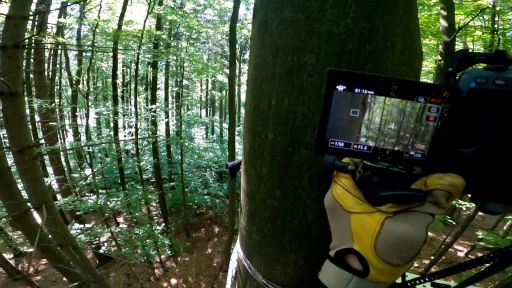
When naturalist Joe Hutto became “mother” to a flock of wild turkeys, it gave him a unique opportunity to immerse himself in their lives and see the world through their eyes. He was not a stranger intruding, but rather the heart of the flock. He was able to do this by taking advantage of a biological phenomenon known as “imprinting.”
Imprinting refers to a critical period of time early in an animal’s life when it forms attachments and develops a concept of its own identity. Birds and mammals are born with a pre-programmed drive to imprint onto their mother. Imprinting provides animals with information about who they are and determines who they will find attractive when they reach adulthood.
Imprinting has been used by mankind for centuries in domesticating animals and poultry. In Rome, in the first century B.C., agriculturalist Lucius Moderatus Columella wrote a treatise on agrarian practices and suggested that “anyone wishing to establish a place for rearing ducks should collect wildfowl eggs in the marches and set them under farmyard hens, for when they are reared in this way they lay aside their wild nature.” For centuries in rural China, rice farmers have imprinted newly hatched ducklings to a special stick, which they then use to bring the ducks out to their rice paddies to control the snail population.
But, it was not until the early 1900s that any scientific studies were done of the phenomenon. Austrian naturalist Konrad Lorenz became the first to codify and establish the science behind the imprinting process.
Lorenz found that when young birds came out of their eggs they would become attached to the first moving object they encountered. In most cases in the wild, that would be their mother. But Lorenz replaced himself as the object of their affection. And it wasn’t just him that the young birds would attach to as a mother substitute. They would just as easily attach to inanimate objects and oddities, such as a pair of gumboots, a white ball and even an electric train – if it was presented at the right time. The hatchlings have been prepared by natural selection to form an immediate strong social bond.
Lorenz’s work with geese and ducks provided concrete evidence that there are critical sensitive periods in life where certain types of learning can take place. And, once that learning is ‘fixed,’ it is the least likely to be forgotten or unlearned. Lorenz’s geese responded to him as a parent, following him about everywhere, and when they became adults, courted him in preference to other geese.
Researchers building on Lorenz’s work have identified other such unique windows of opportunity for both animals and people to acquire knowledge. For birds like ducks, geese and turkeys, that hatch and begin walking around, the need to follow something for their own safety is vital to their early survival, so imprinting happens in the first few hours and days.
Joe Hutto used this sensitive time period to become the parent to his flock. When the poults are born, the first thing they do is look about for a parent to bond to. They are attracted to movement, sound and smell. Joe used all three of these to reinforce the poults attachment to him as their mother. While they were incubating, he spoke to them, in both “turkey” and English, to get them used to the sound of his voice. When the poults hatched, he was positioned to be the first thing they would see. When the first poult emerged, he made his turkey sound and, as Joe recounts, the poult turned its head, its eyes met Joe’s and “something very unambiguous happened in that moment.” A connection had been made.
The new hatchling made his way over to Joe and huddled up against his face. Over the next few hours this was repeated with all the baby birds. And, the attachment was reinforced as he spent 24/7 tending them as a parent would. They came to associate the sight, sound and smell of him as their mother.
But the biological imperative that drives imprinting can have its negative side. Conservationists and naturalists have become sensitive to the damage imprinting can cause in young animals who attach to people or objects instead of a parent. Birds that imprint on human ‘parents’ prefer their company to that of their own species. They are unlikely to ever return to the wild or socialize appropriately with their own kind.
This has led to the development of some novel approaches in captive breeding programs. In California and Arizona, at the Condor Recovery Project, eggs are incubated and the chicks are raised by caretakers using a hand puppet shaped like a condor head; while researchers at China’s Wolong Panda reserve take it a step further – dressing in full, furry panda suits whenever they have to interact with the animals, believing that the cubs must live devoid of all human contact if they are to have any chance of survival.
But the implications for imprinting extend far beyond geese and pandas. Researchers since Lorenz’s time have found that imprinting is a component in all animal and human interaction, and can be a more plastic and forgiving mechanism than was originally thought. It plays a role in determining who we love and who we live with – not just how a man can become mama to a turkey.
Photo © David Allen


Having watched the first few minutes of the program “My Life as a Turkey”, I found it too disturbing to continue watching. If Joe Hutto has a federal permit, either as a licensed wildlife rehabilitator, or as a person issued a permit for scientific research, no mention was made of this fact. If he does have the required permit, not mentioning it, is in itself a violation of the conditions of the permit. Thousands of young wild birds and animals are inappropriately imprinted every year, mostly by well-meaning, but ignorant people. They have been illegally removed from the wild; usually they do not survive, when they do, they are not equipped for survival after release, having been raised by a human, not by their mother.
If I am entirely mistaken, and if Joe Hutto has been issued a permit by the U.S. Fish and Wildlife Service, it is your obligation, and his, to make this clear at the beginning of this program, so as to help prevent the unnecessary deaths of so many young wild birds and animals, who are taken from the wild and who die in the hands of untrained people.
All orphaned or injured wildlife should be taken immediately to a licensed wildlife rehabilitator, who is the only person with the training, experience, and legal permission to raise native wildlife. Thank you. I hope you will find a way to correct this incorrect presentation, which is very damaging to wildlife.
Hmm, Sharon, perhaps you should have watched the complete program before forming your opinion. It was a great show and Joe did evreything right. Your loss……
Sharon, you say that you watched first few minutes. If this is true I would assume you would have seen how Joe came across these eggs. He did not take them from the wild, they were placed on his front porch. These eggs never would have had an opportunity to hatch if it wasnt for Joe. If he had taken these eggs from a mother in the wild, then I could see where you are coming from, but Joe did this out of kindness and his love for nature.
What a interesting program filled with insights on the natural world. Time well spent. It was immensely interesting to watch the imprinting process at the beginning and and to see how much is hardwired into animals consciousness as to how they react with their environment.
Sharon, I am sorry you could not have given the program a chance but alas, I feel that you would not have understood.
Ahhh, Sharon, the sweet sublimity of ignorance not only garnered you the loss of viewing a great program, but has, alas, left the indelible imprint of an idiot on this comment page. It is often – by often, I mean always – a smart and prudent idea to gather all facts, info, etc., before waging an uneducated, unfounded, moral & ethical campaign from your mighty throne of superiority, get off of it and take a moment to let some light in. It is the (lack-of) thinking like yours that is an impedance and harm to this world. You could have easily clicked a few buttons to discover some of Hutto’s “credentials” – or you could have also taken a few seconds to realize that anyone can raise turkeys if they wish, it just depends upon zoning (i.e. approval for farming, etc.).
However, I digress, as I know this is a futile fight against the infestation of sciolism…as ignorance is bliss…but what a great show/story to miss. Looking forward to the mule deer story.
Sharon’s comment reflects the same kind of know-it-all-beforehand thinking as practised by the Occupiers of Wall Street.
Sharon, should have watched the program IN FULL! Gather your facts as Rachel mentioned. Great episode, glad I had the oppertunity to watch!
…If I’m not mistaken, Sharon’s point was that particularly important facts should be presented at the very beginning of the program, which is true. Not everyone is going to watch programs all the way through.
Pointing out that she merely needed to finish the program is actually proving her point: Other people might watch just the first few minutes, and may set out to mimic what they’ve seen without having all the facts. It happens. Could be partially deterred with a simple “don’t try this at home” at the very beginning of the program. It could influence the actions of people who have good intentions but don’t understand the negative consequences of meddling with wild animals. In a perfect world, everyone would just do their research, but that’s not what happens, so Sharon is right.
You guys are forgetting what’s best for the wildlife in your excitement to cast harsh judgment on another person’s character.
Sharon, your a moron, Thats what i got from skim reading your post. do you have a federal permit to be stupid?
What an interesting show, too bad Sharon couldn’t get into it, that’s why the program is called nature. Sharon can observe it from her living room while other people will live with nature.
Imprinting is very important if you raise wild birds. We had a white crowned sparrow that we had trapped and kept for eight years, it sang very beautifully and the songs would fill the room, but it wouldn’t fly up to you or land on your hand, it flew around the house and always flew back to the cage. It got used to it’s life with us.
Being in Alaska you have a lot of chances to observe nature, and other peoples interactions on PBS are very interesting to watch.
Sharon there’s more to nature that watching it on a TV set.
Sharon is correct that raising “wild” game and releasing them as adults into the wild can prevent a natural instinct to fear anything, since we as humans are at the top of the food chain. Other then that valid point, Im a turkey hunter and that long beard would look nice in my game room. Sharon, when I say game room im not talking about UNO or Monopoly. Next time im in the woods I will undo your hancuffs from whatever tree you are hugging and we will call it even.
Oh Sharon……the “wisdom” of commenting on a program that you didn’t watch is evident by the other comments. That was a lovely program. Mr. Hutto did EVERYTHING correctly. He gave his heart, soul and life to those birds ALL OF WHICH returned to the wild. I have no intention of beating up on you……only to remind you that life would serve you well if you possessed all of the facts before you treat others to a helping of your wisdom.
Just because you have a license, doesn’t necessarily mean that you are more qualified to raise or rehabilitate wildlife. The first injured hawk I ever found I brought home and immediately called a licensed raptor recovery person. They couldn’t come pick it up for 2 days. In that time, I was able to get it eating again, as well as drinking without making it used to humans. She came and picked it up, and told me point blank” This bird will probably be destroyed because you have had it for too long to be re-introduced to the wild.” What?? I called her immediately, and she tells me that?
The second time, I learned. I found an injured Merlin falcon who evidently had been hit by a car. I brought him home,(he had an injured wing, not broken-same as the hawk), got him over his shock,fed him for weeks,exercised him outside in my pasture. After about a month, he flew off. I still see him around here from time to time, living just fine. I am so glad I didn’t call a “licensed professional ” again.
I had finished my dinner when this program started, and I decided to see the begining not knowing how interesting was going to be. I was glued for the next hour, and I wish I can see more programs with this type of research. It is too bad that Sharon did not watch the whole program, then make her comments based on the whole research. This program was so good that I am going to buys more than a couple videos, to give as a Christmass present to my family.
this made me slow down in life and made me thank god of all the things I have in life ! To be honest I don’t cry when i watch this kind of things but this really made me have tears. I really love this episode
I stumbled upon this show while surfing, often stopping by PBS for what I consider the best that TV has to offer.
I sat totaly absorbed, it was a great show. The nature scenes had me so I forgot to breath sometimes. It had it’s sad times also but necessary.
Keep it up PBS, I can count on you.
Thank you to PBS for providing this unique glimpse into the world of wildlife. While no program could provide a “turkey’s perspective”, this came as close as we’ll probably ever get. How impressive to see a human in awe of the turkeys’ intelligence, communication skills and love of joy! I learned a lot.
Sharon,
How sad it was for you to form an opinion to which you obviously dont’ know anything about. I missed the first twenty minutes of the show and was immersed into a journey that few people see. I thought in my opinion that Joe did everything right. Even right down to the vocalizations to alert the birds or find the birds. The birds eventually went their own way in the wild. I doubt that their minds are messed up. Had you watched the program , I believe you would have a different opinion. Please buy the movies or stream it and watch the entire movie. It will move you.
I really enjoyed the show. Perfect for this time of year too. I missed the part about Sweet Pea and saw part of what happened to Turkey Boy (my 4 year old turkey need her bed time). I’d like to know when it will be aired again so I can see what I missed. What a nice man Joe Hutto seems to be. In my stressful life of got to move fast before tomorrow comes, it helped put me at ease.
This was one fo the best shows I have seen. It touched my heart.
I loved this program! It brought back so many memories of early Florida before so much development trashed it. And, the sheer amount of love and dedication that Joe sank into these birds is incredible. To see that they returned that “affection” is remarkable. Watching and listening to him “talk turkey” really made me smile. I learned a lot from this show not just about turkeys but how people can interact with animals if they give themselves the time. Not that I am advocating for everyone to do the same experiment. People are too far removed from animals. By living closer to animals, humans have a better understanding of life, just as in earlier civilizations.
I have sent out emails to friends asking them to watch this show so they can know the joy from the human-animal relationship too. Thank you to Joe his love of animals and for taking this time to share. Thank you PBS for bringing such quality programs to us! Please keep such great programs coming!
Oh for the old days when you took a wild animal such as a bird other than a raptor into your house, cared for it, and then released it when it was ready and healthy enough to survive in the wild. I grew up in the country where we would take injured bird or abandoned baby birds (making sure they really were abandoned first). If we didn’t know what to do there was always someone in the neighborhood who did know. Even the game warden was in on who had what with no worry about proper permits. This was a great show. I never saw a wild turkey till I was in Oregon last year and saw them by the road. Wild turkeys have brains but domestic ones are dumb as a box of rocks. They bred the brains out of them when they bred for the large breast instead. I am seriously thinking of buying a copy of this show. It was great and the photography was incredible.
I find the vehemence and anger directed at Sharon, (who I think was only concerned with what’s best for animals in most situations) sad but interesting especially coming from people sensitive enough to appreciate the story. I wonder why? and what it says about us
I was touched by the program. Interesting to me: 1. that he learned that taking care of young wild animals is not easy and was much more than he originally thought; 2. that the birds had so much info already “hard-wired” in (they knew what to eat and what not to eat…); 3. and the developmental stages of the birds. It was fascinating! I now understand so much more about these birds. I had seen some fly across the road, and seen a “brood” walk across a road with several “parents” and LOTS of “chicks”. Nature is wonderous and amazing. It was nice to see that other people have the same interest and passion for understanding our animal cohabitors. “Don’t Hate, Educate!”
What an enjoyable program. I can only imagine the sacrifice it must have taken to be mother to a brood of turkeys for well over a year.
Will “My Life as a Turkey” be on a DVD that we can purchase? I enjoyed the program so much and would love to have a DVD of it to give to my son for Christmas.
My girlfriend and I viewed this program in its entirety last evening. Kudos to all, because this show is consumately well-done! The first impressions a viewer may have is that Joe is merely a hick with a southern drawl — until the latter portion where he offers his insights as to how the wild turkeys taught him that humans are too consumed with their “future”, and life is always in the moment. The scientific data that Joe has garnered through his dedication to animal studies is invaluable. Rock on, Joe, and rock on, PBS!!!
This program is one of the very best that I’ve ever seen, on PBS or elsewhere. At the end of the program they gave a phone # for ordering the DVD: 1-800-336-1917. Price is $29.99. I believe there’s a book that can be purchased as well. Well done, PBS! You’ve touched my heart.
My husband and I watched this show last night and we were so impressed with Joe Hutto and how much he had to give up to work with the wild turkeys. We have always seen wild turkeys on local farms where I live and never paid much attention to them. Now we will be looking at them from a totally new perspective! Joe’s compassion and caring with these animals is commendable! I was so impressed with his ability to “talk” to them making the various sounds they make and able to read their thoughts. I will probably be ordering a copy of this show. I was that impressed!
It was an amazing program. One thing I did not understand (and I’m not sure Joe did, either) was why Turkey Boy attacked him?
Any thoughts on this?
Very touching, sensitive program – I loved Mr Hutto’s insights into the immediacy of the natural world as he observed ” thru the eyes of his birds”.
I love Nature – this one was sort of a surprise and really wonderful!
I won’t waste my breath about Sharon’s opinion – It’s all been said
I have to say I loved this show till the end then it just made me cry, but it did bring back so many memories for me also. Some time in the 1980’s I had a wild turkey, raised as a pet my parents raised them for fun , some people bought for the table and some bought for a pet, I kept one at my house for a pet and then we moved and so I took him back to live with my Mom, he was a little sad at first BUT them I went every day to see him and he calmed right down. He was called Bugger, because he was a “cute little bugger”. I had him for about 3 years till this film company herd about Mom and the turkeys. And they wanted “bugger” for their farm. I was so upset, and I was an adult with my own children. But Mom told me I better say good buy because he was going to the farm. Well I did and I grabbed him and hugged him and he would purr just like the ones on the show and then gobble, Mom said she thought HE thought I was his girfriend, I dont think so , he was just a big baby. I never saw him again.I still think about him every time I go to my brothers house, the original house where he was born.
I am curious; again, please forgive my ignorance, here. I, too, watched the show and loved almost every moment of it. In specific, I was disturbed by what happened to Sweet Pea, as I am sure, Mr. Hutto was heartbroken, as he noted. However, could it possibly be that she was so attached to Mr. Hutto, that she never fully developed her sense to “protect” herself as she sat on her nest; or is this simply an act of nature that happens all the time? I hope this makes sense, what I am asking. Consequently, I did find it disturbing as to what happened with Turkey Boy. Was there no simple way that Mr. Hutto could leave without the bird seeing him go? As to avoid the situation? It bothered me that he had to swing at the bird and ultimately end in such a tragic way. Yes, I guess, I am a bleeding soul but love nature. This was a beautiful show and I do believe that Mr. Hutto has an extreme respect for the animals that he studies.
To Suzanne in Seattle–
I also noticed no explanation about Turkey Boy’s attack. I think it was a combination of his age and the time of year when the males become aggressive and fight other males for dominance. This is due to hormonal changes afffecting behavior.
I am a very strict vegan. I don’t eat turkey, hunt turkey or contribute to any practices that would do them any harm. However, I think the research done here was so important. I also think that this video is so instrumental in making us rethink how we perceive certain “dumb animals”. I am an animal lover and I had no idea that wild turkeys are such complex creatures. People mindlessly hunt these animals for sport, but perhaps if our children see more educational pieces such as this, they will give their actions a second thought and be more appreciative of life.
This was a great show that had my attention and kept it. It was so touching seeing the effect it had on Joe and how it appeared he was holding back tears when the birds were starting to mature and leave the nest, as it were. Empty nest syndrome apparently. I was completely convinced that Joe was overwhelmed by the discoveries he made while raising these turkeys. Who would have believed they could be affectionate and caring creatures. I have told so many people and was hoping it would be on again but find no future scheduling. Thanks, it has given me another positive outlook.
Once again, another great show on PBS. What impressed me was the way the other wildlife responded to Joe in the presence of the turkeys and so differently to Joe in their absence. Makes humans kind of feel unwelcome.
BRAVO. More like this please.
As a chld that grew up in a house where we hunted turkeys (and other wildlife), I have seen my dad spend HOURS observing these birds and their behaviors. They are amazingly intelligent creatures and this video brings their level of awareness to a whole new level. Yes, our reasoning for studying them were different from Joes but I found this program to be extremely interesting, and I think my dad will as well. I was taught to always respect the wildlife, and my dad is teaching my son the same thing. This program just cemented the fact that respecting the world around us is massively important. I am currently surfing the web to see if I can find it on DVD to send it to my dad. Thank you PBS for an amazing program!!!
Hi. I was very moved by this film and had a few questions and hoped someone out there who has more time than I do can answer a few questions. This is a re-enactment. How is that accomplished? Was a second flock of birds hatched and then given the names of the original birds, which are now gone? I admit to my ignorance on this type of filming, and appreciate answers from those who have knowledge in this area. Thank you.
THANK YOU to PBS & JOE HUTTO for one of the best NATURE shows yet. It was a show I could easily relate to as I live in northwestern Penna. and see wild turkeys quite often and I also related on a personal level. I hatched a wild turkey egg and had PEEPS for 3 yrs. I understand Sharon’s concern that public should have been advised at beginning of show however I don’t think it would fully prevent people from rescuing injured wild life. I obtained 6 eggs due to my field being brush mowed and nest run over, I was told by avid sportsman and hunter that the mother would not return to nest and that of the 12 eggs, 6 which were broken open and immediately had vultures circling, that since they were due to hatch to put undamged eggs under lightbulb, only 1 hatched 1 week later. I contacted DEC in western New York after egg hatched and told this was illegal but was given name of rehabilitator, this person wasn’t doing it anymore but gave me 2 other phone numbers one only did mammals and other person was too busy. Yes what I did was illegal and wrong however I and family and friends learned alot from this beautiful bird who in all likelyhood would not have been born. My thought is we are not going to completely prevent people from rescuing injured wild life. However I see people as myself as loving and caring for nature and only trying to help. I agree with Joe that the wild turkey is very intelligent and a survivor. I have always felt it should be America’s national bird.
Philip said “I find the vehemence and anger directed at Sharon, (who I think was only concerned with what’s best for animals in most situations) sad but interesting especially coming from people sensitive enough to appreciate the story. I wonder why?”
I found that interesting, too. I’m also a wildlife rehabilitator, and although I loved this program and the understandings it provides, I totally get what Sharon is saying. When you work with wildlife, it is ingrained in you not to habituate the animals. The more wild animals bond with humans, the worse things will be for them when they are released. And often, much suffering results for the wild animals. Mr. Hutto had a breadth of knowledge the average person doesn’t have, and he did so many things right. But Sharon’s point was to add a disclaimer so as not to give the wrong message to people who think it is legal or acceptable to raise any wild animal the way Mr. Hutto did.
For those who piled on, I would venture to say you haven’t been at the intake desk of a wildlife hospital, when someone brings in a wild bird or wild animal that is so habituated to humans, it cannot be released. If those animals can’t get placement (spots can be rare in facilities) they often have to be euthanized. If the animals are released by those who raised them and familiarized them, things often end badly if they are accustomed to interacting with humans. It might be tough to understand this, but when you’ve been on that side, it’s hard to fault Sharon for her sentiments. In our field, habituation = usually tragic outcomes for the animals.
From my experience there is a point in the development of animals and birds when a separation occurs, and the young continue on as individuals no longer attached to the parent. I have a mother cat who no longer will acknowledge her son, who also lives with me, in the same motherly way nor he her as a child. They live together but no longer have that special bond. The imprinting has disappeared with maturity. Just as in flocks of sheep, where a mother & lamb can recognize each other out of hundreds by their voices, or penguins, but then this disappears even though they continue to live together in flocks or herds.
Joe Hutto’s turkeys seem to make quantum leaps in their development and grow further away from the first intensity of imprinting. He raised them as if he were a parent turkey, encouraging them to learn their ways of the wild, so that they were quite ready to become independent. His was the perfect rescue.
This wonderful program can be viewed in its entirety at PBS.org.
As a licensed wildlife rehabilitator specializing in migratory songbirds, I understand the importance of not imprinting birds that will be released into the wild at some point. However, I understand the value of what Mr. Hutto was attempting to accomplish (and did). I too, have fallen in love with particular birds I have raised from hatchling age. However, the songbirds which have attached to me as hatchlings and nestlings quickly become “wild” as fledglings. I take care (without going overboard) to not “cuddle” or hold the birds I rehab or raise; I cannot help talking to them, though. I’ve released many, many adult birds which went on to migrate or raise broods of their own.
Thank you so much for such a wonderful, educational and heartwarming show….I immediately sent links to my fellow rehabbers, and they too, are/were delighted. Beautifully done!
I feel sorry for Sharon and people of her ilk.
Wild turkeys are fairly plentiful in this part of northern New York. At one point Joe almost had me convinced I would never eat turkey again. Needless to say, I was delighted when Joe’s turkey “brother” viciously attacked him in the end. They’re wild turkeys and they are tasty!
Sharon, if you post your city and state, I’d be happy to refer you to a licensed therapist ;oD
This was one of the most beautiful programs I’ve ever seen! Thank you for capturing the poignant and profound relationship between Joe Hutto and his flock of wild turkeys. I definitely shared his emotional journey bonding with these magnificent birds. Bless you!
When I grow up I want to be Joe Hutto ;-)
Great program, story and beautiful photography.
I’m not a hunter, don’t know much about wildlife, but came across the show on GPB and just could not go past it! I was lucky enough to see from the beginning – BIG pan of turkey eggs- and to follow through to the end. I was so fascinated, and am trying to find where to purchase the program for my grandchildren. Loved Joe showing them how to roost! Was amazed as they contemplated a dead animal, grieved loss of their own. Loved baby Turkey Boy showing is feathers and always loved Sweet Pea as she curled up to cuddle in Joes’s arms. So sad when she died and Turkey Boy attached a the end. Joe certainly proved they will imprint but also not leave or lose their essential nature.
Thank you for best show in years!, Jan Reed
This was one of the best shows I have seen in years. What a wonderful story to have aired on PBS. Please show more of these kinds of stories. The observations that Joe makes about life in general made me sit and think well past the end of the show!
One of the best programs I have ever watched on PBS. At the beginning of the program I was tentative about the guy and what he was doing. Toward the end I begin to realize that he knows more about turkeys than anyone else in the world. I have no qualms about others eating or hunting turkey. Were it not for state wildlife programs and licensed hunting the turkey and all wild game would have become extinct a long time ago. Oh yeah, his success rate for raising the poults to adulthood was much better than those in the wild would have experienced. I hope his work gets published in appropriate research journals.
Excellent, great show! Sorry to take another poke at Sharon, but I think there must have been a federal agent present at her birth, you can see the imprinting was successful! I appreciated Artie’s balance, and when handling nature, we need balance! I raise chickens (hatch them from eggs for my childern in school), and enjoy many of the same insights. I keep them as pets (domestic breeds) not for butcher. I enjoy their different personalities, though considering they are not the smartest creature on the farm. None the less they are still MAGNIFICENT! Reality check, I have to remember they are pretty low on the food chain, almost as low as crickets. I work hard to protect them from predators, but they have their place in the balance of nature. Reality is hard on us humans, just enjoy the raw beauty, it teaches us alot about life. Thank- you PBS
@Sharon: He found them, brought them life, nurtured them, protected them, taught them as they taught him, lived in the wild with them, gave them freedom to be turkeys, and they lived their lives as that–free turkeys by their own terms. Your heart might be in the right place, but your brain needs to catch up. Like everyone said, you have to watch the entire show–it has your full intention at heart, as it has all of ours.
This is for Tanya. As for the mindless hunting of the wild turkey, I am a turkey hunter and I share in the credit of one of the most successful conservation stories of all times. At one time there was only approximately 200,000 wild turkeys in the U.S. Thanks to hunters and the National Wild Turkey Federation (made up almost entirely of hunters), we now have many millions of birds in their original range and in places where there were never wild turkeys. I hunt turkeys with a mind and a soul. As for the questions about Turkey Boys violent behavior, adult gobblers (male turkeys) spend much of the year in bachelor groups without major disputes. As spring approaches, the gobblers start becoming more aggressive towards each other. The gobblers are establishing dominance in order to determine who gets preferential breeding rights. The violence gets so bad that the bachelor flocks disband. After the breeding season, the gobblers forgive all and again form peaceful bachelor groups.
Fachowa Kancelaria zapewnia usługi prawne. Adwokat i radca pomogą. Zaprzyjaźnione kancelarie, biegli, rzeczoznawcy, lekarze sądowi w całej Polsce.
Kancelaria tel. (71) 723 44 71
http://www.zygmund.pl – wejdź i sprawdź, nic nie płacisz, wkrótce darmowe porady na stronie!