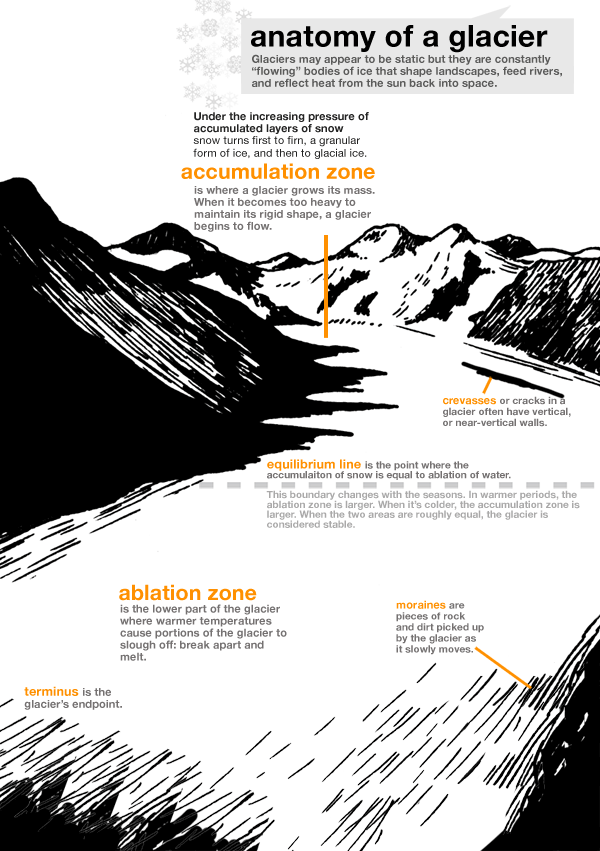
A glacier has two main sections: the accumulation zone and the ablation zone. High in the mountains, a glacier forms as snow accumulates and compresses first into “firn,” a granular ice, and then finally into glacial ice. A glacier begins to move, or “flow,” as it acquires more and more mass. When it moves south to warmer temperatures, the foot of the glacier will slough off – giant pieces break and melt. This area where a glacier loses mass is the ablation zone. The boundary between the two zones, the equilibrium line, adjusts with the seasons. In warmer periods, the ablation zone is larger and the equilibrium line moves further up the glacier. When it’s colder, the accumulation zone is larger. And when the two areas are roughly equal, the glacier is considered stable.