This post comes to PBS Nature from World Wildlife Fund (WWF). Views and opinions expressed in blog posts are those of the individuals expressing them and do not necessarily reflect those of THIRTEEN Productions LLC/The WNET Group. Earth’s coral reefs, dubbed “rainforests of the sea” ...
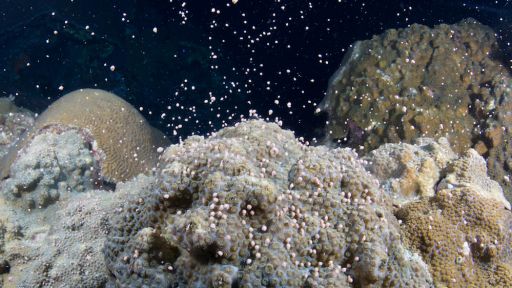
On nights when the perfect tide conditions, day-length and sea temperature all align, some 400 species of coral across 3,000 reefs reproduce by releasing their eggs and sperm simultaneously. This ultimately helps grow the world's largest living structure - the Great Barrier Reef.
Coral reefs cover less than 1 percent of the Earth’s surface yet feed and shelter a significant amount of marine life, including some 4,000 species of fish. However, these vital ecosystems face an increasingly bleak future.
Just after sunset in early August, divers descend into inky black waters of the Gulf of Mexico, 100 miles from shore. The beams of their dive lights pierce the darkness, illuminating a large coral mound, its textured surface covered in tiny white dots. At some ...