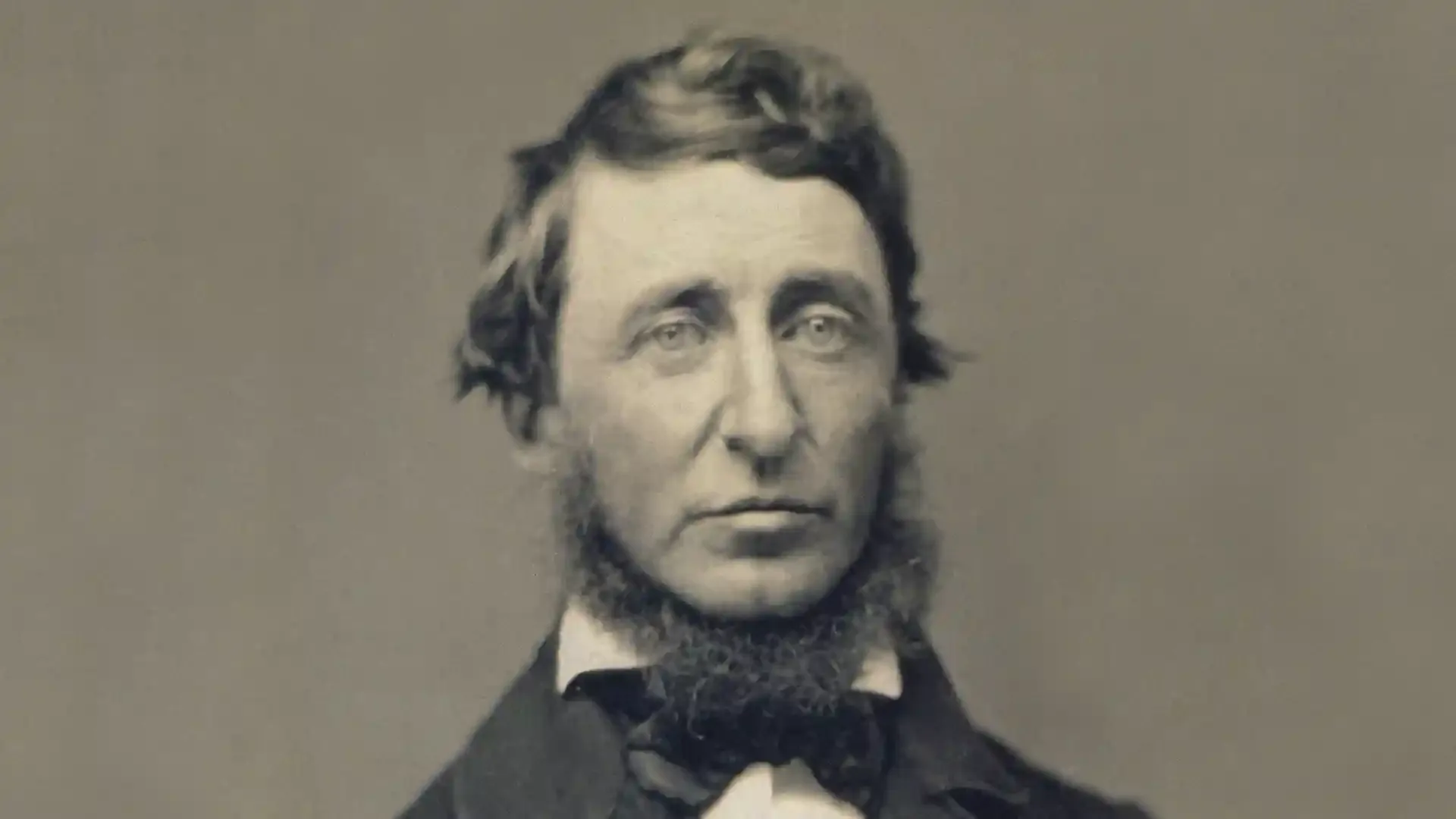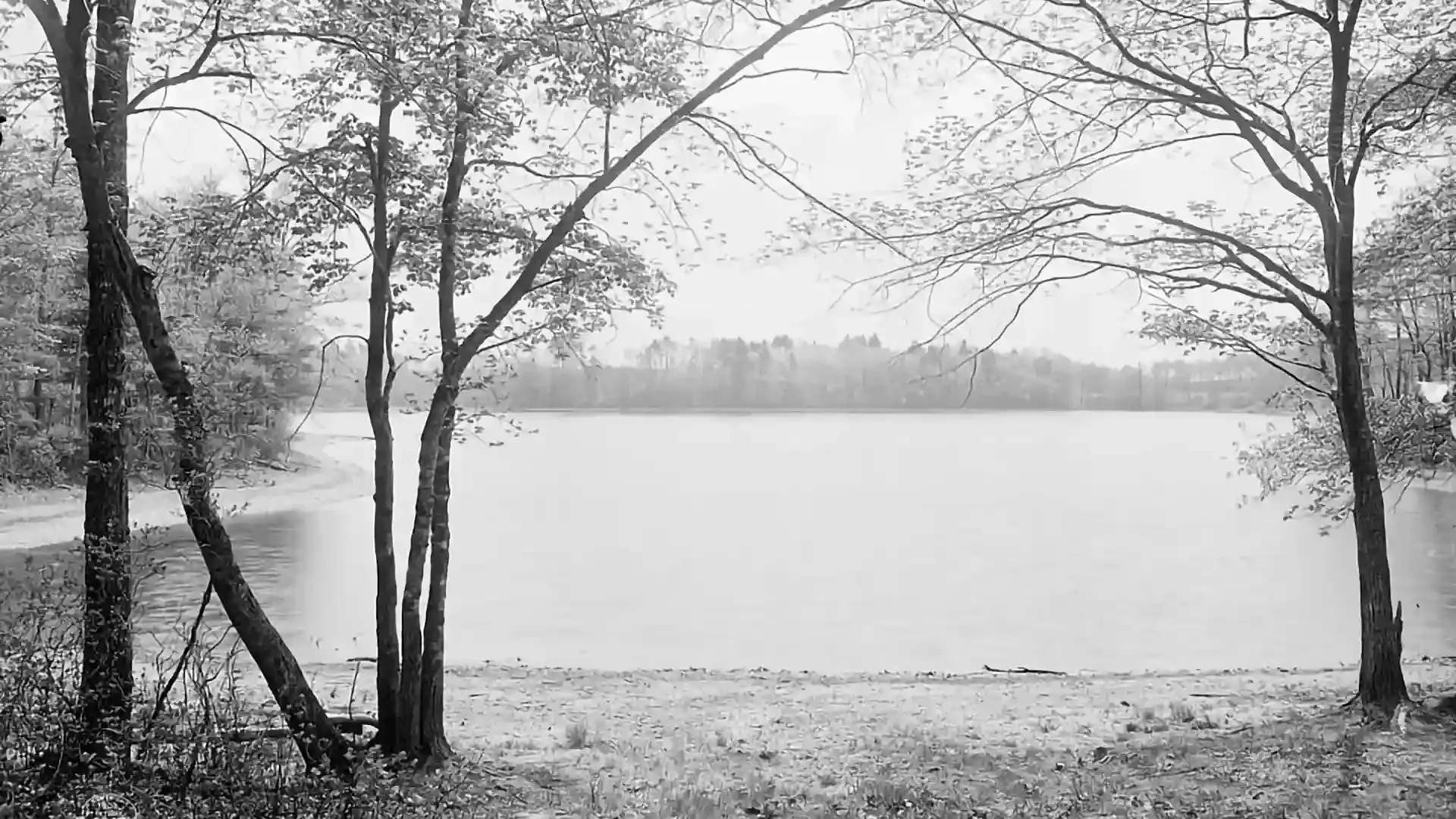
Henry David Thoreau is often remembered as a writer who retreated from society to live in a small house at Walden Pond. But he also sheltered escaped enslaved people in his home, defied federal law, and publicly defended an activist who many Americans considered a terrorist.
The new three-part PBS series Henry David Thoreau, executive produced by Ken Burns and Don Henley and directed by Erik Ewers and Christopher Loren Ewers, explores his thoughts on people marginalized by society. Looking at his experiences with them, and how he wrote about them, reveals the complexities of race, gender, and the roots of inequality, offering a clearer view of our shared history.
Official Trailer
Thoreau was born in Concord, Massachusetts, in 1817 and died there in 1862. During his lifetime, the United States was barely 40 years past the American Revolution, and the promises of 1776 — liberty, equality — were already being tested. The most urgent question of the time was whether slavery would end or expand, and what ordinary people were expected to do about it.
Here is a look at the world that shaped Thoreau:
Thoreau’s America
The Declaration of Independence had proclaimed all men equal, but millions of people were enslaved in the U.S., and the Southern economy depended on their labor.
While slavery had been abolished in the North, the issue wasn’t settled. Northern factories and textile mills, emerging quickly during the Industrial Revolution, relied on Southern cotton exports, which meant that Northern wealth was built, at least in part, on enslaved labor. Most white Americans, in both the North and South, understood that slavery was wrong. Even so, the majority chose to maintain the status quo rather than take a moral stand.
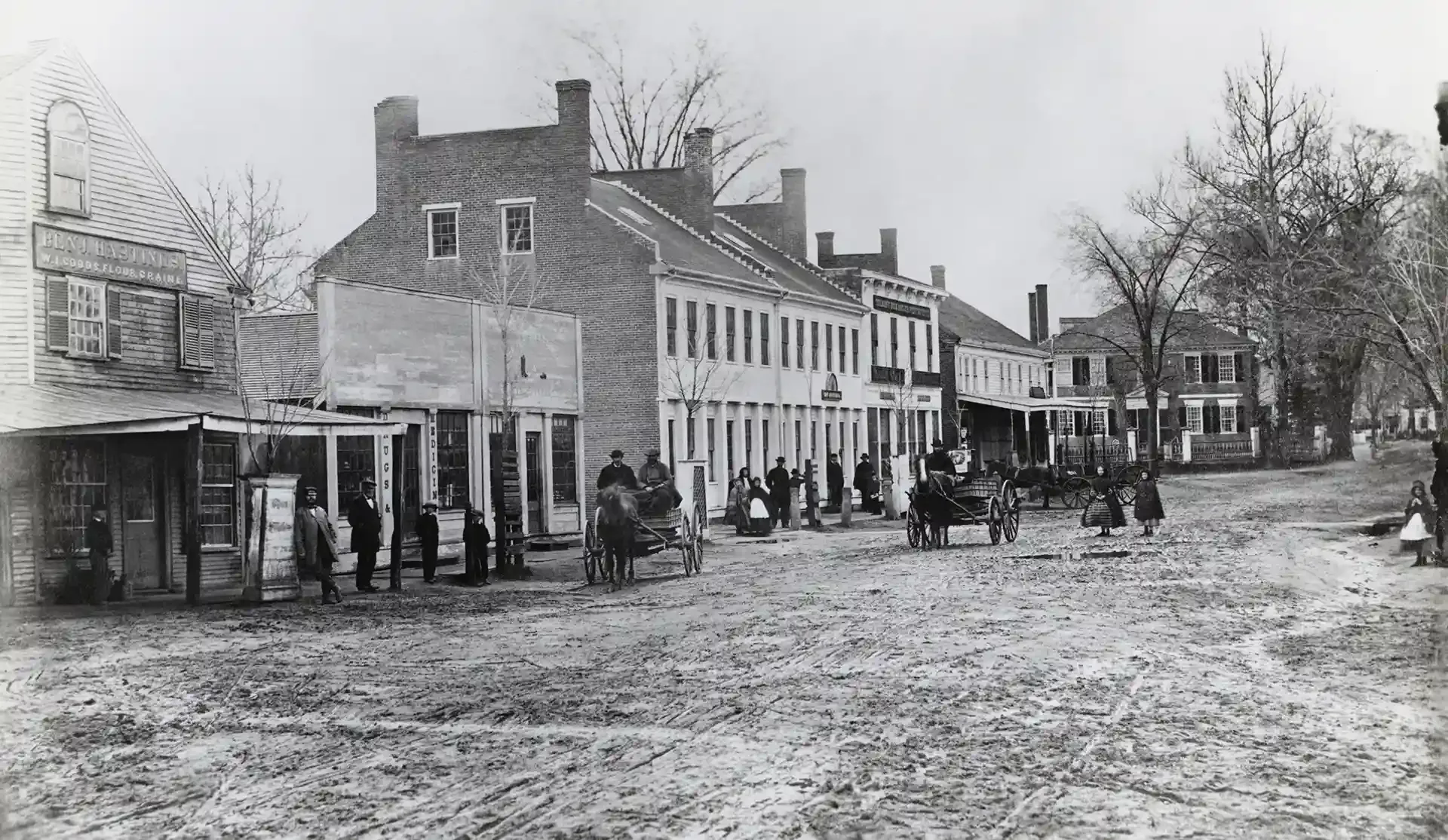
By the time Thoreau graduated from college in 1837, the country was rapidly expanding westward. Every new territory reopened the same question: would slavery be permitted or prohibited? The debate consumed Congress and divided political parties, communities, and families. Thoreau watched closely.
Support your local PBS station in our mission to inspire, enrich, and educate.
Concord and the Abolitionist Movement
During Thoreau’s lifetime, Concord, Massachusetts, was a center of the abolitionist movement. The network of committed activists there included a small but significant free Black community, who were among the leaders of the fight against slavery.
While he was at Walden Pond between 1845 and 1847, Thoreau lived near this free Black community. In the 1780s, Massachusetts had effectively abolished slavery. But free Black residents faced limited choices — either continuing to work as servants or trying to survive on poor-quality land that white residents didn’t want to farm.
Thoreau wrestled with the question of why, after slavery, a community of formerly enslaved people remained excluded from the economy and culture of a bustling town like Concord. Observing Concord’s free Black community pushed him toward a more active role in the anti-slavery movement, as he began to reflect on his own freedom of movement in contrast to the limitations placed on a community that was free only in name.
The Thoreaus were committed abolitionists. Thoreau’s mother, Cynthia, and his sisters, Helen and Sophia, were deeply involved long before Thoreau’s own public activism began. They were key members of the Concord Female Anti-Slavery Society, one of several women-led organizations that anchored New England’s abolitionist movement. The family home became a known stop on the Underground Railroad, a secret network of safe houses that abolitionists used to help freedom seekers traveling north.
Their network extended to some of the movement’s most prominent figures. Helen formed a particularly close friendship with Frederick Douglass, an abolitionist who had escaped slavery and written an acclaimed autobiography detailing the experience, and she likely hosted him at the family home while he was in Concord.
Thoreau grew up in this environment, and abolitionist thought and its leaders shaped his thinking and his writing from early on.
The Fugitive Slave Act
On September 18, 1850, Congress passed the Fugitive Slave Act, making it legal for enslavers to reclaim any runaway, even those who had escaped to free states in the North. Further, the law made it a crime to help an escaped enslaved person, punishable by a fine of up to $1,000 (about $40,000 today) and up to six months in jail. Thoreau saw the consequences of the law unfold in his own community.
In April 1851, Thomas Sims, who had escaped from a Georgia rice plantation, was arrested in Boston and sent south to be re-enslaved. Thoreau was outraged, writing in his journal that Boston authorities had sent an innocent man into slavery and that a government which “deliberately enacts injustice, and persists in it! — will become the laughing-stock of the world.”
Thoreau had already been working through these ideas in Civil Disobedience, published in 1849.
I say, break the law. Let your life be a counter-friction to stop the machine.
Thoreau had no intention of complying with the Fugitive Slave Act. Instead, he began working alongside his family in the Underground Railroad, helping formerly enslaved people find safety in the North. In one instance, he escorted a man named Henry Williams from the Thoreau home to the Concord train station. When he spotted a policeman, he rerouted Williams to a later train.
Williams made it safely to Canada, one of several people Thoreau helped reach freedom.
The Anthony Burns Trial
In late May 1854, Anthony Burns, who had escaped slavery, was arrested in Boston by federal marshals under the Fugitive Slave Act. His enslaver had traveled up from Virginia to reclaim him.
Despite protests across the city, Burns was marched through the streets of Boston by federal troops, a platoon of U.S. Marines, and the entire Boston police force to a ship waiting to carry him back to Virginia. The Burns case was a direct threat to the freedom and security of Boston’s free Black community.
Only a week after Burns was sent south, Congress passed the Kansas-Nebraska Act, allowing newly formed western states to decide for themselves whether to permit slavery. The two events together were a devastating setback for the abolitionist movement.
On July 4, 1854, there was a protest rally in South Framingham, Massachusetts. The speakers that day included some of the most well-known abolitionists in the country — William Lloyd Garrison, Wendell Phillips, and Sojourner Truth. Thoreau spoke in the afternoon. The podium featured an upside down American flag, signaling that the country was in crisis.
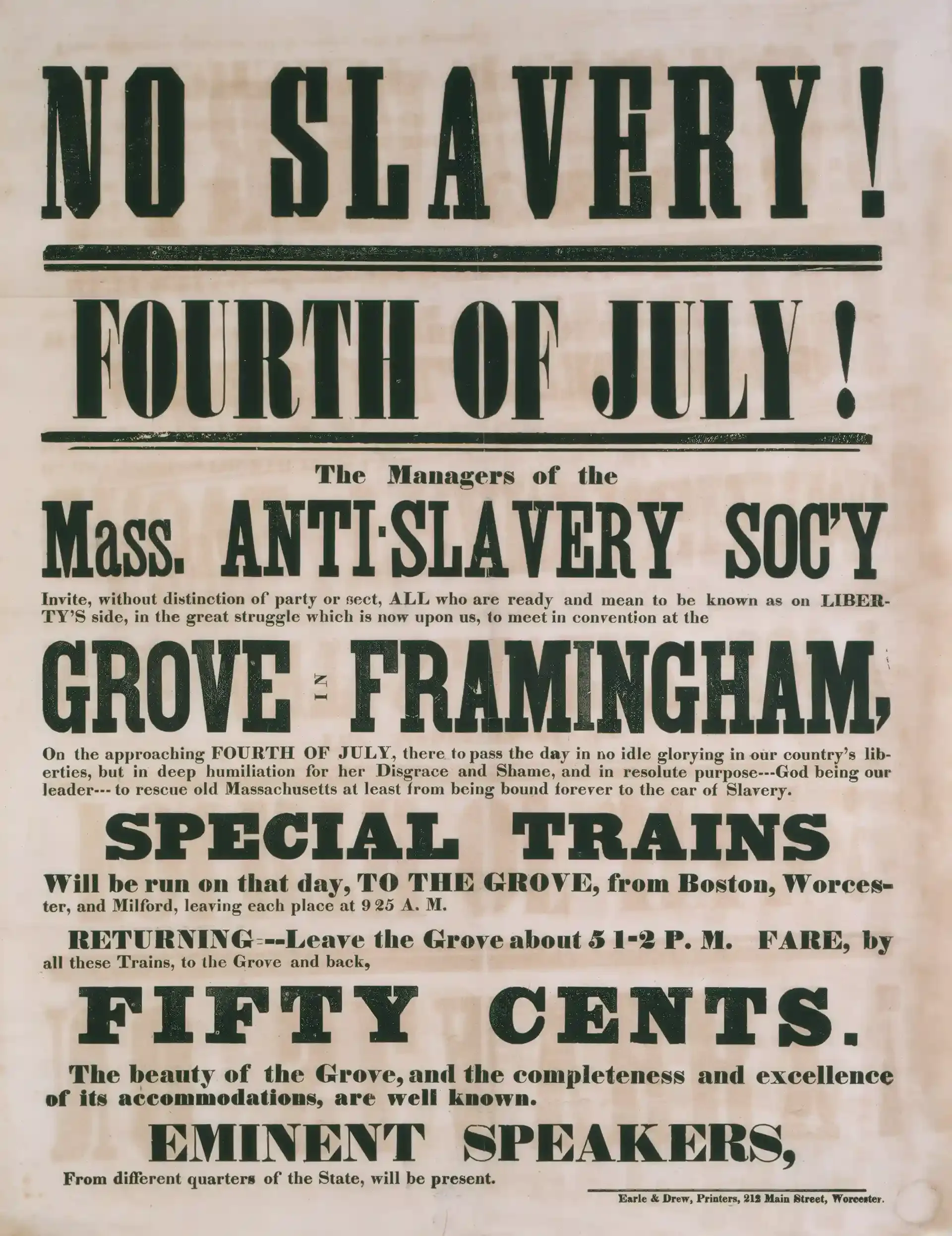
Thoreau called out the judges, politicians, and ordinary citizens of Massachusetts who had enforced an unjust law, along with everyone else in the country complicit in slavery. The speech was published later that year as Slavery in Massachusetts, one of few works by Thoreau that found an immediate audience.
I feel that my investment in life here is worth many percent less since Massachusetts last deliberately sent back an innocent man, Anthony Burns, to slavery… Man’s influence and authority were on the side of the slaveholder, and not of the slave — of the guilty, and not of the innocent — of injustice, and not of justice. Nowadays, men wear a fool’s-cap, and call it a liberty-cap.

The best of PBS, straight to your inbox.
Be the first to know about what to watch, exclusive previews, and updates from PBS.
John Brown and the Road to the Civil War
By the time Thoreau was finding his own political voice, Frederick Douglass was one of the most powerful speakers in the abolitionist movement. Thoreau believed that engaging seriously with people who had a different perspective on the world, like Douglass, was essential to understanding it clearly. John Brown would test this.
Thoreau believed individuals had a moral obligation to disobey unjust laws. John Brown believed armed resistance was the only answer. He was a white radical abolitionist who had already made national headlines for leading violent attacks on pro-slavery settlers in Kansas. In 1857, Brown traveled to Concord seeking support for his cause and met with Thoreau, who later described Brown as a meteor, “flashing through the darkness in which we live.”
In the fall of 1859, Brown and his supporters raided the federal armory at Harpers Ferry, Virginia, hoping to arm an uprising to end slavery by force. The raid failed, and Brown was captured, tried, and sentenced to death.
Thoreau was the first person to publicly defend Brown’s actions. Before Brown was executed, Thoreau delivered a speech in Concord. “I do not wish to kill or be killed,” he said, “but I can foresee circumstances in which both these things would be by me unavoidable.”
He was saying that some injustices are so profound that the usual rules no longer apply.
Brown was hanged on December 2, 1859. Thoreau wrote a second speech, “The Last Days of John Brown,” that was read aloud at Brown’s gravesite six months later. In it, he called Brown “the clearest light that shines on this land.”
Brown forced Thoreau to confront a question he had been working on for years: what would it actually take to end an injustice this deep? Two years later, the Civil War began.
Thoreau’s writing can’t be separated from the world that produced it. The Industrial Revolution, the fight to end slavery, and the moral and political crises of his day inspired Thoreau to think and write critically. Understanding these circumstances is the only way to fully appreciate the significance of his work. The house at Walden Pond and the Concord woods were where Thoreau went to think clearly enough to keep going.
To learn more about Henry David Thoreau’s life and works, watch “Henry David Thoreau,” a film by Erik Ewers and Christopher Loren Ewers, streaming on PBS.org and the PBS app.