He has been called the patron saint of the environmental movement and the father of nonviolent resistance. His best-known work, Walden, is considered a masterpiece and figures on every list of essential American books. His essay “Civil Disobedience” has inspired activists and reformers for more than 150 years.
The new three-part PBS series Henry David Thoreau, executive produced by Ken Burns and Don Henley and directed by Erik Ewers and Christopher Loren Ewers, takes a closer look at his life and his writing.
Official Trailer
Henry David Thoreau lived during the mid-1800s, but the questions he explored in his writing — how to live deliberately, what it means to act with conscience, what we owe to the natural world — have never felt more urgent.
Ready to learn more? Here is where to start:
Walden: Or, Life in the Woods (1854)
Thoreau was living during the American Industrial Revolution, a time when people were being pulled off farms to work in factories, cities were growing, and the pressure to earn and consume was becoming a defining fixture of everyday life for the first time. He observed his neighbors in Concord, Massachusetts, caught in a cycle of work and stress that they had not consciously chosen — what he famously called “quiet desperation.”
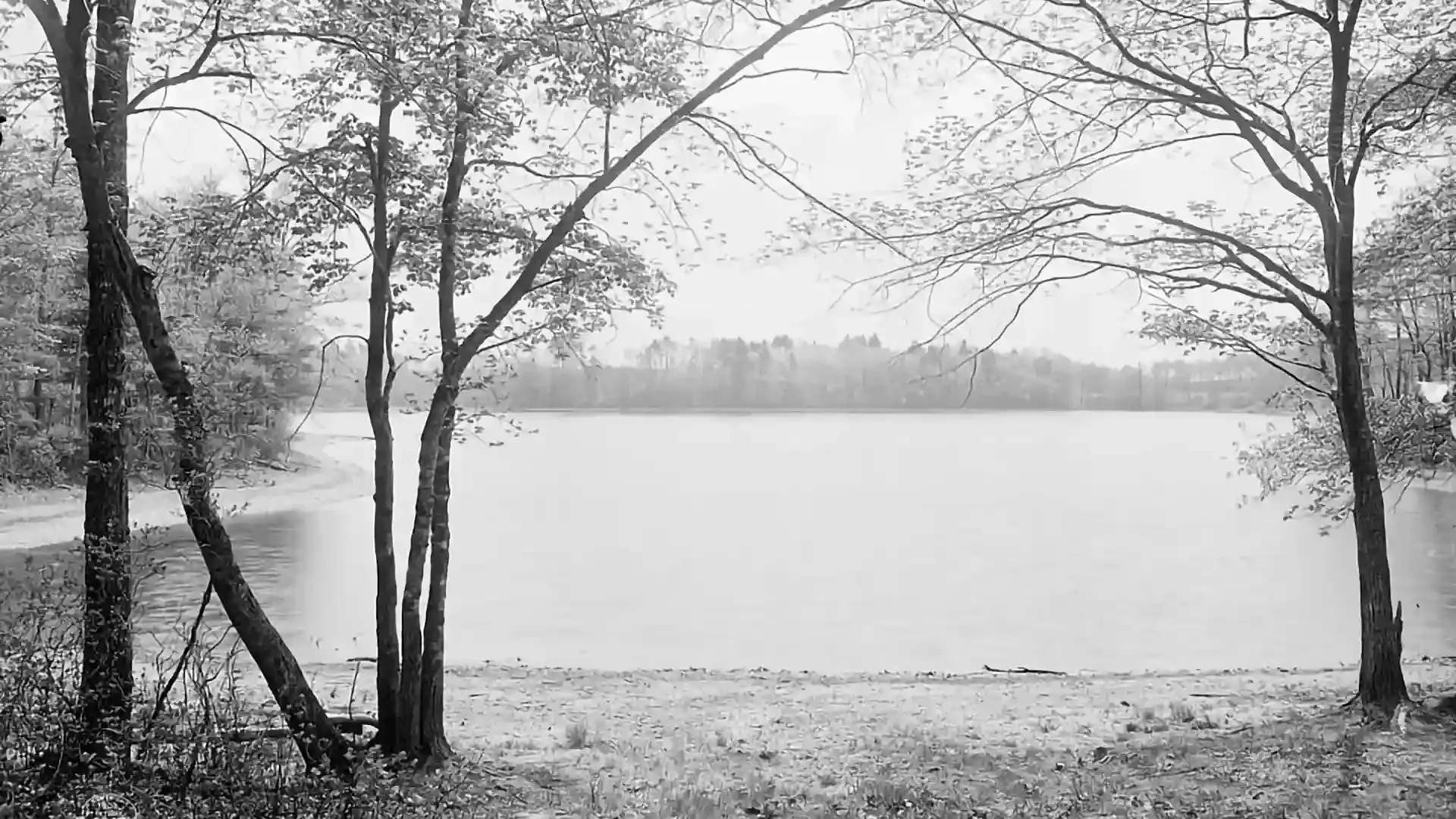
In the summer of 1845, Thoreau began an experiment designed to answer the question: what does it actually mean to live well? He walked into the woods outside Concord, built a 10x15 foot house next to Walden Pond, and lived there for two years, two months, and two days.
He stripped his life down to its most basic material needs and spent his days walking through the woods, recording everything he heard and saw with scientific precision. His journals were so careful and sustained that scientists have recently used them to track changes to Massachusetts’ climate over time.
Thoreau eventually found that this same close attention, with practice, could be turned inward, toward his own sense of what a good life required. He spent the next seven years editing those journals into Walden, now considered one of the most influential books in American history.
Worth Noting:
Thoreau’s house cost just $28.12 to build. He recorded every expense in his journal, down to the cost of nails and hinges.
Quotes from Walden:
I went to the woods because I wished to live deliberately, to front only the essential facts of life, and see if I could not learn what it had to teach, and not, when I came to die, discover that I had not lived.
Simplicity, simplicity, simplicity! I say, let your affairs be as two or three, and not a hundred or a thousand.
Support your local PBS station in our mission to inspire, enrich, and educate.
“Civil Disobedience” (1849)
In the summer of 1846, a year into his experiment at Walden Pond, Thoreau walked into Concord and was stopped by the local tax collector, who told him he owed four years of unpaid poll taxes. Thoreau refused to pay. He believed that by paying taxes, he was supporting an economy tied to slavery and funding the Mexican-American War, which he saw as a campaign to expand enslavement in the west. Thoreau was arrested and spent the night in jail. Someone, likely his aunt, paid the tax without his knowledge the next morning.
The experience highlighted one of the major questions Thoreau worked through during his lifetime: how can you live with a clear conscience when simply going about your day makes you part of something you find morally wrong?
He published “Civil Disobedience” in 1849. The essay argues that people have a moral obligation to refuse to follow unjust laws, and Thoreau acted on it. He and his family were active in Concord’s abolitionist movement and participated in the Underground Railroad.
The essay has been remarkably influential — Gandhi, Malcolm X, and Martin Luther King Jr. all read “Civil Disobedience” and drew on it to build their own movements.
Worth Noting:
Thoreau’s essay was originally titled “Resistance to Civil Government.” It was republished as “Civil Disobedience” after his death.
Quotes from “Civil Disobedience”:
Let your life be a counter-friction to stop the machine. What I have to do is to see, at any rate, that I do not lend myself to the wrong which I condemn.
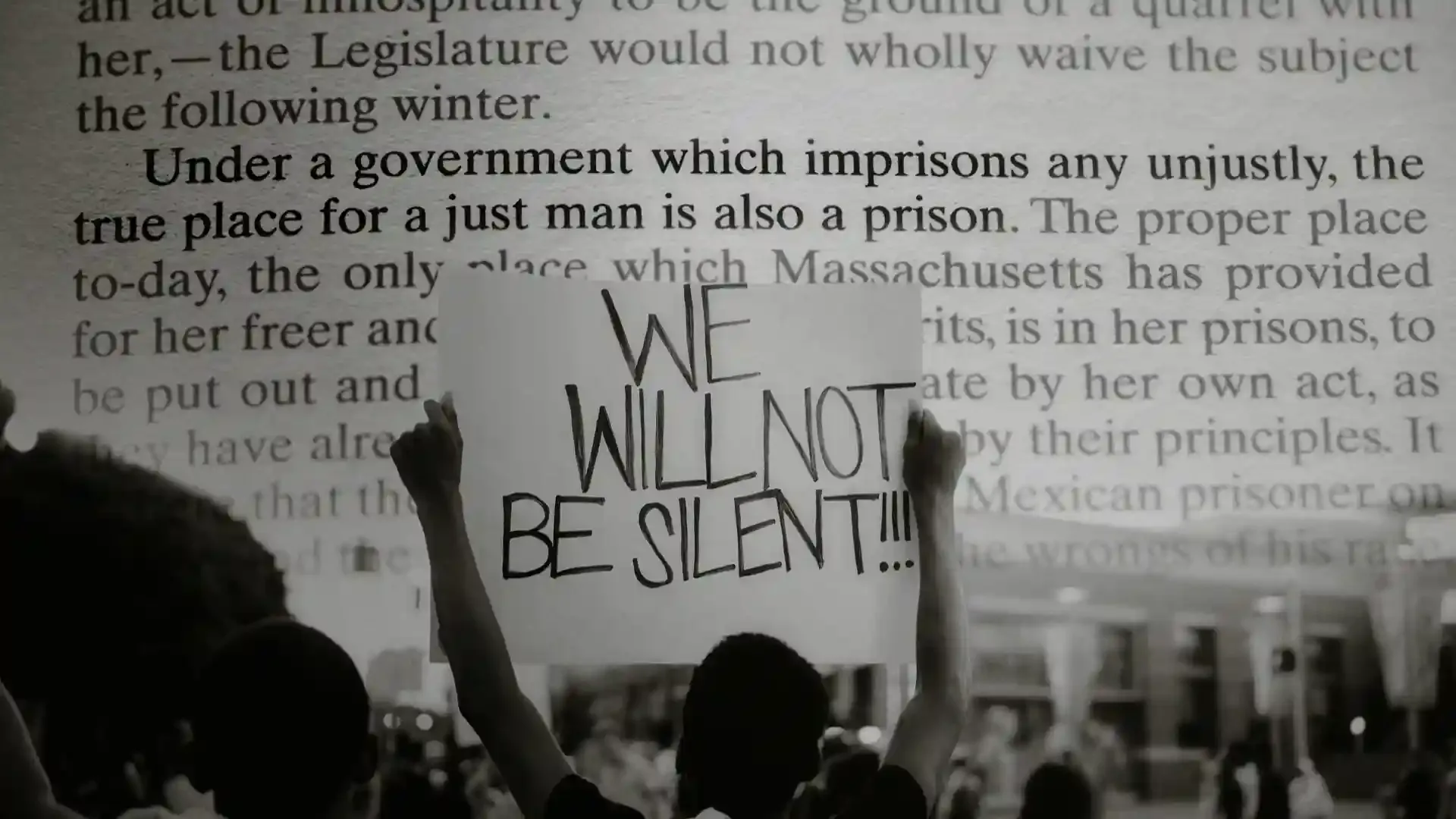
Under a government which imprisons any unjustly, the true place for a just man is also a prison.
A Week on the Concord and Merrimack Rivers (1849)
In the late summer of 1839, Thoreau and his brother John built a boat and set off on a two-week river adventure. They called their boat Musketaquid, after the name Indigenous people gave to the river lowlands.
The brothers boated down the Concord River and up the Merrimack into New Hampshire, where they continued their adventure on foot, into the White Mountains. Along the way, they watched the New England landscape they loved being reshaped by mills, dams, and factory towns.
More than anything else, the trip was an adventure shared by brothers. Growing up, Henry and John were inseparable, spending most of their time exploring the woods and rivers around Concord together. When John died suddenly of tetanus just three years after their river trip, Thoreau was devastated. He spent years turning his journal entries from those two weeks into A Week on the Concord and Merrimack Rivers, equally a travel narrative and a tribute to his brother, drawing on Hindu texts, Greek philosophy, and ancient literature.
Worth Noting:
A Boston publisher agreed to print one thousand copies of the book, but only if Thoreau would buy back any that didn’t sell. Thoreau eventually had to buy back 706 of them, which cost him $300 — an entire year’s income for the average American. He stored them all in the family home’s attic.
Quotes from A Week on the Concord and Merrimack Rivers:
The world is but a canvas to our imaginations.
The language of Friendship is not words, but meanings. It is an intelligence above language.

The PBS ‘What to Watch’ Weekly Newsletter
What to Watch delivers the best shows and content PBS has to offer each week.
“Walking” (1862)
In 1851, Thoreau gave a speech at the Concord Lyceum that would be published as “Walking” in 1862, two months after his death. He called it an introduction to “all I may write hereafter,” signaling how central these ideas were to everything he believed. In the text, Thoreau notes that he spent four hours a day walking and saw this as essential to preserving his health and spirits.
The essay carries more weight than its title might suggest. Thoreau wrote it at a time when Americans were sharply divided over slavery. In that context, “Walking’s” argument that the freedom to roam in nature is a universal human right held deeper meaning. Thoreau did his best thinking while walking in nature, and he believed every person deserved that same access.
For Thoreau, protecting human freedom and protecting the natural world were the same argument. The essay is now considered a landmark of the modern environmental movement. It was one of the first works to argue that the wilderness should be protected as something essential to being human.
Worth Noting:
The essay’s most famous line, “In Wildness is the preservation of the world,” is often misquoted as “In Wilderness.” The distinction is important because while wilderness is a place that can be visited, wildness is a state of being that everyone should be able to access — like freedom.
Quotes from “Walking”:
I wish to speak a word for Nature, for absolute Freedom and Wildness, as contrasted with a freedom and culture merely civil — to regard man as an inhabitant, or part and parcel of Nature, rather than a member of society.
I am alarmed when it happens that I have walked a mile into the woods bodily, without getting there in spirit.
“Slavery in Massachusetts” (1854)
In May 1854, a formerly enslaved man named Anthony Burns was arrested in Boston and ordered to be returned to slavery in Virginia. The Fugitive Slave Act required citizens in free states to assist in capturing escaped enslaved people and returning them to their owners, which meant that Northerners were required by law to participate in slavery.
The Burns case drew thousands of protesters into the streets of Boston. That same month, Congress passed a new law called the Kansas-Nebraska Act, allowing western states to decide for themselves whether to permit slavery.
Thoreau was furious.
On July 4, 1854, he delivered “Slavery in Massachusetts” at a protest rally, speaking alongside fellow abolitionists William Lloyd Garrison, Wendell Phillips, and Sojourner Truth. Massachusetts was as much a target as the South, and Thoreau directed his anger at the judges, politicians, and ordinary citizens enforcing the Fugitive Slave Act.
The speech was one of the most direct and scathing pieces of political writing Thoreau ever produced, and it stands as a model of how to speak honestly about injustice.
Worth Noting:
“Slavery in Massachusetts” was one of the few works by Thoreau that was widely read and discussed the moment it appeared. Unlike Walden and A Week on the Concord and Merrimack Rivers, which sold poorly at first, the speech resonated immediately.
Quotes from “Slavery in Massachusetts”:
I feel that my investment in life here is worth many percent less since Massachusetts last deliberately sent back an innocent man, Anthony Burns, to slavery. ... Man’s influence and authority were on the side of the slaveholder, and not of the slave — of the guilty, and not of the innocent — of injustice, and not of justice.
Nowadays, men wear a fool’s-cap, and call it a liberty-cap.
Thoreau lived in a politically divided world being reshaped by industry and moving faster than most people could keep up with. He was writing for anyone who suspected, on some level, that the life they were living wasn’t quite the life they were meant to have. He was writing for his time and also, somehow, for ours.
To learn more about Henry David Thoreau’s life and works, watch “Henry David Thoreau,” a film by Erik Ewers and Christopher Loren Ewers, streaming on PBS.org and the PBS app.
Explore More