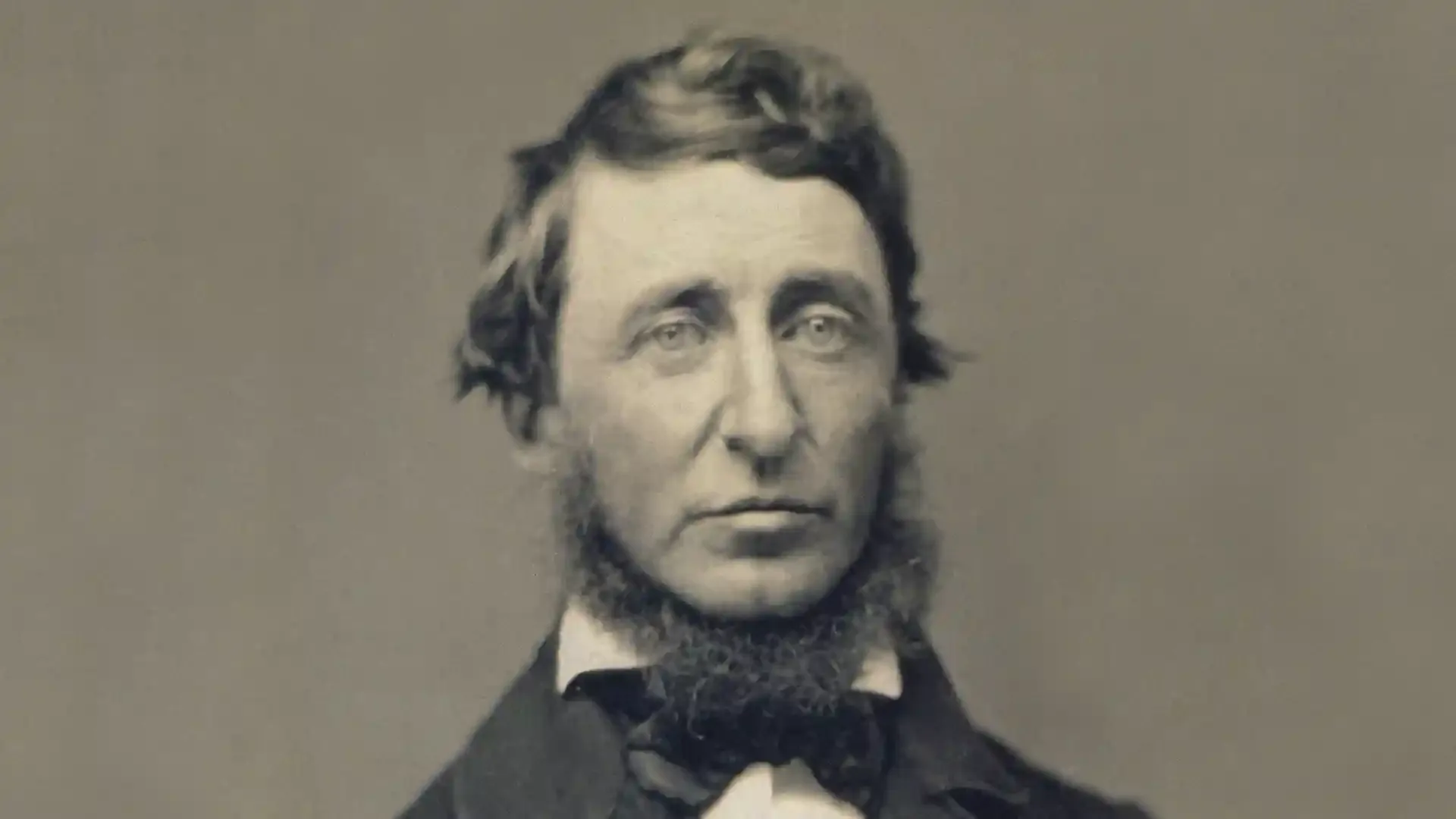
Henry David Thoreau was a writer, a scientist, a seeker of truth, and a fighter for maintaining our nation’s first principles. Yet our knowledge of him is largely incomplete, outdated, and often inaccurate.
In the new three-part PBS series Henry David Thoreau, executive produced by Ken Burns and Don Henley and directed by Erik Ewers and Christopher Loren Ewers, the mythical Thoreau gives way to the human Thoreau.
Far from the secluded hermit in the woods at Walden Pond, Henry David Thoreau spent his life exploring far-reaching and forward-thinking ideas, including the quest for a meaningful life. And what he found still resonates today.
Official Trailer
In 1854, Henry David Thoreau published Walden, an account of an experiment he had been working on for most of his adult life. He’d spent two years living alone in a small house in the woods outside of Concord, Massachusetts, and seven more refining his journal entries from the time into one of the most influential books in American history.
What made Walden an experiment was Thoreau’s method. He started with a question, deliberately created the conditions needed to test it, and spent time making sense of what he found.
Thoreau’s experiment was designed to answer the question: What does a person actually need to live a good life? To find answers, he stripped his life down to essentials (a tiny hand-built house, a bed, seeds to grow food, his journals) and paid close attention to what was left. Thoreau’s findings still speak to anyone who has suspected that the life they are living isn’t quite the life they are meant to have.
Here are four lessons from Thoreau to get you started:
Lesson 1: Name What Isn’t Working
Thoreau lived during the American Industrial Revolution, a time when rapid technological change was pulling people off farms and into factories. The pressure to work harder, earn more, and keep up was unlike anything previous generations had known.
Thoreau watched his neighbors in Concord exhaust themselves maintaining lives they had never consciously chosen. He called this “quiet desperation” and believed it to be the defining condition of his time.
It would be hard to argue that it isn’t still ours. Most of us can recognize this feeling. We’ve overcomplicated our lives enough that it’s easy to lose sight of what actually matters, and we rarely slow down long enough to notice. Thoreau believed this was the problem.
It appears as if men had deliberately chosen the common mode of living because they preferred it to any other. Yet they honestly think there is no choice left.
Thoreau’s first lesson is simple: notice and name what isn’t working in your life and write it down. The fact that something feels off is an honest place to start.
Support your local PBS station in our mission to inspire, enrich, and educate.
Lesson 2: Slow Down and Look Closely
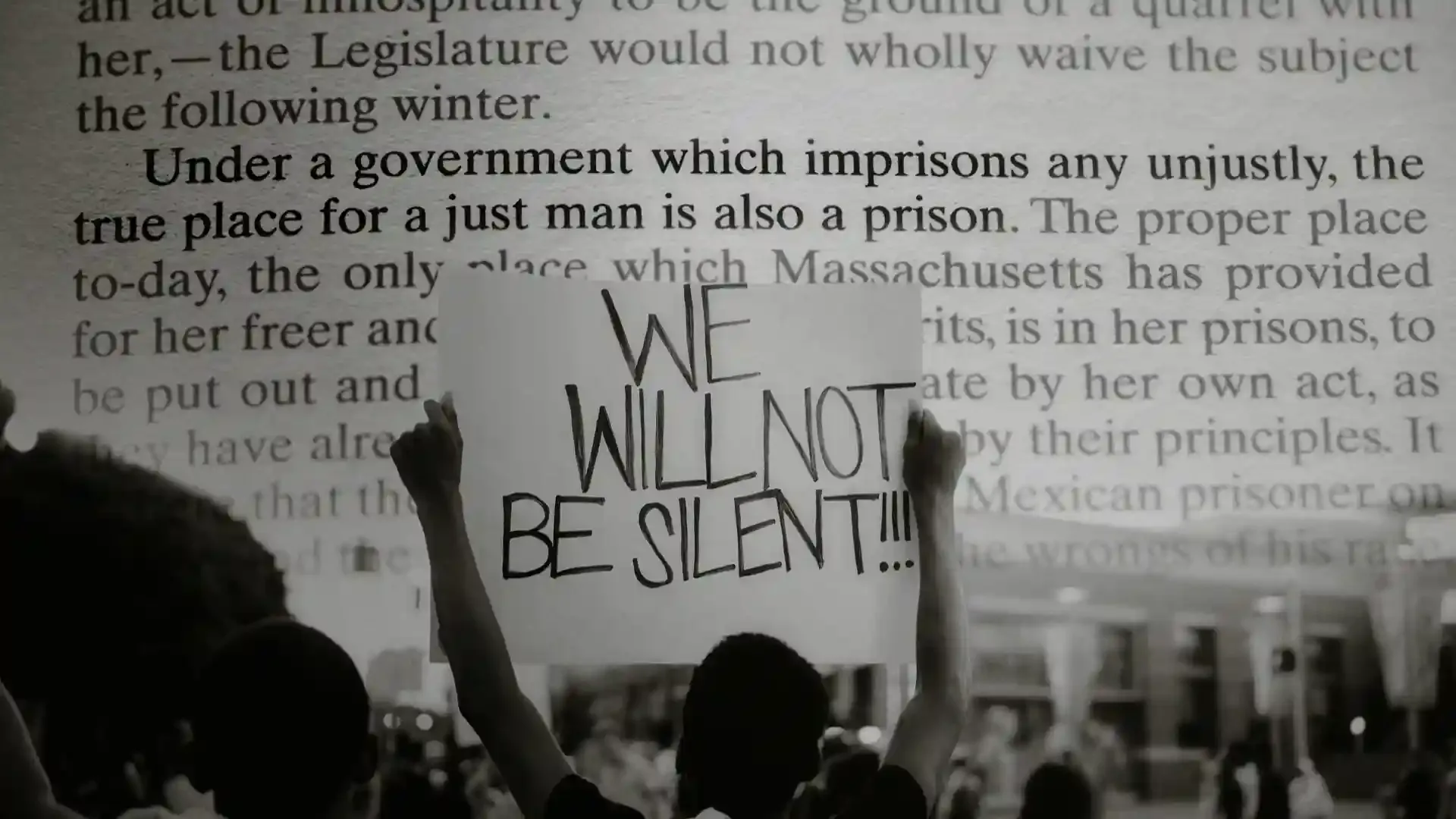
A common misconception about Thoreau is that he moved to Walden to escape his own life. In fact, he walked into Concord regularly, kept up with friends and family, and was engaged in the political issues of his day — most notably, the abolition of slavery.
Thoreau’s goal was to see and understand his world more clearly, and he was explicit about why:
I went to the woods because I wished to live deliberately, to front only the essential facts of life, and see if I could not learn what it had to teach, and not, when I came to die, discover that I had not lived.
Living in the woods helped Thoreau develop a specific kind of attention. He walked slowly through the forest every day, keeping detailed field notes about everything he heard and saw: animal behavior, the thickness of the pond ice, the precise timing of wildflower blooms in the spring. His journals were so careful, precise, and sustained that his records have been reexamined recently to understand changes in Massachusetts’ climate over time.
The practice Thoreau developed in the woods is available anywhere. Start small. Slow down, look closely, and write down what you find.
Lesson 3: Find a Place Where You Can Hear Yourself Think
Thoreau chose to conduct his experiment in the woods for good reason. His mentor, neighbor, and sometime-landlord Ralph Waldo Emerson had argued that the natural world, observed closely enough, could reveal important truths about human life. Thoreau took that idea literally and went to test it.
What he found was remarkable. Over time, Thoreau discovered that the same deliberate attention he brought to the natural world could be turned inward. The more present he became in the woods, the more clearly he could hear his own thoughts and understand his own values.
Modern research has backed what Thoreau found through years of careful attention; time in nature reduces stress and improves the kind of thinking that helps you understand yourself. You don’t need a forest or a pond. The point is to slow down to give yourself space to think. A park, a good patch of sky, or a quiet corner of your neighborhood will do.

The best of PBS, straight to your inbox.
Be the first to know about what to watch, exclusive previews, and updates from PBS.
Lesson 4: Design Your Own Experiment
Thoreau didn’t have a grand plan for his experiment at the start. He had been living at the Emersons and writing about a simpler, more deliberate life close to nature when his brother died suddenly of tetanus in 1842. The loss was devastating. The two had grown up inseparable, spending many of their days exploring the woods and rivers around Concord. His grief brought his purpose into focus: he wanted to understand what it means to live well.
Thoreau formed a question, created the conditions to test it, and let the results change him. He spent years revising his work before eventually sharing it with the world in Walden. The text isn’t meant to be a manual on a particular way of living. Thoreau was instead modeling a way of thinking about how to live. He said it himself:
I would not have any one adopt my mode of living on any account ... I desire that there may be as many different persons in the world as possible; but I would have each one be very careful to find out and pursue his own way.
Thoreau wrote in an era of rapid industrialization, when American lives were being reshaped by forces largely outside of their own control. We have continued to build the world Thoreau feared: noisy, crowded, and fast-moving enough that serious self-examination feels like a luxury. His work feels urgently relevant, maybe even more so now than when he wrote it.
The experiment Thoreau ran was his and yours will be different. Start with one honest question about how you are living, create the space to test it, and write down what you find. Your experiment begins wherever you are.
To learn more about Thoreau’s life, experiments, and philosophy, watch “Henry David Thoreau,” a film by Erik Ewers and Christopher Loren Ewers, on PBS.org and the PBS app.