To celebrate the new PBS Eons miniseries Eons: Life and Death on Pangea, we opened our inboxes to fans of deep time and invited them to ask a paleontologist their burning questions about natural history. Here are our answers to some of the questions we were asked, from how we talk about time to what the heck Dimetrodon was doing (or not doing) with the enormous sail on its back. We hope you enjoy!
And natural history fans should be sure to check out Eons: Life and Death on Pangea, now streaming on PBS.org and the PBS app.
Add to your watchlistHow did the geological eras, periods, epochs, etc. get their names?
Turns out, a bunch of different ways! The three biggest chunks of time that we talk about the most on Eons are the Eras: Paleozoic, Mesozoic, and Cenozoic. They were named by geologists in the mid-1800s from the oldest (the Paleozoic) to the youngest (the Cenozoic). Each of their names references the life forms that evolved within them and their order in the geologic record. “Paleozoic” means “ancient life,” “Mesozoic” means “middle life,” and “Cenozoic” means “new life.”
The names of the smaller subdivisions of time (periods, epochs, ages, etc.) within the eras were inherited from older classification systems used by various paleontologists and geologists mostly to describe and discuss the particular chunks of time and local rocks they were interested in – and they essentially named them after whatever they wanted to. For example, in Eons: Life and Death on Pangea, we start our journey into deep time in the Carboniferous Period, which was formalized by two English geologists in 1822 and named for its abundant coal beds. After that, we move into the Permian Period, which was named in 1841 by a Scottish geologist after the Russian region of Perm.
These days, the International Commission on Stratigraphy (the group that maintains the boundaries of the units that make up the International Geological Time Scale) suggests naming new chunks of time/bodies of rocks after geographic features that are close to the location that defines the new chunk of time/body of rock. For example, one of the newest units of time (just ratified by the ICS in 2018) is the Meghalayan Age, which started 4200 years ago and is still going right now. It’s named for Meghalaya, a state in northeast India, that is home to the cave containing the stalagmite used to define the start of the Age.
To see a visual representation of Earth’s time periods throughout geological history, check out the International Chronostratigraphic Chart from the International Commission on Stratigraphy.
Support your local PBS station in our mission to inspire, enrich, and educate.
What was the Permian-Triassic extinction, and what caused it?
The extinction at the end of the Permian Period, around 252 million years ago, was the biggest mass extinction event in the planet’s history, with something like 75% of species on land and 80% of species in the oceans dying out. Paleontologists often call it “the Great Dying” for this reason. It marks the end of the Paleozoic Era (the “era of ancient life”) and the start of the Mesozoic Era (sometimes called the “age of dinosaurs”).
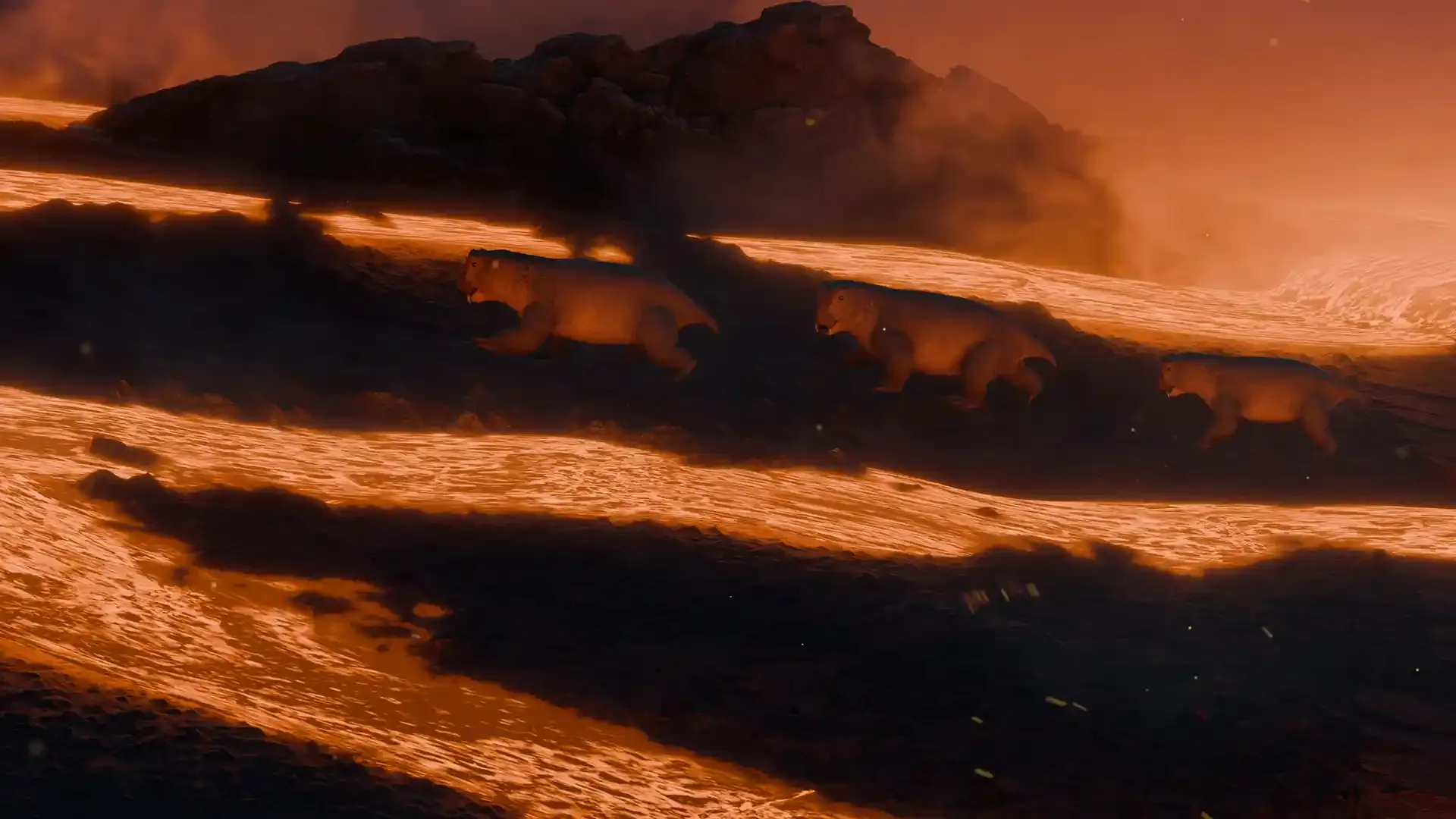
Research on its cause is ongoing, but most scientists agree that a major contributor was a climate catastrophe driven by a huge volcanic event: the eruption of the Siberian Traps in what’s now Russia. The lava from this eruption covered an area the size of western Europe and the greenhouse gases released by the eruption (and probably made worse by the coal beds it burned through) warmed the planet to nearly-unlivable levels very quickly, which also caused the oceans to acidify. This combination was devastating to both life on land and in the sea.
Could the Earth ever have a situation like the Siberian Traps again?
Unfortunately, yes – and I mean that in two different ways, depending on the meaning of “a situation.”
The first is that the Siberian Traps are an example of what geologists call a “large igneous province,“ which just means a really, really big area covered by lava, either on land or underwater. Many gigantic eruptions like this have happened in our planet’s history, like the Columbia River Basalts in the Pacific Northwest of North America and the Emeishan Traps in China, to name two. Some researchers have even connected these types of eruptions to other mass extinction events, like the Deccan Traps eruption in India coinciding with the end of the age of dinosaurs. Major eruptions like these are just part of Earth’s geologic cycles, so yes, they can, and will, happen again.
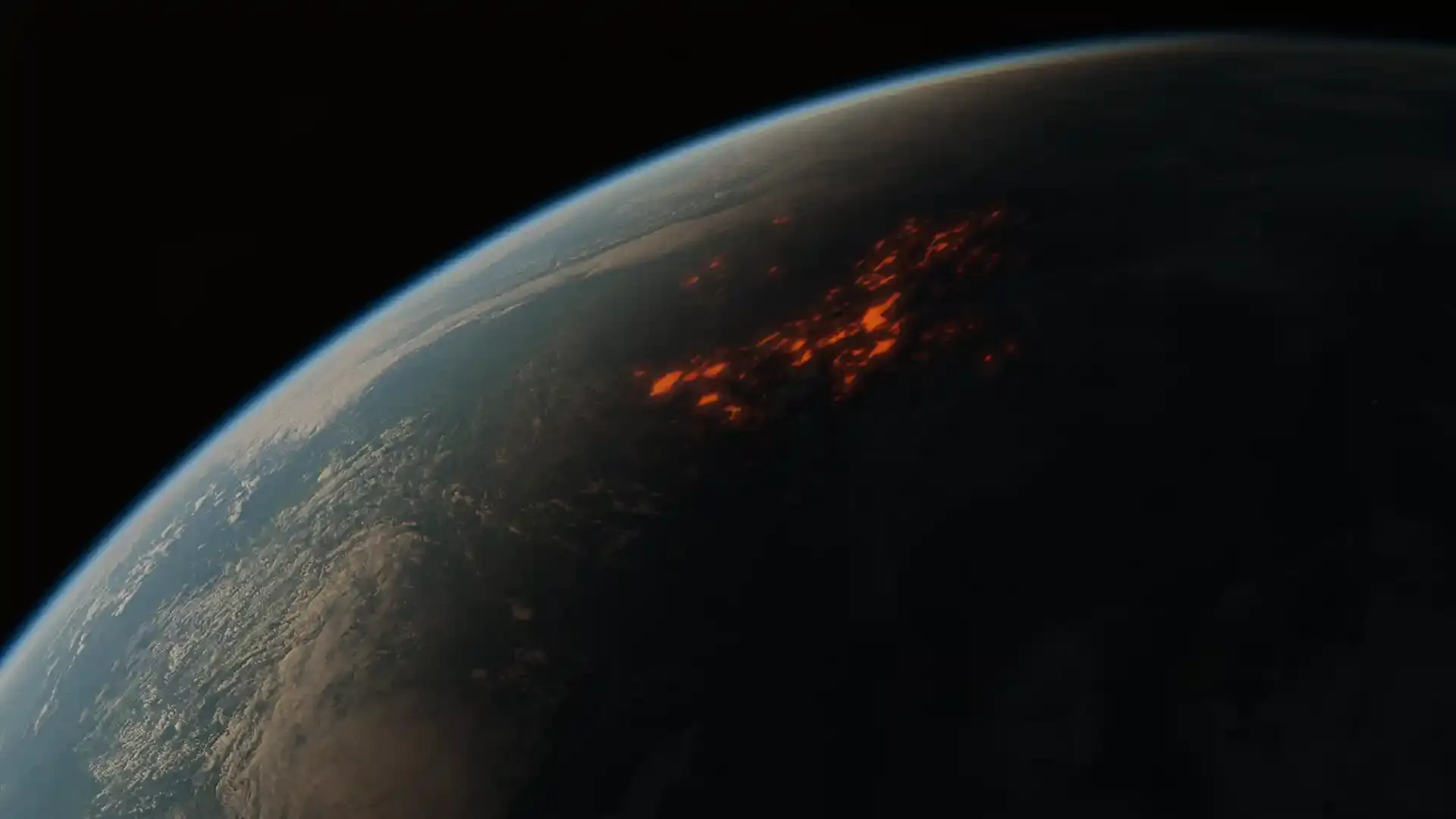
The second is that our planet is rapidly warming right now, thanks to human activity generating a lot of greenhouse gases over a very short period of time. So, in some ways, we’re seeing many of the same effects the Siberian Traps caused (like rising global temperatures and ocean acidification) playing out again – different ultimate cause, but similar “situation.”
Were the species that lived in the Permian Period “dinosaurs?“
No, the Permian Period took place before the first dinosaurs evolved. It’s undeniable that dinosaurs are a popular, iconic part of natural history, but not every ancient animal that lived in the past was a dinosaur, which is part of why we chose to focus on the Permian for Eons: Life and Death on Pangea.
Paleontologists (and other kinds of biologists) classify living organisms based on who they’re related to, and many of the fascinating creatures that make up the fauna of the Permian were actually more closely related to us humans than they were to dinosaurs. The most famous of these ancient mammal-relatives is probably Dimetrodon, but there were a ton of other synapsids (the name for the branch of the tree of life that we also belong to) that populated the Permian landscape, too, and we’re excited for you to meet them in our show.
What makes a synapsid a synapsid? Did mammals evolve from synapsids, or did they have some other common ancestor? Are humans synapsids?
One way to define a synapsid is by who they’re related to. The synapsid story starts with the evolution of a group of animals called amniotes, who had adaptations for life on land that included laying eggs with shells (“amniotic eggs“). Then, over 300 million years ago, amniotes split into two major groups: sauropsids and synapsids.
The sauropsids are the reptile branch of the tree of life (and they’re pretty reptile-like from the start) and the synapsids are the branch that would eventually evolve into mammals. So, mammals (including humans) are synapsids, like a square is a rectangle. In the fossil record, we can see that there used to be other groups of synapsids (like the one included the famous Dimetrodon and its relatives, for example), but that they went extinct over time, leaving mammals as the only synapsids alive today.
Another way to define a synapsid is by what traits make this group of animals different from other groups, like the sauropsids. The most classic trait used to tell if an animal is a synapsid is if it has a single opening in its skull behind its eye socket, called a temporal fenestra (but research about whether that’s truly unique or not is ongoing).
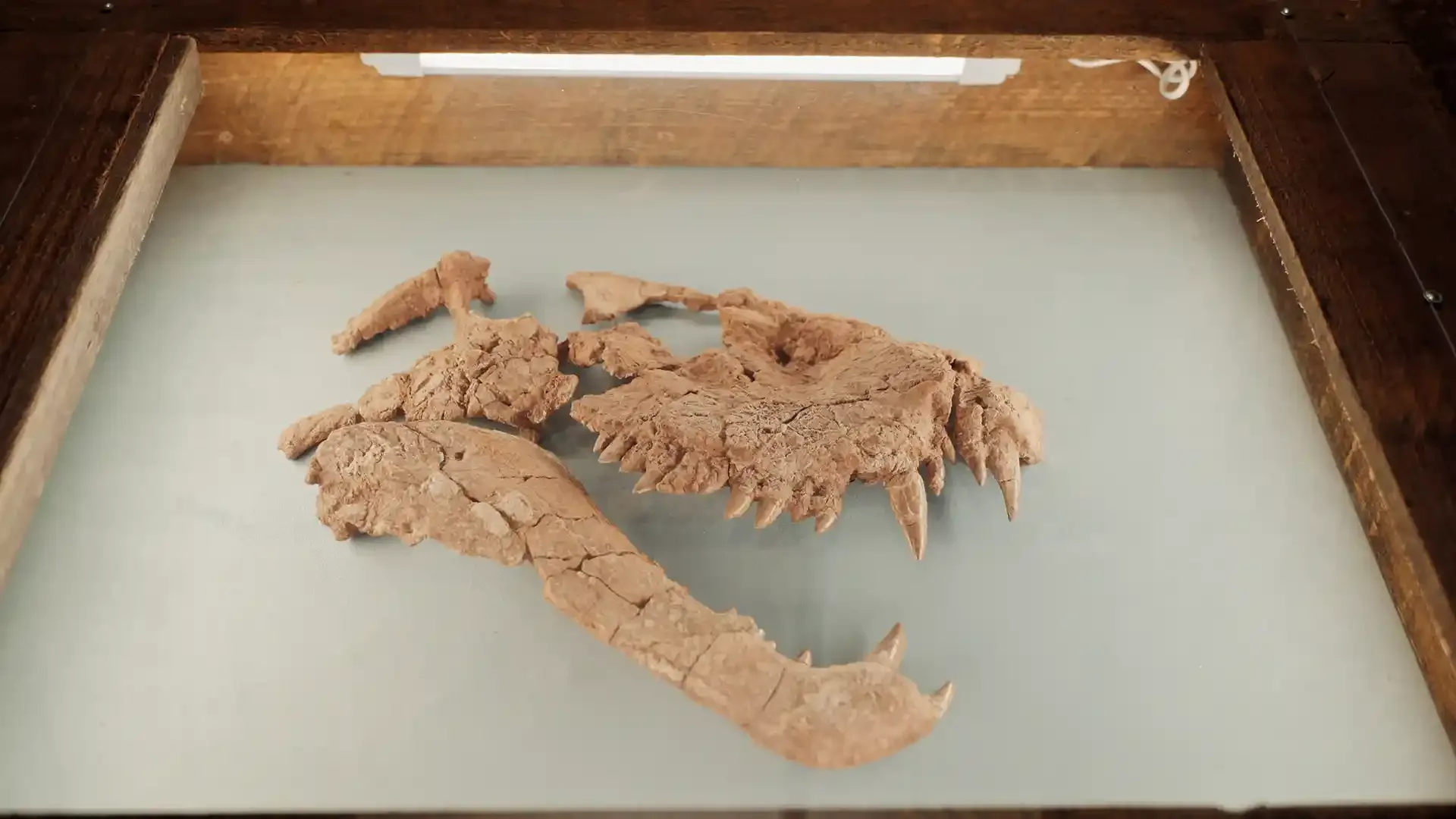
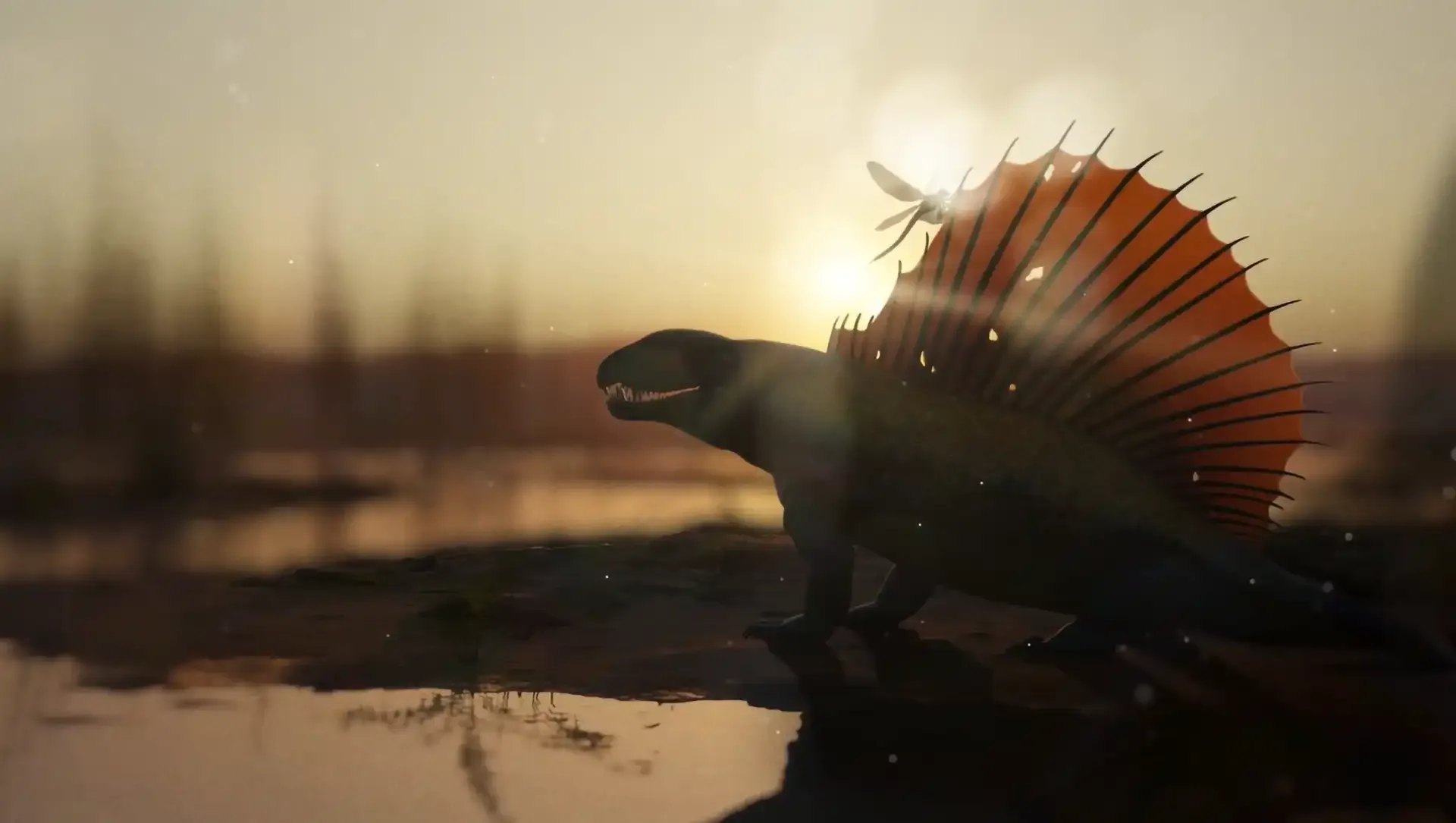
Any chance that Dimetrodon and Edaphosaurus might have literally used their dorsal sails to sail?
Funny you should ask! In 1886, a paleontologist named Edward Drinker Cope actually proposed this as a hypothesis. The long spines that made up the sail would’ve acted like a ship’s masts, with the skin in between them catching the breeze.
It doesn’t seem like this idea was taken seriously though, even in the late 1800s, and by 1907 it was clear from the rest of their anatomy that these species were landlubbers. The function of the sail remains a mystery to this day, but what we can say is that this anatomical anomaly seems a lot more common to Permian animals than modern ones, which is part of what makes it so hard to figure out!
Can’t get enough natural history content? Be sure to check out Eons: Life and Death on Pangea, now streaming on PBS.org and the PBS app.
Add to your watchlist
The best of PBS, straight to your inbox.
Be the first to know about what to watch, exclusive previews, and updates from PBS.