The Permian Period is perhaps most famous for the way it ended: with The Great Dying, the worst mass extinction of all time that wiped out nearly all complex life on Earth. But there was so much more to the Permian than just disaster and death. Over most of the Period – the nearly 50 million years leading up to that apocalyptic event – Permian species were thriving. And they evolved into a dazzling array of bizarre and incredible forms that still leave us awestruck today.
Before the Great Dying, there was a lot of pretty great living going on, too. Here are some of the weirdest, most wonderful, and often-unappreciated animals from the Permian Period that we would like you to meet.
To learn more about the fascinating animal species that populated the Permian Period, and how they met their untimely end in the Great Dying, be sure to check out “Eons: Life and Death on Pangea,” which premieres on July 29, 2026.
Add to your watchlist1. Helicoprion
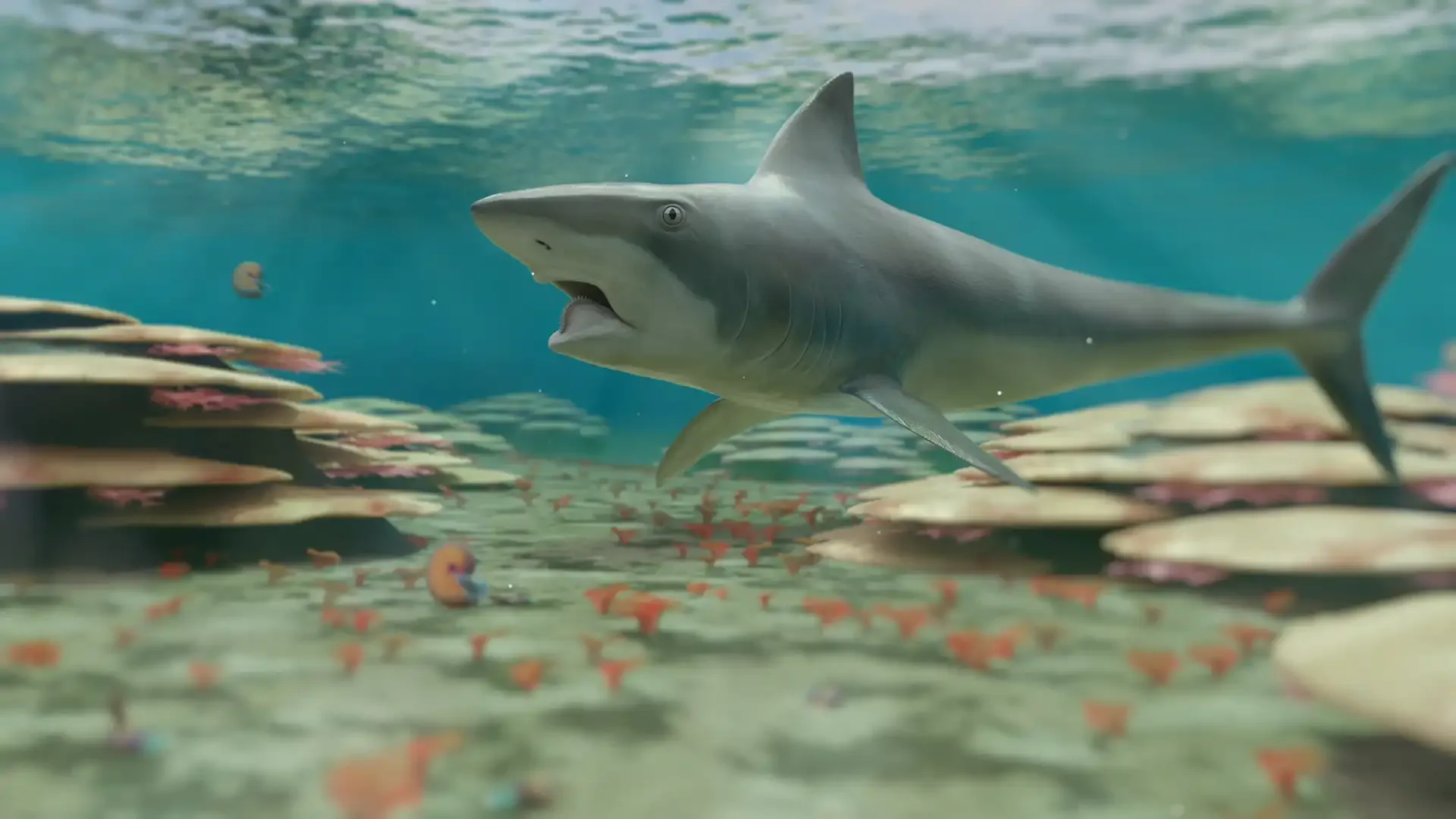
In the oceans of the Early to Middle Permian lurked one the biggest and most confusing beasts of the entire Period: Helicoprion, a shark-like animal so strange that it blew our minds for over a century.
Ancient sharks being annoyingly mysterious is nothing new in paleontology. Shark skeletons are mostly made of cartilage, which doesn’t fossilize nearly as well as bone does. So the fossil record of ancient shark species and their relatives is written mainly in teeth, generally the only “hard evidence” they left behind.
In the case of Helicoprion though, its teeth are, ironically, the most confusing thing about it. They’re arranged in these giant circular whorls, unlike any other species we know of. Since their discovery in the late 1800s, researchers have been trying to figure out what these tooth whorls were used for, why they evolved, and where they fit on Helicoprion. It wasn’t even clear that these jaw-dropping tooth structures had, well, dropped from Helicoprion’s jaws in the first place. Some scientists proposed that they had sprouted from the animal’s fins, tail, or snout instead, as defensive structures, for example. Today, researchers think that they’ve finally figured it out: Helicoprion had a single big whorl nestled in the center of its lower jaw, which it used to hook and slice up soft prey like squid.
Even though the mystery of Helicoprion’s buzzsaw jaws may now be solved, it continues to remind us of something crucial about the Permian Period as a whole. It was so far back in deep time that species were often living and behaving in ways (and using traits) that simply have no modern analogues. So when we’re trying to figure them out, we’re limited not just by fossils, but also sometimes by our imagination, too.
2. Cotylorhynchus
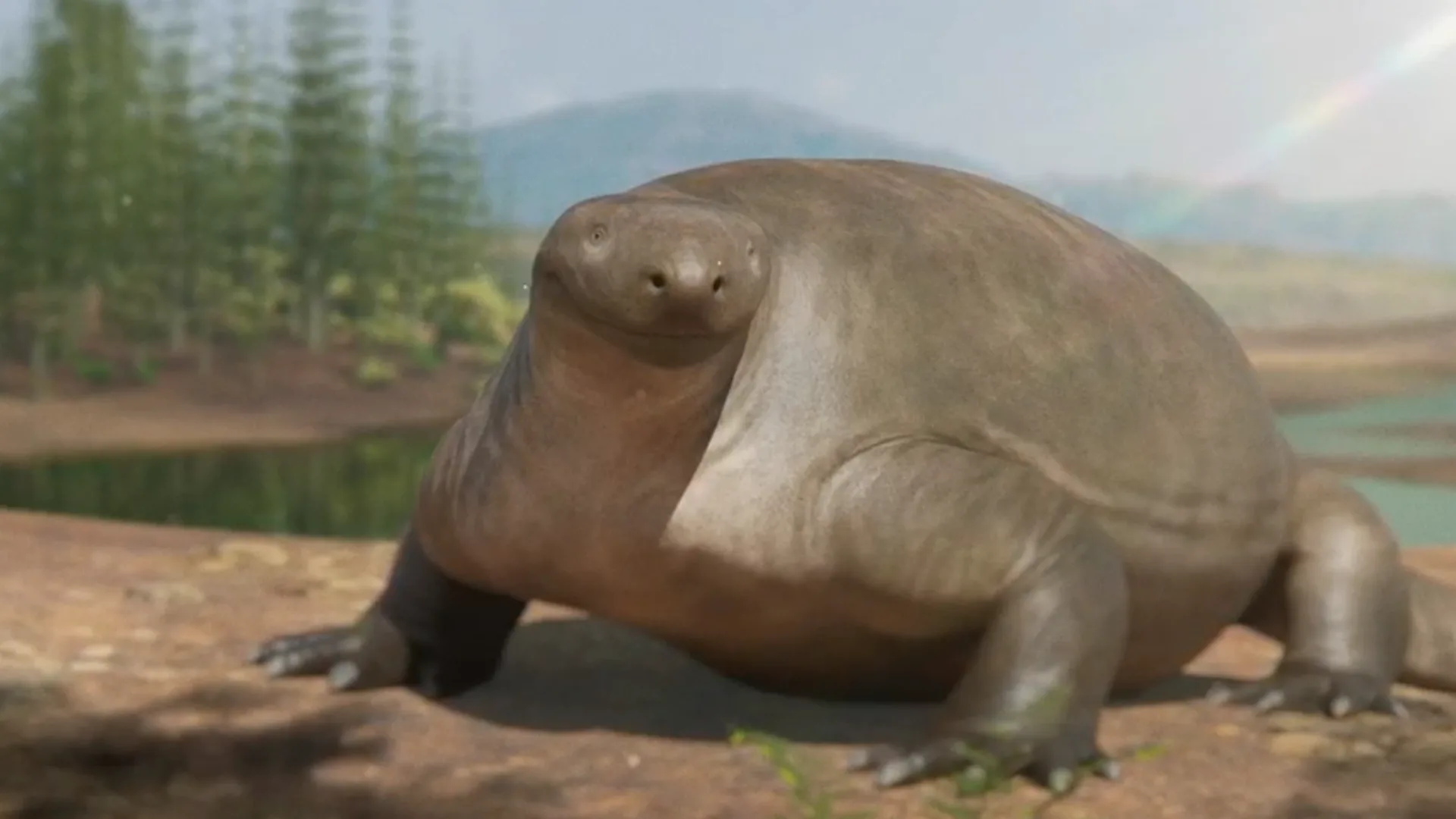
Above the waves, Early Permian animals were just as absurd. Take Cotylorhynchus from the Early Permian, for example, one of the first really big, fully terrestrial vertebrates, and one of the first to figure out eating plants full-time. It was one of the very earliest land animals to fit the big herbivore niche, which has been filled many times in the hundreds of millions of years since, from Triceratops to modern cows.
But the mix of solutions that Cotylorhynchus settled on for this radical new lifestyle of “Being Big” And “Eating Plants” was pretty unique in the history of life on Earth… Meaning that to us today, its proportions just seem kind of ridiculous. It had a huge, barrel-shaped body for fermenting and digesting large amounts of plant matter, supported by short and thick sprawling limbs that allowed it to waddle around on land. But perhaps most quirky of all was its absolutely tiny head that kind of looks like it was transplanted onto its huge body from a different, much smaller animal.
The unique mosaic of traits that Cotylorhynchus evolved as it ballooned up and turned vegetarian represents just one of many strange evolutionary experiments in the Permian. And it reflects a key reason that life on land in this time period often feels a little bit wrong somehow. Many species were adapting to the challenges of the terrestrial realm for the very first time, and getting kind of weird with it in the process. And seeing as it was one of the first-ever big land herbivores, Cotylorhynchus doesn’t just seem strange to us today, it was a bona-fide weirdo in its own time, too.
Support your local PBS station in our mission to inspire, enrich, and educate.
3. Dimetrodon
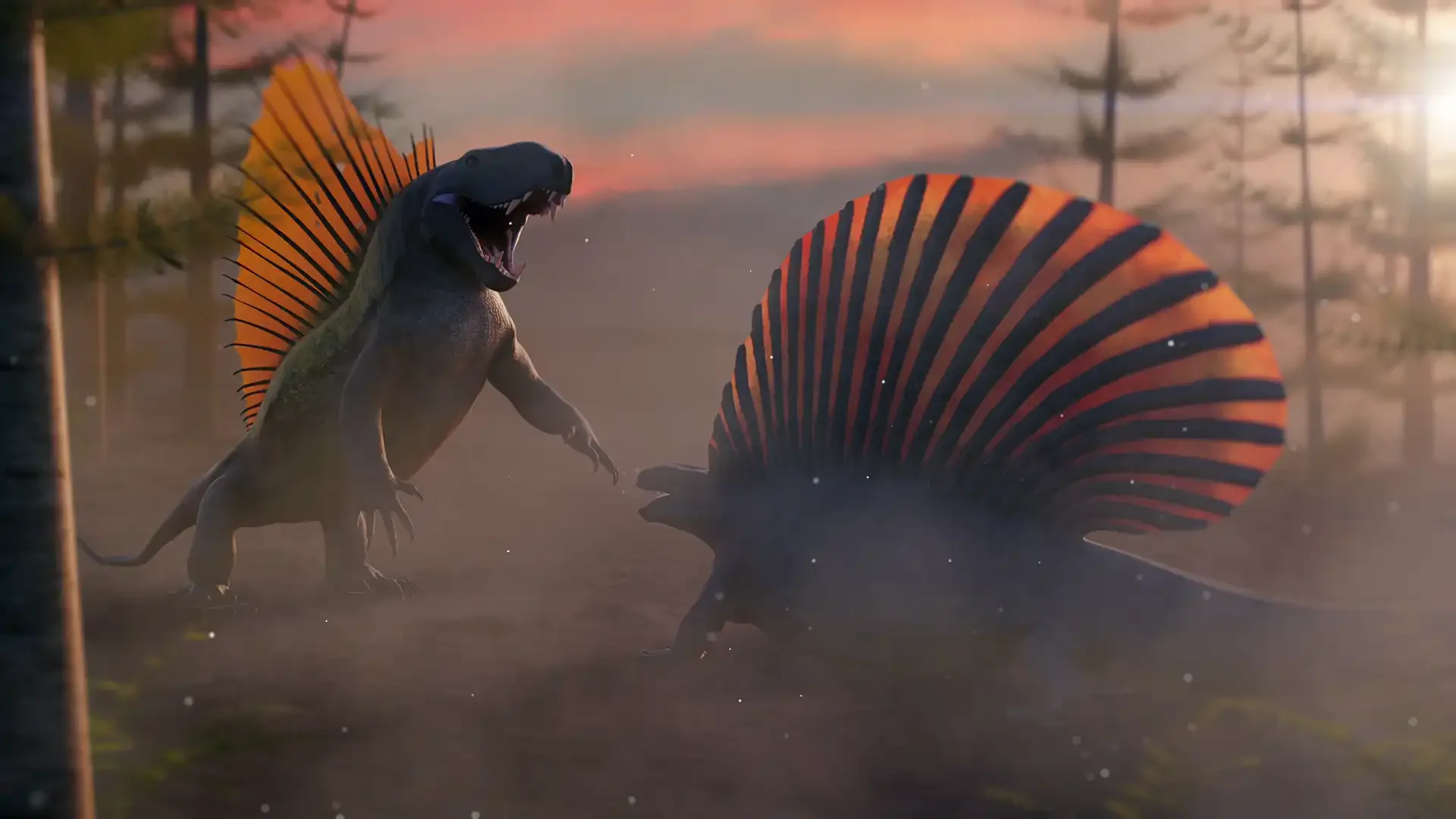
Every ecosystem on land has its “top dog” - a large apex predator that sits right at the peak of the food chain and feasts on the species below it. Think tigers, polar bears, or wolves, for example. Our next Permian animal basically invented this way of life. It was the first big apex predator that life on land ever saw.
Say hello to Dimetrodon. Appropriately for an animal with such main character energy, Dimetrodon has become something of a poster child for the Permian Period as a whole. Not just because it was a pioneering predator of the Early Permian, but for a couple of other big reasons as well.
For one, despite looking superficially like some kind of proto-dinosaur, Dimetrodon was actually a synapsid. This means that it was much more closely related to us mammals than to reptiles, making it an ancient cousin of you and me.
And secondly, it had that unmistakable sail. Even though it’s perhaps the single largest and most obvious trait of Dimetrodon, we actually don’t really know what the point of it was. Many hypotheses have come and gone over the years, like that it functioned as a literal sail that allowed Dimetrodon to catch the wind and cruise around Permian lakes, for example. Or that it was a big biological radiator for cooling down and warming up Dimetrodon’s body as needed. Or maybe it was actually a giant billboard for communication and display, including intimidating rivals and winning over mates. The truth is, like so many details about life in the Permian, we just don’t know for sure.
4. Inostrancevia
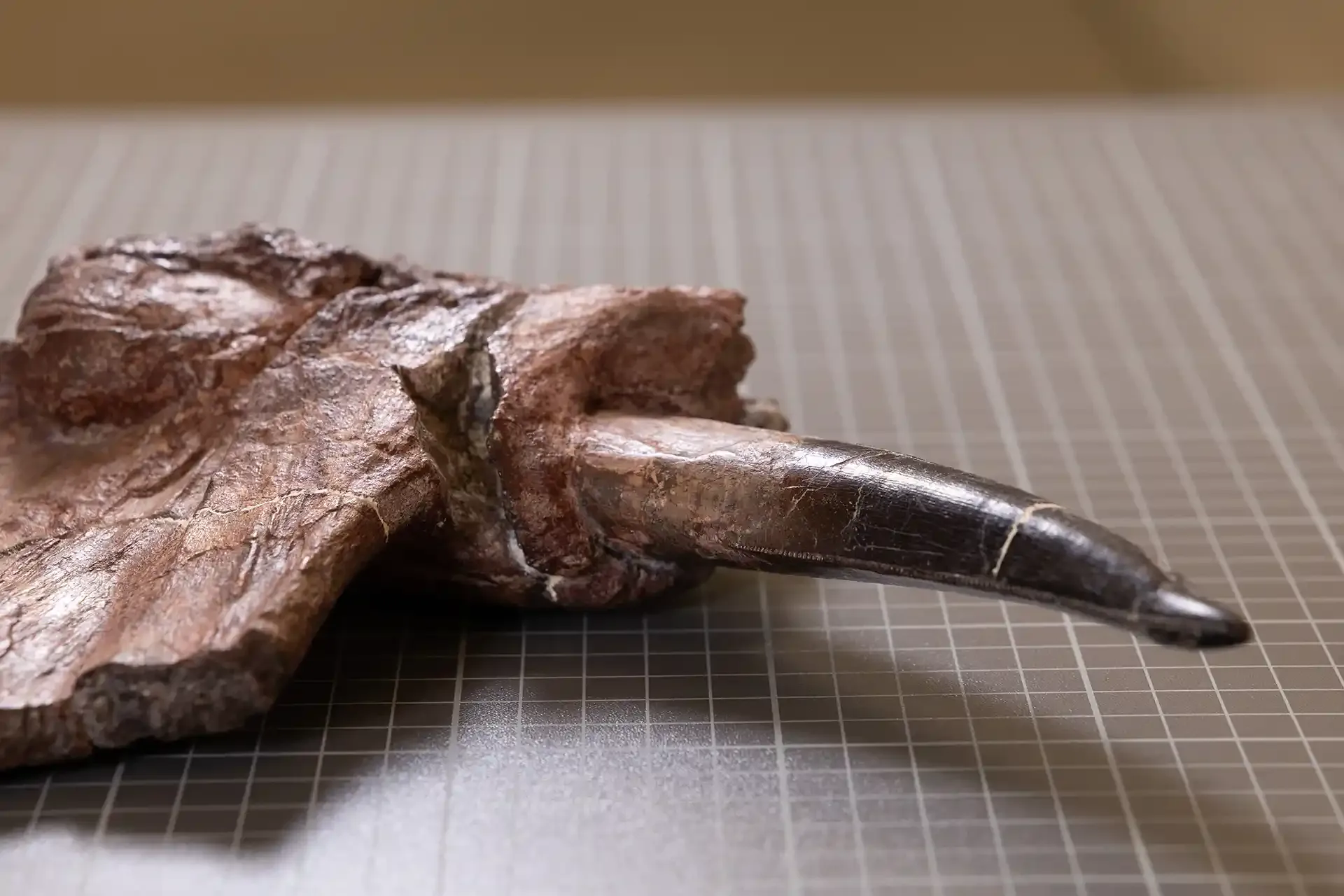
While Dimetrodon was the terrestrial realm’s first-ever big apex predator in the Early Permian, by the Late Permian, that apex predator crown had passed to another, more agile and ferocious carnivore: Inostrancevia.
Inostrancevia was a tiger-sized member of a synapsid group called the gorgonopsians. Unlike Dimetrodon, who was a slow-moving, lumbering ambush predator that snatched up prey with its jaws and held on, gorgonopsians like Inostrancevia took the concept of predation to the next level. They could move in bursts of speed, chasing down fleeing prey if needed. It was a kind of “Dimetrodon walked so Inostrancevia could run” situation.
Plus, they could use their forearms to pin down prey while inflicting deep wounds with their powerful jaws and deadly saber teeth. These were animals specialized for causing maximum damage with every bite. It’s a strategy that has evolved in similar ways in other species since, including in the famous saber-tooth cats of the most recent ice age, for example.
But the saber-teeth of the gorgonopsians were a first for their time, and with them, Inostrancevia rose to become one of the terrestrial realm’s most fearsome apex predators during the Late Permian. Eventually though, their reign was suddenly cut short. At the very end of the Permian, the Great Dying triggered a near-total ecological collapse that wiped out the large prey populations that apex predators require. And without a stable food chain to support them, Inostrancevia and the other gorgonopsians disappeared forever, along with the vast majority of all other species, when the mass extinction hit.
5. Lystrosaurus
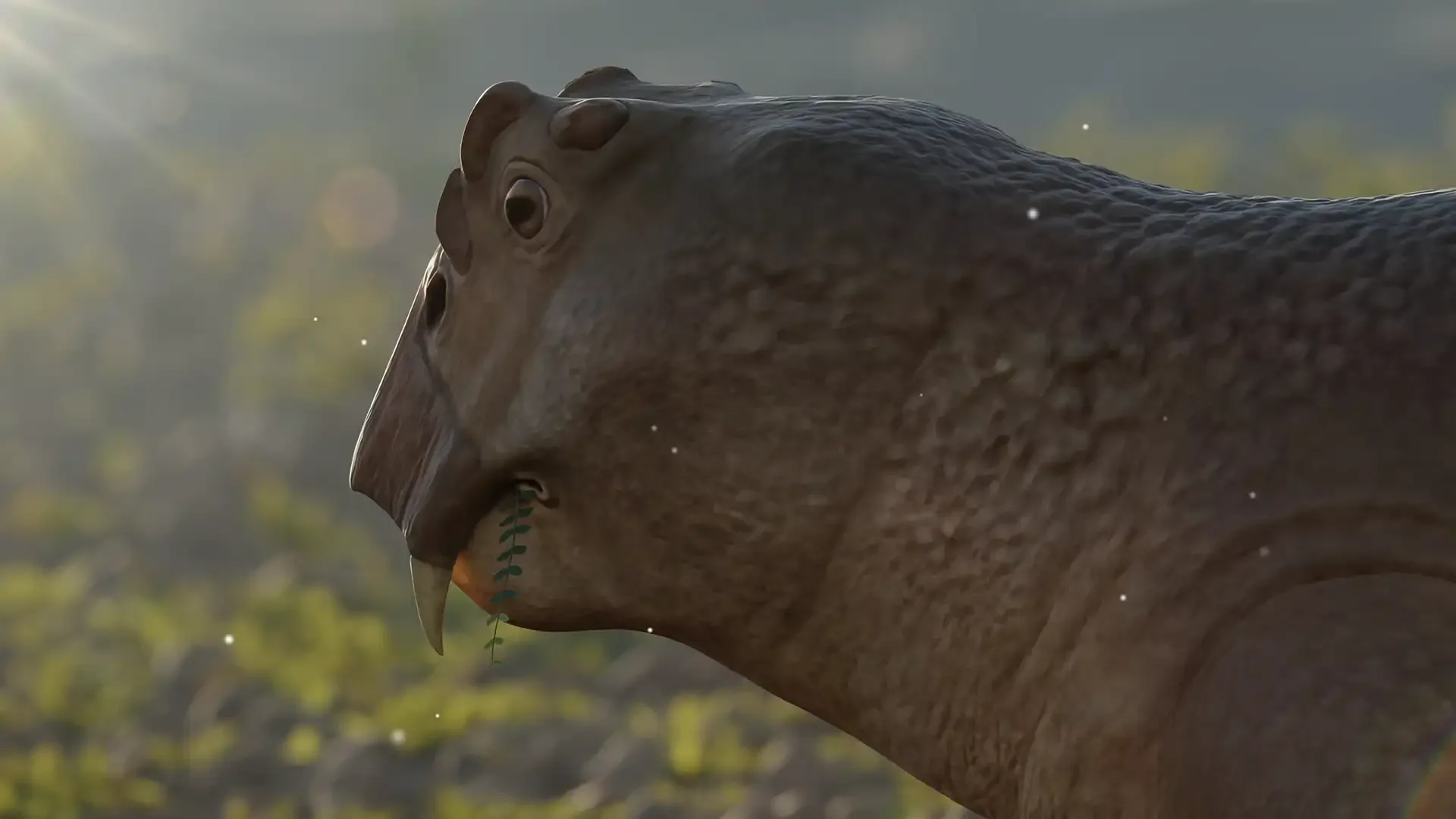
This next animal is perhaps the strangest one of all – and for the strangest reason, too. It was nothing much to look at, just a beaked and leathery pig-sized herbivore, but this little goofball was the big winner of the worst extinction event of all time, and it seems to have basically ruled the world in its aftermath.
Its name is Lystrosaurus and it was a synapsid cousin of ours that first evolved in the Late Permian. Initially, it was just a minor and unassuming burrowing plant-eater in a world dominated by larger and flashier species. But when the Great Dying hit, and almost all those other species were driven extinct, Lystrosaurus didn’t just survive, it flourished.
For the first few million years after the extinction event, in the Early Triassic Period, the fossil record of vertebrate life on land is full of almost nothing but Lystrosaurus. At some sites that capture the wreckage of ecosystems right after the mass extinction, Lystrosaurus alone represents around 95% of all terrestrial vertebrates that we find. And this almost-complete ecological dominance means that, from a certain point of view, Lystrosaurus was briefly one of the single most successful animals in the entire history of life.
Now, we’re not sure exactly why it did so well after the worst-ever mass extinction. Maybe it was thanks to its ability to dig up, and survive off of, roots and tubers in harsh conditions, or its ability to burrow to escape chaos above ground. Or maybe it just got really lucky and found itself in a world without any remaining competitors or predators.
In any case, Lystrosaurus earned the official designation of a “Disaster Taxon” – a rare title in paleontology given only to species that somehow thrive against all the odds when the world is falling apart around them.
Can’t get enough of natural history or the weird animal species that came before us? Then be sure to check out “Eons: Life and Death on Pangea,” premiering July 29th, 2026 on PBS.org and the PBS app.
Add to your watchlist
The PBS ‘What to Watch’ Weekly Newsletter
What to Watch delivers the best shows and content PBS has to offer each week.