SUMMARY
We are in commencement season, when graduates look back on their accomplishments and look ahead to their future ambitions. But shifts in the economy and the anxiety around it are changing how this generation sees their prospects. Ali Rogin speaks with New York Times reporter Jodi Kantor about her book, "How to Start: Discovering Your Life's Work."
View the transcript of the story.
NOTE: If you are short on time, watch the video and complete this See, Think, Wonder activity: What did you notice? What did the story make you think? What would you want to learn more about?
News alternative: Check our recent segments from the News Hour, and choose the story you’re most interested in watching. You can make a Google doc copy of discussion questions that work for any of the stories here.
WARM-UP QUESTIONS
- What is the unemployment rate for recent graduates between the ages of 22 and 27?
- How did graduates respond to commencement speeches praising developments in AI?
- Who is Jodi Kantor?
- Why are students so worried about getting into the job market, according to Kantor?
- What advice does Kantor provide to graduates to have a positive, productive response to this "very intimidating and degrading environment"?
ESSENTIAL QUESTIONS
- Jodi Kantor cautions against putting too much trust in predictions about the future of the workplace, such as the message that AI will replace entry-level workers. Do you agree with Kantor's advice? Why or why not?
- What skill or interest do you have, or hope to learn more about, and how can this skill be developed?
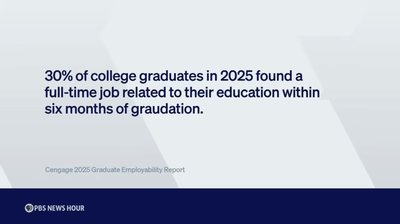
Media literacy: Take a look at the infographic included at the end of the News Hour segment. Why do you think this infographic was included? What important questions does it raise, and what other information do you think it would be useful to include?
WHAT STUDENTS CAN DO
Now it's your turn to examine the data. Go to the Cengage 2025 Graduate Employability Report linked here. Below are some data points from the report. Examine and answer the following questions.
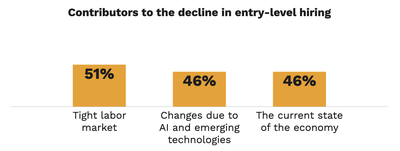
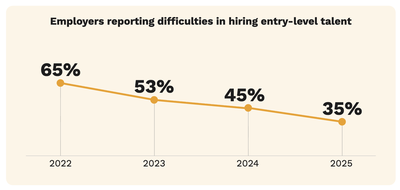
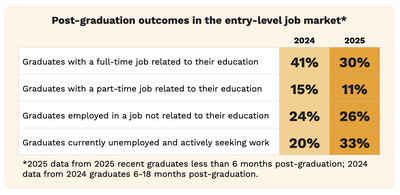
- What overall message are the graphs conveying?
- Did this data surprise you? Why or why not?
- What questions do you still have about the data?
- What issues do you think could affect this data in the future? How so?
During the News Hour segment, Jodi Kantor discusses how the job hiring process is A.I.-fueled right now. According to the World Economic Forum, about 88% of companies already use some form of AI for initial candidate screening to filter or rank job applications.
Learn more about the way bias is embedded into these AI-powered hiring algorithms using the resources below:
- Stanford University: AI Hiring Tools Can Yield Racial Bias and Systemic Rejection
- Brookings: Gender, race, and intersectional bias in AI resume screening via language model retrieval
Consider the following questions:
- What are some similarities and differences between the data found in the Stanford University study and the Brookings study?
- Did any data surprise you? Why or why not?
- What ideas do you have for combatting bias in AI-powered hiring algorithms?
Written by Claudia Caruso, PBS News Hour Classroom's intern, and News Hour's Victoria Pasquantonio
Sign up to receive our weekly newsletter with Daily News Lessons and community events.
To provide feedback on News Hour Classroom's resources, including this lesson, click here.