|
 GEN.
GUILLERMO GARIN: Of course, after the battle there are many who feel
they are generals and state their opinions about what happened. The
truth is that in life any important experience leaves many lessons,
which allow, if the situations are repeated, to avoid the mistakes that
are unavoidably made. There is no doubt that things would have been
done differently if the events were repeated. The military intervention
of 1973 was not planned in great detail, nor was it sought by the armed
forces. The situation of the country had gone beyond any acceptable
limits. National harmony had been completely destroyed. It was the nation
which asked for the intervention of the armed forces and of course,
we were not really prepared for that. Our tasks are others, very specific
ones. The armed forces have always been very professional, and consequently
our field was always the military field, not the political, economic
or social areas, which we had to approach with the most energy and sense
of responsibility possible after 1973. GEN.
GUILLERMO GARIN: Of course, after the battle there are many who feel
they are generals and state their opinions about what happened. The
truth is that in life any important experience leaves many lessons,
which allow, if the situations are repeated, to avoid the mistakes that
are unavoidably made. There is no doubt that things would have been
done differently if the events were repeated. The military intervention
of 1973 was not planned in great detail, nor was it sought by the armed
forces. The situation of the country had gone beyond any acceptable
limits. National harmony had been completely destroyed. It was the nation
which asked for the intervention of the armed forces and of course,
we were not really prepared for that. Our tasks are others, very specific
ones. The armed forces have always been very professional, and consequently
our field was always the military field, not the political, economic
or social areas, which we had to approach with the most energy and sense
of responsibility possible after 1973.
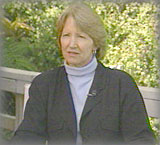 ELIZABETH
FARNSWORTH: And did you think at the time that the military would be
holding power and the presidency for so many years? ELIZABETH
FARNSWORTH: And did you think at the time that the military would be
holding power and the presidency for so many years?
GEN. GUILLERMO GARIN: Well, actually I was just a captain at the time,
but I am totally convinced that our authorities, the president who was
General Augusto Pinochet, made a careful analysis from the moment they
took power in Chile, which allowed them to assess the damage that has
been done to Chile and the stagnation the country had been going through
for many years. Not only during the Marxist-Leninist government of Allende
but for many years we had been experiencing a growth rate that showed
the nation was lagging behind neighboring countries and the rest of
Latin America. Therefore, they reached the conclusion that goals, not
timeframes, were needed and such goals had to be reached in the shortest
time in order to restore normalcy to the country and restore the freedoms
and the level of progress enjoyed in the past. This was imperative in
order to bring people out of extreme poverty, and return to the path
of progress the country enjoyed in the distant past. So, I have no doubts
whatsoever that the authorities at the time concluded that the period
they were about to begin would not be brief.
|
 |
|
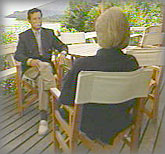 ELIZABETH
FARNSWORTH: We have noticed here in interviews that there's an impasse.
Those who believed they suffered during those years want one thing.
Those who believe they saved the nation do not want those same things
-- that alleged torturers be brought to trial, for example. How could
one break that impasse? ELIZABETH
FARNSWORTH: We have noticed here in interviews that there's an impasse.
Those who believed they suffered during those years want one thing.
Those who believe they saved the nation do not want those same things
-- that alleged torturers be brought to trial, for example. How could
one break that impasse?
GEN. GUILLERMO GARIN: There is little doubt that the vision one has
of that reality depends on which side you are on. Of course there are
those who felt they were harmed when the armed forces intervened in
1973 and then during the subsequent process in which political liberties
were restricted -- mainly those extremist sectors who dominated for
some time and who had to be restrained with determination. In this [sort
of] struggle, and this is well known by countries who have had these
kind of conflicts, mistakes are made, maybe even abuses. Now, 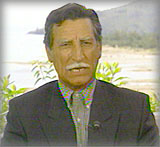 there
is little doubt that the purpose of waging this struggle energetically
was to achieve the stability of the country as soon as possible and
avoid terrorism, to stop subversion from increasingly injuring the mass
of citizens, who also have human rights. Maybe it was the lesser of
two evils. I acknowledge that a shot fired against a fellow countryman
is an aberration. Someone dying, no matter how it happens, is bad. But,
regrettably, when there are extremist sectors, when there is subversion,
when there is terrorism looming, instigated from some other place as
a means to achieve political ends, repression must take place. And consequently
mistakes are made in such struggle. The agencies in charge -- and they
weren't the armed forces specifically -- there were specialized organizations
which were devoted to those ends -- had to wage such battle and possibly
made mistakes. I acknowledge that this is bad. It is bad, I am not going
to lie, a dead person is bad. That is, if there were 3,000 victims of
this process on one side and there
is little doubt that the purpose of waging this struggle energetically
was to achieve the stability of the country as soon as possible and
avoid terrorism, to stop subversion from increasingly injuring the mass
of citizens, who also have human rights. Maybe it was the lesser of
two evils. I acknowledge that a shot fired against a fellow countryman
is an aberration. Someone dying, no matter how it happens, is bad. But,
regrettably, when there are extremist sectors, when there is subversion,
when there is terrorism looming, instigated from some other place as
a means to achieve political ends, repression must take place. And consequently
mistakes are made in such struggle. The agencies in charge -- and they
weren't the armed forces specifically -- there were specialized organizations
which were devoted to those ends -- had to wage such battle and possibly
made mistakes. I acknowledge that this is bad. It is bad, I am not going
to lie, a dead person is bad. That is, if there were 3,000 victims of
this process on one side and  a
like number on our side which has not been mentioned or condemned, that
is bad. But that is the price we had to pay for a process we did not
start. Our people, who fought in that war against subversion did it
with the loftiest purpose, maybe they made mistakes. Some have been
tried, many of them, but their motivation was not selfish. No one got
rich in this struggle, which affected many because they had to work
clandestinely, to infiltrate the subversive activities. It was a very
rough battle then, many people are being persecuted today and many are
being tried, and they have no money to pay their lawyers. a
like number on our side which has not been mentioned or condemned, that
is bad. But that is the price we had to pay for a process we did not
start. Our people, who fought in that war against subversion did it
with the loftiest purpose, maybe they made mistakes. Some have been
tried, many of them, but their motivation was not selfish. No one got
rich in this struggle, which affected many because they had to work
clandestinely, to infiltrate the subversive activities. It was a very
rough battle then, many people are being persecuted today and many are
being tried, and they have no money to pay their lawyers.
These are things from thirty years ago. Perhaps the negative thing
about all this is precisely that it is affecting the national life…today.
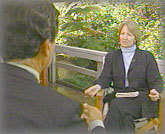 ELIZABETH
FARNSWORTH: For instance, let's take an example -- someone I met on
this trip who was tortured in Villa Grimaldi. He suffered horribly.
He wants justice. How [do you] give him that and also meet what you
think must be done? Is there a way out? ELIZABETH
FARNSWORTH: For instance, let's take an example -- someone I met on
this trip who was tortured in Villa Grimaldi. He suffered horribly.
He wants justice. How [do you] give him that and also meet what you
think must be done? Is there a way out?
GEN. GUILLERMO GARIN: There is no easy way out. I think that the only
way those people who actually suffered an unjust treatment is to compensate
them materially, once the injustice is proved. Because there is also
a lot of fiction. There many who say they were detained…or disappeared…and
say the armed forces did it. We don't know exactly who made them disappear.
There was a very strong confrontation in Chile, much hate. You can see
how hatred we thought dormant has risen again recently. It is tremendously
difficult to prove the facts in those situations  and
therefore be just, to make justice. All kinds of laws have been enacted
to deal with that period which was so traumatic for the whole country
up until 1978 -- there's an amnesty, for example, which was enacted
because there's no way to faithfully recreate those facts; they are
distorted by time; and they are being distorted by the manner they are
posed now politically. Consequently, countries have always been wise
in that sense and have applied amnesties when something like this has
happened. Chile did it in the distant past. The current amnesty law
was enacted in 1978 and was interpreted in a certain way because it
was understood there was no way to reproduce the actions which had taken
place in such a traumatic period. But after 1990 it has been reinterpreted… and
therefore be just, to make justice. All kinds of laws have been enacted
to deal with that period which was so traumatic for the whole country
up until 1978 -- there's an amnesty, for example, which was enacted
because there's no way to faithfully recreate those facts; they are
distorted by time; and they are being distorted by the manner they are
posed now politically. Consequently, countries have always been wise
in that sense and have applied amnesties when something like this has
happened. Chile did it in the distant past. The current amnesty law
was enacted in 1978 and was interpreted in a certain way because it
was understood there was no way to reproduce the actions which had taken
place in such a traumatic period. But after 1990 it has been reinterpreted…
[Editor's note: Chile's Supreme Court ruled in 1998 that the amnesty
did not apply to cases in which a person has "disappeared,"
because disappearance is a "continuing" crime. The amnesty
covered human rights crimes committed between 1973 and 1978.]
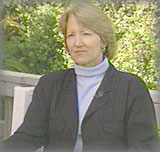 ELIZABETH
FARNSWORTH: What do you think of that reinterpration? ELIZABETH
FARNSWORTH: What do you think of that reinterpration?
GEN. GUILLERMO GARIN: It's a big mistake. This has done great harm to
the country. Since that time, hatreds have come to the surface. Who's
going to benefit from putting a man of such advanced age [as Pinochet]
in prison? How will this benefit the victim? There is no possibility
that it will be fair. They would need to have the exact reproduction
of the scene of what happened in those years. And that is impossible.
I think the only way to compensate -- I don't know if this is the right
term -- to offset the damage caused is in a material form; because the
other thing seems like vengeance which may be very unjust.

|
 |