 |
|
 |
 |
| GEN. GUILLERMO GARIN | |
 February 23, 2000 
|
||
|
|
Editor's Note: This interview was conducted
in Spanish Feb. 23, 2000, shortly before the decision was announced
in London to return Augusto Pinochet to his home in Santiago on the
grounds of ill health. Brackets indicate editor's clarifications to
place questions in context. |
|
GEN. GUILLERMO GARIN: I worked for many years in important positions. I became Vice-commander in Chief of the Army, and I positively know that the armed forces, at least the Army of Chile, have no records anywhere like that. It was not their task. I don't believe any organization had such records. |
||||||||||||||||||||||
| A changing political landscape? | |||||||||||||||||||||||
|
ELIZABETH FARNSWORTH: How has the situation here changed because of the arrest of General Pinochet [in England].
GEN. GUILLERMO GARIN: If there are complaints or suits against him, court proceedings must go forward. But that does not mean that he should be convicted. I am convinced he cannot be convicted. Now there is something that is very important to me. This should not be affected by what happened outside of the country. Whatever happened to him outside Chile should not affect what happens here. They stepped over our national dignity they violated our institutions and our jurisdiction. ELIZABETH FARNSWORTH: What does the election of President Lagos mean to you? [Ricardo Lagos, of the Socialist Party, was elected president in January and inaugurated March 11. His opponent was center-right candidate Joaquin Lavin.]
|
 |
||||||||||||||||||||||
| Looking back | |||||||||||||||||||||||
|
ELIZABETH FARNSWORTH: What are you most proud of accomplishing after 1973? GEN. GUILLERMO GARIN: This country is totally different from the one
of 1973. I think that the changes, even with the errors we may have
committed, have been for the well-being of Chileans. In every aspect
of real life, ELIZABETH FARNSWORTH: Which things do you regret the most after 1973?
|
 |
||||||||||||||||||||||
| Finding the "disappeared" | |||||||||||||||||||||||
|
ELIZABETH FARNSWORTH: What do you think of the "Mesa de Dialogo" -- the round-table of representatives from the military, religious and human rights community which is trying to come up with a way to find the "disappeared."
I am not very optimistic in that regard. I think it won't happen because the information must be very precise. I think it is very difficult, but the effort must be made. That is what the "Mesa de Dialogo" is supposed to figure out. I am convinced that it is logical to think that if there is no protection for the one with information, that person will never deliver it. If it exists and there is legal protection maybe some truth can be found. |
 |
||||||||||||||||||||||



 ELIZABETH
FARNSWORTH: Do you believe there are records somewhere that could help
locate the disappeared?
ELIZABETH
FARNSWORTH: Do you believe there are records somewhere that could help
locate the disappeared? 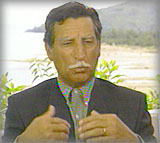 GEN.
GUILLERMO GARIN: Up until that moment I saw with much optimism how national
harmony was evolving, how the political sectors were relating to each
other. The arrest occurred -- we consider it a kidnapping -- of General
Pinochet in London; and the attitude of many Chileans changed. Hatred
surfaced in ways that were surprising for me. And very negative, I believe.
Because wounds have been opened that I thought had been healed well.
That makes me think that in the future it will take a lot to return
to what we had before the arrest of General Pinochet, and to retake
the correct path to forgive each other and for Chileans to live in peace
and harmony. I recognize that the mothers and children who lost someone
in this traumatic period of national life have a full right to feel
all possible pain and grief; but we must go on, we must find the formula
that will allow us to continue living in harmony in Chile.
GEN.
GUILLERMO GARIN: Up until that moment I saw with much optimism how national
harmony was evolving, how the political sectors were relating to each
other. The arrest occurred -- we consider it a kidnapping -- of General
Pinochet in London; and the attitude of many Chileans changed. Hatred
surfaced in ways that were surprising for me. And very negative, I believe.
Because wounds have been opened that I thought had been healed well.
That makes me think that in the future it will take a lot to return
to what we had before the arrest of General Pinochet, and to retake
the correct path to forgive each other and for Chileans to live in peace
and harmony. I recognize that the mothers and children who lost someone
in this traumatic period of national life have a full right to feel
all possible pain and grief; but we must go on, we must find the formula
that will allow us to continue living in harmony in Chile.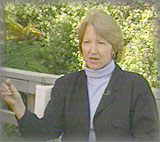 ELIZABETH
FARNSWORTH: Should General Pinochet be tried here?
ELIZABETH
FARNSWORTH: Should General Pinochet be tried here?  GEN.
GUILLERMO GARIN: It simply means our democracy is working perfectly
well; and I am happy for having participated in the struggle to restore
democracy because it was General Pinochet and the military government
who recovered democracy. It has been presented to the world that we
were the ones who destroyed democracy in Chile. But in Chile, national
harmony had been destroyed by 1973, and intervention was needed to restore
the liberties which are inherent to all democracies. I believe the election
was additional evidence that the democracy restored during the military
government is working perfectly well, within the framework of and protected
by the 1980 Constitution, promoted by the military government. I have
no doubts as to how our democracy will work in the future.
GEN.
GUILLERMO GARIN: It simply means our democracy is working perfectly
well; and I am happy for having participated in the struggle to restore
democracy because it was General Pinochet and the military government
who recovered democracy. It has been presented to the world that we
were the ones who destroyed democracy in Chile. But in Chile, national
harmony had been destroyed by 1973, and intervention was needed to restore
the liberties which are inherent to all democracies. I believe the election
was additional evidence that the democracy restored during the military
government is working perfectly well, within the framework of and protected
by the 1980 Constitution, promoted by the military government. I have
no doubts as to how our democracy will work in the future.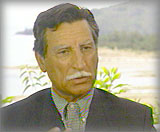 every
sector went through a big change. There was effectively a revolution
here. A revolution in the sense that virtually every sector in the country
changed in terms of modernization and real benefit for the majority
of Chileans. This country advanced significantly in every aspect and
has the possibility of becoming a more developed country because those
changes were carried out in areas beyond just the economic part. Although
it is true that the economic changes are the most tangible, there were
changes in every aspect of life -- in labor and educational reform for
example -- and from that the country has kept evolving, growing. I am
not saying this democratic government has done nothing -- on the contrary
-- but it was the solid foundation which meant profound changes in the
country that allowed construction and growth to continue and I hope
it goes on.
every
sector went through a big change. There was effectively a revolution
here. A revolution in the sense that virtually every sector in the country
changed in terms of modernization and real benefit for the majority
of Chileans. This country advanced significantly in every aspect and
has the possibility of becoming a more developed country because those
changes were carried out in areas beyond just the economic part. Although
it is true that the economic changes are the most tangible, there were
changes in every aspect of life -- in labor and educational reform for
example -- and from that the country has kept evolving, growing. I am
not saying this democratic government has done nothing -- on the contrary
-- but it was the solid foundation which meant profound changes in the
country that allowed construction and growth to continue and I hope
it goes on. 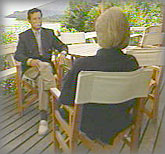 GEN.
GUILLERMO GARIN: Precisely what we have talked about before, that mistakes
were made in the area of human rights. I am aware that perhaps it was
unavoidable, but there were mistakes and that is a negative. But in
the final analysis, the positive work, especially considering what the
country was like when we took over -- what we did is absolutely beneficial
for the majority of Chileans. I do not wish to take away any rights
from those who were affected directly. I am very sorry. I hope there
is a way we can compensate them for the pain they have endured, but
I believe the damage can be repaired only through material means.
GEN.
GUILLERMO GARIN: Precisely what we have talked about before, that mistakes
were made in the area of human rights. I am aware that perhaps it was
unavoidable, but there were mistakes and that is a negative. But in
the final analysis, the positive work, especially considering what the
country was like when we took over -- what we did is absolutely beneficial
for the majority of Chileans. I do not wish to take away any rights
from those who were affected directly. I am very sorry. I hope there
is a way we can compensate them for the pain they have endured, but
I believe the damage can be repaired only through material means.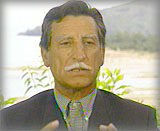 GEN.
GUILLERMO GARIN: If there is someone who knows the whereabouts of the
"disappeared", that person will possibly deliver that information
if there is legal protection for doing so. And if it can be delivered
to an organization of the army, there could be collaboration that way
too.
GEN.
GUILLERMO GARIN: If there is someone who knows the whereabouts of the
"disappeared", that person will possibly deliver that information
if there is legal protection for doing so. And if it can be delivered
to an organization of the army, there could be collaboration that way
too.