

Related Show: Weather Hunters
Bubbles in the Wind


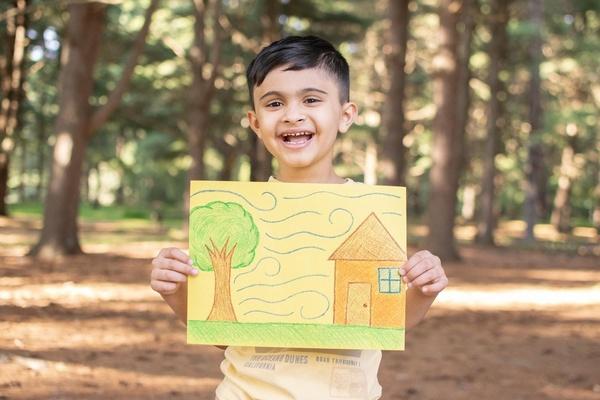
Wind is moving air, and while air is invisible, we can observe its effects! Head outside together to go on a scavenger hunt to find evidence that the wind is blowing.
Materials
Directions
Go on a wind scavenger hunt. Start by asking your child, “Is it windy outside? How do we know?” We can’t actually see the wind, but we can see what it does. Ask:
What do you see moving in the wind? (Leaves? Hair? Flags?)
What do you hear? (Rustling trees? Rain drops hitting the street?)What can you feel or even smell in the air? (Warm or cool breeze? Smells travel on the wind. Where are different smells coming from?)
Encourage your child to use all their senses to discover more about the wind around us.

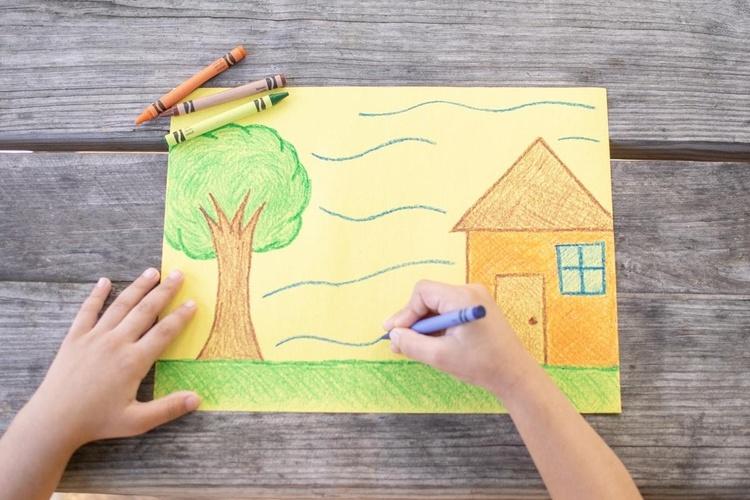
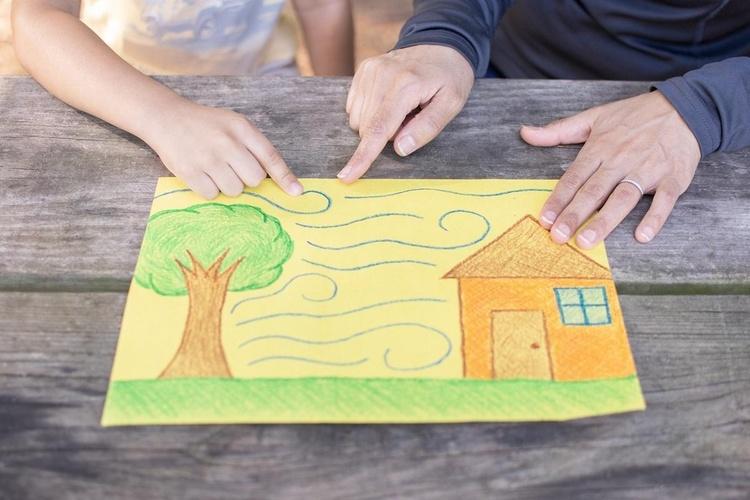
Invite your child to draw a picture of the outside space you investigated. Give them a piece of chalk to draw “wind lines” into the picture to show how wind moved through the space. Explain that scientists sometimes use lines like this to represent invisible forces like wind. Say, “Let’s keep exploring to find out how the wind moves through this space!”
Encourage your child to get curious by asking:
Does wind move across, up, down, or spin around?
Is it always fast or slow?
Then, bring in the bubbles as a tool for investigation!
Ask, “How might bubbles help us learn more about the wind?” (They’re light and float easily, moving wherever the wind takes them!)
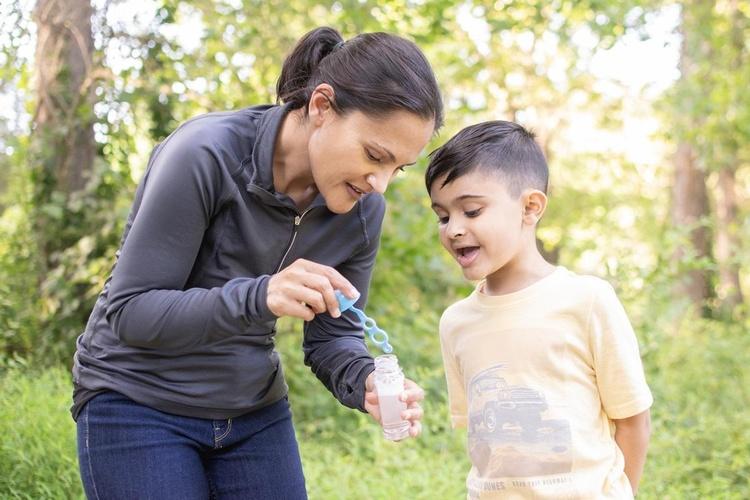
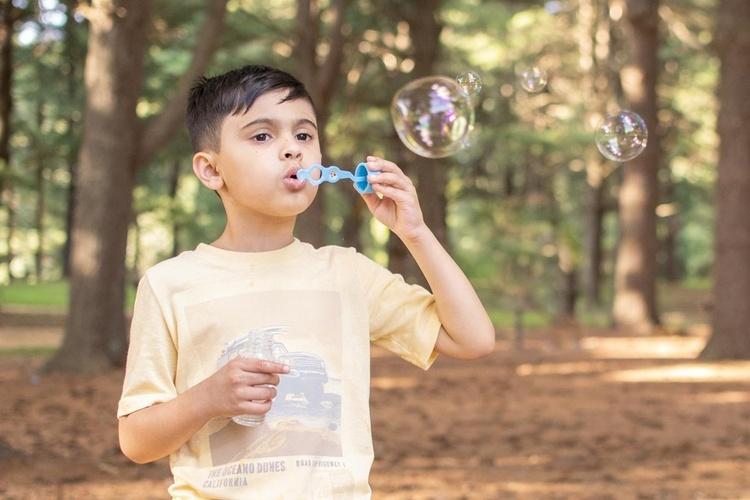
Time to investigate! Begin by blowing bubbles in different outdoor spots and observe how they move. Encourage your child to use descriptive language like up, down, sideways, spiral, fast, and slow.
Try blowing bubbles:
Toward a building. (Bubbles may bounce back due to air pressure!)
In an alleyway between two buildings. (Bubbles will either whip through quickly or not go in at all!)
Up toward the sky or down toward the ground.
Talk about what surprises you. What did you learn about how wind moves?
Have your child return to their drawing of the wind and give them the opportunity to add new “wind lines” based on what they learned. Explain: Scientists are always updating their models as they learn new things — just like you!
 Author:
  Science