Create a Map to Tell a Story


In “The Big Gathering,” Molly prepares to go on a trip with her family! She begins planning by looking at a map of Alaska and pointing out where her friends live. Molly and her friends are going to Anchorage, Alaska — where "The Big Gathering" is taking place. "The Big Gathering" is based on an actual event called the Alaska Federation of Natives Convention.
Alaska is very big, so some people have to travel far to get to the city of Anchorage. Molly’s map includes pictures of her friends near where they live. For example, Molly lives near Denali, which is 300 miles from Anchorage — which means Molly has a long way to travel to get to "The Big Gathering." She labels the towns they live in and the location of Anchorage. Her map includes information abouts how far each person will have to go to get to "The Big Gathering." Molly can use the information on her map to tell the story about how she and her friends will get to their event. Maps can be a great inspiration for telling stories!
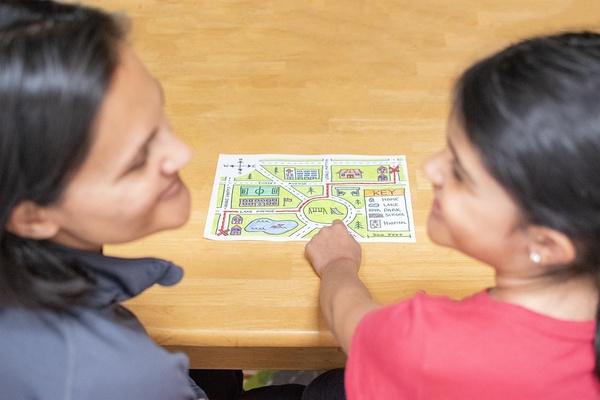
Together with your child, create a map that shows the route for a trip you’ve taken recently — either in your city or town or somewhere farther away. Encourage your child to include landmarks they visited or saw along the way. While making the map, talk about why we use maps and how they are helpful. You can also discuss how maps can help tell a story about where you have been or where you are going, just like Molly!
Materials
Directions
Ask your child about a trip they took, such as a visit to a place they’ve never been or where they went on a special day. Ask them what they would like to remember about how they got there to save as a keepsake or share with a friend. Then, invite them to draw a map to show you how they remember getting to the destination. They can choose a trip they took locally, like going to school, the doctor, or a friend’s house. Or they can choose a trip that they took to a place further from home.
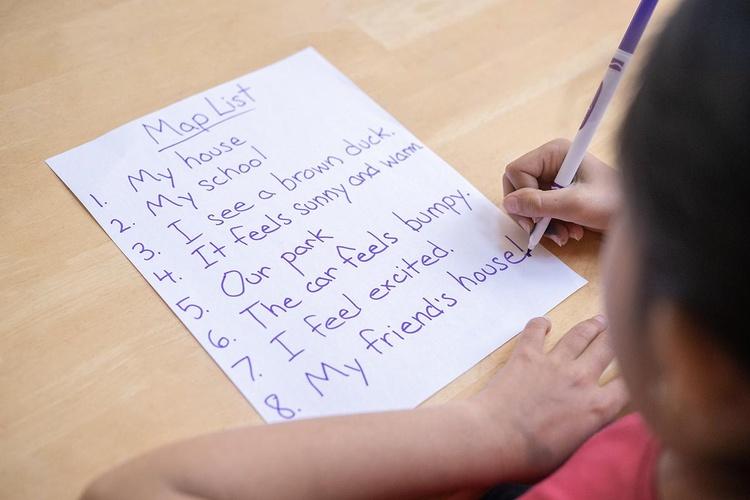
Ask your child where they started the trip, where they ended the trip, and what they saw along the way. What did they see, hear, or smell? How did they feel while they were traveling? What was the weather like? Together, write down what they observed on their trip in a list that you’ll choose from to include on the map.
Next, ask your child to draw a simple map of their route. Help them by asking them to draw where they started the trip first. Then, they can draw the route to their destination as a line or series of lines to illustrate roads or walking paths. The route should end at the final destination.
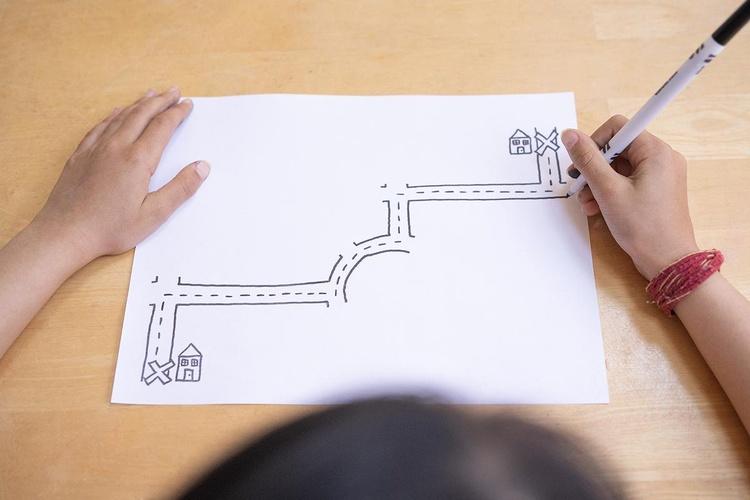
Together, check on your notes and decide what other information to include on your map. Help your child place buildings, parks or other special places they noticed on the trip along the lines on the map. Did you pass a grocery store or familiar house? Did you pass a park where you heard birds chirping? Or did you pass a park with trees that shaded you from the sun? Include what you remember on your route.
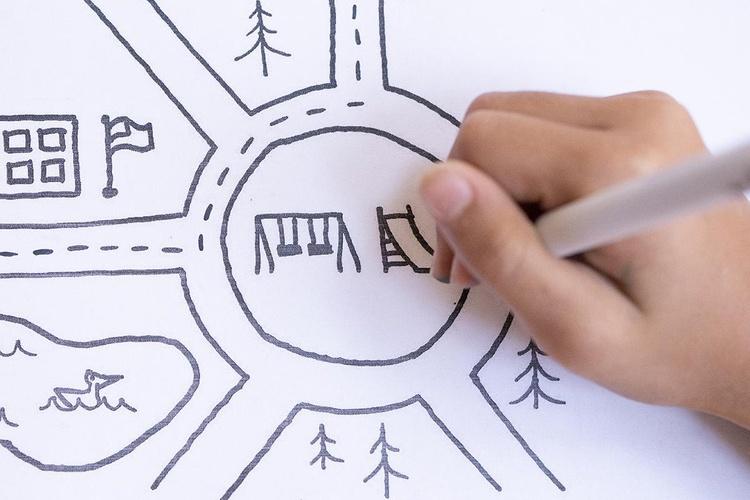
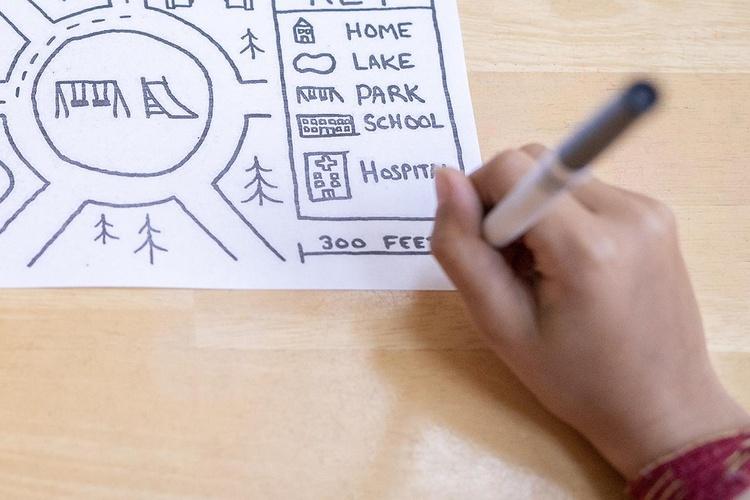
Encourage your child to add labels to their map for your home and the landmarks they saw. Write down the name or roads or towns you passed through. If your child has trouble remembering what to write down, look at a map online or on an app for help. Make a map key that includes information about symbols and markers your child includes on the map, as well as a scale for distance.
Together with your child, share the map with a family member or friend and tell them the story of your trip using your map to illustrate it. Point out what direction you went in and what happened along the way. As your child reviews the story, encourage the use of words that help illustrate the passing of time, such as first, before, after, finally, during, to support the structure of the story. Your child can also ask their friend or family member if they have any questions about your map or your story as they tell it. You may discover new things to include on your map! Keep your map to remind you of this special trip or to share again with a friend.
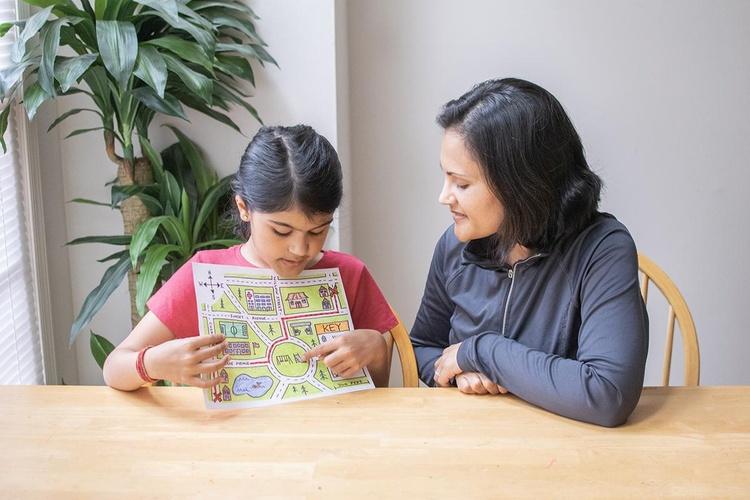
Continue your child’s interest in maps by looking at more maps together, either on paper or on a mobile app. Do you use maps to figure out how to get to a new place or find the fastest route to a familiar place? Talk with your child about why you use maps as part of your routine. Next time you travel, show your child how you use maps to help you find your way!
Explore Further
Maps contain information that shows us how to get from place to place. But maps can also show us ways land was organized in the past. Indigenous tribes have an extensive history of being respectful stewards of the land for thousands of years. Land acknowledgments provide the opportunity to connect with tribes and the rich history of their cultures. Have you ever wondered about the Indigenous lands you live on or the lands you’ve traveled through? Spend some time as a family discovering the history and culture of the tribes who cultivated the lands you traveled through for your trip and design a poster to honor them.
Want more “Molly of Denali” activities? Make a beaded necklace or try spiced oatmeal muffins to continue the fun!
 Author:
  Literacy