

Related Show: Lyla in the Loop
Create Your Own Card Game for Family Night


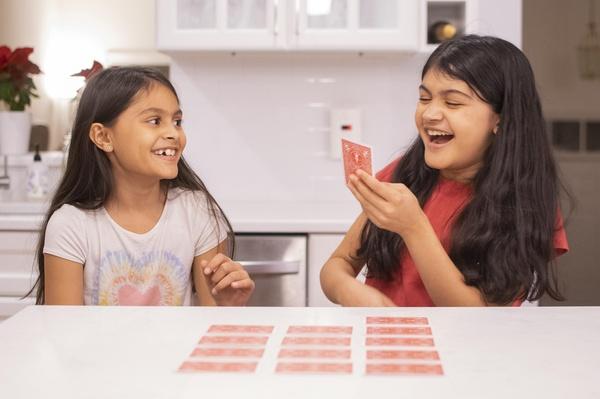
Lyla is very excited for game night with her family. But her family is not as excited as she is. She finds out why. Everyone has a different reason, like the games are too long or they’ve played them before. Lyla decides to make up a new game that her family can get excited about, and it worked. Everyone wants to play!
Your family can play Lyla’s card game too. As you play, decide together if you need to make changes to the rules. Then, make up your own version of the game!
Materials
Directions
Gather your friends and/or family around the table to start game night!
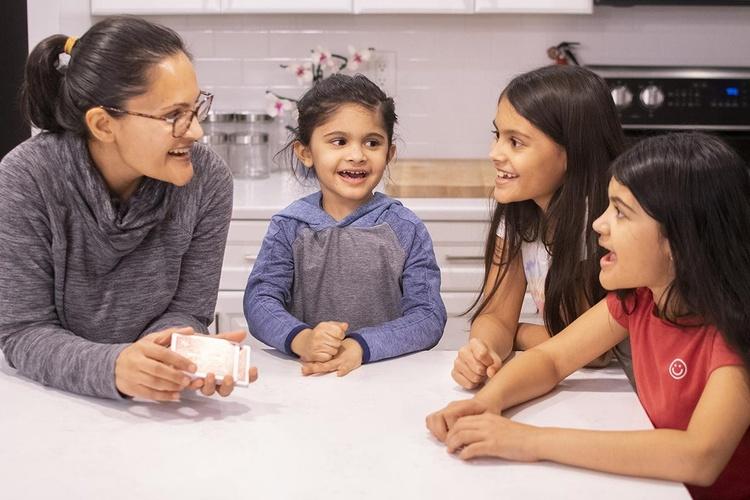
Take the card deck out of the box and pull out 15 cards: four hearts, three diamonds, three spades, three clubs, and two jokers. In Lyla’s card game, numbers don’t matter, but you can decide if you’d like to select certain cards. Assign an activity to each shape and tell your family members the rules. For example, if you pull a heart, then you follow the directions for that activity.
For example, Lyla and her family select these activities for each symbol:
Diamond: Mystery smell test. Choose three foods or other items such as soap or toothpaste that the player can safely smell. Ask the player to close their eyes and smell the items and challenge them to guess what they are before the timer goes off.
Heart: Hop to it! The player hops on one foot to every room and back with a stuffie or book balanced on their head. If hopping is a little too wobbly, try doing a funny walk around the room or simply try balancing a book on your head at the table.
Spade: Crab walk challenge. Crawl to your room like a crab, grab an object, and come back to the table before the one minute timer runs out. If crawling to a room isn’t an option, use crab hands (pretend your thumbs and pointer fingers are pincers) to pick up an object to put on the table.
Club: Spin walk. Close your eyes, spin five times, open your eyes, and walk from where you are playing to another chair or spot in the room before the timer runs out.
If a player doesn’t complete the activity in a certain amount of time, they are out. If a player selects a Joker card, they choose another card and can decide if they want to do the activity or if someone else should do it for them. The last one in the game has to do a final trick. If they beat the timer, they win!
If they don’t beat the timer, there’s no winner, and the game starts over again.
You can make up your own challenges and categories, too. For example, Hearts can represent a brain challenge such as naming five countries that start with the letter “N;” Diamonds can represent a physical challenge such as walking backwards balancing a book in one hand; clubs can represent a musical challenge such guessing a song by listening to it for just five seconds; and spades can represent an art challenge such as drawing a portrait of your family in two minutes. There are so many things you can do!
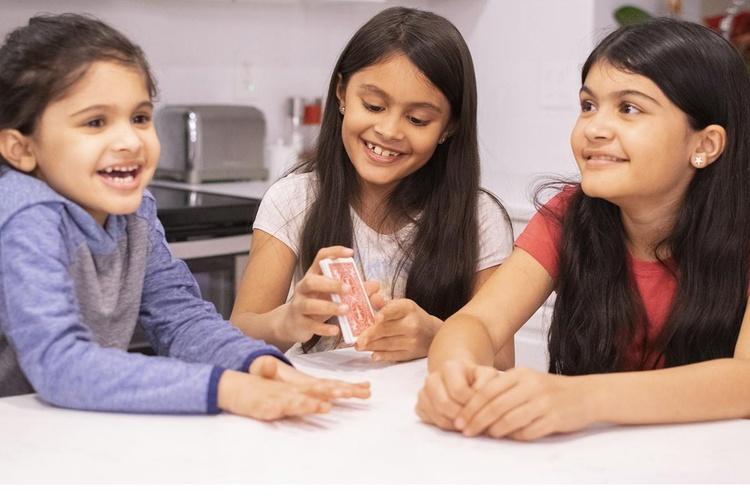
Next, mix up the cards. Lay the cards face-down on the table in rows of three. It’s time to play!
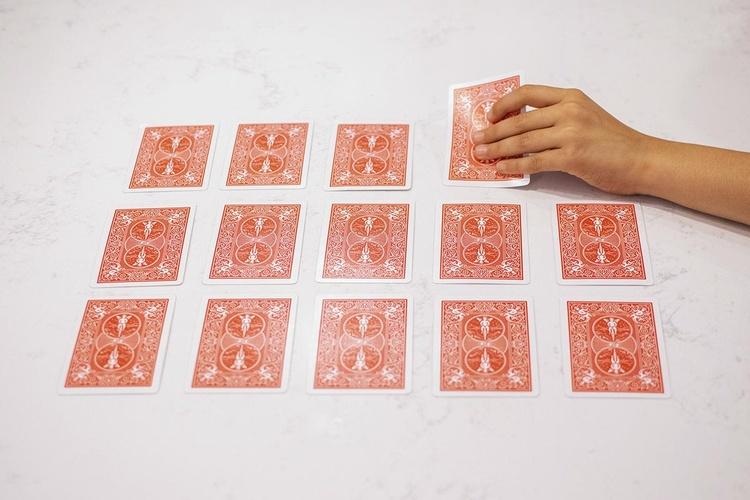
Choose the first player and ask them to flip over one card. Ask the player to complete the activity assigned to that card symbol. Set the timer and ask the player to start! Once the first player is back at the table, the second player can choose a card and do an activity.
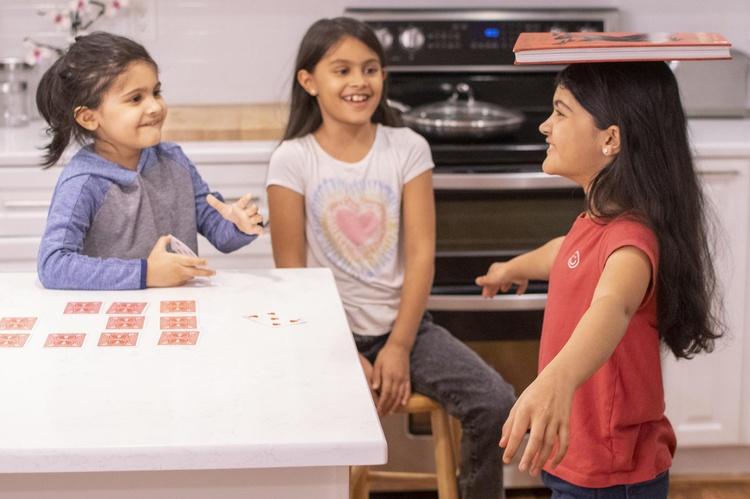
Keep playing until everyone has had a turn, or play for as long as you like!
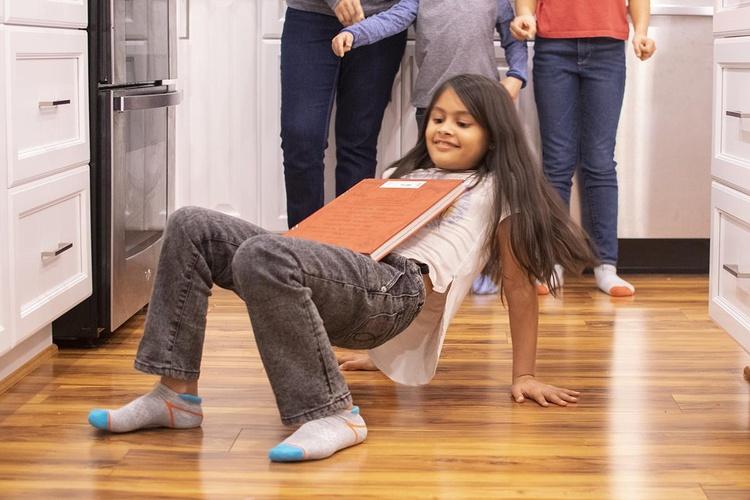
Explore Further
Lyla learns that making up a family game can be fun! As you play, you can teach your child about symbols and what they represent. Discuss other symbols they might have seen and how symbols can tell us information and communicate rules. For example, if a stop light turns green, then a car can go. Or if a bell rings at recess, then it’s time to go inside. What examples of symbols and rules can you talk about related to your daily routine?
You can also think of other ways you can use your deck of cards to create different games with new rules and new ways of using the symbols. Is there a fun matching game you can play? Can you use just one color or only odd or even numbers or assign a new meaning to each symbol for another type of game? Are there fun ways to switch-up games that you already play with new rules or different strategies? Try going online to see what kinds of games other people have made up using a deck of cards. As Lyla shows us, the possibilities are endless!
 Author:
- Activity Type
- Craft