

Exploring Weather


Does your child like to splash in rain puddles or watch the clouds as they move across the sky? You can help your child learn about weather by making a simple weather chart together and observing the weather with all their senses!
Before You Play
Explain to your child that weather refers to atmospheric conditions at a particular time. This includes precipitation like rain, snow, sleet, freezing rain, cloudiness, windiness, and temperature. Some parts of the world have four distinct seasons. Change of state, is an important weather-related science concept that children everywhere can explore by observing freezing and melting.
Materials
Directions
No matter the forecast, you and your child can use the “My Weather Chart” or the "Weather Chart for Kids" to record the weather, just like weather people, or meteorologists, do. Help your child to record their observations and encourage him to think about weather patterns over time. Make connections for your child between their weather notes and the climate in your area. For example, "We had four days of rain this week. Spring is a very rainy season."
Depending on where you live and the time of year, you may want to focus on different aspects of the weather! Check the forecast and follow the suggestions below for the weather near your home. When you are getting ready to go outside, encourage your child to think about the weather by asking, "What do you think the weather is like out today?" Encourage him to think about how the weather influences their day. Check the weather together and talk about what types of clothes are best suited for the conditions. Does it look cloudy? Ask your child if you should bring your umbrellas.
Cloudy: There are many different types of clouds, including puffy cumulus clouds, feathery cirrus clouds, and long, low stratus clouds. Invite your child to lie down outside and look for familiar shapes in the clouds. Ask him to describe the shapes. Are the clouds moving? How so? Ask questions that encourage him to make predictions, like "Do you think the clouds will cover the sun?"
Rain: During a rainstorm, invite your child to think about the qualities of the rain by listening to the sounds of raindrops. Encourage him to look outside and describe the rain. Ask questions like, "How hard is the rain coming down? Are the drops really big or small?" Together, you can make a rain gauge to measure the rainfall: Just put an empty jar outside right before it rains, then check the water level after the rain stops!
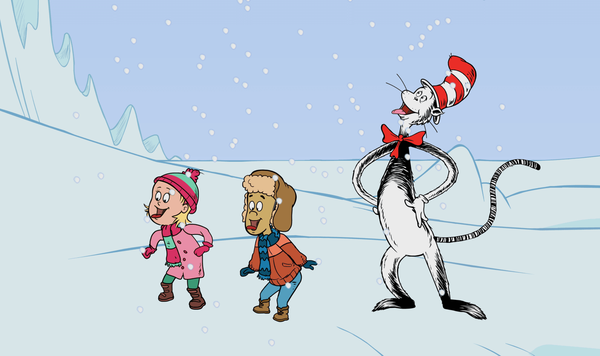
Snow: If you live in an area where it snows, encourage your child to make a snowman or a snow creature, just like Sally and Nick do in The Cat in the Hat Knows a Lot About That! How does your child think the snow sticks together? Invite your child to collect snowflakes on their mitten or on a piece of black construction paper. Observe them with a magnifying glass. What sizes and shapes are the snowflakes? Record what your child sees on your weather chart.
Wind: Listen to the wind together and look for evidence of its effects on trees and other outdoor objects, like paper blowing in the street. You can help your child make a small kite by using construction paper, ribbon, and string. What effects of the wind does your child notice when trying to fly the kite? Ask questions like, “Can you tell which direction the wind is blowing. Can you fly the kite when it’s not windy? Why not?”
Temperature: Depending on where you live, you and your child may experience varied temperatures in a single day — in the spring, it may be very warm during the day but cold at night. Draw your child’s attention to freezing or melting water outside, like a puddle turning to ice at night. If you live in an area with consistent year-round temperatures, look for other opportunities to notice things melting. For example, in the summer, you can ask, "Why do you think your popsicle is melting?"
 Science