
Nature Obstacle Course


Build self-confidence and motor skills by designing and traversing an outdoor obstacle course featuring materials from nature. Add places where you can jump, throw, balance and bend, and have lots of nature-iffic fun.
Materials
The materials are just suggestions. Work with what you have in your environment. We'll give you lots of options to make it fun and challenging wherever you may be.
Let's Make a Nature Obstacle Course
Choose a spot for your obstacle course. An open space that is flat or mostly flat will work well.
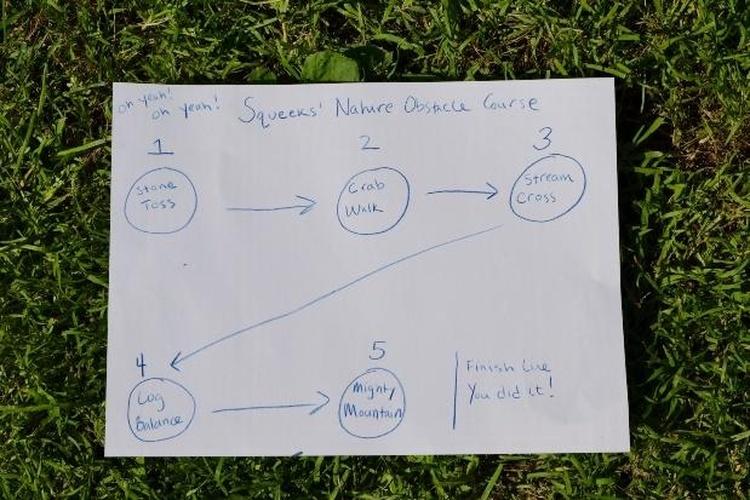
Draw a plan for your obstacle course. It should include the kinds of activities you want to do, where each activity station will be on the obstacle course, and the route you want people to follow. Activity suggestions are listed below.
Note: The goal is to create a course that gets you jumping, balancing, bending, stretching and practicing coordination. As long as you are moving and having fun, you are doing this activity right!
Make a list of the materials you'll need.
Head outside to collect your materials. (Check with a grownup first.)
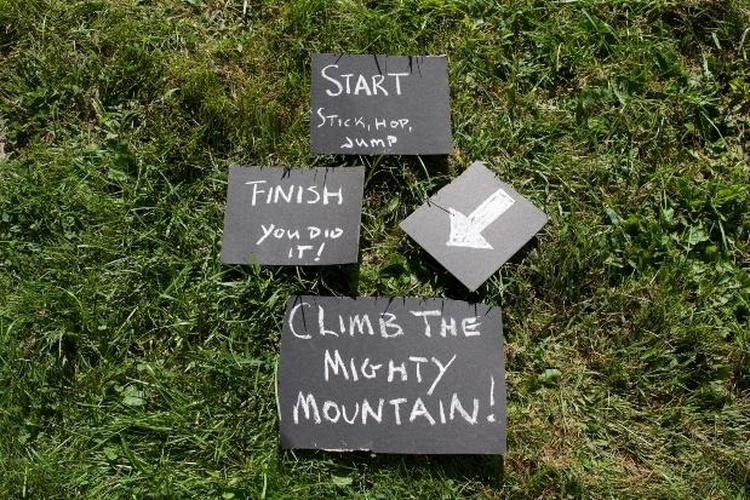
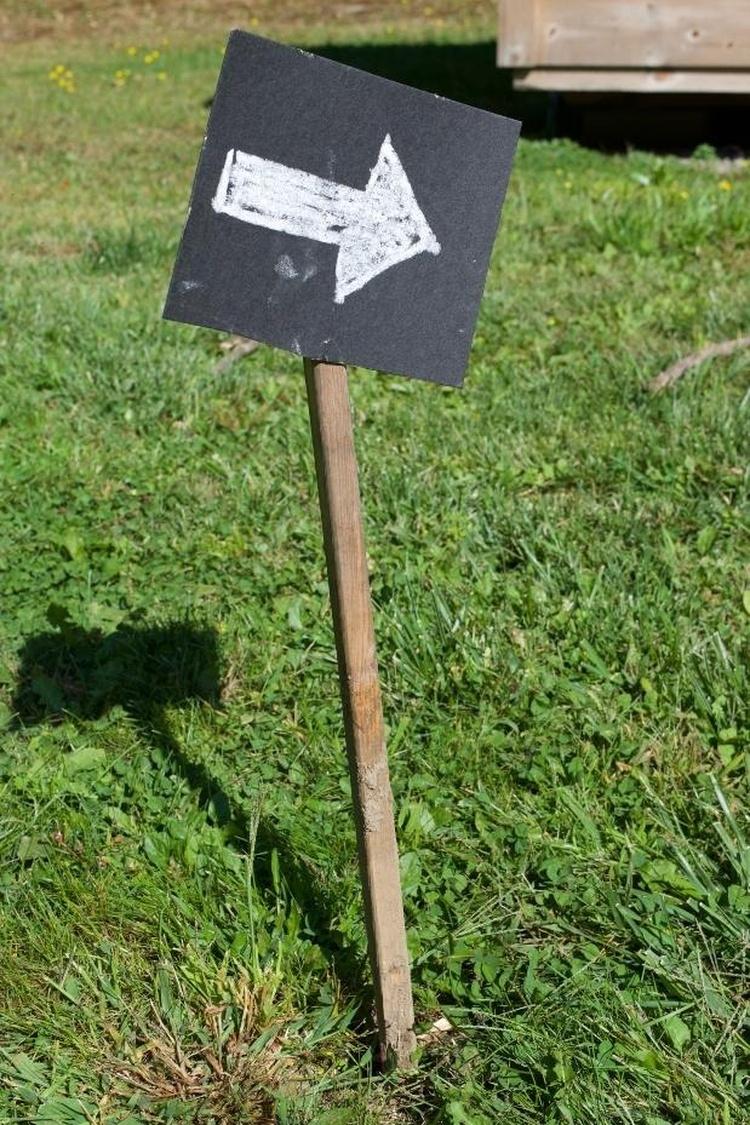
Build your nature obstacle course! Include signs for each activity station that name the activity. You may also want to make signs with arrows to help show how to move from one station to the next, and signs for start and finish lines.
Activity Suggestions:
The Stone Toss
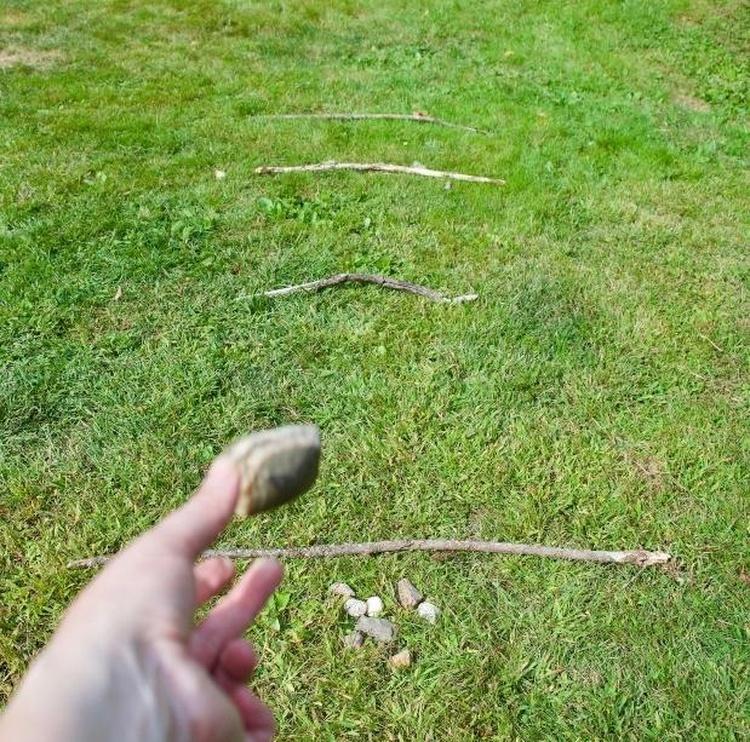
Materials:
- 5 - 10 small stones that are about the size of a golf ball (work up to heavier stones)
- 3 - 4 sticks about two-feet long
How it Works:
Use one stick to mark the "throw line," and stagger the other sticks different distances from the throw line. Using an underhand motion, throw a stone beyond one of the sticks. Challenge yourself to throw the stone past the stick farthest from the throw line. When it becomes too easy, move the sticks farther away. You can also try heavier stones.
Log Balance
Materials:
(One of the following)
- One long log
- Several short logs
- A long piece of brightly-colored yarn
- Two-by-four plank raised a few inches off the ground
How it Works:
Balance is the name of this game! Balance heel-to-toe as you walk across logs, a plank or a long piece of yarn stretched out in a straight line. If you use yarn, secure each end to keep it in place.
Walk Like a Crab
Materials:
- Cones or sticks to mark the course
How it Works:
Did you know many crabs move sideways? To walk like a crab, start by sitting on the ground with your knees bent and your feet flat on the ground. Set your hands on the ground behind you with your fingers pointing behind you or to the side. Push up so your butt is in the air and then move sideways. After you practice your crabby moves, set up a start line and a finish line. You can race or challenge each other to see who can make it the farthest before sitting back down.
A Stick, Hop, and a Jump
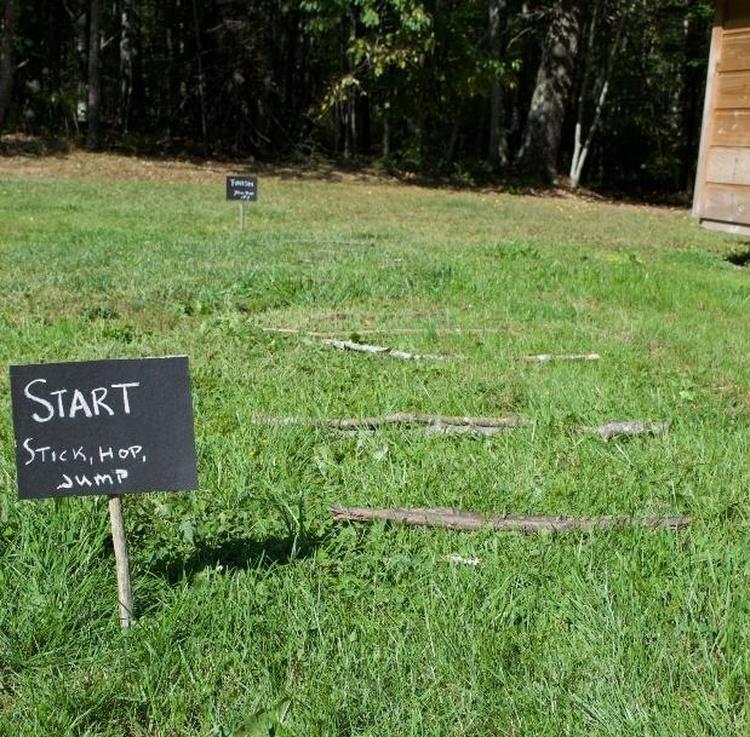
Materials:
- 15-20 sticks, each about two feet long
How it Works:
Make a course with the sticks as the obstacles -just like the tree roots or small logs you might encounter during a walk in the woods. For every spot with one stick, you have to hop over it with one foot. For every spot with two sticks, you jump over them with both feet.
Can You Duck It?
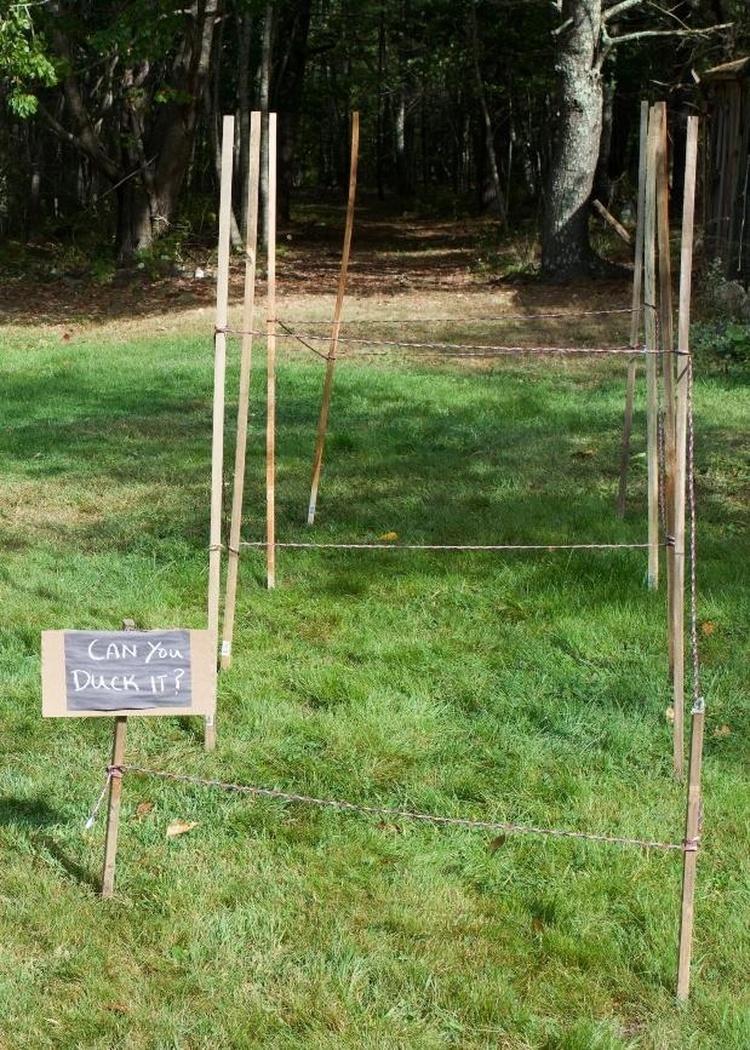
Materials:
- About 10 to 20 sturdy stakes or sticks with some at least three-feet tall
- Brightly-colored thin rope or string
How it Works:
Set up several pairs of stakes upright in the ground to create a course. Each stake in a pair should be about four or five feet apart. The pairs of sticks should be at least two feet apart from each other. Connect each pair of sticks with the string or rope. Vary the heights of your string obstacles so that some are high enough to duck or crawl under, while others are low enough to cross using a high step.
Leap Like a Frog
Materials:
- Cones or sticks to mark the course
- A few good friends
How it Works:
Mark a start and a finish line. Have four or five friends crouch down on the ground like rocks. (Note: This will work best if the "rocks" are a similar height to the leapers.) Race from start to finish by leaping like a frog over each "rock." To do this, place your hands on the back of the "rock" to help propel yourself over.
It's a Stream!
Materials:
- Several sturdy rocks that have a flat enough surface for stepping on
- Two tablespoons of imagination
How it Works:
Here we pretend we have a stream to cross. Leap or take big steps from rock to rock without touching the "water."
Alternative:
If no rocks are available, you can use sidewalk chalk to draw rocks and a stream.
Climb the Mighty Mountain
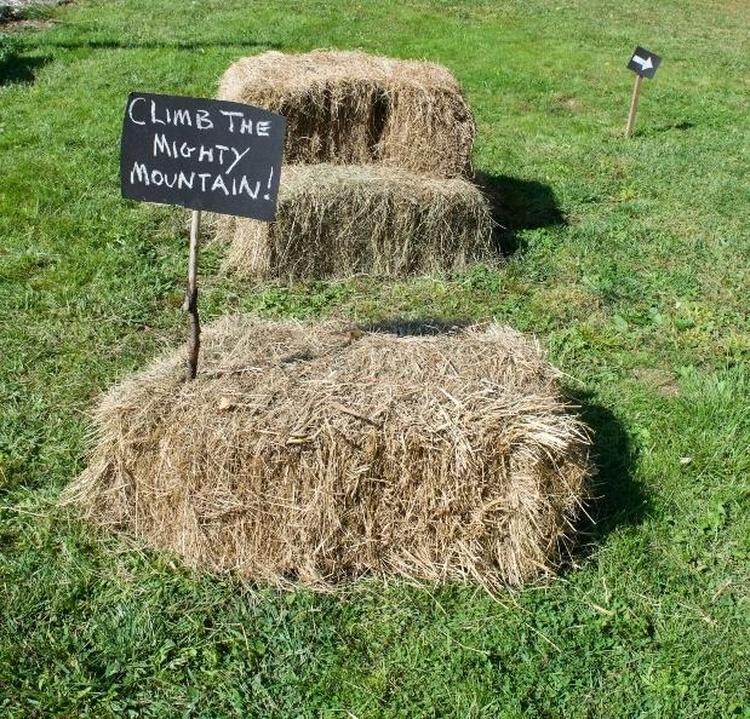
Materials:
- Straw bales, sturdy crates or
- boxes that can hold the weight of a child
How it Works:
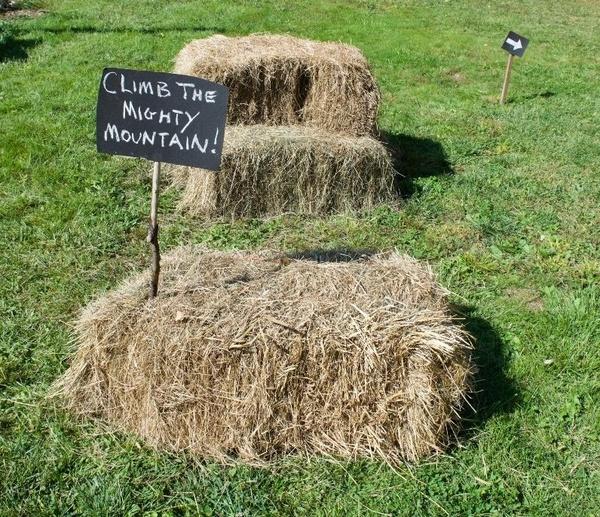
The goal here is to practice high stepping. You can accomplish this by setting up a course of boxes or bales to step up on and then step down (or jump) as you make your way to the finish line. You can also build a squat pyramid or stairs with the straw bales.
Alternative:
No crates, boxes or bales? No problem! Build a race course with stakes or cones and use a high knee walk to make it from start to finish. With a high knee walk, you hold your hands out at waist level and raise your knees high enough to meet your hands.
Tips for Success
Start with small goals and build on your successes. Keep courses short and easy at first, and then make them increasingly more difficult. This will help keep you from getting frustrated too quickly.
Don't be discouraged if you can't finish a challenge the first few times you try! Practice, set goals and track your progress. For example, if you can't do the crab walk from start to finish without resting twice, keep practicing until you only have to rest once. Once you can make it from start to finish without resting, have a friend time you and then try to beat your best time.
Remember to reward yourself for your hard work, and to always make it about having fun!
Always have drinking water available while you are practicing in your nature obstacle course.
Have friends and grownups there to cheer you on, time you or even help! When it's their turn, you can do the same for them.
Note for Parents and Teachers
We recommend at least three activity stations to make the obstacle course; activities should reflect the capabilities of the average age of participants. As noted above, work with the environment and materials that are around you and easily accessible.
- Activity Type
- Craft