
Finding Math in Everyday Places


Kids often see math as an isolated activity. They might think of math as just counting, or adding, or something they do for 40 minutes a day at school. The truth is, math is important to so many factors of our lives! By helping kids understand how math is used in everyday life, you can help to foster a lifelong curiosity and love of learning.
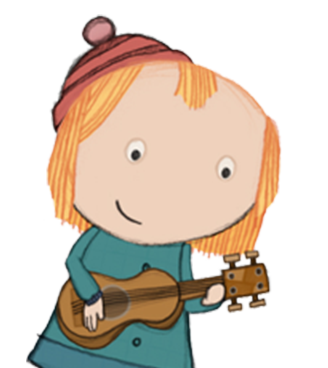
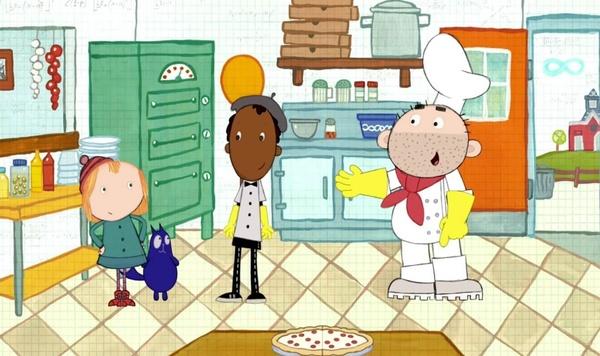
If we want kids to be curious about math outside the classroom, we need to take math off the page and into the real world. In the show "Peg + Cat," Peg (and her side-kick Cat), reminds us that we are surrounded by everyday math!
Take the kitchen.
Grocery shopping and cooking are inherently mathematical activities. As adults, we forget how often we use our everyday math: measuring, estimation, counting, sorting and spatial reasoning skills — skills that our children are just developing. When you invite your kids to help you prepare meals, set the table, put away groceries and clean up, you can engage them in conversations that will tap their mathematical mind.
Here are some activities and conversation starters that can help young children find the everyday math embedded in daily living.
Kitchen Math Activities
Cooking
There are plenty of everyday math games that you can play as you cook:
- Show kids what cups, teaspoons and tablespoons look like. Let them help you measure ingredients.
- Let them pull the right number of eggs out of the carton or fill the measuring cup to the correct line.
- Ask them to mix the batter 15 times and count with them as they do it.
- Help them set the timer and show them how it counts down.
- Set the oven to the right temperature together and watch as the numbers climb up. Talk about what “degrees” means.
- Let them figure out how many pieces of bread you need to make three sandwiches for lunch.
- Teach them how to read a recipe and, as they get older, talk about how to “double” or “halve” a recipe.
- Have them estimate how many pancakes or cookies the batter will make.
Place Settings
When kids set the table, they activate their counting, spatial and sequencing skills. First, they need to figure out the correct number of plates, cups and utensils, and then they have to organize these items spatially and sequentially (first the plates, then the cups, then the forks). Their attempts might be messy at first as they scrunch plates together or lay spoons at odd angles! But as they practice these everyday math games, you’ll see their skills grow in tangible ways. Even toddlers can engage in early counting by pulling out “one spoon for Mommy, one spoon for me, one spoon for...”
By introducing these everyday math games as little rituals and habits at daily meal times, kids can also start to see their progress as their spatial and sequential reasoning becomes more and more confident.
Organizing
Putting away groceries builds sorting and spatial skills. As they help you unload bags, ask children to separate refrigerator items from shelf items, kitchen items from bathroom items. From there, help them sort items by type in order to place them in the correct locations: fruits and vegetables, beverages, canned goods, etc. Older kids can participate in planning meals and creating grocery lists, activities that — as adults know all too well — tap our problem-solving and estimation skills.
Cleaning
Loading the dishwasher requires complex spatial reasoning — even for adults. How do you get all of the dishes to fit? It’s a daily puzzle to be solved. Unloading the dishwasher is a great sorting activity for even very young kids, particularly separating utensils by type.
Measuring dishwashing powder or estimating the number of plates in a drawer can also become fun examples of everyday math that children can practice as they expand their ideas about where math is in the world around us.
Kitchen Math Conversation Starters
Sometimes, kids need a little encouragement to start exploring the naturally mathematical nature of the world. Tap your child’s mathematical thinking by asking questions:
- Help me double this cookie recipe. The original calls for two eggs. How many eggs would I need to make twice as many cookies?
- How many pancakes do we need to make if everyone in our family eats three of them?
- How can I cut this pizza into eight equal pieces?
- We have six carrots and three people. How many carrots do we each get?
- How many Cheerios do you think you can fit on your spoon at once? Let’s see if you are right.
- Do you have more raisins or apple slices in your cup? How many more?
- Guess how many beans are on your plate. Let’s count and see if you are right!
- Which size container would best fit these leftovers?
- Can you find the lids that match these containers (or pots)?
- Can you put these stacking bowls (or measuring cups) back together in the right order?
- What shapes do you see in the kitchen? What shapes do you see at the table? What shapes do you see on your plate?
- Estimate how many items you think are in this grocery bag. Then let’s count as we take them out to see how close you were.
Your kids can practice their “kitchen math” skills by playing these "Peg + Cat" games on PBS KIDS:
Make a Peg Cake
Count on this cake for a delicious and Peg-a-licious treat at your child’s party!
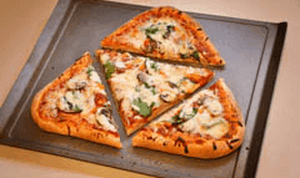
Practice Math While Making Peg’s Perfect Pizza
Baking with your child is a great way to introduce math concepts like counting, measuring and telling time.
Expand your child’s everyday math curriculum
Once you’ve taken the time to consider how math is used in everyday life without us even thinking about it, incorporating these everyday math games becomes easier and easier. Both you and your child will start to think of the world in more mathematical terms naturally, and their confidence in their mathematical skills will grow too.
ThePBS KIDS app is a great place to start if you’re looking for more ways to get kids engaging with and practicing everyday math. With plenty of everyday math games from your child’s favorite shows, they will enjoy the puzzles and challenges in these practical math skill games.
 Author:
Peg and Cat go on music-filled adventures and use math to solve Really Big Problems.