
Best Benefits of Playing Video Games Together


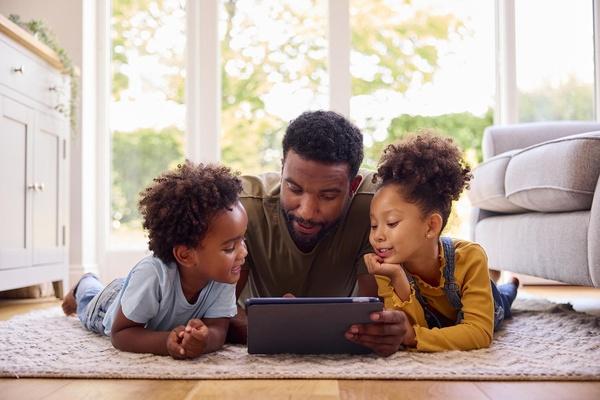
If your kids are like mine, they love playing video games! Joining them is a great way to connect and create a shared experience with my kids. While we play, I learn from them, hear their thoughts, and cheer them on!
“We know that games are the number one activity for kids on mobile, tablet, and desktop,” said Abby Jenkins, Senior Director of Content for PBS KIDS. She and her team make fun educational video games that help kids learn social and emotional learning, problem-solving, and computational thinking skills. “We’re focused on helping kids find content that they love and want to play but in service of those key learning goals.”
Games are a great time to bond as a family.
Playing video games together can be a great way to bond as a family. You can navigate different challenges, take turns, and share helpful tips. It’s fun to see my son show his little sister how to get through a tricky part of a game or hear her encourage him. For me and my husband, it can also be fun to relive our own childhood memories as we dust off some of the same video games we played as kids to now play with our children.
“I love video games,” said Adam Buchweitz, who has been making video games for 15 years and is currently a lead developer at LAN Party Technologies, which builds virtual game rooms for people to enjoy playing video games together. He recently played a video game full of puzzles with his daughter for the first time. It had them work together as a team while they raced against the clock. “The experience — I don’t know that I’ll ever forget it. I don’t know that [she] will ever forget it, and she’s only five!”
He encourages parents to be thoughtful and intentional when looking for the right video games to play with their kids. “It’s not free babysitting,” said Buchweitz, who suggests playing together instead of letting young children play alone. “If you engage with them, you can be the voice of reason.”
Games can have educational benefits.
Video games can build on what kids are already learning and doing, from finding patterns to making artistic creations. Some educational video games promote memory or problem-solving skills. Other video games focus on creating and working together.
“There are so many types of games in the PBS KIDS Games app,” said Jenkins. “We think building on a child’s interest is a great entry point to finding content that they’re going to love. If they are interested more in creating and building, there’s something for you to do. If they’re interested in creative and pretend play, there’s something there for you.”
You might be surprised to find some parts of the game playing out daily. For example, working together to follow the recipe in a game may help your child follow directions and work with other family members to make dinner.
“One of the moments where we think that’s such a win is when kids continue to play when they’re done playing the game,” said Jenkins. Her hope is for the video games to spark curiosity in kids.
Games encourage learning through play.
When playing, kids can explore another imaginative world or scenario. Some educational games help show the perspective of the character in the game. Helping other characters to meet their needs in the game can build empathy.
Another one of the benefits of playing video games together is the chance for families to talk. Jenkins said, “We have found that kids are naturally talking and narrating their own play while they are playing a game. So, it’s just a great way to hear what kids are saying and how they are reacting while they are playing and maybe get some insights.”
Here’s a list of PBS KIDS Games to play together:
Arthur vs. D.W.: Have a little sibling competition going on in your house? Take it to the court and see if you can send the most socks to the basket in this two-player game.
Babysitting Squee: To practice caring for someone and building empathy, help Jelly, Ben, and Pogo look after Squee. Ask your child what they like best when with a babysitter.
Pinkamazing Family Game: Play this game for silly prompts to draw or act. Then, see what parts of the game you take beyond the app. This game is designed to span all ages and can be played by up to four people.
Tea Party: For open-ended play, join Daniel Tiger and his friends for some tea. Ask your child what snacks they like best and pretend alongside them.
Canoe Quest: Help Molly paddle through the river rapids and collect rocks while learning science facts. Afterward, see if your child wants to go on a nature adventure together to see what you can find!
Hide & Seek: In this two-player game, take turns helping hide with Elinor and her friends. Then, have the other person click to find them.
Story Emporium: With this game, you can pick out different parts to create a story together. Take turns making decisions or decide together what will happen to the “Work it Out Wombats” characters.
Find your favorite games to play together on PBS KIDS Games!
 Author: