
Creating an Inclusive Home and School Community


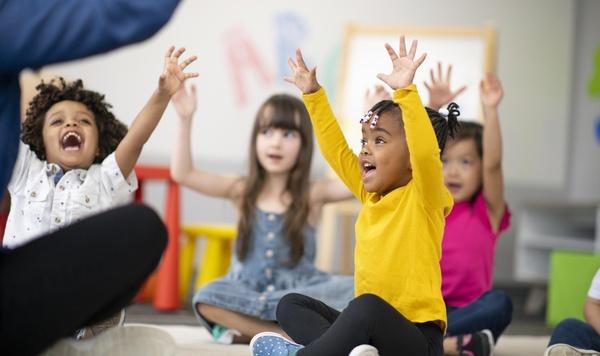
At the start of the new school year, Ms. Maria placed pictures of community helpers all around her classroom, taking care that they represented many different races and genders. During the first week of school, she overheard a conversation between two children, Sky and Alex. Sky noticed the firefighter and was smiling from ear to ear. The firefighter looked just like her — skin Black like hers and hair in braids. She found her friend, Alex, and brought him over to share her excitement.
Sky: Look Alex, the firefighter looks just like me. Her skin and hair is just like mine!
Alex: She looks like you and your Mom, too! The mail carrier has white skin like me. See?
Sky: Yeah, we have different skin colors. My Mom told me it’s because of melanin.
Alex: Melanin?
Sky: My Mom said that is why my skin is Black. We have more melanin than people with white skin.
Alex: You have more melanin than me?
Sky: Yeah. My Mom says people with skin like mine aren’t always treated fairly. She said it’s called racism.
Alex: I heard my parents talk about racism before. Doesn’t sound very nice.
At story time, Ms. Maria read a book about our skin’s many shades of brown. She was proud to have a diverse classroom library that celebrated the racial and cultural heritage of her class. For an activity, she asked children to draw portraits of one another, noticing similarities and differences in their eye, hair, and skin color.
At the end of the day, Ms. Maria shared Sky’s and Alex’s conversation with their parents, encouraging them to continue the conversation at home. Sometimes she worried about how families would respond to her openness talking about race with their children. She recognized that some families had conversations like these often whereas others did not. She knew that families who were Black, Indigenous and from communities of color were most likely to talk about race — both positive aspects related to family culture, history, and pride, but also to prepare children for bias they might experience. Ms. Maria hoped that more families would intentionally have conversations with their children like these to create a more inclusive community across school and home.
As you work with your child’s school to create an inclusive community, here are a few parenting strategies we hope will be helpful on your journey.
1 Build relationships between home and school to reduce implicit bias.
Educators use many different strategies to help children and families feel welcome, but they are still learning, too. Get to know your child’s teacher and school leaders to reduce implicit bias, which is the attitudes and stereotypes that shape how we view others. One common bias is the tendency to view Black children (especially boys) as being more likely to show aggression or negative behaviors than other children. Another common bias is adultification — the tendency to view Black children (especially girls) as being older than their white peers and judging them accordingly. These biases may help explain why the suspension and expulsion rates for Black preschoolers are alarmingly high. Every child and family has a story. Developing positive relationships that allow for stories to be shared can promote compassion, foster community, and ultimately change children’s outcomes.
2 Shape your child’s school community through conversations at home.
Your conversations shape how your child thinks about and treats others at school. Try these strategies at home to teach your child to love their differences and practice empathy. Teach your child that differences do matter. Talk about the fact that sometimes people are treated differently because of the color of their skin, where they are from, their family cultures and traditions, and for many other reasons. Let your child know that this is never okay and talk honestly with them about racism, using art, media, and storybooks. Brainstorm together what your child can do if they see hurtful behaviors (“What could you do if you saw someone being left out?”).
3 Learn to recognize microaggressions.
Microaggressions are subtle gestures, comments, and biased behaviors towards marginalized groups. For example, telling a child of another race that their hair is beautiful and asking to touch it may leave the child feeling like they are not “normal” (even if you intended to compliment). Praising a child for how articulate or well-behaved they are might imply that you did not expect them to be that way. As you learn to recognize microaggressions, ask yourself: What do I know about myself that brings out these thoughts? How can I shift my own perspective while helping my child develop one that is increasingly inclusive?
4 Get to know your child’s community.
At school pick-up/drop-off and during classroom events, show genuine interest in getting to know the children and families in your child’s class by learning what is important to them. At home, share your family culture and traditions with your child. As you cook favorite recipes, tell stories, or sing traditional songs, share with your child that every family has their own special traditions and these traditions are just as important to other families as yours are to you. This message helps children learn that all cultures are important even if they are different from one another and that there is no “right” or “normal” culture.
5 See learning as an ongoing process.
As you talk with your child about race and related topics, know that there will be moments where you might say, “I don’t know, let’s learn about it together.” Show your child how to do so. You are likely to make mistakes along the way and that is okay, too. Mistakes can be a wonderful opportunity to teach your child how to avoid defensiveness, listen and learn to understand the experiences of others, offer a genuine apology, and model asking about what you can do differently next time.
Building an inclusive community requires intentional effort by both teachers and families. Helping children practice empathy by talking about feelings is an important place to start, but extending these conversations to include race and racism is critical. Like Ms. Maria, we can work together across school and home to create a community where all children and families feel valued for who they are.
 Author: