

Doing Science With Young Children


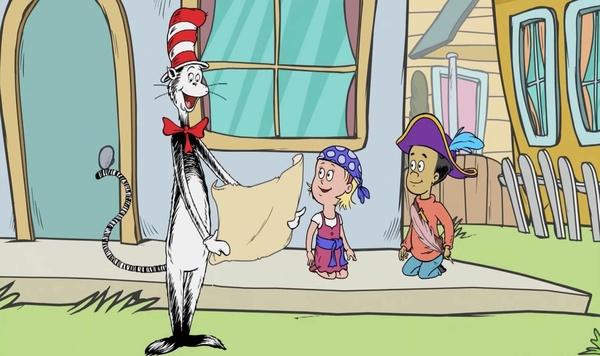
On The Cat in the Hat Knows a Lot About That!®, Nick and Sally jump right in and get involved with doing science. Even young children can form questions, plan investigations, create and test theories, then improve on them! Here are some ways to foster curiosity in children, and encourage them to be scientists.
Science for young children begins with wondering and questioning.
Children are invited to express their innate curiosity about the living things, objects and materials, and events in the world around them. They are encouraged to wonder, predict, and generate their own ideas.
Science for young children invites all children to participate.
ALL children, including girls and boys, children from different cultures or ethnic backgrounds, children with disabilities, and children with varying interests, abilities, and learning styles have opportunities to engage in doing and learning science. For example, a child with vision impairment is invited to explore using his senses of hearing and touch.
Science for young children focuses on direct experience.
Children have many opportunities to directly observe and explore the living things, objects and materials, and events in the world around them. For example, as they learn about animals, children observe the birds, worms, snails, and insects in their own backyards and playgrounds.
Science for young children is an active process.
Children participate actively in science inquiry - the process of finding out. They have space, time, and encouragement to ask questions, make observations, try things out, develop and test their ideas, collect information, and think about what happened.
Science for young children includes many varied experiences about an idea.
Children have lots of opportunities to observe and investigate a particular idea so as to gradually develop their science understanding. For example, while learning about the life cycle of plants, children plant seeds, observe and measure plant growth, and compare the growth of different plants. They also look at plants around their neighborhood and visit a local plant store or nursery.
Science for young children includes many opportunities for them to communicate what they are doing, noticing, and finding out.
Children are invited to think and talk about their explorations and ideas with others. They have materials available to represent their ideas through drawing, painting, and/or making 3-D models.
 Author: