
Helping Children Understand How We Are Alike and Different


Preschoolers are learning to make sense of their world by organizing or sorting things into categories. It's healthy and natural to notice similarities and differences. In fact, those are some of the skills we want children to demonstrate to tell us that they are ready for "big" school.
Understanding how people are alike and different is an important building block for children as they develop empathy and learn to have healthy relationships. Toddlers, for example, can begin by recognizing the likes and dislikes of close family members (i.e. Dad’s favorite color is green, Grandma likes lemon in her water, Uncle Michael does not like when it snows, etc). Older children might describe how people are similar or different — pointing out things like hair style, skin color, family size, or holidays celebrated. They may also start to ask questions like “Why does she walk with leg braces?” or “Why does he have a different skin color than me?” And while those questions can sometimes feel embarrassing to parents in the moment, they are also perfect opportunities to talk with children about the wonderful ways in which we are all unique.
Here are a few ideas for starting conversations with your child about the likes, dislikes, similarities, and differences of others — with a little help from an episode of Daniel Tiger’s Neighborhood.
Start with a Daniel Tiger video!
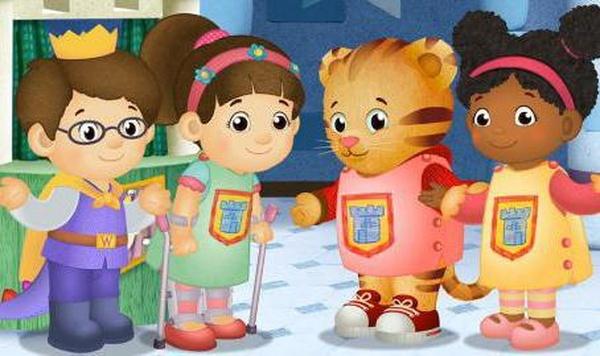
In the episode “Daniel’s New Friend,” Daniel and Miss Elaina meet Prince Wednesday’s cousin, Chrissie, during a royal playdate at the castle. While the children are playing, they recognize that Chrissie has leg braces to help her walk. They ask a lot of questions so they can learn more about why she needs them — and then celebrate their similarities and differences with the strategy song, “In some ways we are different, but in so many ways we are the same.”
Ask your child to help sort laundry.
Sorting laundry can help children begin to understand how people and things can belong to multiple groups. Take a group of socks, for example. Have your child sort by color first. Then, sort by sock owner. Point out how socks might be part of the “red sock group” and the “Mommy’s sock group.” Sorting and pulling items into groups and being able to recognize similarities and differences are skills your child can develop to get ready for “big” school.
Compare and contrast each family member’s shoes.
You might ask questions like, “Who in our family wears shoes? What kind of shoes? Who has the smallest feet? Biggest feet? Who wears socks? Who doesn’t?” Help your child point out differences and similarities. (“Grandpa has the biggest feet and wears shoes that tie. I bet your little sister has the smallest feet, and she wears shoes with velcro bands because she hasn’t learned to tie her shoes yet. But both Grandpa and your little sister wear shoes — and their feet are comfy!”)
Reassure your child that you love them just the way they are.
Talk about how family members and friends have different hair colors, lengths, styles. Or that some of us are taller or shorter than others. We also like and dislike different foods. Sometimes we are alike, and sometimes we are different. But as Mister Rogers often told us, “You've made this day a special day, by just your being you. There's no person in the whole world like you; and I like you just the way you are.”
 Author:
Play, sing along, and learn with Daniel Tiger and his friends in the Neighborhood of Make-Believe.