

Helping Kids Learn to Take Turns and Practice Waiting


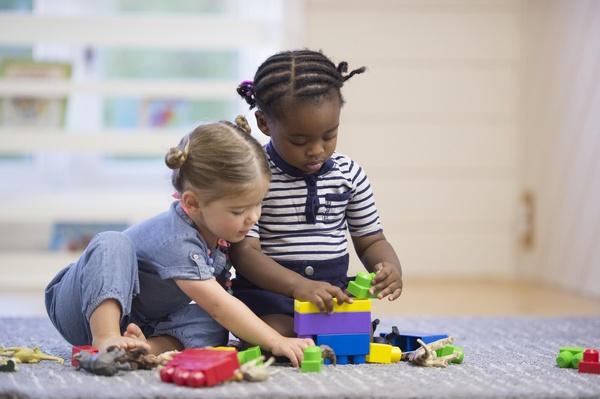
“I want a turn! When’s it going to be my turn?”
If you’re like me, you hear this constantly with your kids. My kids are learning how to share, and part of sharing is learning how to wait for a turn. Instead of getting what they want right away, I remind them to be patient while waiting for their turn. From sharing a new toy, trying out a new activity, picking which game to play, or simply wanting my undivided attention, my kids take lots of turns!
Whether with family at home or with peers at preschool or on a playdate, children need to learn how to take turns. Taking turns strengthens communication and creative problem solving skills and helps kids learn more about empathy and patience.
“Waiting is an important lesson,” said Jaime Baker, who has taught pre-kindergarten and kindergarten for 22 years. She says young kids learn that if someone else is playing with the fun dump truck, it’s their friend’s turn, and they’ll have to wait to play with it. “It’s important to teach them: you have to wait,” Baker said. She wants kids to remember: “Just because I asked doesn’t mean I get it right now.”
In “Daniel Tiger’s Neighborhood,” Daniel and his friends have many opportunities to take turns at school and while playing at the pool. They sing, “We are taking turns, I can wait for mine,” as they share for show and tell, play with desired toys, and go down the slide.
Learning how to wait takes practice. Here are ways you can encourage your child as they learn to wait, share and take turns:
Teach them to think flexibly and look for a solution. In the episode “Everyone Has a Turn at Show and Tell,” Daniel wants to use a green apron for show and tell, but O the Owl is already playing with it. Teacher Harriet asks them if they can find a way to both use it. O can use it right away while playing restaurant, and Daniel can have it when it’s time for show and tell since they don’t need it at the same time.
Practice communicating about taking turns. When at the park or a new friend’s house for the first time, taking turns in a new place can be tricky. Plus, there are new fun things to try! Practice beforehand, showing your child how to use their words when asking for a turn. Act out what happens if someone takes a long turn or doesn’t want to share. If your child thinks someone’s turn is taking too long, help them practice asking, “Can you take a shorter turn, please?”
Help them understand their feelings. Waiting is hard (even for grown-ups)! When your child wants something right away, or feels like someone else isn’t sharing when they should, talk about how that makes them feel. It can be frustrating to wait for a turn. When she’s teaching, Jaime Baker tells her class that, “It’s okay to be frustrated, but what can we do to make you not frustrated?” Working through big feelings with your kids helps them feel seen and understood while they wait.
Talk about what happens next. When Daniel and Prince Wednesday both want the pool noodle in the “Daniel Takes a Turn at the Pool” episode, Prince Wednesday’s mom makes it clear that it is Daniel’s turn now, but Prince Wednesday will get it next. Talking about what comes next can comfort your child and remind them who gets the next turn. In my family, this happens at the dinner table when both kids want to share about their day at the same time. I remind them whose turn it is to speak right now and who can share next so we can hear from everyone.
Find a way to play together. Daniel and Miss Elaina wants to play with bubbles at the pool, but Miss Elaina has them first. To find a way to play together, Daniel pops the bubbles while Miss Elaina makes them, then they switch roles. They play make believe with the bubbles and have fun together, further strengthening their friendship. (Taking turns like this also gave each person something else to do while they waited!)
- Use clues kids can see. When one child wants something, but the other isn’t ready to be done, Jaime Baker recommends that young children show with their arms how long they will keep it. Though it’s not an exact measurement between arm lengths and minutes, it gives both kids a clue for how long it’ll be until the waiting child gets a turn. (You can also use a timer that shows a countdown for taking turns!)

Learning how to take turns and practice waiting is just one of the many social skills you can teach your kids. For more tips, check out these articles on building social skills!
Sign up for the "Daniel Tiger's Neighborhood" newsletter!
Every day is full of possibilities and so is your child! Get "Daniel Tiger's Neighborhood" inspired articles, activities, and recipes emailed directly to you. Sign up here!
 Author:
Play, sing along, and learn with Daniel Tiger and his friends in the Neighborhood of Make-Believe.