

Simple Ways To Help Your Child Become A Better Problem Solver


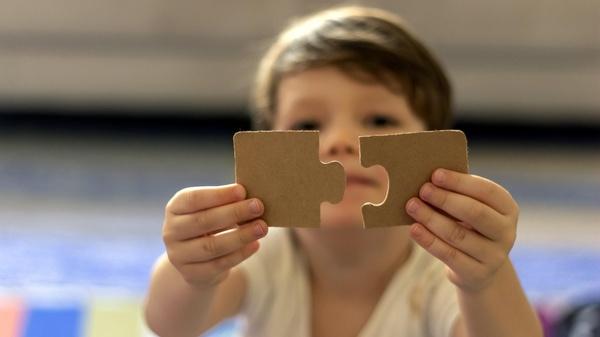
Encouraging kids to become problem solvers can often feel like a counterintuitive task. Imagine this scene:
Jamal is working on a puzzle and getting very frustrated when he can’t find the right space for each piece. His dad, Khalil, wants to relieve Jamal of this stress and doesn’t want Jamal to feel bad about himself.
As parents, it’s natural to want to help our children when they struggle. But, the stress children experience as they work through a challenge actually leads to growth. Learning a new skill may feel uncomfortable until we persevere and we have mastered it. Few of us would have learned to ride a bike if our parents had never let go. The discomfort of teetering created the opportunity for us to figure out how to maintain balance and feel that incredible sense of pride when we could cruise around on our own.
When we run to our kids’ rescue, we unintentionally communicate that we don’t think our kids are capable of mastering the challenges they face — and that only adults can solve their problems. Mastering these problem-solving skills, like bike riding or computer skills, is essential to kids’ growth and development. If we want them to thrive, we need to empower them to use problem-solving skills for themselves.
“Rosie’s Rules” is a new PBS KIDS show that provides a powerful model for how kids can embrace challenges by helping manage their emotions. In each episode, Rosie confronts big and small frustrations as she tries to figure out how the world works. Instead of falling apart, Rosie has a tool to help her manage her emotions. Seeing Rosie use these tools provides a powerful problem-solving example for kids.
When Rosie needs a break, she follows a three-step problem-solving process. She starts off by saying, “I need to flop,” which means she needs to give her body a break. She may sit down or flop on the floor (safely!) or hold her head in her hands. Then, she talks herself through her process: "Breathe in, breathe out. Wiggle about. Now I’m ready to figure this out!” When her body is calm, she exclaims, “¡Vamos a ver!" ( “Let’s see!”) and jumps into action. This shows young kids that they can have tools to help themselves.
Try these simple ways to help your child be a better problem solver:
1 Acknowledge that problems are part of life.
We tend to think of problems as negative — something to fear and avoid. But problems are just an expected part of everyday life: it's raining, so you can't go to the playground and need to find an indoor activity; you're out of bread, so you have to find something else to eat for lunch. All solvable! Thinking about everyday obstacles in this way sets you and your child up to approach challenging moments with a positive mindset. The message to your child? “Challenges happen, and I am confident you can deal with it.” The more times they encounter problem-solving examples in their lives, the less overwhelming the challenge becomes.
2 Validate your child’s emotions.
One of the most effective and loving ways to help kids calm down is to validate their emotions, which lets them know they’re seen and understood. Try something like, “You are working hard on this tower, and it’s so frustrating that it keeps falling.” Encouraging your child to use Rosie’s tool of flopping, breathing, and wiggling about may come in handy here!
3 Remind your child how they calmed themselves and persevered through a challenge.
Kids have problem-solving skills — they just may not be totally aware of them. Recall a time when your child rebuilt a tower of blocks that fell, worked hard to figure out how to balance on a scooter, or learned to love school after a rocky first month. Drawing attention to how they negotiated these everyday challenges reminds children of the progress they’ve already made, which helps solidify the problem-solving lessons they’ve learned and apply it to other situations.
4 Help your child think through creative solutions.
There will be times when your child does need help to find a solution. Start by asking your child for their ideas. Before offering your input, ask your child if they would like to hear your ideas for solving the problem. Asking for permission to provide input shows respect for your child’s boundaries and problem-solving skills, making it more likely that they will listen to your suggestions.
Fostering problem-solving skills for kids that they can develop and use to thrive is a balance; it requires a patient and communicative approach. But once you use these tips when everyday challenges arise, you’ll find that both you and your child will start to manage emotional reactions and work through problems methodically — just like Rosie!
Just like Rosie, your child is figuring out how the world works. Their ability to manage their own frustrations, problem solve and work through a challenge will serve them well — now and far into the future.
Looking for more tips to help teach problem-solving skills?
If you’re still stuck for problem-solving examples you can work through with your child, PBS KIDS has some great resources for parents who want to help their kids work through challenges while still encouraging them to exercise independence and problem-solving skills. Check out the tips for creative problem solving, and get age-appropriate advice, activities and tools to help your children thrive with our PBS KIDS Learn & Grow hub.
 Author: