

How “Daniel Tiger’s Neighborhood” Can Help Parents and Grandparents


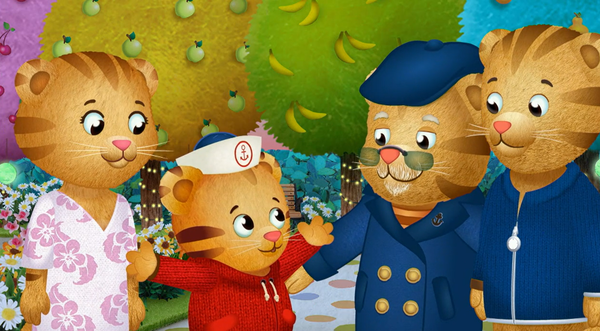
At a recent family reunion, I chatted with my sister-in-law while our kids played around us. The conversation turned to “Daniel Tiger’s Neighborhood,” which celebrates 10 years on the air this year.
She described an experience at the playground with her daughter: “It was time to leave, and I was dreading my daughter’s response. So I sang, ‘It’s almost time to stop, so choose one more thing to do.’ I really didn’t expect it to work. But she said, ‘I choose the slide,’ went down it once, took my hand, and walked with me to the car. I was floored.”
“Daniel Tiger’s Neighborhood” is purposefully and intentionally designed to help not just children but all of the caring adults in a child’s life. That’s why I’m quick to recommend it to parents, grandparents, and early childhood educators. The show helps young kids develop life skills, but it also equips adults with simple strategies that help kids thrive.
Here are three ways caregivers can use “Daniel Tiger’s Neighborhood” to support kids:
1) Use the strategy songs.
Every “Daniel Tiger’s Neighborhood” episode contains a strategy song. Songs are incredible teaching tools because they are memorable. Young kids are learning and practicing many different skills in a short period of time. That’s a lot for their brain to hold onto! Putting a strategy or routine to music makes it easier for them to recall and apply.
That’s why, during the potty-training years, so many of us have found ourselves singing: “When you have to go potty, stop and go right away. Flush and wash and be on your way!”
Or singing this song during the morning rush: “Clothes on, eat breakfast, brush teeth, put on shoes, and off to school!”
Or when a child is under the weather, singing: “When you’re sick, rest is best, rest is best.”
(If your own memory needs jogging, The Daniel Tiger for Parents App has hundreds of songs and video clips, categorized by topic.)
2) Watch a show to prepare for a new experience.
Kids feel more confident when they know what to expect. So much anxiety simply comes from not knowing — and then filling in the gaps with our imagination. Fred Rogers once said, “When children know ahead of time what’s going to happen — and not happen — they can prepare themselves for what’s coming. They can think about it and get used to their feelings about it.”
In its 10 years on the air, “Daniel Tiger’s Neighborhood” has produced episodes to match lots of new moments for kids, such as going to the doctor or dentist, getting a haircut, starting a new class, saying goodbye to a grandparent or parent going on a trip, getting up on stage, welcoming a new sibling, and making a new friend.
Sometimes we forget that an experience that is routine for us can be brand new for our child. We can help them by having simple, age-appropriate factual conversations before they experience something new.
You can also purposefully watch a show clip to start a conversation about upsetting events after they happen — such as developing an allergy, experiencing a big storm, or becoming jealous of a friend.
Using the episodes to prompt conversation can be as simple as this: “Daniel was nervous before going to the doctor, but he wasn’t nervous after he asked questions and talked with Mom Tiger. Let’s talk about what’s going to happen at your doctor’s appointment tomorrow.”
3) Use the show to build your child’s emotional vocabulary.
One of Fred Rogers' guiding principles was, “Anything that’s human is mentionable, and anything that is mentionable can be more manageable. When we can talk about our feelings, they become less overwhelming, less upsetting and less scary.”
Learning to name our feelings is a skill — and a skill kids can learn. When we notice and name our emotions, we can navigate them more effectively. Try watching a show together and occasionally asking your child, “How do you think Daniel/Katerina/etc. is feeling right now? How would you feel if that happened to you?”
Here’s something I love about the grown-ups in Daniel Tiger’s life: they never minimize how he is feeling. They model that it’s okay to be angry or sad or scared — and that there are steps to take to help you manage your feelings.
Daniel’s teacher notices when kids are feeling jealous, overwhelmed, or left out. Daniel’s parents notice when he is scared by a shadow, eager to do a task himself, or angry at a sibling. And they use language and strategies we can emulate.
These adults also don’t leave Daniel or his friends alone in their feelings. They offer empathy and a path forward. And that’s a powerful combination that helps me be a more responsive parent.
It reminds me to say, “Your tower fell down — I can tell you are frustrated! Do you want to rebuild it or take a break and play with something else?” or “That thunder is really loud! Noises can be scary. What would help you feel better? Do you want to snuggle and read a book together?”
Sometimes when I have big feelings on this parenting journey, I’m not above muttering to myself, “When you feel so mad that you want to roar, take a deep breath and count to four.” And then when I’m busy fixing breakfast and school lunches in the morning, I might hum, “Making something is one way to say, ‘I love you.’” It’s funny to think songs from a children’s show can have an effect on helping me through the emotions I experience throughout the day too. And just like how the Tiger family enjoys nature walks, neighborhood gatherings, make-believe with friends, the comfort of a loving bedtime routine, and visits with their grandfather, we all build closeness and character in the small moments. It’s a show that celebrates the wonder in the ordinary and reminds viewers of every age that you’re special just the way you are.
 Author:
Play, sing along, and learn with Daniel Tiger and his friends in the Neighborhood of Make-Believe.